Sandra L. Ragan – författare
565 kr
Skickas inom 5-8 vardagar
440 kr
Läs direkt efter köp
440 kr
Läs direkt efter köp
757 kr
Skickas inom 5-8 vardagar
587 kr
Läs direkt efter köp
587 kr
Läs direkt efter köp
1 976 kr
Skickas inom 5-8 vardagar
603 kr
Skickas inom 10-15 vardagar
400 kr
Skickas inom 10-15 vardagar
2 164 kr
Skickas inom 10-15 vardagar
703 kr
Skickas inom 10-15 vardagar
866 kr
Läs direkt efter köp
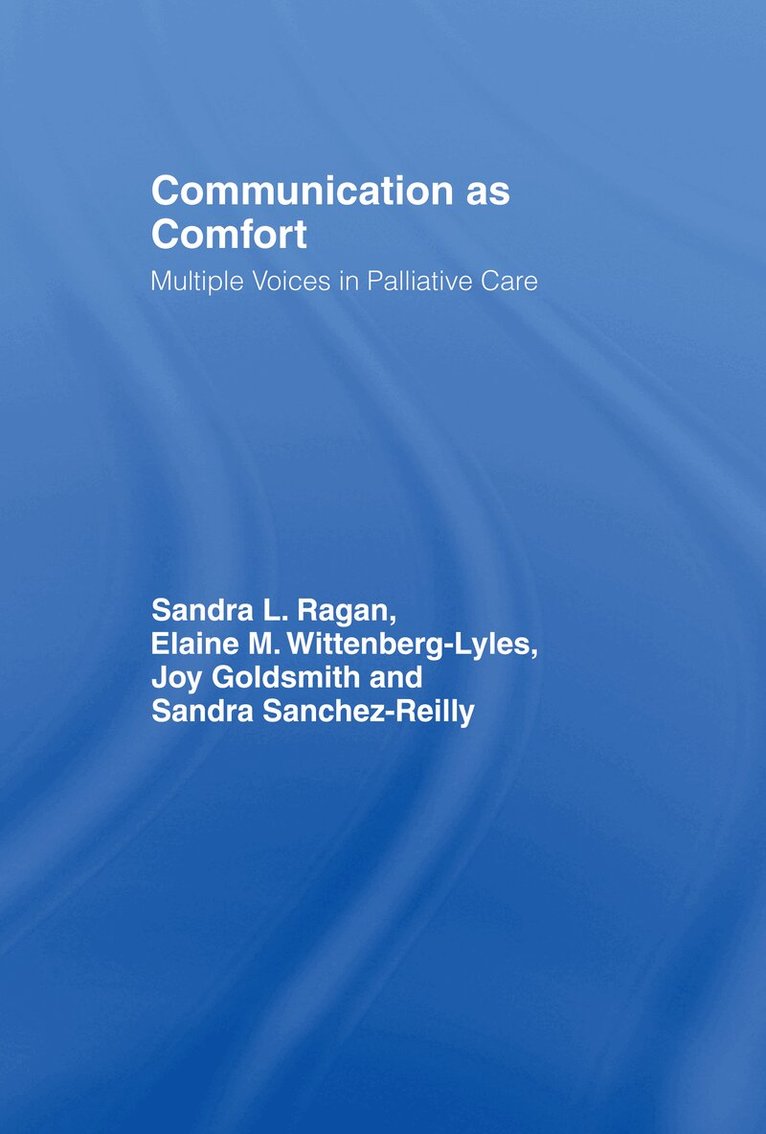
This exceptional work explores the complexities of communication at one of the most critical stages of the life experience--during advanced, serious illness and at the end of life. Challenging the predominantly biomedical model that informs much communication between seriously ill and/or dying patients and their physicians, caregivers, and families, Sandra L. Ragan, Elaine M. Wittenberg-Lyles, Joy Goldsmith, and Sandra Sanchez-Reilly pose palliative care--medical care designed to comfort rather than to cure patients--as an antidote to the experience of most Americans at the most vulnerable juncture of their lives.
With an author team comprised of three health communication scholars and one physician certified in geriatrics and palliative medicine, this volume integrates the medical literature on palliative care with that of health communication researchers who advocate a biopsychosocial approach to health care. Applying communication theories and insights to illuminate problems and to explain their complexities, the authors advocate a patient-centered approach to care that recognizes and seeks to lessen patients’ suffering and the many types of pain they may experience (physical, psychological, social, and spiritual) during life-threatening illness.
866 kr
Läs direkt efter köp
This exceptional work explores the complexities of communication at one of the most critical stages of the life experience--during advanced, serious illness and at the end of life. Challenging the predominantly biomedical model that informs much communication between seriously ill and/or dying patients and their physicians, caregivers, and families, Sandra L. Ragan, Elaine M. Wittenberg-Lyles, Joy Goldsmith, and Sandra Sanchez-Reilly pose palliative care--medical care designed to comfort rather than to cure patients--as an antidote to the experience of most Americans at the most vulnerable juncture of their lives.
With an author team comprised of three health communication scholars and one physician certified in geriatrics and palliative medicine, this volume integrates the medical literature on palliative care with that of health communication researchers who advocate a biopsychosocial approach to health care. Applying communication theories and insights to illuminate problems and to explain their complexities, the authors advocate a patient-centered approach to care that recognizes and seeks to lessen patients’ suffering and the many types of pain they may experience (physical, psychological, social, and spiritual) during life-threatening illness.
468 kr
Läs direkt efter köp
In the 1960s, feminists voiced their outrage about the health care system in the United States which routinely discriminated against women and, in so doing, literally jeopardized their health and well-being. Over a decade later, women''s health advocates still stressed the need for reform of this male-dominated institution because of the on-going threat to the health of American women. In the 1990s, nearly 40 years after women began their fight for quality and equitable treatment from the medical profession, women unfortunately continue to confront problems on numerous levels including discrimination in medical research and in the availability of insurance and health care providers. Most alarming, however, is the fact that women today--like women in the ''60s and before--lack information, understanding, and adequate diagnoses and treatment from their health caregivers. This book extends from a program of research on women''s health issues by the authors. More than 150 audio-taped, naturally occurring interactions between health caregivers and their female patients from three different health care settings--as well as ethnographic field notes in three additional settings which provide health care to women-- constitute the data for this investigation. They explore the consequentiality of relational issues during women''s health care encounters and examine how health care participants save face, enact roles, co-construct their encounters, and accomplish the objective of education and medical care. Unlike earlier works, this study utilizes an extensive data collection derived directly from hundreds of interactions between health care providers and their patients, as opposed to surveys or case studies of singular practitioners. The authors examine the data in light of insights from a variety of theoretical perspectives and are committed to exploring the implication that medical encounters are collaboratively managed by both patients and caregivers. Given these theoretical and empirical contributions, the authors believe this book will advance present understanding in the areas of health and relational communication, women''s health care, gender issues in communication, conversation analysis, discourse processes, and institutional talk.
468 kr
Läs direkt efter köp
In the 1960s, feminists voiced their outrage about the health care system in the United States which routinely discriminated against women and, in so doing, literally jeopardized their health and well-being. Over a decade later, women''s health advocates still stressed the need for reform of this male-dominated institution because of the on-going threat to the health of American women. In the 1990s, nearly 40 years after women began their fight for quality and equitable treatment from the medical profession, women unfortunately continue to confront problems on numerous levels including discrimination in medical research and in the availability of insurance and health care providers. Most alarming, however, is the fact that women today--like women in the ''60s and before--lack information, understanding, and adequate diagnoses and treatment from their health caregivers. This book extends from a program of research on women''s health issues by the authors. More than 150 audio-taped, naturally occurring interactions between health caregivers and their female patients from three different health care settings--as well as ethnographic field notes in three additional settings which provide health care to women-- constitute the data for this investigation. They explore the consequentiality of relational issues during women''s health care encounters and examine how health care participants save face, enact roles, co-construct their encounters, and accomplish the objective of education and medical care. Unlike earlier works, this study utilizes an extensive data collection derived directly from hundreds of interactions between health care providers and their patients, as opposed to surveys or case studies of singular practitioners. The authors examine the data in light of insights from a variety of theoretical perspectives and are committed to exploring the implication that medical encounters are collaboratively managed by both patients and caregivers. Given these theoretical and empirical contributions, the authors believe this book will advance present understanding in the areas of health and relational communication, women''s health care, gender issues in communication, conversation analysis, discourse processes, and institutional talk.