Sandra Sider – författare
Visar alla böcker från författaren Sandra Sider. Handla med fri frakt och snabb leverans.
4 produkter
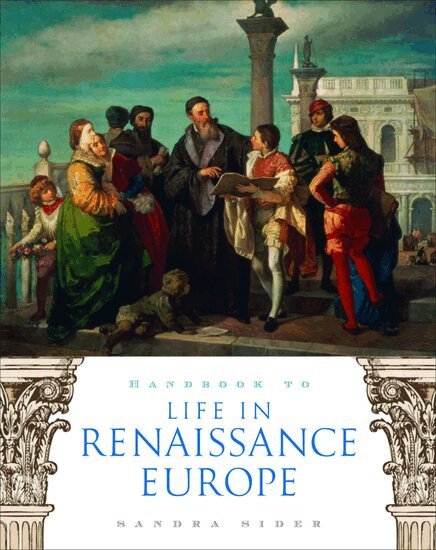
Handbook to Life in Renaissance Europe
Av Sandra Sider
Häftad, 2007
418 kr
Lägg i varukorg
The word renaissance means "rebirth," and the most obvious example of this phenomenon was the regeneration of Europe's classical Roman roots. The Renaissance began in northern Italy in the late 14th century and culminated in England in the early 17th century. Emphasis on the dignity of man (though …
Commemorative American Quilts
Stitching Our Heritage from 1876 to Today
Av Sandra Sider
Inbunden, 2026
449 kr
Lägg i varukorg
Just in time for America’s 2026 semiquincentennial, reveals the significance—especially for women—of commemorative quilt making through 250 years of US history. Quilts were not just lying on beds during America’s history; in fact, they were sewn specifically to celebrate all of the nation’s …
Journeys of a Mystic Soul in Poetry and Prose
Av Cecilia Del Nacimiento, Kevin Donnelly m. fl.
Häftad, 2012
462 kr
Lägg i varukorg
This edition, which offers a bilingual selection of poetry and selected prose translated into English by the nun-author Cecilia del Nacimiento (1570–1646), increases contemporary scholars’ access to, and therefore understanding of, the Spanish early modern religious and intellectual milieu. A …
Bibliography of Emblematic Manuscripts
Av Sandra Sider
E-bok, 1992
1322 kr
Lägg i varukorg
Multiple indices provide full access to the manuscript descriptions: topics and genres, titles, artists, translators, dedicatees, additional names, provenance (including dealers and auction houses), dates of production, and places of production. All shelfmarks are listed separately by collection …