Sandro Skansi – Författare
Visar alla böcker från författaren Sandro Skansi. Handla med fri frakt och snabb leverans.
4 produkter
4 produkter
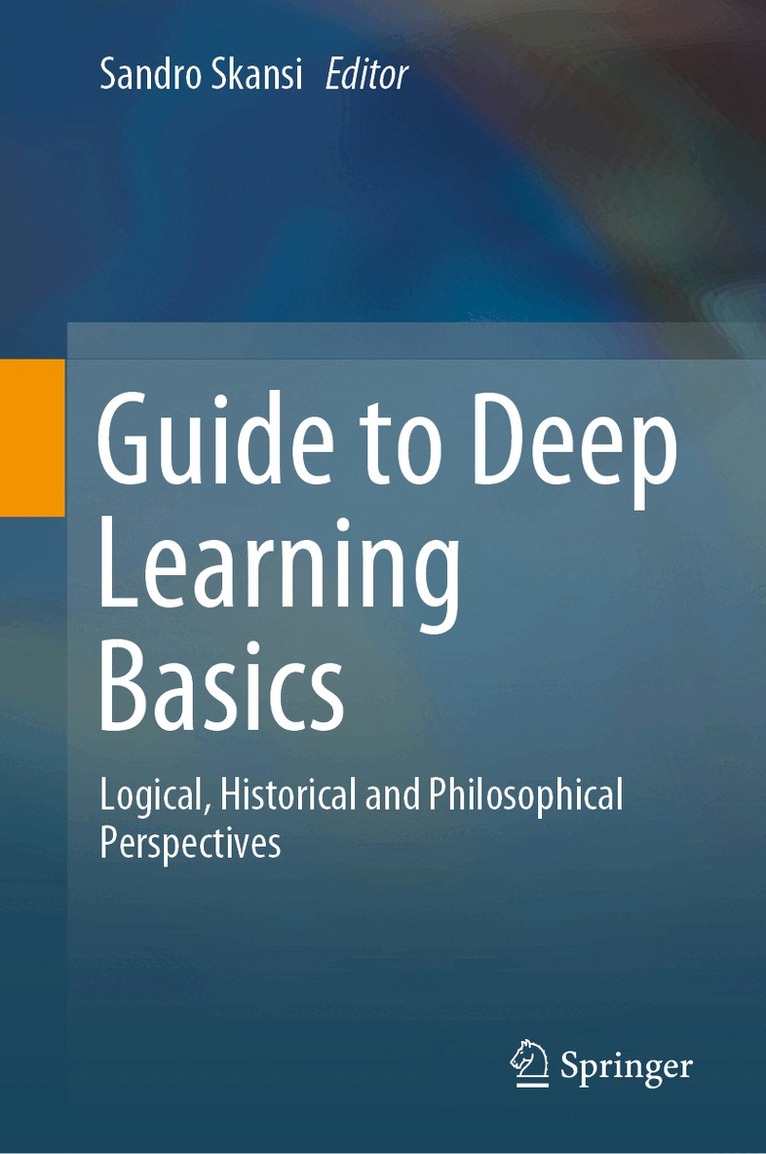
Guide to Deep Learning Basics
Logical, Historical and Philosophical Perspectives
Inbunden, Engelska, 2020
1 062 kr
Skickas inom 10-15 vardagar
This stimulating text/reference presents a philosophical exploration of the conceptual foundations of deep learning, presenting enlightening perspectives that encompass such diverse disciplines as computer science, mathematics, logic, psychology, and cognitive science. The text also highlights select topics from the fascinating history of this exciting field, including the pioneering work of Rudolf Carnap, Warren McCulloch, Walter Pitts, Bulcsú László, and Geoffrey Hinton.Topics and features:Provides a brief history of mathematical logic, and discusses the critical role of philosophy, psychology, and neuroscience in the history of AIPresents a philosophical case for the use of fuzzy logic approaches in AIInvestigates the similarities and differences between the Word2vec word embedding algorithm, and the ideas of Wittgenstein and Firth on linguisticsExamines how developments in machine learning provide insights into the philosophical challenge of justifying inductive inferencesDebates, with reference to philosophical anthropology, whether an advanced general artificial intelligence might be considered as a living beingInvestigates the issue of computational complexity through deep-learning strategies for understanding AI-complete problems and developing strong AIExplores philosophical questions at the intersection of AI and transhumanismThis inspirational volume will rekindle a passion for deep learning in those already experienced in coding and studying this discipline, and provide a philosophical big-picture perspective for those new to the field.
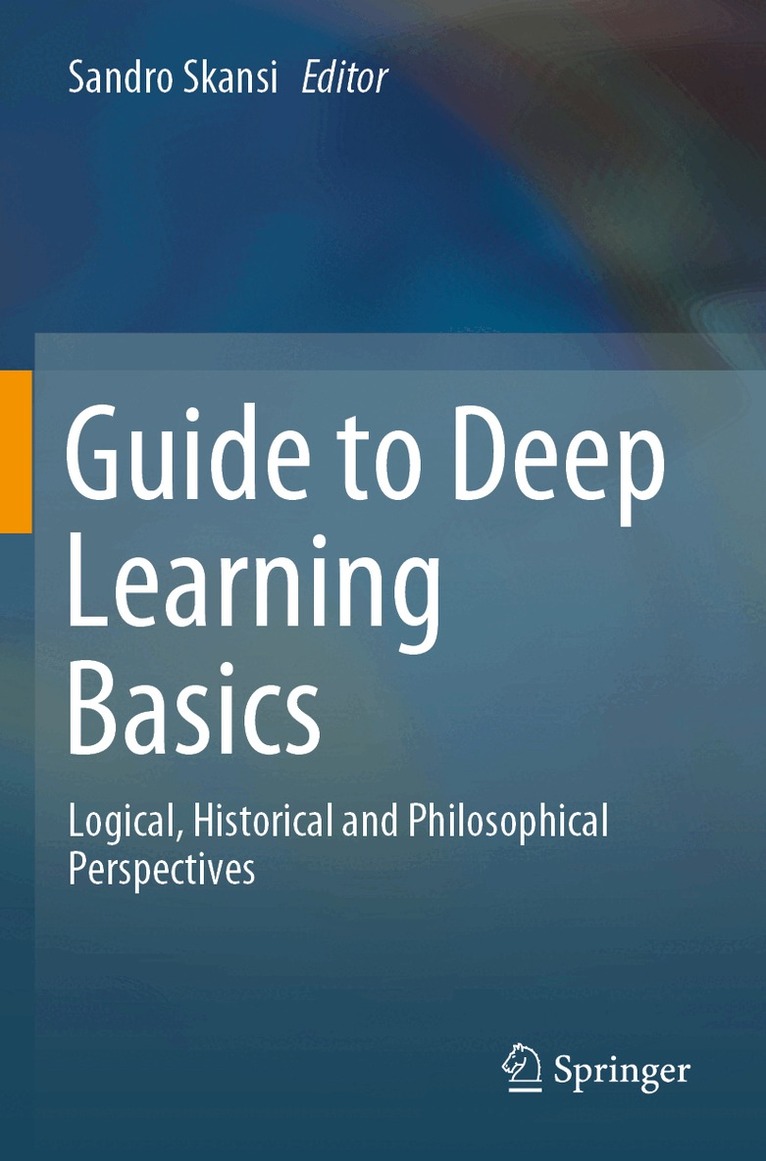
Guide to Deep Learning Basics
Logical, Historical and Philosophical Perspectives
Häftad, Engelska, 2021
1 062 kr
Skickas inom 10-15 vardagar
This stimulating text/reference presents a philosophical exploration of the conceptual foundations of deep learning, presenting enlightening perspectives that encompass such diverse disciplines as computer science, mathematics, logic, psychology, and cognitive science. The text also highlights select topics from the fascinating history of this exciting field, including the pioneering work of Rudolf Carnap, Warren McCulloch, Walter Pitts, Bulcsú László, and Geoffrey Hinton.Topics and features:Provides a brief history of mathematical logic, and discusses the critical role of philosophy, psychology, and neuroscience in the history of AIPresents a philosophical case for the use of fuzzy logic approaches in AIInvestigates the similarities and differences between the Word2vec word embedding algorithm, and the ideas of Wittgenstein and Firth on linguisticsExamines how developments in machine learning provide insights into the philosophical challenge of justifying inductive inferencesDebates, with reference to philosophical anthropology, whether an advanced general artificial intelligence might be considered as a living beingInvestigates the issue of computational complexity through deep-learning strategies for understanding AI-complete problems and developing strong AIExplores philosophical questions at the intersection of AI and transhumanismThis inspirational volume will rekindle a passion for deep learning in those already experienced in coding and studying this discipline, and provide a philosophical big-picture perspective for those new to the field.
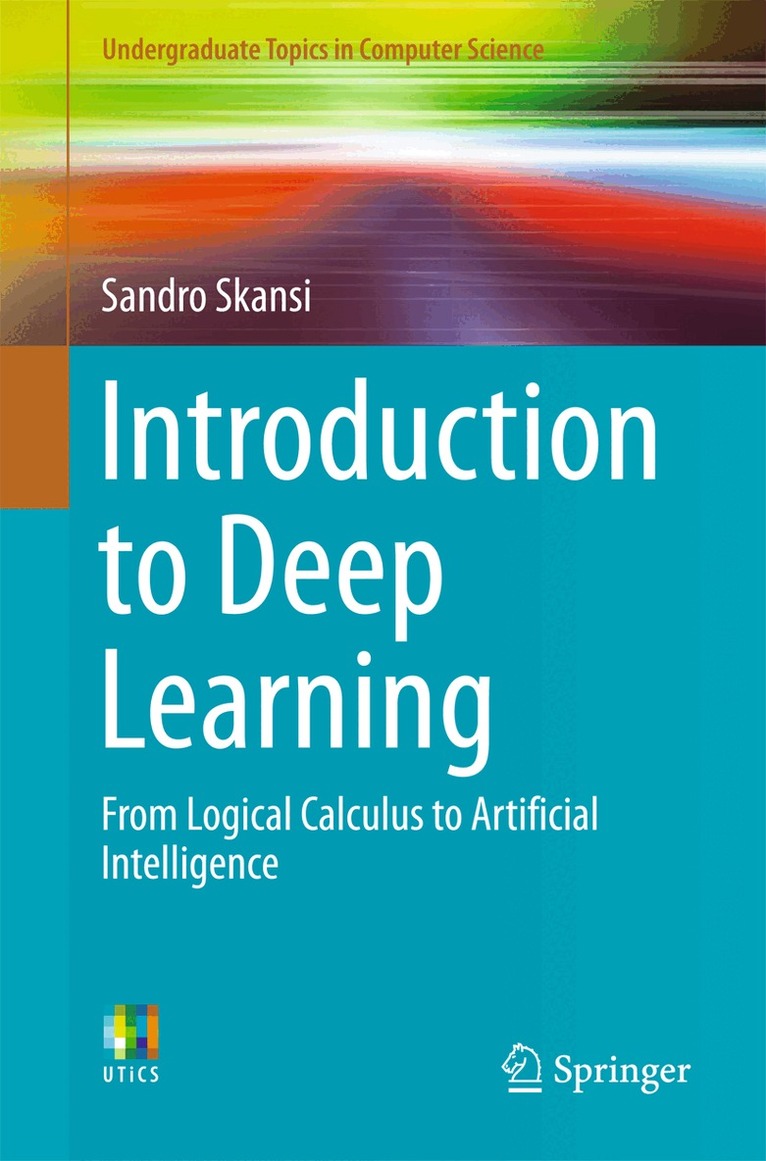
Introduction to Deep Learning
Neural Networks, Large Language Models and Agentic AI
Häftad, Engelska, 2026
720 kr
Kommande
This textbook introduces deep learning in a style that is accessible, rigorous, and grounded in working code. It walks through the most widely used algorithms and architectures step by step, with mathematical derivations kept intuitive and Python examples woven through every chapter. The second edition keeps everything from the first, including convolutional networks, LSTMs, Word2vec, RBMs, DBNs, neural Turing machines, memory networks, and autoencoders. It then covers the systems that have reshaped the field since: generative adversarial networks, the transformer architecture and its attention mechanism, the full training pipeline behind modern large language models (LLMs), prompt engineering with real-life guardrail scenarios, parameter-efficient fine-tuning with LoRA, retrieval-augmented generation with vector databases, knowledge graphs, and agentic AI systems illustrated through an industrial case study.Topics and features:Introduces fundamentals of machine learning and mathematical and computational prerequisites for deep learningDiscusses feed-forward neural networks, convolutional networks, and recurrent architectures, and explores the modifications applicable to any neural networkCovers the transformer architecture from first principles, including self-attention, multi-head attention, positional encoding, and a minimal annotated implementationReviews open research problems, from hallucinations and quadratic scaling to alignment faking and the interpretability of model internalsThis proven, fully revised textbook is written for graduate and advanced undergraduate students of computer science, cognitive science, and mathematics. It should prove equally valuable for readers in linguistics, logic, philosophy, and psychology.Sandro Skansi is an Associate Professor at the University of Zagreb, Croatia, where he teaches logic, political philosophy, artificial intelligence, and cognitive science. Kristina Šekrst is a research associate at the University of Zagreb and a principal engineer at Preamble AI.
587 kr
Skickas inom 10-15 vardagar
This textbook presents a concise, accessible and engaging first introduction to deep learning, offering a wide range of connectionist models which represent the current state-of-the-art. The text explores the most popular algorithms and architectures in a simple and intuitive style, explaining the mathematical derivations in a step-by-step manner. The content coverage includes convolutional networks, LSTMs, Word2vec, RBMs, DBNs, neural Turing machines, memory networks and autoencoders. Numerous examples in working Python code are provided throughout the book, and the code is also supplied separately at an accompanying website.Topics and features: introduces the fundamentals of machine learning, and the mathematical and computational prerequisites for deep learning; discusses feed-forward neural networks, and explores the modifications to these which can be applied to any neural network; examines convolutional neural networks, and the recurrent connections to a feed-forward neural network; describes the notion of distributed representations, the concept of the autoencoder, and the ideas behind language processing with deep learning; presents a brief history of artificial intelligence and neural networks, and reviews interesting open research problems in deep learning and connectionism.This clearly written and lively primer on deep learning is essential reading for graduate and advanced undergraduate students of computer science, cognitive science and mathematics, as well as fields such as linguistics, logic, philosophy, and psychology.