Sara Kindon - Böcker
Visar alla böcker från författaren Sara Kindon. Handla med fri frakt och snabb leverans.
4 produkter
4 produkter
2 030 kr
Skickas inom 10-15 vardagar
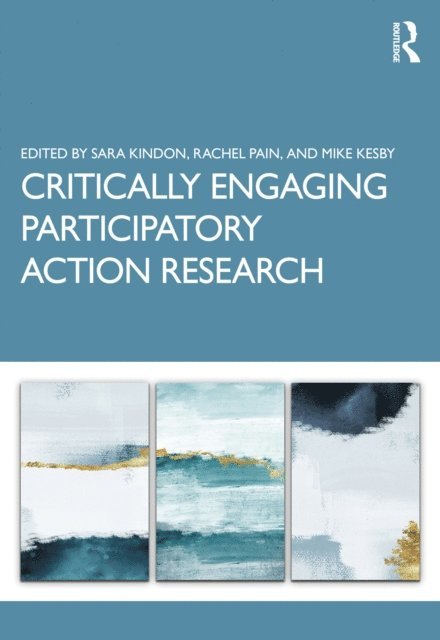
This timely and informative book reasserts the value of Critical Participatory Action Research (CPAR): an approach to participatory action research (PAR) that is informed by critical theories attending to questions of privilege and power, and that generates collaborations focused on challenging structural inequality.The authors, writing explicitly from Minority World perspectives, are experienced researcher-practitioners who have worked with communities in the UK, USA, South Africa, Australia, India, and Colombia over many years. They offer an assessment, exploration, and illustration of CPAR at this point in time, outlining how the approach has evolved over time and space. Exploring its roots in strands of critical thought including postcolonialism, anti-imperialism, feminism, antiracism, queer theory, and Indigenous ontologies, the book asks how PAR is being critically re-engaged to maintain its commitment to greater justice and transformational change. Each chapter provides a rich case study of how these theories inform current collaborations and offers reflection on the entanglements of power that come with attempting CPAR in different institutional and geopolitical contexts. Their examples show that critical interrogation of PAR practices may lead to innovative and impactful outcomes for those involved, as well as new theoretical and substantive research findings.The collection will be of especial interest to students and researchers across the social sciences and humanities, as well as those working outside universities, who are interested in developing or extending their use of CPAR.
534 kr
Skickas inom 10-15 vardagar
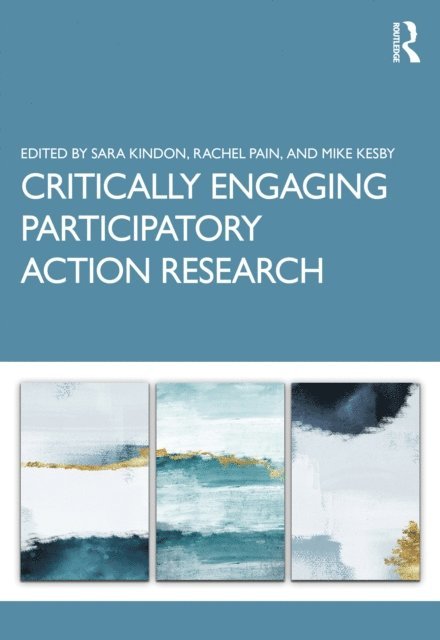
This timely and informative book reasserts the value of Critical Participatory Action Research (CPAR): an approach to participatory action research (PAR) that is informed by critical theories attending to questions of privilege and power, and that generates collaborations focused on challenging structural inequality.The authors, writing explicitly from Minority World perspectives, are experienced researcher-practitioners who have worked with communities in the UK, USA, South Africa, Australia, India, and Colombia over many years. They offer an assessment, exploration, and illustration of CPAR at this point in time, outlining how the approach has evolved over time and space. Exploring its roots in strands of critical thought including postcolonialism, anti-imperialism, feminism, antiracism, queer theory, and Indigenous ontologies, the book asks how PAR is being critically re-engaged to maintain its commitment to greater justice and transformational change. Each chapter provides a rich case study of how these theories inform current collaborations and offers reflection on the entanglements of power that come with attempting CPAR in different institutional and geopolitical contexts. Their examples show that critical interrogation of PAR practices may lead to innovative and impactful outcomes for those involved, as well as new theoretical and substantive research findings.The collection will be of especial interest to students and researchers across the social sciences and humanities, as well as those working outside universities, who are interested in developing or extending their use of CPAR.
Participatory Action Research Approaches and Methods
Connecting People, Participation and Place
Inbunden, Engelska, 2007
2 223 kr
Skickas inom 10-15 vardagar
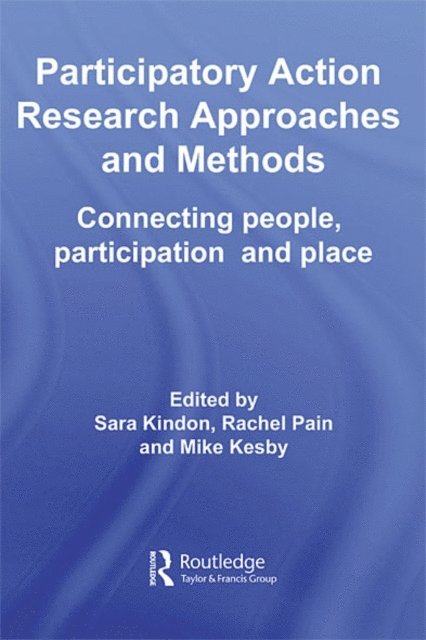
Participatory Action Research (PAR) approaches and methods have seen an explosion of recent interest in the social and environmental sciences. PAR involves collaborative research, education and action which is oriented towards social change, representing a major epistemological challenge to mainstream research traditions. It has recently been the subject of heated critique and debate and rapid theoretical and methodological development. This book captures these developments, exploring the justification, theorisation, practice and implications of PAR. It offers a critical introduction to understanding and working with PAR in different social, spatial and institutional contexts. The authors engage with PAR’s radical potential, while maintaining a critical awareness of its challenges and dangers. The book is divided into three parts. The first part explores the intellectual, ethical and pragmatic contexts of PAR; the development and diversity of approaches to PAR; recent poststructuralist perspectives on PAR as a form of power; the ethic of participation; and issues of safety and well-being. Part two is a critical exploration of the politics, places and practices of PAR. Contributors draw on diverse research experiences with differently situated groups and issues including environmentally sustainable practices, family livelihoods, sexual health, gendered experiences of employment, and specific communities such as people with disabilities, migrant groups, and young people. The principles, dilemmas and strategies associated with participatory approaches and methods including diagramming, cartographies, art, theatre, photovoice, video and geographical information systems are also discussed. Part three reflects on how effective PAR is, including the analysis of its products and processes, participatory learning, representation and dissemination, institutional benefits and challenges, and working between research, action, activism and change.The authors find that a spatial perspective and an attention to scale offer helpful means of negotiating the potentials and paradoxes of PAR. This approach responds to critiques of PAR by highlighting how the spatial politics of practising participation can be mobilised to create more effective and just research processes and outcomes. The book adds significant weight to the recent critical reappraisal of PAR, suggesting why, when, where and how we might take forward PAR’s commitment to enabling collaborative social transformation. It will be particularly useful to researchers and students of Human Geography, Development Studies and Sociology.
Participatory Action Research Approaches and Methods
Connecting People, Participation and Place
Häftad, Engelska, 2010
671 kr
Skickas inom 10-15 vardagar
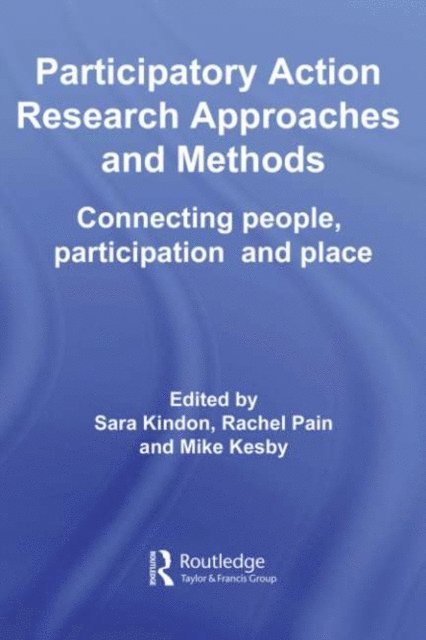
Participatory Action Research (PAR) approaches and methods have seen an explosion of recent interest in the social and environmental sciences. PAR involves collaborative research, education and action which is oriented towards social change, representing a major epistemological challenge to mainstream research traditions. It has recently been the subject of heated critique and debate and rapid theoretical and methodological development. This book captures these developments, exploring the justification, theorisation, practice and implications of PAR. It offers a critical introduction to understanding and working with PAR in different social, spatial and institutional contexts. The authors engage with PAR’s radical potential, while maintaining a critical awareness of its challenges and dangers. The book is divided into three parts. The first part explores the intellectual, ethical and pragmatic contexts of PAR; the development and diversity of approaches to PAR; recent poststructuralist perspectives on PAR as a form of power; the ethic of participation; and issues of safety and well-being. Part two is a critical exploration of the politics, places and practices of PAR. Contributors draw on diverse research experiences with differently situated groups and issues including environmentally sustainable practices, family livelihoods, sexual health, gendered experiences of employment, and specific communities such as people with disabilities, migrant groups, and young people. The principles, dilemmas and strategies associated with participatory approaches and methods including diagramming, cartographies, art, theatre, photovoice, video and geographical information systems are also discussed. Part three reflects on how effective PAR is, including the analysis of its products and processes, participatory learning, representation and dissemination, institutional benefits and challenges, and working between research, action, activism and change.The authors find that a spatial perspective and an attention to scale offer helpful means of negotiating the potentials and paradoxes of PAR. This approach responds to critiques of PAR by highlighting how the spatial politics of practising participation can be mobilised to create more effective and just research processes and outcomes. The book adds significant weight to the recent critical reappraisal of PAR, suggesting why, when, where and how we might take forward PAR’s commitment to enabling collaborative social transformation. It will be particularly useful to researchers and students of Human Geography, Development Studies and Sociology.