Sarah Byrn Rickman - Böcker
Visar alla böcker från författaren Sarah Byrn Rickman. Handla med fri frakt och snabb leverans.
5 produkter
5 produkter
273 kr
Skickas inom 7-10 vardagar
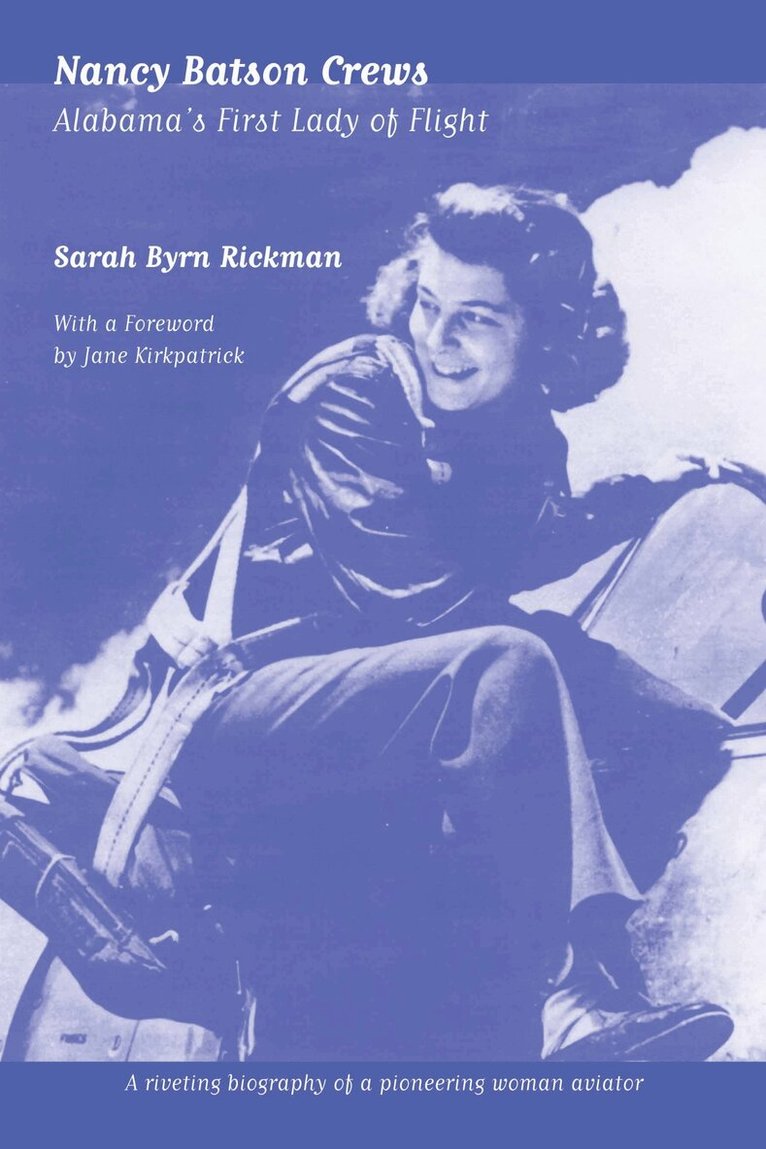
This is the story of an uncommon woman - high school cheerleader, campus queen, airplane pilot, wife, mother, politician, businesswoman - who epitomizes the struggles and freedoms of women in 20th-century America, as they first began to believe they could live full lives and demanded to do so. World War II offered women the opportunity to contribute to the work of the country, and Nancy Batson Crews was one woman who made the most of her privileged beginnings and youthful talents and opportunities. In love with flying from the time she first saw Charles Lindbergh in Birmingham (October 1927), Crews began her aviation career in 1939 as one of only five young women chosen for Civilian Pilot Training at The University of Alabama. Later, Crews became the 20th woman of 28 to qualify as an 'Original' Women's Auxiliary Ferrying Squadron (WAFS) pilot, employed during World War II shuttling P-38, P-47, and P-51 high-performance aircrafts from factory to staging areas and to and from maintenance and training sites. Before the war was over, 1,102 American women would qualify to fly Army airplanes. Many of these female pilots were forced out of aviation after the war as males returning from combat theater assignments took over their roles. But Crews continued to fly, from gliders to turbojets to J-3 Cubs, in a postwar career that began in California and then resumed in Alabama. The author was a freelance journalist looking to write about the WASP (Women Airforce Service Pilots) when she met an elderly, but still vital, Nancy Batson Crews. The former aviatrix held a reunion of the surviving nine WAFS for an interview with them and Rickman, recording hours of her own testimony and remembrance before Crews' death from cancer in 2001. After helping lead the fight in the 70s for WASP to win veteran status, it was fitting that Nancy Batson Crews was buried with full military honors.
241 kr
Skickas inom 5-8 vardagar
217 kr
Skickas inom 7-10 vardagar
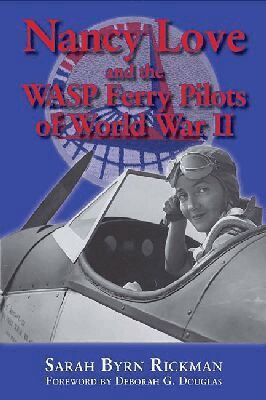
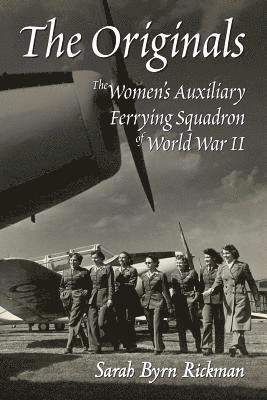
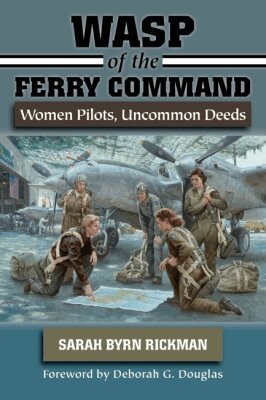
She flew the swift P-51 and the capricious P-38, but the heavy, four-engine B-17 bomber and C-54 transport were her forte. This is the story of Nancy Harkness Love who, early in World War II, recruited and led the first group of twenty-eight women to fly military aircraft for the U.S. Army.Love was hooked on flight at an early age. At sixteen, after just four hours of instruction, she flew solo “a rather broken down Fleet biplane that my barnstorming instructor imported from parts unknown.” The year was 1930: record-setting aviator Jacqueline Cochran (and Love’s future rival) had not yet learned to fly, and the most famous woman pilot of all time, Amelia Earhart, had yet to make her acclaimed solo Atlantic flight.When the United States entered World War II, the Army needed pilots to transport or “ferry” its combat-bound aircraft across the United States for overseas deployment and its trainer airplanes to flight training bases. Most male pilots were assigned to combat preparation, leaving few available for ferrying jobs. Into this vacuum stepped Nancy Love and her civilian Women’s Auxiliary Ferrying Squadron (WAFS).Love had advocated using women as ferry pilots as early as 1940. Jackie Cochran envisioned a more ambitious plan, to train women to perform a variety of the military’s flight-related jobs stateside. The Army implemented both programs in the fall of 1942, but Jackie’s idea piqued General Hap Arnold’s interest and, by summer 1943, her concept had won. The women’s programs became one under the name Women Airforce Service Pilots (WASP), with Cochran as the Director of Women Pilots and Love as the Executive for WASP.Nancy Love advised the Ferrying Division, which was part of the Air Transport Command, as to the best use of their WASP ferry pilots. She supervised their allocation and air-training program. She proved adept at organizing and inspiring those under her command, earning the love and admiration of her pilots. Her military superiors trusted and respected her, to the point that she became Ferrying Division commander Gen. William H. Tunner’s troubleshooter.By example, Love won the right for women ferry pilots to transition into increasingly more complex airplanes. She checked out on twenty-three different military aircraft and became the first woman to fly several of them, including the B-17 Flying Fortress. Her World War II career ended on a high note: following a general’s orders, she piloted a giant C-54 Army transport over the fabled China-Burma-India “Hump,” the crucial airlift route over the Himalayas.Nancy Love believed that the women attached to the military needed to be on equal footing with the men and given the same opportunities to prove their abilities and mettle. Young women serving today as combat pilots owe much to Love for creating the opportunity for women to serve. Her foresight and tenacity nearly seventy years ago helped ensure their future. Now author Sarah Byrn Rickman, aviation historian, presents the first full-length biography of Nancy Love and her role in the WAFS and WASP programs. Her book will appeal to all with a love of flight.
248 kr
Skickas inom 3-6 vardagar
318 kr
Skickas inom 5-8 vardagar