Sarah Cole - Böcker
Visar alla böcker från författaren Sarah Cole. Handla med fri frakt och snabb leverans.
9 produkter
9 produkter
1 179 kr
Skickas inom 5-8 vardagar
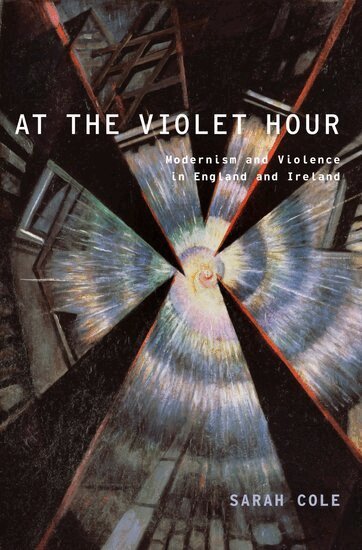
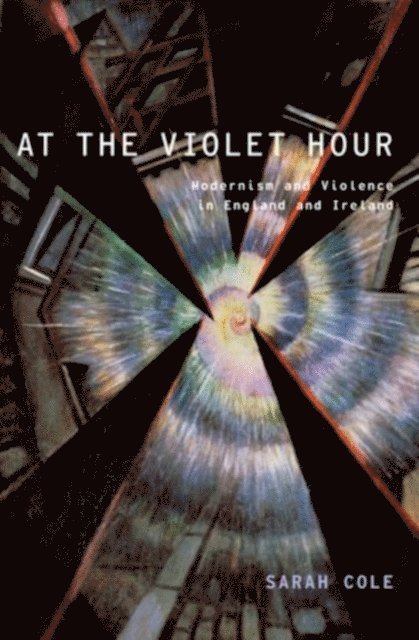
At the Violet Hour argues that the literature of the early twentieth-century in England and Ireland was deeply organized around a reckoning with grievous violence, imagined as intimate, direct, and often transformative. The book aims to excavate and amplify a consistent feature of this literature, which is that its central operations (formal as well as thematic) emerge specifically in reference to violence. At the Violet Hour offers a variety of new terms and paradigms for reading violence in literary works, most centrally the concepts it names "enchanted and disenchanted violence." In addition to defining key aspects of literary violence in the period, including the notion of "violet hour," the book explores three major historical episodes: dynamite violence and anarchism in the nineteenth century, which provided a vibrant, new consciousness about explosion, sensationalism, and the limits of political meaning in the act of violence; the turbulent events consuming Ireland in the first thirty years of the century, including the Rising, the War of Independence, and the Civil War, all of which play a vital role in defining the literary corpus; and the 1930s build-up to WWII, including the event that most enthralled Europe in these years, the Spanish Civil War. These historical upheavals provide the imaginative and physical material for a re-reading of four canonical writers (Eliot, Conrad, Yeats, and Woolf), understood not only as including violence in their works, but as generating their primary styles and plots out of its deformations. Included also in this panorama are a host of other works, literary and non-literary, including visual culture, journalism, popular novels, and other modernist texts.
1 994 kr
Kommande
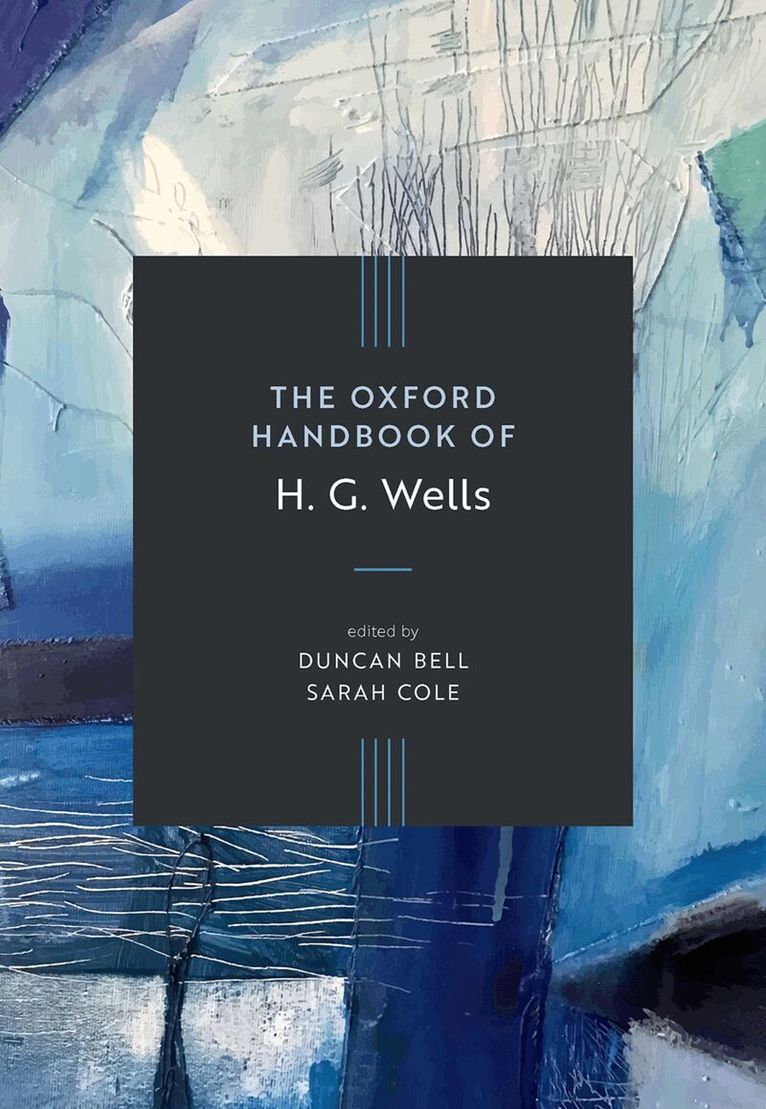
H.G. Wells was one of the leading literary figures and public intellectuals of the twentieth century. Famous today as a pioneering science fiction writer, Wells was also a prominent social and political thinker, journalist, historian, and political activist. His writings helped shape the intellectual life of the age. Yet up to now, there has not been a volume that addresses the full range of his work, influence, and accomplishments. The Oxford Handbook of H. G. Wells aims to fill this gap. Bringing together a diverse group of scholars from literary studies, history, politics and sociology, this Handbook is the most wide-ranging scholarly account of Wells, placing his work in a fully global context and engaging with many issues of interest to scholars and readers across humanities and social sciences. This Handbook explores the development and influence of Wells's ideas from the late nineteenth century until his death in 1946, as well as their circulation around the world. With chapters on gender, science, race, empire, ecology, and more, this volume is sure to appeal to a wide range of H.G. Wells scholars and fans.
548 kr
Skickas inom 5-8 vardagar
Literature has long sought to make sense of the destruction and aggression wrought by human civilization. Yet no single literary movement was more powerfully shaped by violence than modernism. As Sarah Cole shows, modernism emerged as an imaginative response to the devastating events that defined the period, including the chaos of anarchist bombings, World War I, the Irish uprising, and the Spanish Civil War. Combining historical detail with resourceful readings of fiction, poetry, journalism, photographs, and other cultural materials, At the Violet Hour explores the strange intimacy between modernist aesthetics and violence in the late nineteenth and early twentieth centuries.The First World War and T. S. Eliot's The Waste Land demonstrate the new theoretical paradigm that Cole deploys throughout her study, what she calls "enchanted" and "disenchanted" violence-the polarizing perceptions of violent death as either the fuel for regeneration or the emblem of grotesque loss. These concepts thread through the literary-historical moments that form the core of her study, beginning with anarchism and the advent of dynamite violence in late Victorian England. As evinced in novels by Joseph Conrad, Henry James, and others, anarchism fostered a vibrant, modern consciousness of violence entrenched in sensationalism and melodrama. A subsequent chapter offers four interpretive categories-keening, generative violence, reprisal, and allegory-for reading violence in works by W. B. Yeats, J. M. Synge, Sean O'Casey, and others around the time of Ireland's Easter Rising. The book concludes with a discussion of Virginia Woolf's oeuvre, placing the author in two primary relations to the encroaching culture of violence: deeply exploring and formalizing its registers; and veering away from her peers to construct an original set of patterns to accommodate its visceral ubiquity in the years leading up to the Second World War.A rich interdisciplinary study that incorporates perspectives from history, anthropology, the visual arts, and literature, At the Violet Hour provides a resonant framework for refiguring the relationship between aesthetics and violence that will extend far beyond the period traditionally associated with literary modernism.
1 454 kr
Skickas inom 7-10 vardagar
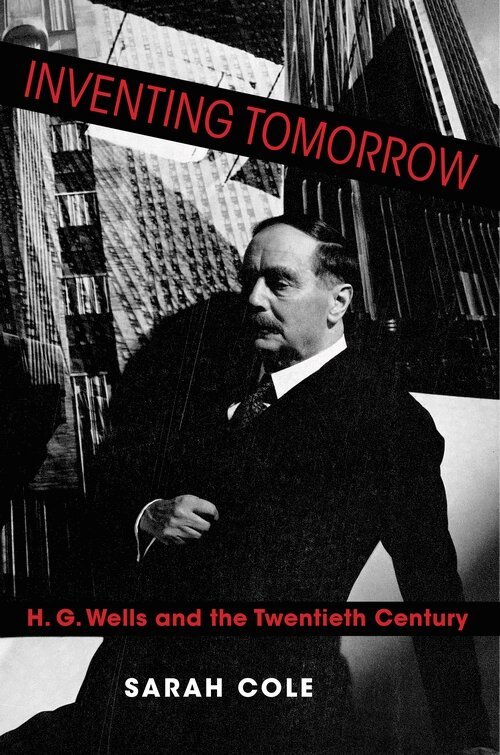
H. G. Wells played a central role in defining the intellectual, political, and literary character of the twentieth century. A prolific literary innovator, he coined such concepts as “time machine,” “war of the worlds,” and “atomic bomb,” exerting vast influence on popular ideas of time and futurity, progress and decline, and humanity’s place in the universe. Wells was a public intellectual with a worldwide readership. He met with world leaders, including Roosevelt, Lenin, Stalin, and Churchill, and his books were international best-sellers. Yet critics and scholars have largely forgotten his accomplishments or relegated them to genre fiction, overlooking their breadth and diversity.In Inventing Tomorrow, Sarah Cole provides a definitive account of Wells’s work and ideas. She contends that Wells casts new light on modernism and its values: on topics from warfare to science to time, his work resonates both thematically and aesthetically with some of the most ambitious modernists. At the same time, unlike many modernists, Wells believed that literature had a pressing place in public life, and his works reached a wide range of readers. While recognizing Wells’s limitations, Cole offers a new account of his distinctive style as well as his interventions into social and political thought. She illuminates how Wells embodies twentieth-century literature at its most expansive and engaged. An ambitious rethinking of Wells as both writer and thinker, Inventing Tomorrow suggests that he offers a timely model for literature’s moral responsibility to imagine a better global future.
369 kr
Skickas inom 7-10 vardagar
H. G. Wells played a central role in defining the intellectual, political, and literary character of the twentieth century. A prolific literary innovator, he coined such concepts as “time machine,” “war of the worlds,” and “atomic bomb,” exerting vast influence on popular ideas of time and futurity, progress and decline, and humanity’s place in the universe. Wells was a public intellectual with a worldwide readership. He met with world leaders, including Roosevelt, Lenin, Stalin, and Churchill, and his books were international best-sellers. Yet critics and scholars have largely forgotten his accomplishments or relegated them to genre fiction, overlooking their breadth and diversity.In Inventing Tomorrow, Sarah Cole provides a definitive account of Wells’s work and ideas. She contends that Wells casts new light on modernism and its values: on topics from warfare to science to time, his work resonates both thematically and aesthetically with some of the most ambitious modernists. At the same time, unlike many modernists, Wells believed that literature had a pressing place in public life, and his works reached a wide range of readers. While recognizing Wells’s limitations, Cole offers a new account of his distinctive style as well as his interventions into social and political thought. She illuminates how Wells embodies twentieth-century literature at its most expansive and engaged. An ambitious rethinking of Wells as both writer and thinker, Inventing Tomorrow suggests that he offers a timely model for literature’s moral responsibility to imagine a better global future.
152 kr
Skickas inom 3-6 vardagar
629 kr
Skickas inom 7-10 vardagar
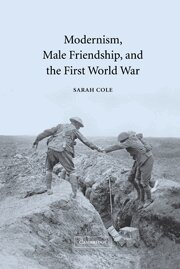
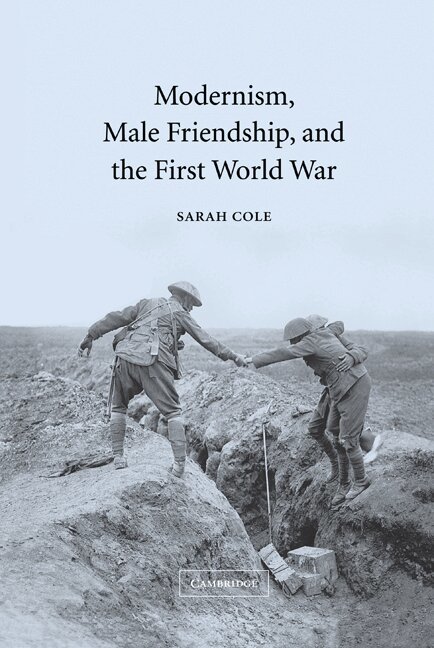
Sarah Cole examines the rich literary and cultural history of masculine intimacy in the twentieth century. Cole approaches this complex and neglected topic from many perspectives - as a reflection of the exceptional social power wielded by the institutions that housed and structured male bonds; as a matter of closeted and thwarted homoerotics; as part of the story of the First World War. Cole shows that the terrain of masculine fellowship provides an important context for understanding key literary features of the modernist period. She foregrounds such crucial themes as the over-determined relations between imperial wanderers in Conrad's tales, the broken friendships that permeate Forster's fictions, Lawrence's desperate urge to make culture out of blood brotherhood and the intense bereavement of the war poet. Cole argues that these dramas of compelling and often tortured male friendship have helped to define a particular spirit and voice within the literary canon.
1 371 kr
Skickas inom 7-10 vardagar
Sarah Cole examines the rich literary and cultural history of masculine intimacy in the twentieth century. Cole approaches this complex and neglected topic from many perspectives - as a reflection of the exceptional social power wielded by the institutions that housed and structured male bonds; as a matter of closeted and thwarted homoerotics; as part of the story of the First World War. Cole shows that the terrain of masculine fellowship provides an important context for understanding key literary features of the modernist period. She foregrounds such crucial themes as the over-determined relations between imperial wanderers in Conrad's tales, the broken friendships that permeate Forster's fictions, Lawrence's desperate urge to make culture out of blood brotherhood and the intense bereavement of the war poet. Cole argues that these dramas of compelling and often tortured male friendship have helped to define a particular spirit and voice within the literary canon.
135 kr
Skickas inom 5-8 vardagar