Sarah Deutsch - Böcker
Visar alla böcker från författaren Sarah Deutsch. Handla med fri frakt och snabb leverans.
4 produkter
4 produkter
482 kr
Skickas inom 5-8 vardagar
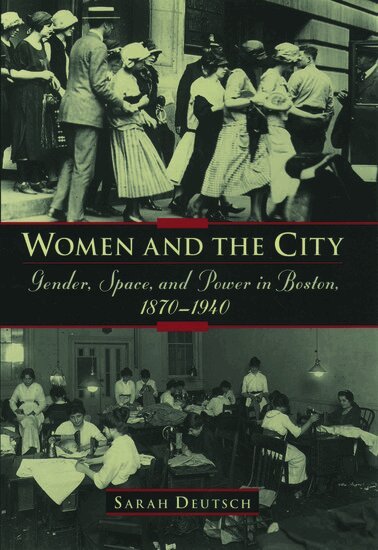
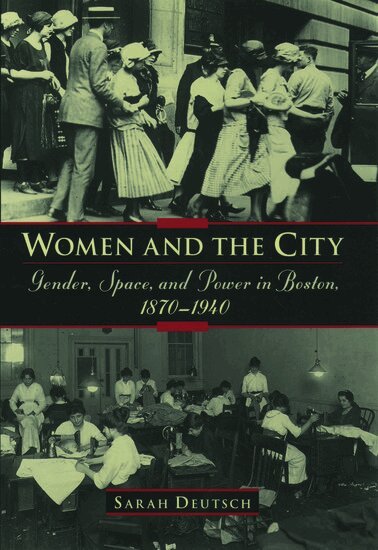
In the 70 years between the Civil War and World War II, the women of Boston changed the city dramatically. From anti-spitting campaigns and demands for police mothers to patrol local parks, to calls for a decent wage and living quarters, women rich and poor, white and black, immigrant and native-born struggled to make a place for themselves in the city. Now, in Women of Boston, historian Sarah Deutsch tells this story for the first time, revealing how they changed not only the manners but also the physical layout of the modern city.Deutsch shows how the women of Boston turned the city from a place with no respectable public space for women, to a city where women sat on the City Council and met their beaux on the street corners. The book follows the efforts of working-class, middle-class, and elite matrons, working girls and "new women" as they struggled to shape the city in their own interests. And in fact they succeeded in breathtaking fashion, rearranging and redefining the moral geography of the city, and in so doing broadening the scope of their own opportunities. But Deutsch reveals that not all women shared equally in this new access to public space, and even those who did walk the streets with relative impunity and protested their wrongs in public, did so only through strategic and limited alliances with other women and with men.A penetrating new work by a brilliant young historian, Women and the City is the first book to analyse women's role in shaping the modern city. It casts new light not only on urban history, but also on women's domestic lives, women's organizations, labor organizing, and city politics, and on the crucial connections between gender, space, and power.
478 kr
Skickas inom 5-8 vardagar
In the 70 years between the Civil War and World War II, the women of Boston changed the city dramatically. From anti-spitting campaigns and demands for police mothers to patrol local parks, to calls for a decent wage and living quarters, women rich and poor, white and black, immigrant and native-born struggled to make a place for themselves in the city. Now, in this text, historian Sarah Deutsch tells this story, revealing how they changed not only the manners but also the physical layout of the modern city. Deutsch shows how the women of Boston turned the city from a place with no respectable public space for women, to a city where women sat on the City Council and met their beaux on the street corners. The book follows the efforts of working-class, middle-class, and elite matrons, working girls and "new women" as they struggled to shape the city in their own interests. And in fact they succeeded in breathtaking fashion, rearranging and redefining the moral geography of the city, and in so doing broadening the scope of their own opportunities.But Deutsch reveals that not all women shared equally in this new access to public space, and even those who did walk the streets with relative impunity and protested their wrongs in public, did so only through strategic and limited alliances with other women and with men. The book analyzes women's role in shaping the modern city. It sheds light not only on urban history, but also on women's domestic lives, women's organizations, labour organizing, and city politics, and on the crucial connections between gender, space, and power.
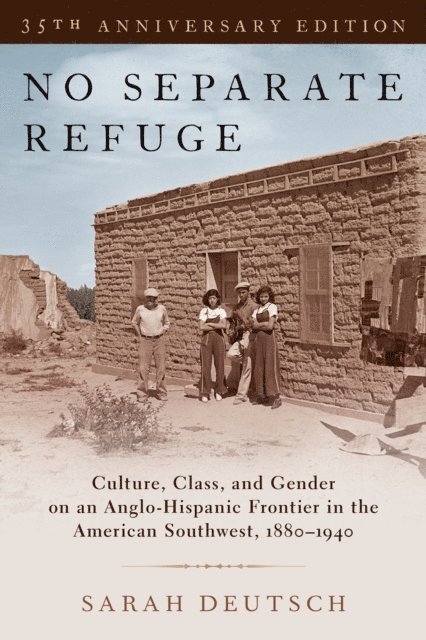
No Separate Refuge
Culture, Class, and Gender on an Anglo-Hispanic Frontier in the American Southwest, 1880-1940- 35th Anniversary Edition
Häftad, Engelska, 2023
349 kr
Skickas inom 5-8 vardagar
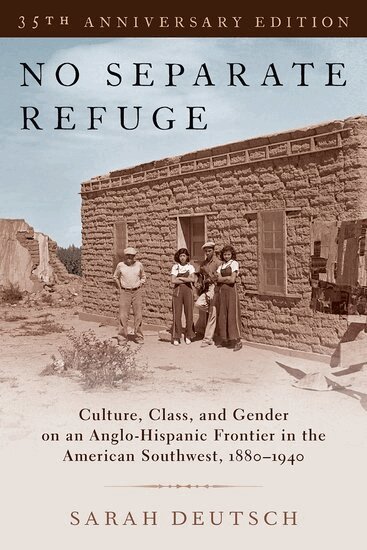
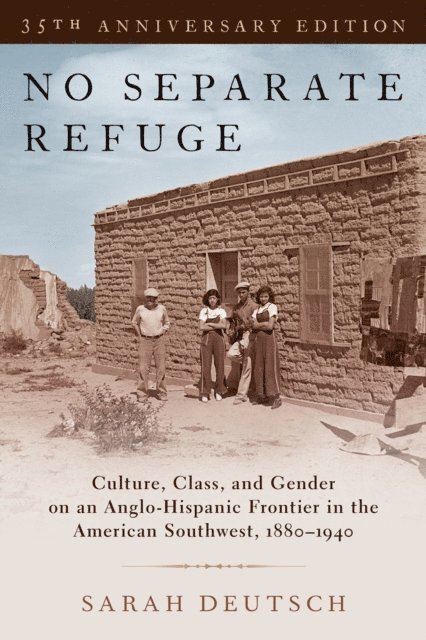
Long after the Mexican-American War brought the Southwest under the United States flag, Anglos and Hispanics within the region continued to struggle for dominion. From the arrival of railroads through the height of the New Deal, Sarah Deutsch explores the cultural and economic strategies of Anglos and Hispanics as they competed for territory, resources, and power, and examines the impact this struggle had on Hispanic work, community, and gender patterns. This book analyzes the intersection of culture, class, and gender at disparate sites on the Anglo-Hispanic frontier--Hispanic villages, coal mining towns, and sugar beet districts in Colorado and New Mexico--showing that throughout the region there existed a vast network of migrants, linked by common experience and by kinship. Devoting particular attention to the role of women in cross-cultural interaction, No Separate Refuge brings to light sixty years of Southwestern history that saw Hispanic work transformed, community patterns shifted, and gender roles critically altered. Drawing on personal interviews, school census and missionary records, private letters, and a wealth of other records, Deutsch traces developments from one state to the next, and from one decade to the next, providing an important contribution to the history of the Southwest, race relations, labor, agriculture, women, and Chicanos. This thirty-fifth anniversary edition reflects on its place in the history of the Anglo-Hispanic borderland, class, and gender.
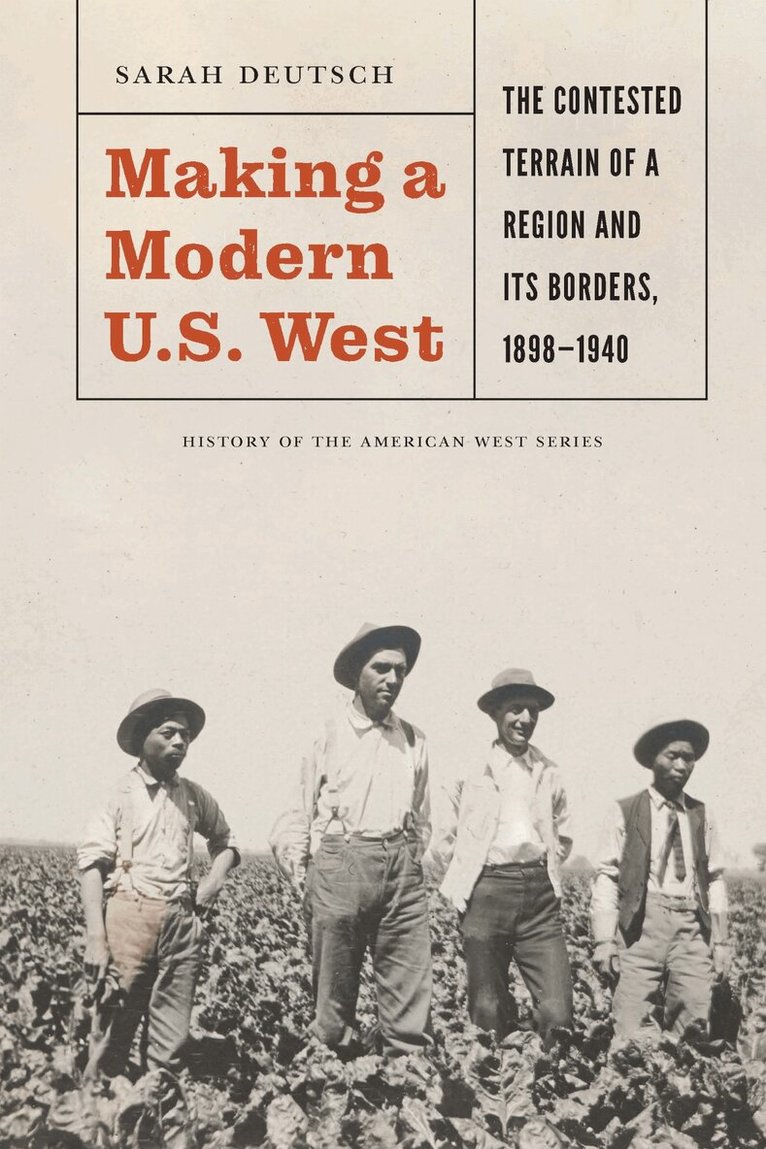
Making a Modern U.S. West
The Contested Terrain of a Region and Its Borders, 1898-1940
Inbunden, Engelska, 2022
548 kr
Skickas inom 7-10 vardagar
To many Americans in the nineteenth and twentieth centuries, the West was simultaneously the greatest symbol of American opportunity, the greatest story of its history, and the imagined blank slate on which the country’s future would be written. From the Spanish-American War in 1898 to the Great Depression’s end, from the Mississippi to the Pacific, policymakers at various levels and large-scale corporate investors, along with those living in the West and its borderlands, struggled over who would define modernity, who would participate in the modern American West, and who would be excluded.In Making a Modern U.S. West Sarah Deutsch surveys the history of the U.S. West from 1898 to 1940. Centering what is often relegated to the margins in histories of the region-the flows of people, capital, and ideas across borders-Deutsch attends to the region’s role in constructing U.S. racial formations and argues that the West as a region was as important as the South in constructing the United States as a “white man’s country.” While this racial formation was linked to claims of modernity and progress by powerful players, Deutsch shows that visions of what constituted modernity were deeply contested by others. This expansive volume presents the most thorough examination to date of the American West from the late 1890s to the eve of World War II.