Sarah Hitchner – författare
Visar alla böcker från författaren Sarah Hitchner. Handla med fri frakt och snabb leverans.
5 produkter
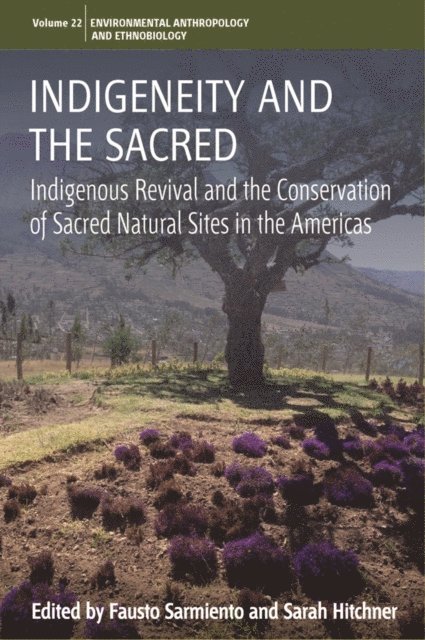
Indigeneity and the Sacred
Indigenous Revival and the Conservation of Sacred Natural Sites in the Americas
Av Fausto Sarmiento, Sarah Hitchner
Inbunden, 2017
1921 kr
Lägg i varukorg
This book presents current research in the political ecology of indigenous revival and its role in nature conservation in critical areas in the Americas. An important contribution to evolving studies on conservation of sacred natural sites (SNS), the book elucidates the complexity of development …
Indigeneity and the Sacred
Indigenous Revival and the Conservation of Sacred Natural Sites in the Americas
Av Sarah Hitchner, Fausto Sarmiento
E-bok, 2017
315 kr
Lägg i varukorg
This book presents current research in the political ecology of indigenous revival and its role in nature conservation in critical areas in the Americas. An important contribution to evolving studies on conservation of sacred natural sites (SNS), the book elucidates the complexity of development …
Indigeneity and the Sacred
Indigenous Revival and the Conservation of Sacred Natural Sites in the Americas
Av Fausto Sarmiento, Sarah Hitchner
Häftad, 2019
527 kr
Lägg i varukorg
This book presents current research in the political ecology of indigenous revival and its role in nature conservation in critical areas in the Americas. An important contribution to evolving studies on conservation of sacred natural sites (SNS), the book elucidates the complexity of development …
Forests as Fuel
Energy, Landscape, Climate, and Race in the U.S. South
Av Sarah Hitchner, John Schelhas m. fl.
Inbunden, 2022
1204 kr
Lägg i varukorg
In the US South, wood-based bioenergy schemes are being promoted and implemented through a powerful vision merging social, environmental, and economic benefits for rural, forest-dependent communities. While this dominant narrative has led to heavy investment in experimental technologies and rural …
Forests as Fuel
Energy, Landscape, Climate, and Race in the U.S. South
Av Sarah Hitchner, John Schelhas m. fl.
Häftad, 2023
458 kr
Lägg i varukorg
In the US South, wood-based bioenergy schemes are being promoted and implemented through a powerful vision merging social, environmental, and economic benefits for rural, forest-dependent communities. While this dominant narrative has led to heavy investment in experimental technologies and rural …