
Sarah Louise Macmillen – författare
Visar alla böcker från författaren Sarah Louise Macmillen. Handla med fri frakt och snabb leverans.
4 produkter
4 produkter
1 166 kr
Skickas inom 10-15 vardagar
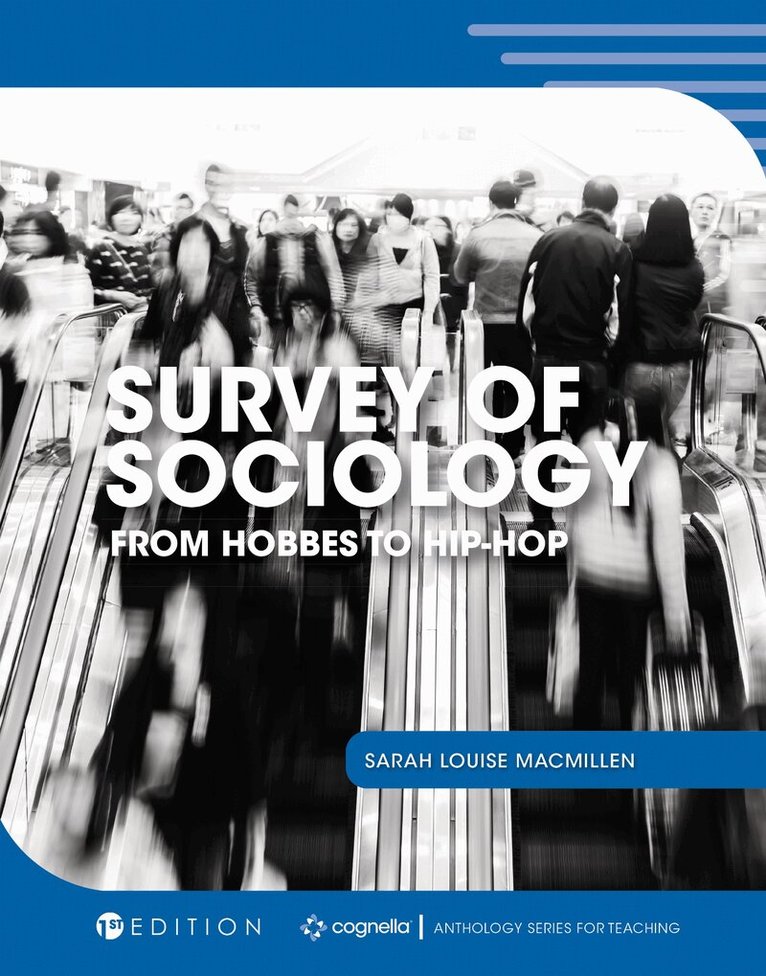
Survey of Sociology: From Hobbes to Hip-Hop provides students with articles that introduce them to key concepts in sociology. Students learn how and why scholars study society, as well as how cultural systems, economics, systems of power, and art influence society and our everyday world.The anthology is divided into four parts. Part I includes readings that invite students to begin thinking like a social scientist and introduce various data collection methods. In Part II, students learn about the effects of cultural systems, including religion and perspectives on gender and sexuality, on society. The readings in Part III address big-picture issues, including economics, power, capitalism, and ecology. In the final part, students examine perspectives that relate to the individual and everyday life, including the "inner dialogue" between our sense of self and our projection of society's expectations, exchange-behavior in business culture, and how art, literature, and music can transcend the material experiences of inequality and injustice and transform society.Insightful and timely, Survey of Sociology is an ideal supplementary textbook for introductory courses within the discipline.
3 104 kr
Skickas inom 3-6 vardagar
1 325 kr
Skickas inom 10-15 vardagar
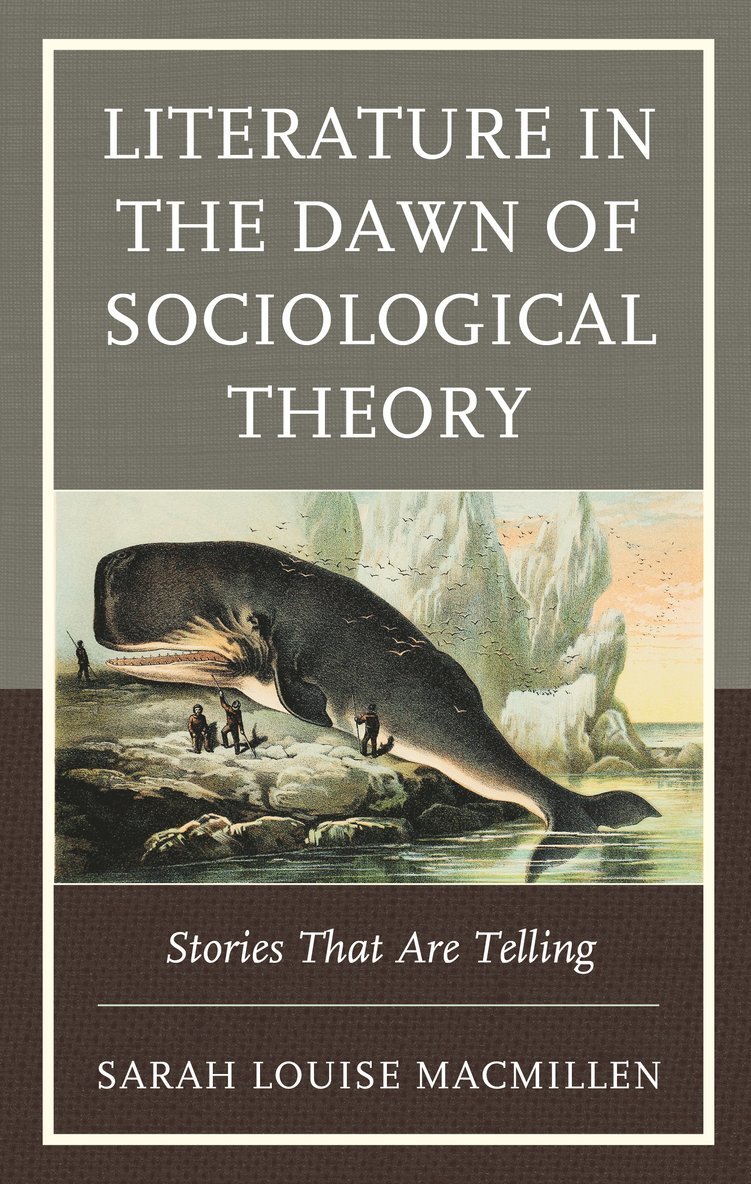
Literature in the Dawn of Sociological Theory: Stories That Are Telling focuses on a selection of novelists from the early 1800s to the early 1900s and their connections to the insights of Classical Sociological Theory and the sociological imagination. This monograph also considers the aesthetic, sociological, and literary insights of Theodor Adorno, György Lukács, Fredric Jameson, Raymond Williams, Wolf Lepenies, Franco Moretti, Lucien Goldmann, and John Orr. The main chapters discuss the fiction of Nathaniel Hawthorne, Herman Melville, Joseph Conrad, Charlotte Perkins Gilman, Virginia Woolf, and Fyodor Dostoevsky. The concluding chapter reflects on the dawn of modernity, especially the birth of capitalism and the plague crisis via Boccaccio’s Florence, significant to The Decameron. Throughout the text, Sarah Louise MacMillen considers these “stories that are telling” in light of social issues today. She presents a case for highlighting the authors of the past, wherein these fictional accounts anticipate some of our contemporary social problems and social movements. These dynamics include the environmental crisis, the effects of globalization, Black Lives Matter, #MeToo, “cancel culture,” debates about gender nonconformity, and secularization. Finally, MacMillen reflects on the need for solidarity in shifting patterns of social existence and rebuilding post-COVID.
504 kr
Skickas inom 10-15 vardagar
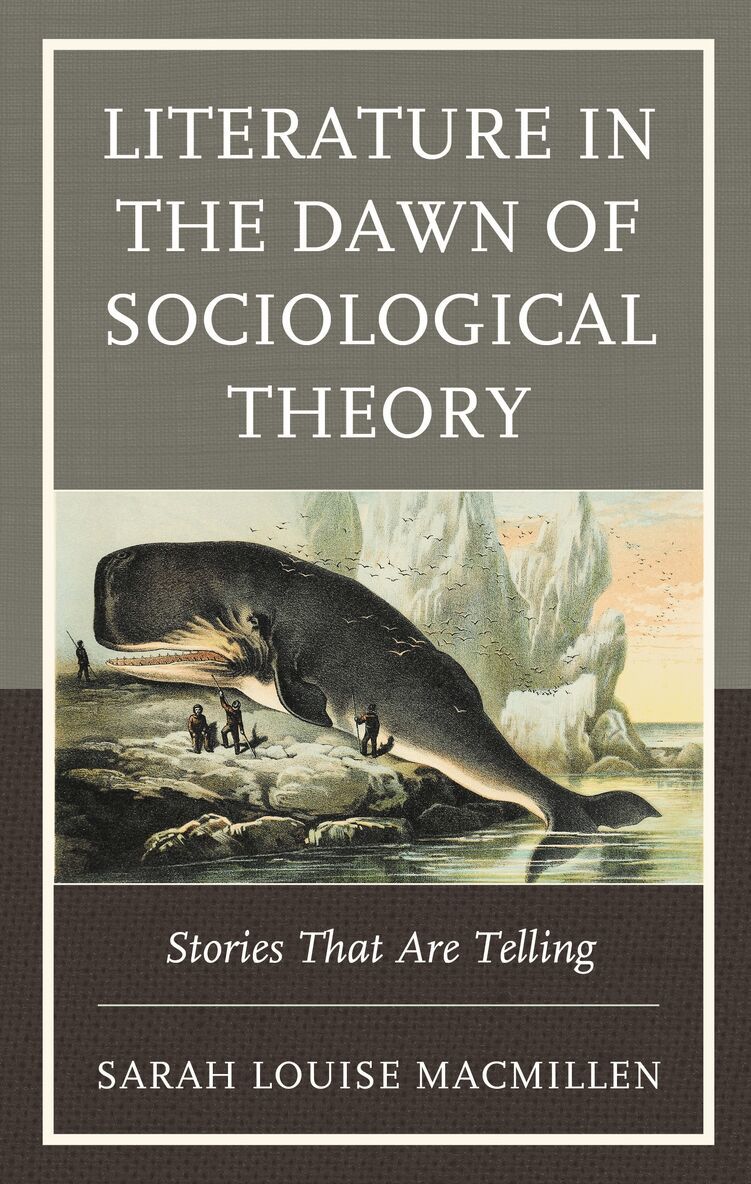
Literature in the Dawn of Sociological Theory: Stories That Are Telling focuses on a selection of novelists from the early 1800s to the early 1900s and their connections to the insights of Classical Sociological Theory and the sociological imagination. This monograph also considers the aesthetic, sociological, and literary insights of Theodor Adorno, György Lukács, Fredric Jameson, Raymond Williams, Wolf Lepenies, Franco Moretti, Lucien Goldmann, and John Orr. The main chapters discuss the fiction of Nathaniel Hawthorne, Herman Melville, Joseph Conrad, Charlotte Perkins Gilman, Virginia Woolf, and Fyodor Dostoevsky. The concluding chapter reflects on the dawn of modernity, especially the birth of capitalism and the plague crisis via Boccaccio’s Florence, significant to The Decameron. Throughout the text, Sarah Louise MacMillen considers these “stories that are telling” in light of social issues today. She presents a case for highlighting the authors of the past, wherein these fictional accounts anticipate some of our contemporary social problems and social movements. These dynamics include the environmental crisis, the effects of globalization, Black Lives Matter, #MeToo, “cancel culture,” debates about gender nonconformity, and secularization. Finally, MacMillen reflects on the need for solidarity in shifting patterns of social existence and rebuilding post-COVID.