Sarah Salih - Böcker
Visar alla böcker från författaren Sarah Salih. Handla med fri frakt och snabb leverans.
15 produkter
15 produkter
2 091 kr
Skickas inom 10-15 vardagar
This collection brings together two flourishing areas of medieval scholarship: gender and religion. It examines gender-specific religious practices and contends that the pursuit of holiness can destabilise binary gender itself. Though saints may be classified as masculine or feminine, holiness may also cut across gender divisions and demand a break from normally gendered behaviour. This work of interdisciplinary cultural history includes contributions from historians, art historians and literary critics and will be of interest not only to medievalists, but also to students of religion and gender in any period.
773 kr
Skickas inom 10-15 vardagar
This collection brings together two flourishing areas of medieval scholarship: gender and religion. It examines gender-specific religious practices and contends that the pursuit of holiness can destabilise binary gender itself. Though saints may be classified as masculine or feminine, holiness may also cut across gender divisions and demand a break from normally gendered behaviour. This work of interdisciplinary cultural history includes contributions from historians, art historians and literary critics and will be of interest not only to medievalists, but also to students of religion and gender in any period.
227 kr
Skickas inom 7-10 vardagar
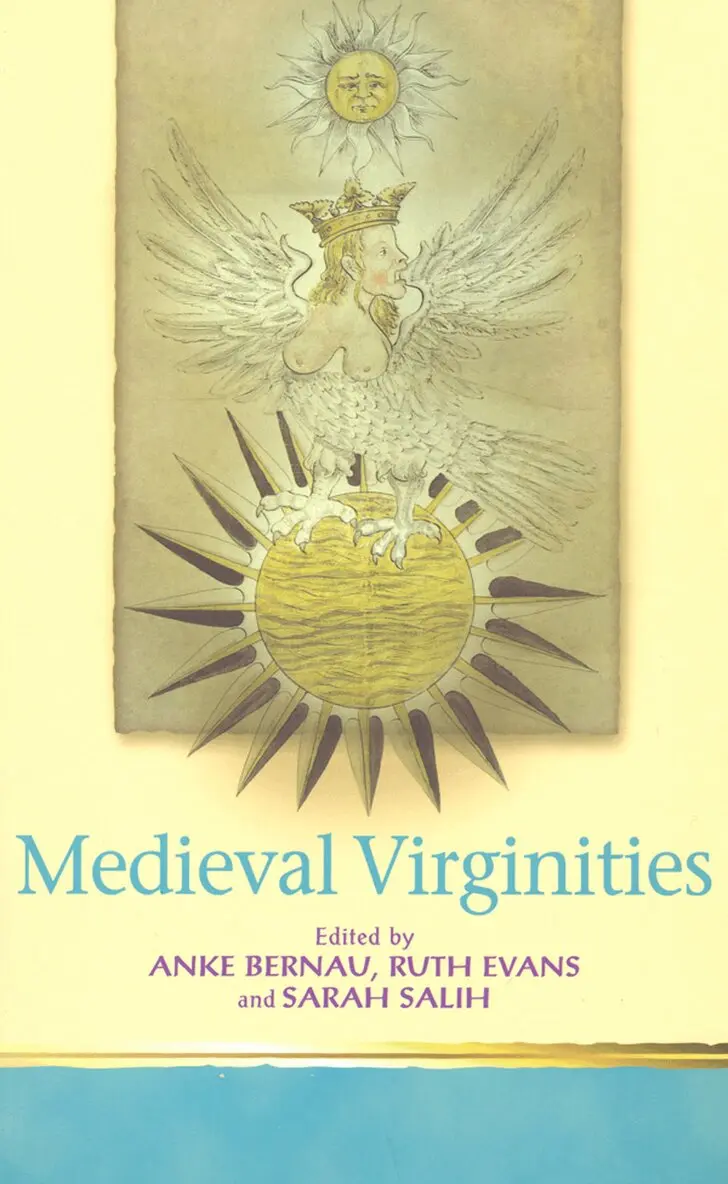
From Joan of Arc to Britney Spears, the figure of the virgin has been the subject of considerable scholarly and popular interest. Yet virginity itself is a paradoxical condition, both perfect and monstrous, present and absent, often visible only insofar as it is under threat. Medieval Virginities traces some of the specific manifestations of virginity in late medieval culture. It shows how virginity is represented in medical, legal, hagiographical and historical texts, as well as how the seductive but dangerous figure of the virgin affects the aims and objectives of these texts. Because virginity is so often thought of as self-identical and ahistorical, Medieval Virginities aims to theorize and historicize its various manifestations and to demonstrate how representations and discussions of virginity continuously shift and change. The variety of subjects and disciplines represented here testify both to the elusiveness of virginity and to its lasting appeal and importance. Medieval Virginities shows how virginity's inherent ambiguity highlights the problems, contradictions and discontinuities lurking within medieval ideologies. It will be essential reading for anyone interested in questions of gender identity, conceptions of the body, subjectivity, truth and representation in medieval culture.
453 kr
Skickas inom 10-15 vardagar
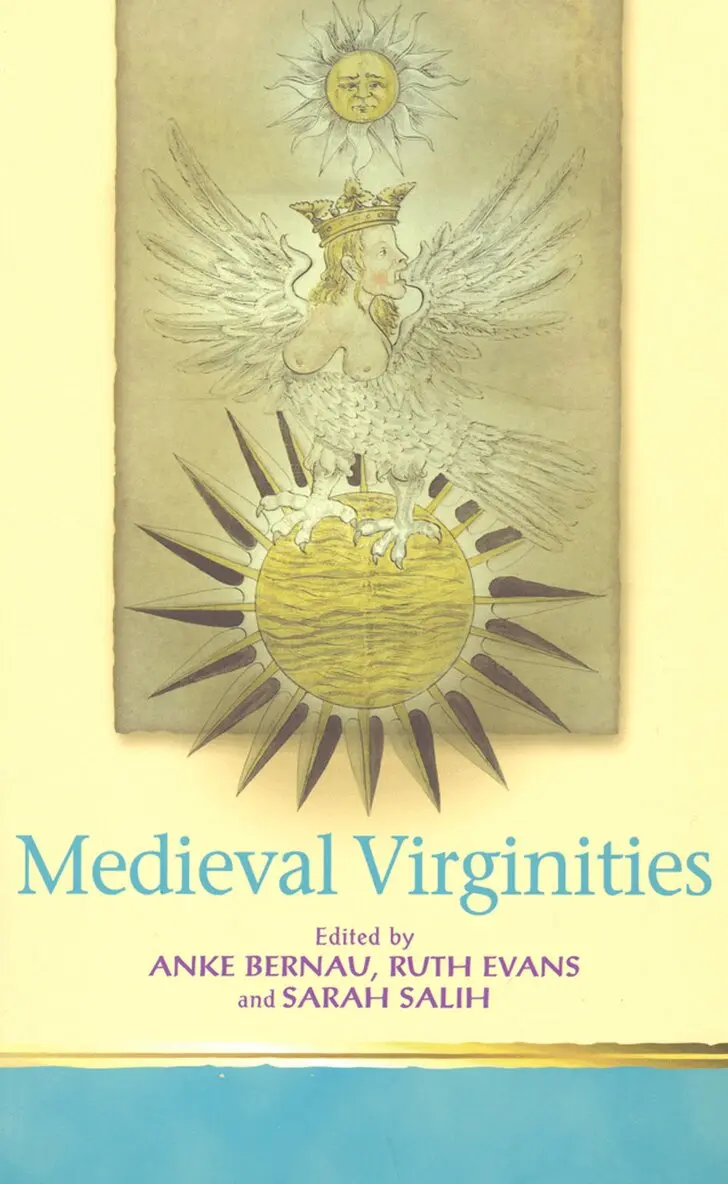
From Joan of Arc to Britney Spears, the figure of the virgin has been the subject of considerable scholarly and popular interest. Yet virginity itself is a paradoxical condition, both perfect and monstrous, present and absent, often visible only insofar as it is under threat.Medieval Virginities traces some of the specific manifestations of virginity in late medieval culture. It shows how virginity is represented in medical, legal, hagiographical and historical texts, as well as how the seductive but dangerous figure of the virgin affects the aims and objectives of these texts. Because virginity is so often thought of as self-identical and ahistorical, Medieval Virginities aims to theorize and historicize its various manifestations and to demonstrate how representations and discussions of virginity continuously shift and change.The variety of subjects and disciplines represented here testify both to the elusiveness of virginity and to its lasting appeal and importance. Medieval Virginities shows how virginity's inherent ambiguity highlights the problems, contradictions and discontinuities lurking within medieval ideologies. It will be essential reading for anyone interested in questions of gender identity, conceptions of the body, subjectivity, truth and representation in medieval culture.
1 336 kr
Skickas inom 7-10 vardagar
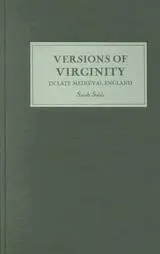
Medieval virginity theory explored through study of martyrs, nuns and Margery Kempe.This study looks at the question of what it meant to be a virgin in the Middle Ages, and the forms which female virginity took. It begins with the assumptions that there is more to virginity than sexual inexperience, and that virginity may be considered as a gendered identity, a role which is performed rather than biologically determined. The author explores versions of virginity as they appear in medieval saints' lives, in the institutional chastity of nuns, and as shown in the book of Margery Kempe, showing how it can be active, contested, vulnerable but also recoverable.SARAH SALIH teaches in the Department of English at King's College London.
735 kr
Skickas inom 7-10 vardagar
Studies in the Age of Chaucer is the annual yearbook of the New Chaucer Society, publishing articles on the writing of Chaucer and his contemporaries, their antecedents and successors, and their intellectual and social contexts. More generally, articles explore the culture and writing of later medieval Britain (1200-1500). SAC also includes an annotated bibliography and reviews of Chaucer-related publications.
735 kr
Skickas inom 7-10 vardagar
Studies in the Age of Chaucer is the annual yearbook of the New Chaucer Society, publishing articles on the writing of Chaucer and his contemporaries, their antecedents and successors, and their intellectual and social contexts. More generally, articles explore the culture and writing of later medieval Britain (1200-1500). SAC also includes an annotated bibliography and reviews of Chaucer-related publications.
735 kr
Skickas inom 7-10 vardagar
Studies in the Age of Chaucer is the annual yearbook of the New Chaucer Society, publishing articles on the writing of Chaucer and his contemporaries, their antecedents and successors, and their intellectual and social contexts. More generally, articles explore the culture and writing of later medieval Britain (1200-1500). Each SAC volume also includes an annotated bibliography and reviews of Chaucer-related publications.
735 kr
Skickas inom 7-10 vardagar
Studies in the Age of Chaucer is the annual yearbook of the New Chaucer Society, publishing articles on the writing of Chaucer and his contemporaries, their antecedents and successors, and their intellectual and social contexts. More generally, articles explore the culture and writing of later medieval Britain (1200-1500). Each SAC volume also includes an annotated bibliography and reviews of Chaucer-related publications.
745 kr
Skickas inom 10-15 vardagar
Studies in the Age of Chaucer is the annual yearbook of the New Chaucer Society, publishing articles on the writing of Chaucer and his contemporaries, their antecedents and successors, and their intellectual and social contexts. More generally, articles explore the culture and writing of later medieval Britain (1200-1500). Each SAC volume also includes an annotated bibliography and reviews of Chaucer-related publications.
Del 23 - Kings College London Medieval Studies (KCLMS)
Locating the Middle Ages
The Spaces and Places of Medieval Culture
Inbunden, Engelska, 2012
633 kr
Skickas inom 7-10 vardagar
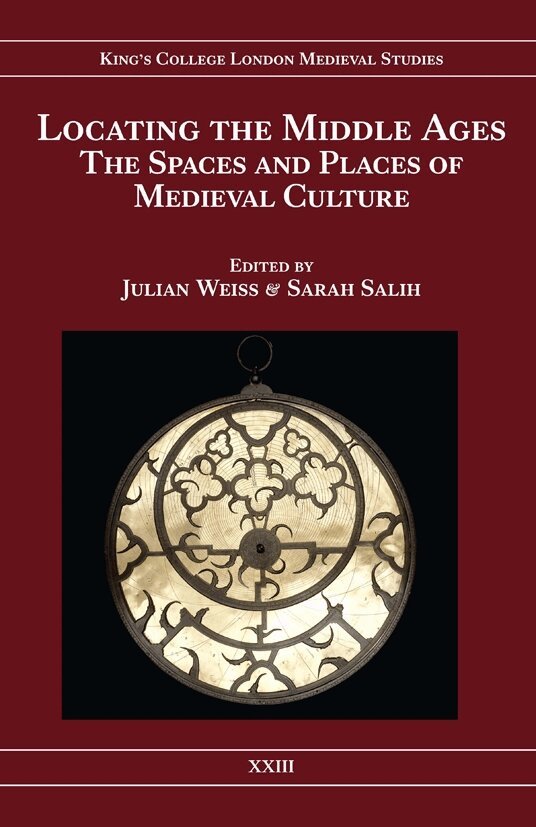
An examination of the ideas of space and place as manifested in medieval texts, art, and architecture.This interdisciplinary collection of sixteen essays explores the significance of space and place in Late Antique and medieval culture, as well as modern reimaginings of medieval topographies. Its case studies draw on a wide variety of critical approaches and cover architecture, the visual arts (painting and manuscript illumination), epic, romance, historiography, hagiography, cartography, travel writing, as well as modern English poetry. Challenging simplistic binaries of East and West, self and other, Muslim and Christian, the volume addresses the often unexpected roles played by space and place in the construction of individual and collective identities in religious and secular domains. The essays move through world spaces (mappaemundi, the exotic and the mundane East, the Mediterranean); empires, nations, and frontier zones; cities (Avignon, Jerusalem, and Reval); and courts, castles and the architectureof subjectivity, closing with modern visions of the medieval world. They explore human movement in space and the construction of time and place in memory. Taking up pressing contemporary issues such as nationalism, multilingualism, multiculturalism and confessional relations, they find that medieval material provides narratives that we can use today in our negotiations with the past.Julian Weiss is Professor of Medieval and Early Modern Hispanic Studies, Sarah Salih Senior Lecturer in English, at King's College London.Contributors: Richard Talbert, Paul Freedman, Sharon Kinoshita, Luke Sunderland, Julian Weiss, Sarah Salih, Konstantin Klein, Katie Clark, Elizabeth Monti, Elina Gertsman, Elina Räsänen, Geoff Rector, Nicolay Ostrau, Andrew Cowell, Joshua Davies, Chris Jones, Matthew Francis
362 kr
Skickas inom 10-15 vardagar
The Saints' Life was one of the most popular forms of literature in medieval England. This volume offers crucial information for an understanding of the genre.The saints were the superheroes and the celebrities of medieval England, bridging the gap between heaven and earth, the living and the dead. A vast body of literature evolved during the middle ages to ensure that everyone, from kings to peasants, knew the stories of the lives, deaths and afterlives of the saints. However, despite its popularity and ubiquity, the genre of the Saint's Life has until recently been little studied. This collection introduces the canon of Middle English hagiography; places it in the context of the cults of saints; analyses key themes within hagiographic narrative, including gender, power, violence and history; and, finally, shows how hagiographic themessurvived the Reformation. Overall it offers both information for those coming to the genre for the first time, and points forward to new trends in research.Dr SARAH SALIH is Senior Lecturer in English, King's College London.Contributors: SAMANTHA RICHES, MARY BETH LONG, CLAIRE M. WATERS, ROBERT MILLS, ANKE BERNAU, KATHERINE J. LEWIS, MATTHEW WOODCOCK
Del 25 - Studies in Medievalism
Studies in Medievalism XXV
Medievalism and Modernity
Inbunden, Engelska, 2016
1 196 kr
Skickas inom 7-10 vardagar
Essays examining the complex intertwining and effect of medievalism on modernity - and vice versa.The question of how modernity has influenced medievalism and how medievalism has influenced modernity is the theme of this volume. The opening essays examine the 2001 film Just Visiting's comments on modern anxieties via medievalism; conflations of modernity with both medievalism and the Middle Ages in rewriting sources; the emergence of modernity amid the post-World War I movement The Most Noble Order of Crusaders; António Sardinha's promotion of medievalism as an antidote to modernity; and Mercedes Rubio's medievalism in her feminist commentary on modernity. The eight subsequent articles build on this foundation while discussing remnants of medieval London amid its moderndescendant; Michel Houellebecq's critique of medievalism through his 2011 novel La Carte et le territoire; historical authenticity in Michael Morrow's approach to performing medieval music; contemporary concerns in Ford Madox Brown and David Gentleman's murals; medieval Chester in Catherine A.M. Clarke and Nayan Kulkarni's Hryre (2012); medieval influences on the formation of and debate about modern moral panics; medievalist considerations inmodern repurposings of medieval anchorholds; and medieval sources for Paddy Molloy's Here Be Dragons (2013). The articles thus test the essays' methods and conclusions, even as the essays offer fresh perspectives on the articles.Karl Fugelso is Professor of Art History at Towson University in Baltimore, Maryland.Contributors: Edward Breen, Katherine A. Brown, Catherine A.M. Clarke, Louise D'Arcens, Joshua Davies, John LanceGriffith, Mike Horswell, Pedro Martins, Paddy Molloy, Lisa Nalbone, Sarah Salih, Michelle M. Sauer, James L. Smith
1 213 kr
Skickas inom 10-15 vardagar
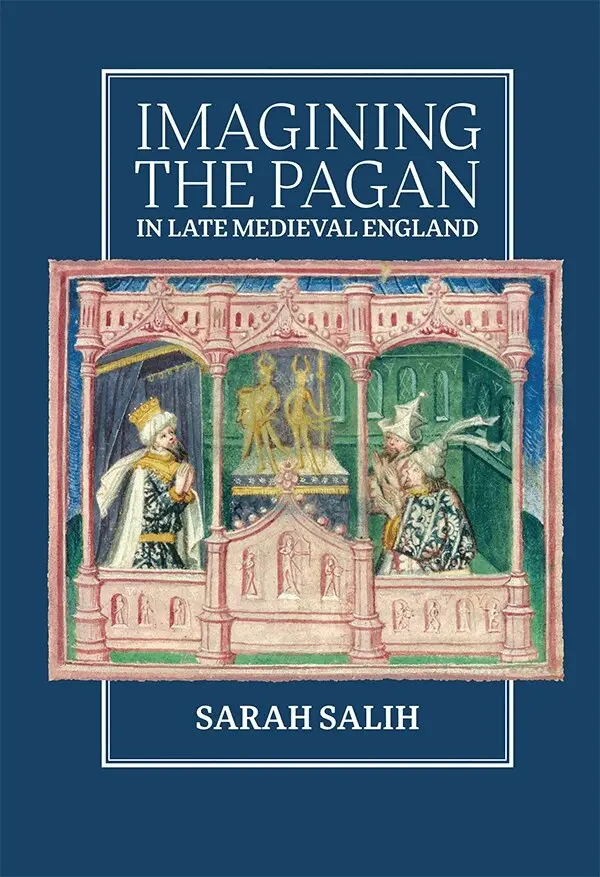
Reads the imagined history of the long term relationship between pagan and Christian through quasi-factual fifteenth-century Middle English writings, from Lydgate's Troy Book to the hagiographies of Bokenham, Barclay and Capgrave and Mandeville's Travels.SHORTLISTED for the 2020 Katharine Briggs Award.Late medieval English culture was fascinated by the figure of the pagan, the ancestor whose religious difference must be negotiated, and by the pagan's idol, an animate artefact. In romances, histories and hagiographies medieval Christians told the story of the pagans, focussing on the absence or presence of pagan material culture in the medieval world to ask whether the pagan era had completely ended or whether it might persist into the Christian present.This book reads the imagined history of the long term relationship between pagan and Christian through quasi-factual fifteenth-century Middle English writings. John Lydgate's Troy Book describes the foundation of a Troy that is at once London's ancestor and a vision for its future; he, John Capgrave and Reginald Pecock consider how pagans were able to build idols that attracted spirits to inhabit them. The hagiographies of Osbern Bokenham, Alexander Barclay, Capgrave and Lydgate describe the confrontation of saint and idol, and the saint's appropriation for Christians of the city the pagans built. Traces of the pagan appeared in the medieval present: Capgrave, Lydgateand John Metham contemplated both extant and lost artefacts; Lollards and orthodox writers disputed whether Christian devotional practice had pagan aspects; and Mandeville's Travels sympathetically imagined how pagans mightexplain themselves.Dr SARAH SALIH is Senior Lecturer in Medieval English, King's College London.
Del 29 - Kings College London Medieval Studies (KCLMS)
Mandeville’s Travels
Race, Religion, Reception
Inbunden, Engelska, 2026
2 009 kr
Kommande
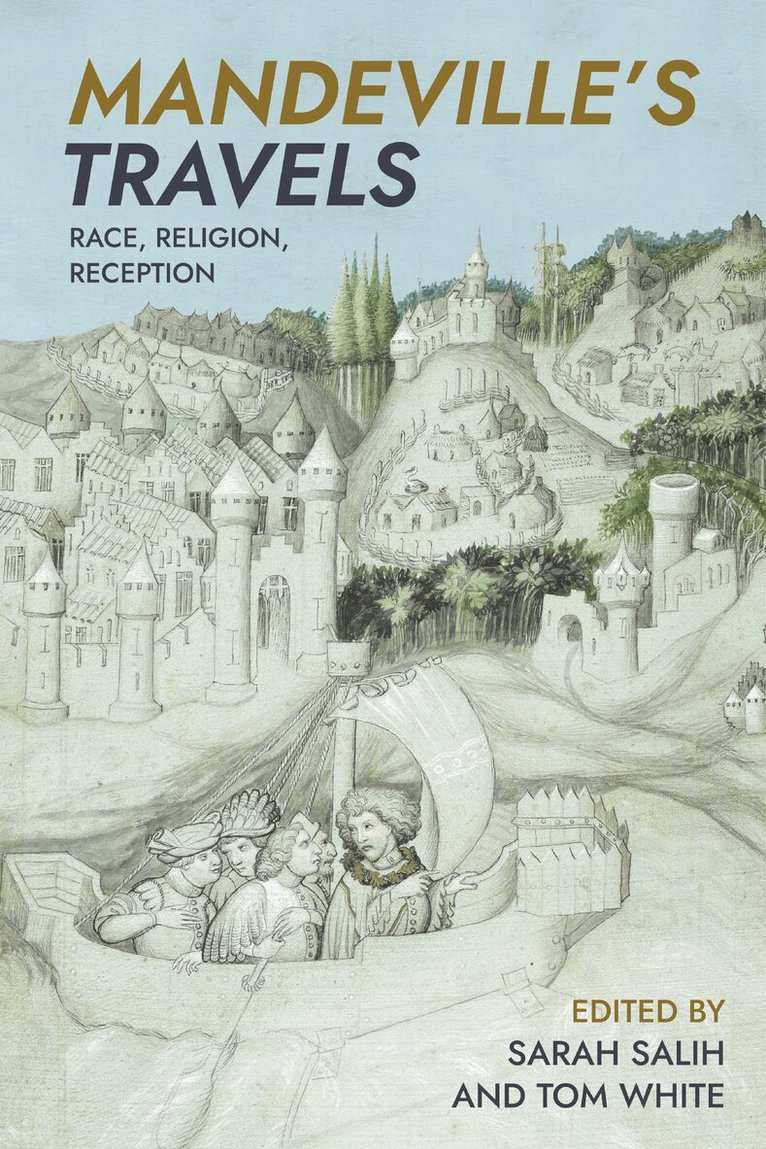
Offers new readings of Mandeville's Travels in its original historical context, in its textual history and in the present day.Mandeville's Travels was a medieval bestseller. Originally written in French in the mid-fourteenth century, it was translated into Latin and all the main European vernaculars, and survives in over three hundred manuscripts, some extensively illustrated. The book is a skilful translation and repackaging of existing travel and wonder narratives combined with original commentary, in which the probably fictitious English knight Sir John Mandeville recounts his journeys through Europe, the Holy Land and the Far East. It is a book of everything: a romance following a pilgrim-knight's journey, an encyclopaedic world-map in the form of a travelogue, a meditation on human religious, cultural and bodily diversity, an urgent enquiry into the trajectory of salvation history. It combines traditional wonders such as the Plinian "monstrous races" with an assessment of the geopolitical position of Latin Christendom in the wake of the failure of the Crusades to conquer the Middle East. Looking back to classical geography, it also, unknowingly, looked forward to the era of European colonial travel: Christopher Columbus took a copy with him when he sailed west across the Atlantic in 1492. This collection offers new readings of Mandeville's Travels in its original historical context, in its textual history and in the present day; in particular, recent developments in medieval racial theory enable new analyses of Mandeville's post-Crusades arc in the long history of European colonisation and racialisation. Contributors reassess its accounts of Jews, the Mongols, the Islamic Mamluk Empire and the imaginary eastern Christian empire of Prester John, with particular scrutiny of the text's reputation for "tolerance" of racial and religious difference. They examine its entry into print culture in the fifteenth and sixteenth centuries, and the interaction of its textual history with World War I and the aftermath of empire in the twentieth and twenty-first centuries. They also consider its resonance in the present day, enquiring whether this medieval Christian book can speak to our diverse and divided moment.