Scott E. Henke – författare
Visar alla böcker från författaren Scott E. Henke. Handla med fri frakt och snabb leverans.
4 produkter
4 produkter
Häftad, Engelska, 2020
697 kr
Skickas inom 5-8 vardagar
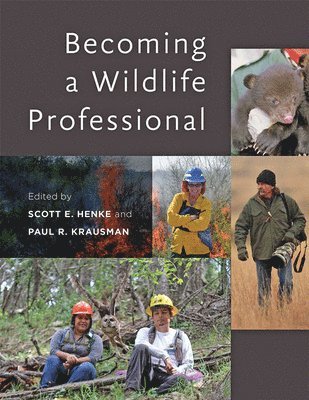
The essential guide for anyone planning a career in wildlife management and conservation.Working with wildlife can be a thrilling adventure steeped in the wonders of the natural world, but entering the field demands a strong personal commitment. With proper training and guidance, students can transform themselves into competitive applicants and forge successful careers. This book reveals the best way to become a wildlife management professional. Becoming a Wildlife Professional is the first comprehensive book to describe the entry-level jobs available for the next generation of wildlife biologists and conservationists. Scott E. Henke and Paul R. Krausman include detailed chapters on how students should prepare for a vocation in the wildlife profession while offering pragmatic advice about applying for and obtaining a job. The core of the book presents more than 100 diverse career options that are available to aspiring wildlife workers, including work in biological field research, forestry, rehabilitation, ranching, photography, and refuge management. It also details each position's educational and technical requirements, challenges, salaries, and opportunities for advancement.Bringing together useful advice from a range of seasoned experts who actually hold these jobs and have used these techniques to secure employment, Becoming a Wildlife Professional conveys important philosophical messages about the responsibilities and challenges of a career in wildlife conservation and management. This how-to manual is an essential text for wildlife science students interested in making themselves marketable for employers across a wide spectrum of wildlife jobs. Chapter Author Contributors: Rick Baydack, Jessica L. Blickley, Monika Burchette, Shawn Cleveland, Kristy Deiner, Kelly Garbach, Ashley R. Gramza, Jim Heffelfinger, Scott E. Henke, Fidel Hernández, Serra J. Hoagland, Jessica A. Homyack, Winifred B. Kessler, Holley Kline, Lianne Koczur, Michel T. Kohl, John L. Koprowski, Blaise Korzekwa, Paul R. Krausman, Iara Lacher, Mariah H. Meek, Kelly F. Millenbah, Karen E. Munroe, Kerry L. Nicholson, John P. O'Loughlin, Lindsey Phillips, Lauren M. Porensky, William F. Porter, Terra Rentz, Nova J. Silvy, Kelley M. Stewart, Marit L. Wilkerson, Eric Winford. An additional 52 wildlife professionals describe the work of the profession. Published in association with The Wildlife Society.
E-bok
PDF, 20184 198 kr
Läs direkt efter köp
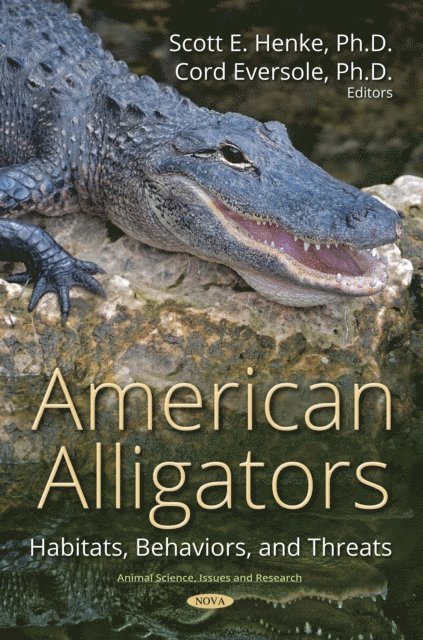
The American alligator is an icon of conservation and biological science in the United States. This species has arguably one of the most volatile, yet rich histories in terms of conservation, wildlife management, and scientific research. Due to this, American alligators often serve as a model for crocodilian science on a global scale.American Alligators: Habitats, Behaviors, and Threats is an essential addition to the library of vertebrate scientists, herpetologists, and most importantly crocodilian biologists. The book contains the most comprehensive, up-to-date knowledge about American alligator biology, behavior, distribution, diet, ecology, genetics, habitat use, physiology, parasitology, toxicology, and management by the leading experts of alligator professionals from around the world. Each chapter contains a comprehensive description of past research concerning each topic, new knowledge and interpretations of the topic, and suggestions of future research needs. This all-encompassing approach to the synthesis of past, present, and future knowledge of American alligators will make this a highly sought and referenced volume of work.Authors are a mix of next-generation scientists who have distinguished themselves as crocodilian biologists, as well as those who are well-established within herpetological circles. Chapter authors include Kimberly Andrews, Richard Bauer, Gary Calkins, Warren Conway, Ted Joanen, Michelle Lawing, Abigail Lawson, Mark Merchant, Chris Murray, Brent Newman, James Nifong, Adam Rosenblatt, Wade Ryberg, David Saalfeld, Gregory Skupien, Bradley Strickland, Helen Sung, William Sutton, Marisa Tellez, and Jonathan Warner, as well as chapters written by the co-editors Cord Eversole and Scott Henke.Cord B. Eversole received his Ph.D. from Texas A&M University-Kingsville and has 15 years of experience working with alligators and other herpetofauna. He has worked as a wildlife researcher for the Caesar Kleberg Wildlife Research Institute at Texas A&M University-Kingsville since 2010. Scott E. Henke is a research scientist with the Caesar Kleberg Wildlife Research Institute and a Regents Professor and Chair within the Department of Animal, Rangeland and Wildlife Sciences with Texas A&M University-Kingsville. He also is co-editor of the book Becoming a Wildlife Professional. The two researchers have teamed up and published extensively within herpetological journals, with the main emphasis of their collaborative research concerning the American alligator. (Nova)
E-bok
PDF, Engelska, 20193 512 kr
Läs direkt efter köp
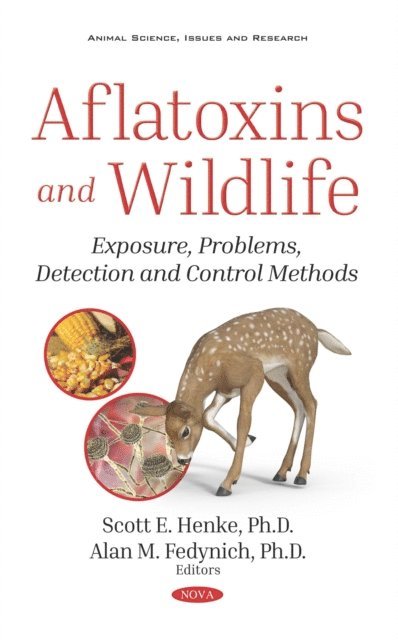
Aflatoxins are a highly toxic group of secondary metabolites that are produced by soil fungi, especially Aspergillus spp. fungi. The fungi infect cereal grain crops including corn, wheat, cotton, peanuts, and various other nuts. Aflatoxins can cause serious health concerns because they are known carcinogens, mutagens, teratogens, and immunosuppressive agents. Therefore, limits are in place by the U.S. Food and Drug Administration regarding how much aflatoxin can occur in cereal grain that will be consumed by humans and livestock within the human food chain. Such limits are even stricter in Europe than in the United States. Therefore, aflatoxins, when present in cereal grains, contribute to major economic losses in these commodities. However, to date in the United States, aflatoxin concentrations are not restricted within cereal grain provided to wildlife. Various wildlife agencies and organizations recommend limits in aflatoxin concentrations, but these are only recommendations and not mandated by law. Therefore, grain condemned for human consumption can be marketed as feed for wildlife. Unfortunately, wild animals befall the same health concerns as humans when it comes to aflatoxin exposure. Aflatoxins in Wildlife is a compilation of research concerning the effects of aflatoxin exposure to wildlife by researchers of the Caesar Kleberg Wildlife Research Institute at Texas A&M University-Kingsville. This volume contains sixteen chapters, beginning with a review of aflatoxin, what it is, how it functions in the environment, and its known effects on various species (Chapter One and Two). The book then discusses the potential exposure of wildlife to aflatoxins (Chapter Three), and the prevalence of aflatoxins in feed provided to wildlife (Chapters Four–Six). Chapters Seven–Ten focus on specific effects that aflatoxins have on the physiology of wildlife species, mainly birds, while Chapters Eleven and Twelve research the recovery time needed after aflatoxin exposure and the ability of species to detect aflatoxin within feed. Chapter Thirteen specifically addresses the effects of aflatoxin exposure in wild mammals. The remainder of the book (Chapters Fourteen–Sixteen) focus on testing feed for aflatoxin and how a person can reduce the risk of providing aflatoxin-contaminated grain to wildlife. Aflatoxins in Wildlife is an essential addition to the library of vertebrate and environmental toxicologists, zoonotic disease specialists, veterinary health care professionals, and wildlife biologists. Scott E. Henke is a wildlife research scientist with the Caesar Kleberg Wildlife Research Institute and a Regents Professor and Chair within the Department of Animal, Rangeland and Wildlife Sciences with Texas A&M University-Kingsville. Dr. Henke has more than 150 publications in scientific journals and also is co-Editor of the books Becoming a Wildlife Professional and American Alligators: Habitats, Behaviors, and Threats. Alan M. Fedynich is a wildlife research scientist with the Caesar Kleberg Wildlife Research Institute and a Professor within the Department of Animal, Rangeland and Wildlife Sciences with Texas A&M University-Kingsville. Dr. Fedynich has authored/coauthored more than 70 articles published in peer-reviewed scientific journals. The two researchers have collaborated on numerous zoonotic disease and parasite projects.
Inbunden, Engelska, 2017
828 kr
Tillfälligt slut
Working with wildlife can be a thrilling adventure steeped in the wonders of the natural world, but entering the field demands a strong personal commitment. With proper training and guidance, students can transform themselves into competitive applicants and forge successful careers. This book reveals the best way to become a wildlife management professional. Becoming a Wildlife Professional is the first comprehensive book to describe the entry-level jobs available for the next generation of wildlife biologists and conservationists. Scott E. Henke and Paul R. Krausman include detailed chapters on how students should prepare for a vocation in the wildlife profession while offering pragmatic advice about applying for and obtaining a job. The core of the book presents over 100 diverse career options that are available to aspiring wildlife workers, including work in biological field research, forestry, rehabilitation, ranching, photography, and refuge management. It also details each position's educational and technical requirements, challenges, salaries, and opportunities for advancement.Bringing together useful advice from a range of seasoned experts who actually hold these jobs and have used these techniques to secure employment, Becoming a Wildlife Professional conveys important philosophical messages about the responsibilities and challenges of a career in wildlife conservation and management. This how-to manual is an essential text for wildlife science students interested in making themselves marketable for employers across a wide spectrum of wildlife jobs. Chapter Author Contributors: Rick Baydack, Jessica L. Blickley, Monika Burchette, Shawn Cleveland, Kristy Deiner, Kelly Garbach, Ashley R. Gramza, Jim Heffelfinger, Scott E. Henke, Fidel Hernandez, Serra J. Hoagland, Jessica A. Homyack, Winifred B. Kessler, Holley Kline, Lianne Koczur, Michel T. Kohl, John L. Koprowski, Blaise Korzekwa, Paul R. Krausman, Iara Lacher, Mariah H. Meek, Kelly F. Millenbah, Karen E. Munroe, Kerry L. Nicholson, John P. O'Loughlin, Lindsey Phillips, Lauren M. Porensky, William F. Porter, Terra Rentz, Nova J. Silvy, Kelley M. Stewart, Marit L. Wilkerson, Eric Winford. An additional 52 wildlife professionals describe the work of the profession.