Paul R Krausman - Böcker
Visar alla böcker från författaren Paul R Krausman. Handla med fri frakt och snabb leverans.
13 produkter
13 produkter
928 kr
Skickas inom 10-15 vardagar
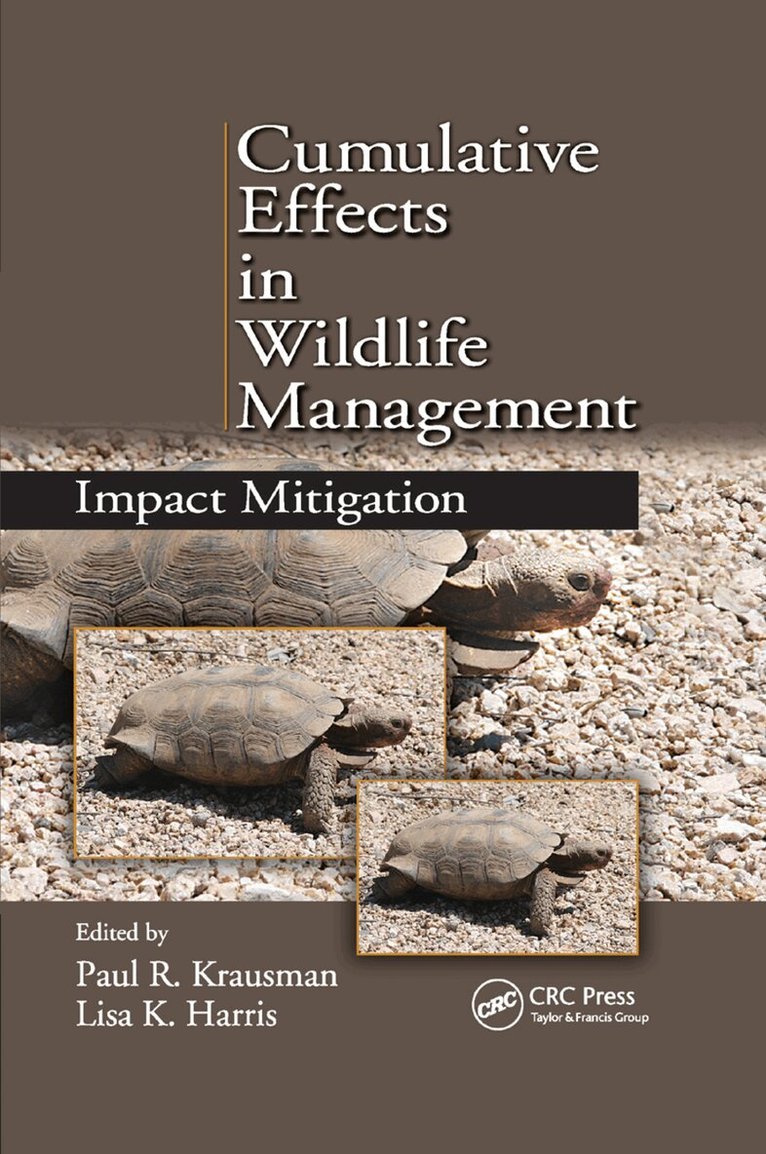
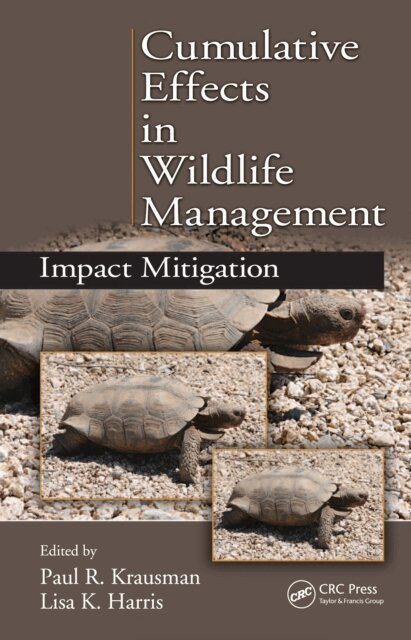
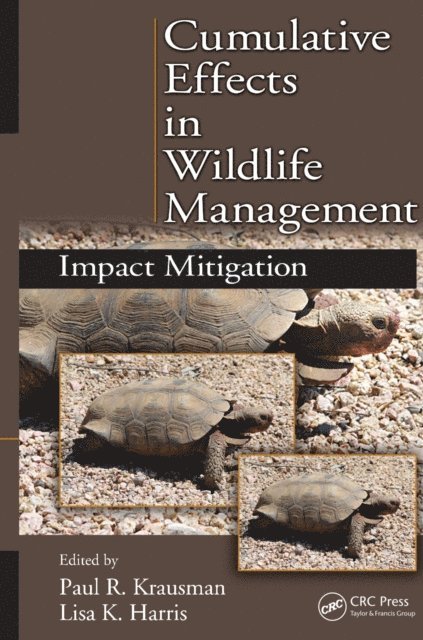
As humans continue to encroach on wildlands, quality and quantity of wildlife habitat decreases before our eyes. A housing development here, a shopping mall there, a few more trees cut here, another road put in there, each of these diminishes available habitat. Unless the cumulative effects of multiple simultaneous development projects are recognized and incorporated at the beginning of project development, we will continue to see wildlife habitat disappear at unprecedented rates.Divided into two parts, Cumulative Effects in Wildlife Management emphasizes the importance of recognizing cumulative effects and highlights the necessity of their bearing on future policy. It begins with an outline of the differences between direct, indirect, and cumulative effects of anthropogenic impacts on wildlife habitat and addresses the similarities and differences in US and Canadian policies, legal and economic ramifications, and the confusion that stems from lack of consideration, communication, and forward planning. Section 1 also describes the current standard means of quantifying cumulative effects as proposed by the Council on Environmental Quality.Section 2 presents a series of case studies that deepen our appreciation of how anthropogenic influences interconnect and how this heightened level of understanding influences our ability to make informed decisions. Case studies include cumulative effects in the Canadian Arctic, border issues with Mexico, suburban and exurban landscapes, scenic resources, and the cumulative impacts of energy development on sage-grouse.Without a conscious knowledge of what is happening around us, we will not be able to incorporate an effective land ethic, and natural resources will be the ultimate loser. Cumulative Effects in Wildlife Management brings to light the crucial connections between human expansion and habitat destruction for those managers and practi
455 kr
Skickas inom 5-8 vardagar
Since the 1970s, the Endangered Species Act (ESA), by virtue of its regulatory impact, has been a frequent subject of policy analysis. In this comprehensive history and critique of the ESA, Brian Czech and Paul R. Krausman incorporate the new model of policy design theory to frame a larger discussion about conservation biology and American democracy. Czech and Krausman provide a historical background of endangered species policy that integrates natural history, socioeconomic trends, political movements, and professional developments. Outlining the controversies surrounding the ESA, they find a connection between challenges to species conservation and challenges to democracy. After an assessment of ESA analyses that have been performed from traditional perspectives, they engage policy design theory to review the structural logic of the ESA, analyzing each clause of the legislation for its application of the fundamental elements of democracy. To address the technical legitimacy of ESA, they propose two new genetic considerations-functional genome size and molecular clock speed-to supplement phylogenetic distinctiveness as criteria with which to prioritize species for conservation.Next, they systematically describe the socioeconomic context of ESA by assessing and classifying the causes of species endangerment. A hybrid of policy analysis and ecological assessment, The Endangered Species Act: History, Conservation Biology, and Public Policy will appeal to scholars and students in the fields of natural resource policy and law, conservation biology, political science, wildlife ecology, and environmental history, and to professionals at agencies involved in wildlife conservation.
1 819 kr
Skickas inom 10-15 vardagar
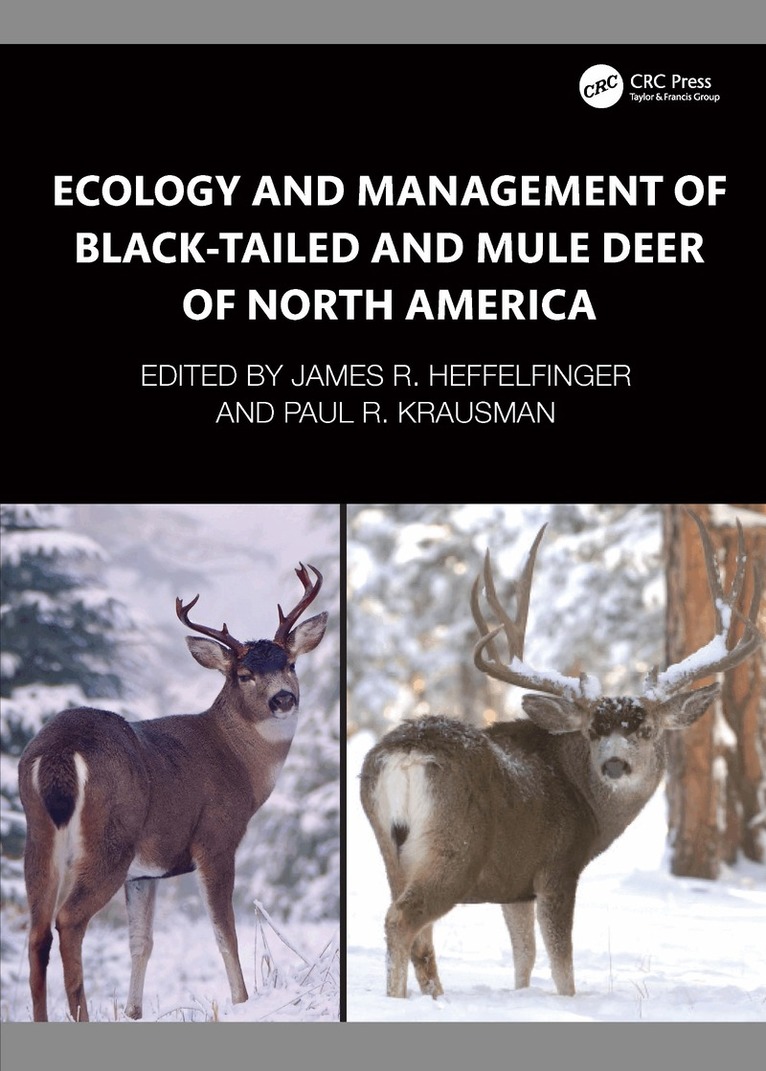
Choice Outstanding Academic Title 2024!Black-tailed and mule deer represent one of the largest distributions of mammals in North America and are symbols of the wide-open American West. Each chapter in this book was authored by the world’s leading experts on that topic. Both editors, James R. Heffelfinger and Paul R. Krausman, are widely published in the popular and scientific press and recipients of the O. C. Wallmo Award, given every two years to a leading black-tailed and mule deer expert who has made significant contributions to the conservation of this species. In addition, Heffelfinger has chaired the Mule Deer Working Group sponsored by the Western Association of Fish and Wildlife Agencies for more than 15 years. This working group consists of the leading black-tailed and mule deer experts from each of 24 states, provinces, and territories in western North America, putting them at the forefront of all conservation and much of the research on this species.The book represents all current knowledge available on these deer, including how changing conditions such as fires, habitat alteration and loss, disease, climate change, socio-economic forces, energy development, and other aspects are influencing their distribution and abundance now and into the future. It takes a completely fresh look at all chapter topics. The revisions of distribution, taxonomy, evolution, behavior, and new and exciting work being done in deer nutrition, migration and movements, diseases, predation, and human dimensions are all assembled in this volume.This book will instantly become the foundation for the latest information and management strategies to be implemented on the ground by practitioners and to inform the public. Although this book is about deer, the topics discussed influence most terrestrial wildlife worldwide, and the basic concepts in many of the chapters are applicable to other species.
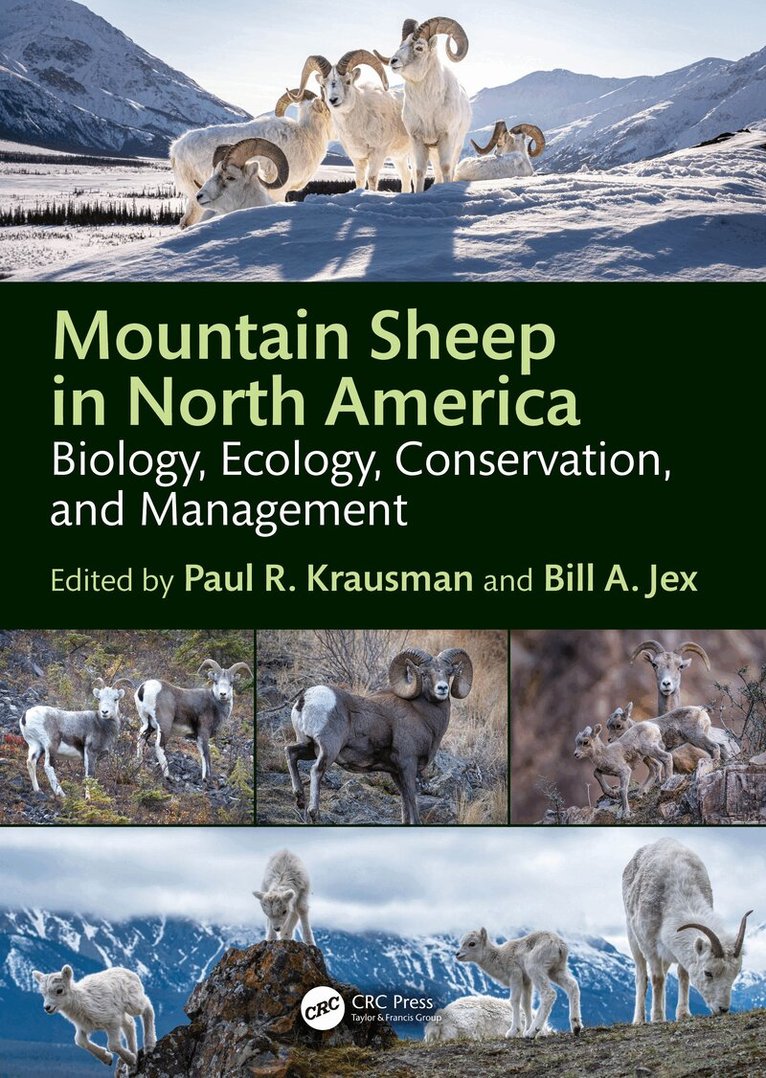
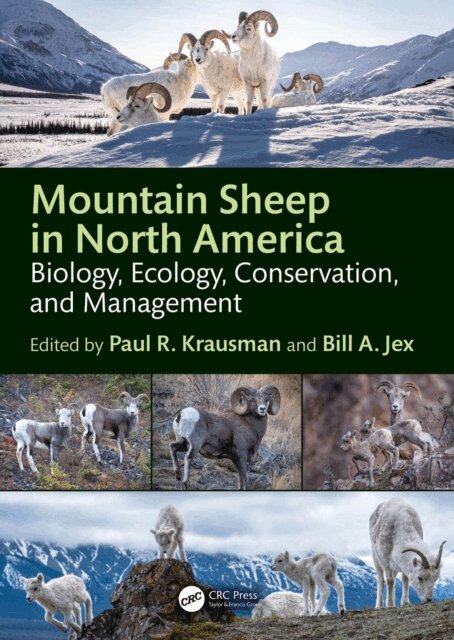
Mountain Sheep in North America
Biology, Ecology, Conservation, and Management
Inbunden, Engelska, 2026
2 772 kr
Skickas inom 10-15 vardagar
Mountain Sheep in North America: Biology, Ecology, Conservation, and Management provides a detailed account of bighorn and thinhorn sheep across their geographic ranges from Alaska and Canada to Mexico. This book examines all aspects of the sheep life history including activity patterns; biology; conservation; diet; ecology; genetics; habitat requirements; health and disease; historical perspectives; management approaches; predation; competition with other species; natural history; social behavior; taxonomy; the changing role of agency, Indigenous, and conservation stakeholders; and the considerations for future management actions, opportunities, and conservation risks.The book describes advancements in new technologies supported by current science, disproving some long-held assumptions about the species and their ecology, making it the most comprehensive source of information about mountain sheep in North America today. It offers the reader a better understanding of the management of mountain sheep, and the numerous challenges of a developing world including anthropogenic influences, altered habitats, species assemblages, and changing climates. Each chapter is written by internationally recognized experts and practicing mountain sheep managers from agencies and academia. New research is presented within broader shifts in conservation policy and funding, helping readers understand the practical implications of evolving science in real-world situations and offering wisdom that will help them create positive conservation outcomes for mountain sheep.This is an essential text for students of wildlife, early-career and experienced biologists, managers, policy- and decision-makers, administrators, and anyone interested in mountain sheep in our world today, including those who are simply passionate about them. This book will provide even the most knowledgeable mountain sheep enthusiast with an improved understanding of this magnificent wildlife resource.
747 kr
Skickas inom 10-15 vardagar
Mountain Sheep in North America: Biology, Ecology, Conservation, and Management provides a detailed account of bighorn and thinhorn sheep across their geographic ranges from Alaska and Canada to Mexico. This book examines all aspects of the sheep life history including activity patterns; biology; conservation; diet; ecology; genetics; habitat requirements; health and disease; historical perspectives; management approaches; predation; competition with other species; natural history; social behavior; taxonomy; the changing role of agency, Indigenous, and conservation stakeholders; and the considerations for future management actions, opportunities, and conservation risks.The book describes advancements in new technologies supported by current science, disproving some long-held assumptions about the species and their ecology, making it the most comprehensive source of information about mountain sheep in North America today. It offers the reader a better understanding of the management of mountain sheep, and the numerous challenges of a developing world including anthropogenic influences, altered habitats, species assemblages, and changing climates. Each chapter is written by internationally recognized experts and practicing mountain sheep managers from agencies and academia. New research is presented within broader shifts in conservation policy and funding, helping readers understand the practical implications of evolving science in real-world situations and offering wisdom that will help them create positive conservation outcomes for mountain sheep.This is an essential text for students of wildlife, early-career and experienced biologists, managers, policy- and decision-makers, administrators, and anyone interested in mountain sheep in our world today, including those who are simply passionate about them. This book will provide even the most knowledgeable mountain sheep enthusiast with an improved understanding of this magnificent wildlife resource.
720 kr
Skickas inom 7-10 vardagar
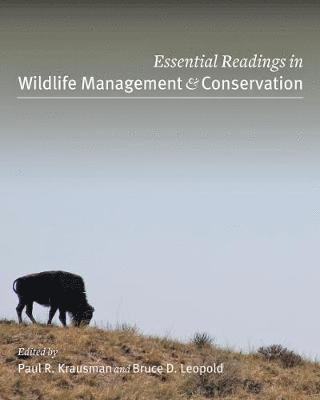
Prepared by two of the leading figures in wildlife biology, this book gathers in one volume the most influential articles published in the field. Paul R. Krausman and Bruce D. Leopold have collected the forty-two papers that every wildlife student should read. Each piece is introduced with a commentary that explains why it is important and a brief listing of papers that inspired or were inspired by the classic. Practical and conceptual topics consider every aspect of the wildlife profession, including ethics. Ideal for use as a textbook, Essential Readings in Wildlife Management and Conservation is divided into four sections: the philosophical roots of wildlife management, biology, habitat, and human dimensions. Contains the classic publications of K. T. Adair, R. A. Baer, L. C. Birch, W. H. Burt, L. H. Carpenter, G. Caughley, T. C. Chamberlin, E. L. Charnov, L. C. Chase, F. E. Clements, L. C. Cole, J. H. Connell, R. N. Conner, Z. J. Cornett, P. D. Dalke, D. J. Decker, L. R. Dice, J. G. Dickson, D. F. Doak, P. R. Ehrlich, R. Y. Edwards, C. S. Elton, P. L. Errington, D. Esler, C. D. Fowle, T. A. Gavin, V. Geist, M. Gilpin, H. A. Gleason, J. Grinnell, J. P. Hailman, G. Hardin, N. T.Hobbs, C. S. Holling, S. S. Hutchings, D. H. Johnson, S. R. Kellert, R. H. Klopfer, B. A. Knuth, C. C. Kreuger, A. Leopold, R. L. Lindeman, C. A. Loker, R. H. MacArthur, J. Macnab, S. P. Mahoney, G. F. Mattfield, D. R. McCullough, S. L. Mills, A. J. Nicholson, J. F. Organ, R. T. Paine, G. Parsons, M. E. Richmond, S. J. Riley, S. J. Schwager, V. E. Shelford, W. F. Siemer, D. S. Simberloff, M. E. Soule, G. Stewart, J. W. Thomas, B. Van Horne, S. C. Wecker, and E. O. Wilson.
1 114 kr
Skickas inom 7-10 vardagar
Presents an overview of the management and conservation of animals, their habitats, and how people influence both. This title includes topics such as: the definitions of wildlife and management; human dimensions of wildlife management; predator-prey relationships; structured decision making; and issues of scale in wildlife management.
828 kr
Tillfälligt slut
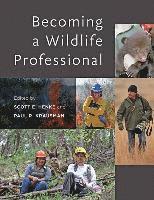
Working with wildlife can be a thrilling adventure steeped in the wonders of the natural world, but entering the field demands a strong personal commitment. With proper training and guidance, students can transform themselves into competitive applicants and forge successful careers. This book reveals the best way to become a wildlife management professional. Becoming a Wildlife Professional is the first comprehensive book to describe the entry-level jobs available for the next generation of wildlife biologists and conservationists. Scott E. Henke and Paul R. Krausman include detailed chapters on how students should prepare for a vocation in the wildlife profession while offering pragmatic advice about applying for and obtaining a job. The core of the book presents over 100 diverse career options that are available to aspiring wildlife workers, including work in biological field research, forestry, rehabilitation, ranching, photography, and refuge management. It also details each position's educational and technical requirements, challenges, salaries, and opportunities for advancement.Bringing together useful advice from a range of seasoned experts who actually hold these jobs and have used these techniques to secure employment, Becoming a Wildlife Professional conveys important philosophical messages about the responsibilities and challenges of a career in wildlife conservation and management. This how-to manual is an essential text for wildlife science students interested in making themselves marketable for employers across a wide spectrum of wildlife jobs. Chapter Author Contributors: Rick Baydack, Jessica L. Blickley, Monika Burchette, Shawn Cleveland, Kristy Deiner, Kelly Garbach, Ashley R. Gramza, Jim Heffelfinger, Scott E. Henke, Fidel Hernandez, Serra J. Hoagland, Jessica A. Homyack, Winifred B. Kessler, Holley Kline, Lianne Koczur, Michel T. Kohl, John L. Koprowski, Blaise Korzekwa, Paul R. Krausman, Iara Lacher, Mariah H. Meek, Kelly F. Millenbah, Karen E. Munroe, Kerry L. Nicholson, John P. O'Loughlin, Lindsey Phillips, Lauren M. Porensky, William F. Porter, Terra Rentz, Nova J. Silvy, Kelley M. Stewart, Marit L. Wilkerson, Eric Winford. An additional 52 wildlife professionals describe the work of the profession.
489 kr
Tillfälligt slut
An annotated collection of classic papers that cover the rich history of wildlife science from Aldo Leopold to Daniel Decker.Prepared by two of the leading figures in wildlife biology, this book gathers in one volume the most influential articles published in the field. Paul R. Krausman and Bruce D. Leopold have collected the forty-two papers that every wildlife student should read. Each piece is introduced with a commentary that explains why it is important and a brief listing of papers that inspired or were inspired by the classic. Practical and conceptual topics consider every aspect of the wildlife profession, including ethics. Ideal for use as a textbook, Essential Readings in Wildlife Management and Conservation is divided into four sections: the philosophical roots of wildlife management, biology, habitat, and human dimensions.Published in association with The Wildlife Society.
International Wildlife Management
Conservation Challenges in a Changing World
Inbunden, Engelska, 2019
820 kr
Skickas
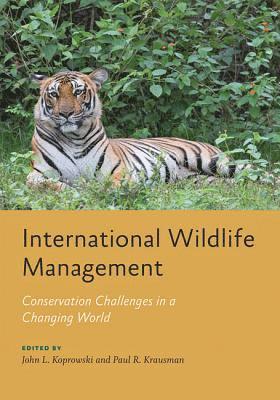
A call for wildlife conservationists to transcend the boundaries of locality, share best practices, and unite with a common voice to influence global policy.Habitat loss, disease management, predator-human conflict, illegal trade—these are among the many conservation challenges faced by wildlife experts around the world. But how wildlife professionals approach these issues has historically been geographically fragmented. By providing a broad perspective on issues faced by wildlife on an international scale, the authors of International Wildlife Management make vital connections, drawing attention to underlying causes and strategies for mitigation that may look surprisingly similar from Montana to Zimbabwe. Bringing together wildlife professionals from around the globe to discuss shared challenges, International Wildlife Management• examines widespread patterns of wildlife loss• covers key conservation strategies, including species reintroduction, community engagement, and wildlife commerce• explores the urgent concerns of climate change, habitat loss and fragmentation, invasive species, and poaching• reviews major organizations involved in wildlife management at an international level, highlighting examples of cooperation among groups and nations in effective wildlife management efforts• features stories of success and struggle from authors across 17 countries on 6 continents This timely and thorough overview thinks big by assessing threats to wildlife on a global scale. Wild creatures don't recognize artificial geographic borders. This useful compendium demonstrates that researchers and scientists should follow their lead.
667 kr
Skickas inom 7-10 vardagar
The essential guide for anyone planning a career in wildlife management and conservation.Working with wildlife can be a thrilling adventure steeped in the wonders of the natural world, but entering the field demands a strong personal commitment. With proper training and guidance, students can transform themselves into competitive applicants and forge successful careers. This book reveals the best way to become a wildlife management professional. Becoming a Wildlife Professional is the first comprehensive book to describe the entry-level jobs available for the next generation of wildlife biologists and conservationists. Scott E. Henke and Paul R. Krausman include detailed chapters on how students should prepare for a vocation in the wildlife profession while offering pragmatic advice about applying for and obtaining a job. The core of the book presents more than 100 diverse career options that are available to aspiring wildlife workers, including work in biological field research, forestry, rehabilitation, ranching, photography, and refuge management. It also details each position's educational and technical requirements, challenges, salaries, and opportunities for advancement.Bringing together useful advice from a range of seasoned experts who actually hold these jobs and have used these techniques to secure employment, Becoming a Wildlife Professional conveys important philosophical messages about the responsibilities and challenges of a career in wildlife conservation and management. This how-to manual is an essential text for wildlife science students interested in making themselves marketable for employers across a wide spectrum of wildlife jobs. Chapter Author Contributors: Rick Baydack, Jessica L. Blickley, Monika Burchette, Shawn Cleveland, Kristy Deiner, Kelly Garbach, Ashley R. Gramza, Jim Heffelfinger, Scott E. Henke, Fidel Hernández, Serra J. Hoagland, Jessica A. Homyack, Winifred B. Kessler, Holley Kline, Lianne Koczur, Michel T. Kohl, John L. Koprowski, Blaise Korzekwa, Paul R. Krausman, Iara Lacher, Mariah H. Meek, Kelly F. Millenbah, Karen E. Munroe, Kerry L. Nicholson, John P. O'Loughlin, Lindsey Phillips, Lauren M. Porensky, William F. Porter, Terra Rentz, Nova J. Silvy, Kelley M. Stewart, Marit L. Wilkerson, Eric Winford. An additional 52 wildlife professionals describe the work of the profession. Published in association with The Wildlife Society.
1 056 kr
Skickas inom 7-10 vardagar
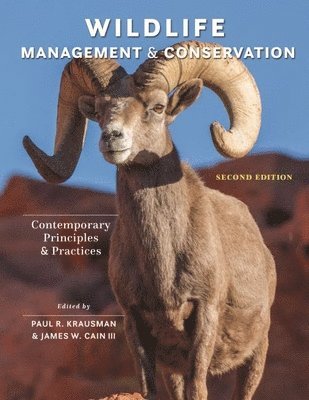
The definitive textbook for students of wildlife management, now updated to cover the latest techniques, tools, and topics.Shortlisted for The Wildlife Society Outstanding Edited Book by The Wildlife SocietyWildlife Management and Conservation presents a clear overview of the management and conservation of animals, their habitats, and how people influence both. The relationship among these three components of wildlife management is explained in chapters written by leading experts and is designed to prepare students for careers in which they will be charged with maintaining healthy animal populations. To be successful wildlife professionals, they will need to find ways to restore depleted populations, reduce overabundant, introduced, or pest species, and manage relationships among various human stakeholders. This book gives them the basic knowledge necessary to accomplish these goals.This second edition, which is updated throughout, features several new and expanded topics, including communication in the wildlife profession, fire science, Indigenous models of management and conservation, plant–animal interactions, quantitative analysis of wildlife populations, and a detailed glossary. The book also covers:• Human dimensions of wildlife management• Animal behavior• Predator–prey relationships• Structured decision making• Issues of scale in wildlife management• Wildlife health• Historical context of wildlife management and conservation• Hunting and trapping• Nongame species• Nutrition ecology• Water management• Climate change• Conservation planningThe most widely used foundational text in the field, this is the perfect resource not only for students but also for early career professionals and those in related fields who need to understand the core tenets and tools of wildlife conservation and management.Contributors: C. Jane Anderson, Bart M. Ballard, Warren B. Ballard, John A. Bissonette, Clint Boal, Scott B. Boyle, Leonard A. Brennan, Robert D. Brown, James W. Cain III, Tyler A. Campbell, Michael J. Cherry, Michael R. Conover, Daniel J. Decker, Randall W. DeYoung, Jonathan B. Dinkins, W. Sue Fairbanks, Selma N. Glasscock, James B. Grand, Michael J. Haney, James R. Heffelfinger, Scott E. Henke, Fidel Hernandez, Davie G. Hewitt, C. L. Hoving, David A. Jessup, Heather E. Johnson, Winifred B. Kessler, John L. Koprowski, Paul R. Krausman, William P. Kuvlesky, Jr., Roel R. Lopez, R. W. Mannan, Melissa J. Merrick, L. Scott Mills, Michael S. Mitchell, Michael L. Morrison, Anna M. Muñoz, John F. Organ, Katherine L. Parker, William F. Porter, Shawn J. Riley, Steven S. Rosenstock, Michael C. Runge, Susan P. Rupp, William F. Siemer, Robert J. Steidl, Kelley M. Stewart
2 557 kr
Skickas inom 10-15 vardagar
As humans continue to encroach on wildlands, quality and quantity of wildlife habitat decreases before our eyes. A housing development here, a shopping mall there, a few more trees cut here, another road put in there, each of these diminishes available habitat. Unless the cumulative effects of multiple simultaneous development projects are recognized and incorporated at the beginning of project development, we will continue to see wildlife habitat disappear at unprecedented rates.Divided into two parts, Cumulative Effects in Wildlife Management emphasizes the importance of recognizing cumulative effects and highlights the necessity of their bearing on future policy. It begins with an outline of the differences between direct, indirect, and cumulative effects of anthropogenic impacts on wildlife habitat and addresses the similarities and differences in US and Canadian policies, legal and economic ramifications, and the confusion that stems from lack of consideration, communication, and forward planning. Section 1 also describes the current standard means of quantifying cumulative effects as proposed by the Council on Environmental Quality.Section 2 presents a series of case studies that deepen our appreciation of how anthropogenic influences interconnect and how this heightened level of understanding influences our ability to make informed decisions. Case studies include cumulative effects in the Canadian Arctic, border issues with Mexico, suburban and exurban landscapes, scenic resources, and the cumulative impacts of energy development on sage-grouse.Without a conscious knowledge of what is happening around us, we will not be able to incorporate an effective land ethic, and natural resources will be the ultimate loser. Cumulative Effects in Wildlife Management brings to light the crucial connections between human expansion and habitat destruction for those managers and practi