Scott Richard Lyons - Böcker
Visar alla böcker från författaren Scott Richard Lyons. Handla med fri frakt och snabb leverans.
3 produkter
3 produkter
269 kr
Skickas inom 10-15 vardagar
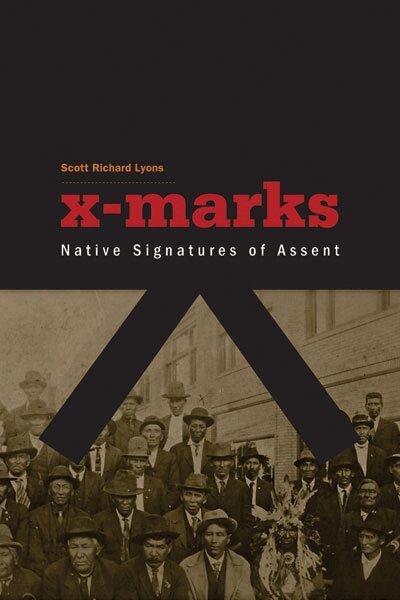
During the eighteenth and nineteenth centuries, North American Indian leaders commonly signed treaties with the European powers and the American and Canadian governments with an X, signifying their presence and assent to the terms. These x-marks indicated coercion (because the treaties were made under unfair conditions), resistance (because they were often met with protest), and acquiescence (to both a European modernity and the end of a particular moment of Indian history and identity). In X-Marks, Scott Richard Lyons explores the complexity of contemporary Indian identity and current debates among Indians about traditionalism, nationalism, and tribalism. Employing the x-mark as a metaphor for what he calls the “Indian assent to the new,” Lyons offers a valuable alternative to both imperialist concepts of assimilation and nativist notions of resistance, calling into question the binary oppositions produced during the age of imperialism and maintaining that indigeneity is something that people do, not what they are. Drawing on his personal experiences and family history on the Leech Lake Ojibwe Reservation in northern Minnesota, discourses embedded in Ojibwemowin (the Ojibwe language), and disagreements about Indian identity within Native American studies, Lyons contends that Indians should be able to choose nontraditional ways of living, thinking, and being without fear of being condemned as inauthentic. Arguing for a greater recognition of the diversity of Native America, X-Marks analyzes ongoing controversies about Indian identity, addresses the issue of culture and its use and misuse by essentialists, and considers the implications of the idea of an Indian nation. At once intellectually rigorous and deeply personal, X-Marks holds that indigenous peoples can operate in modern times while simultaneously honoring and defending their communities, practices, and values.
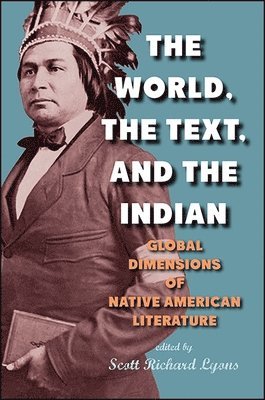
World, the Text, and the Indian
Global Dimensions of Native American Literature
Häftad, Engelska, 2018
683 kr
Skickas inom 3-6 vardagar
Advances critical conversations in Native American literary studies by situating its subject in global, transnational, and modernizing contexts.Since the rise of the Native American Renaissance in literature and culture during the American civil rights period, a rich critical discourse has been developed to provide a range of interpretive frameworks for the study, recovery, and teaching of Native American literary and cultural production. For the past few decades the dominant framework has been nationalism, a critical perspective placing emphasis on specific tribal nations and nationalist concepts. While this nationalist intervention has produced important insights and questions regarding Native American literature, culture, and politics, it has not always attended to the important fact that Native texts and writers have also always been globalized. The World, the Text, and the Indian breaks from this framework by examining Native American literature not for its tribal-national significance but rather its connections to global, transnational, and cosmopolitan forces. Essays by leading scholars in the field assume that Native American literary and cultural production is global in character; even claims to sovereignty and self-determination are made in global contexts and influenced by global forces. Spanning from the nineteenth century to the present day, these analyses of theories, texts, and methods-from trans-indigenous to cosmopolitan, George Copway to Sherman Alexie, and indigenous feminism to book history-interrogate the dialects of global indigeneity and settler colonialism in literary and visual culture.
World, the Text, and the Indian
Global Dimensions of Native American Literature
Inbunden, Engelska, 2017
1 215 kr
Tillfälligt slut
Advances critical conversations in Native American literary studies by situating its subject in global, transnational, and modernizing contexts.Since the rise of the Native American Renaissance in literature and culture during the American civil rights period, a rich critical discourse has been developed to provide a range of interpretive frameworks for the study, recovery, and teaching of Native American literary and cultural production. For the past few decades the dominant framework has been nationalism, a critical perspective placing emphasis on specific tribal nations and nationalist concepts. While this nationalist intervention has produced important insights and questions regarding Native American literature, culture, and politics, it has not always attended to the important fact that Native texts and writers have also always been globalized. The World, the Text, and the Indian breaks from this framework by examining Native American literature not for its tribal-national significance but rather its connections to global, transnational, and cosmopolitan forces. Essays by leading scholars in the field assume that Native American literary and cultural production is global in character; even claims to sovereignty and self-determination are made in global contexts and influenced by global forces. Spanning from the nineteenth century to the present day, these analyses of theories, texts, and methods-from trans-indigenous to cosmopolitan, George Copway to Sherman Alexie, and indigenous feminism to book history-interrogate the dialects of global indigeneity and settler colonialism in literary and visual culture.