Seema Kumari – författare
Visar alla böcker från författaren Seema Kumari. Handla med fri frakt och snabb leverans.
6 produkter
6 produkter
Häftad, Engelska, 2026
1 778 kr
Skickas inom 10-15 vardagar
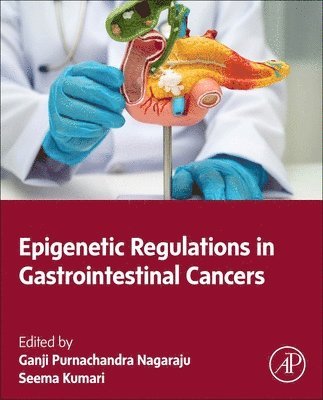
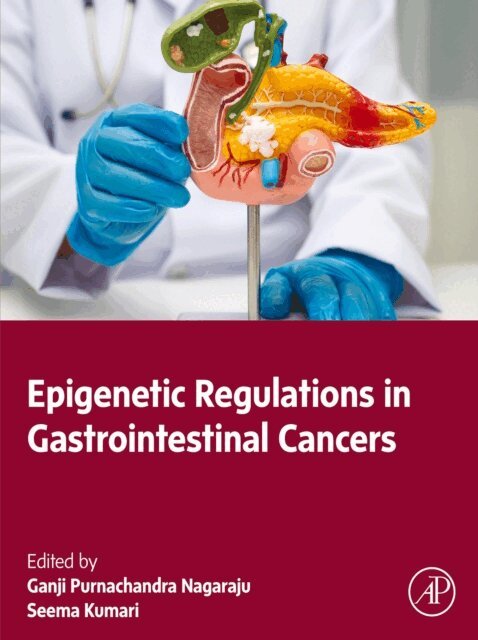
Epigenetic Regulations in Gastrointestinal Cancers offers a comprehensive exploration of the genomic and epigenomic alterations that underpin the aggressive nature of gastrointestinal (GI) cancers. . By synthesizing the latest research and insights into the role of the tumor microenvironment and cellular signaling pathways, this book aims to elucidate the multifaceted nature of GI cancer neoplasia and propose innovative therapeutic strategies. Addressing critical challenges in GI cancer research and treatment, this book serves as a vital resource for researchers and clinicians striving to bridge the gap between basic research and clinical application. It tackles the complexities of GI cancer mechanisms by integrating knowledge from diverse fields, thereby providing a holistic understanding essential for effective therapeutic development. Through real-world case studies and expert contributions, the book highlights successful treatment regimens that leverage epigenetic insights, thereby fostering dialogue among multidisciplinary teams and promoting collaborative approaches to cancer care. Moreover, the book emphasizes the importance of staying abreast of rapid advancements in the field of cancer research. With contributions from leading experts and an accompanying online platform featuring interactive resources, readers will have access to the latest insights and developments in GI cancer research. By identifying specific epigenetic targets and innovative strategies for overcoming treatment resistance, this book aspires to enhance patient outcomes in GI cancers and contribute to the ongoing evolution of personalized medicine in oncology.Provides an in-depth analysis of the various epigenetic changeds that contribute to the aggressiveness of gastrointestinal cancersBridges the gap between fundamental research findings and their clinical implications, offering case studies and expert insights that illustrate successful therapeutic strategiesEmphasizes the importance of multidisciplinary collaboration in cancer research and treatment, presenting contributions from experts across various subfields
E-bok
Engelska, 20262 184 kr
Läs direkt efter köp
Epigenetic Regulations in Gastrointestinal Cancers offers a comprehensive exploration of the genomic and epigenomic alterations that underpin the aggressive nature of gastrointestinal (GI) cancers. . By synthesizing the latest research and insights into the role of the tumor microenvironment and cellular signaling pathways, this book aims to elucidate the multifaceted nature of GI cancer neoplasia and propose innovative therapeutic strategies. Addressing critical challenges in GI cancer research and treatment, this book serves as a vital resource for researchers and clinicians striving to bridge the gap between basic research and clinical application. It tackles the complexities of GI cancer mechanisms by integrating knowledge from diverse fields, thereby providing a holistic understanding essential for effective therapeutic development. Through real-world case studies and expert contributions, the book highlights successful treatment regimens that leverage epigenetic insights, thereby fostering dialogue among multidisciplinary teams and promoting collaborative approaches to cancer care. Moreover, the book emphasizes the importance of staying abreast of rapid advancements in the field of cancer research. With contributions from leading experts and an accompanying online platform featuring interactive resources, readers will have access to the latest insights and developments in GI cancer research. By identifying specific epigenetic targets and innovative strategies for overcoming treatment resistance, this book aspires to enhance patient outcomes in GI cancers and contribute to the ongoing evolution of personalized medicine in oncology. - Provides an in-depth analysis of the various epigenetic changeds that contribute to the aggressiveness of gastrointestinal cancers- Bridges the gap between fundamental research findings and their clinical implications, offering case studies and expert insights that illustrate successful therapeutic strategies- Emphasizes the importance of multidisciplinary collaboration in cancer research and treatment, presenting contributions from experts across various subfields
E-bok
PDF, Engelska, 2013202 kr
Läs direkt efter köp
Master's Thesis from the year 2004 in the subject Chemistry - Bio-chemistry, , course: M.Sc - Biochemistry, language: English, abstract: The hazards of exposure to ionizing radiation were recognised shortly after Roentgen's discovery of x-rays in 1895. Acute skin cancer, leukaemia and other biological damage were observed in the individuals working with x-ray generator. In the year, 1898 Becquerel performed the first recorded experiment in radiobiology, from this earlier study of radiobiology began. Since that time, a tremendous amount of research has been done attempting to interpret the reactions which take place from the moment that radiation enters a living cell until some permanent damage is produced. From beginning to end, these initial reactions are probably completed in a millionth of a second, making them very difficult to study. For this reason, it is still not known which of the many chemical or biochemical reactions brought about by ionizing radiation are responsible for initiating biological damage. Ionizing radiation is energy transmitted by X-rays, gamma rays, beta particles (high-speed electrons), alpha particles (the nucleus of the helium atom), neutrons, protons, and other heavy ions such as the nuclei of argon, nitrogen, carbon, and other elements. X-rays and gamma rays are electromagnetic waves like light, but their energy is much higher than that of light (their wavelengths are much shorter). Ultraviolet (UV) light is a radiation of intermediate energy that can damage cells like sunburns, but UV light differs from the forms of electromagnetic radiation mentioned above in that it does not cause ionization (loss of an electron) in atoms or molecules, but rather excitation (change in energy level of an electron). The other forms of radiation particles are either negatively charged (electrons), positively charged (protons, alpha rays, and other heavy ions), or electrically neutral (neutrons). [...]
Häftad, Engelska, 2013
367 kr
Skickas inom 3-6 vardagar
E-bok
PDF, Engelska, 2015528 kr
Läs direkt efter köp
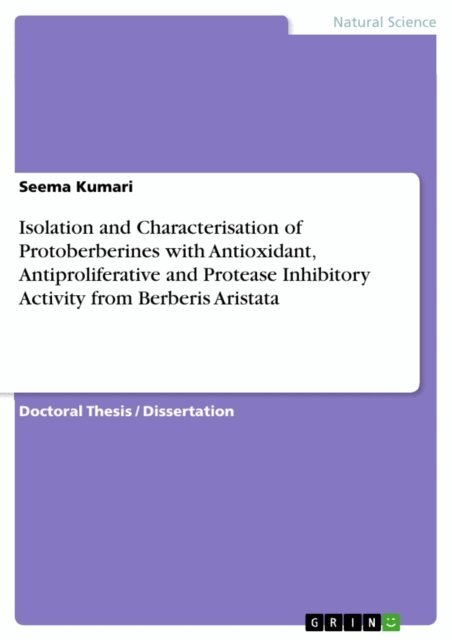
Doctoral Thesis / Dissertation from the year 2012 in the subject Chemistry - Bio-chemistry, , course: Biochemistry, language: English, abstract: Antioxidants are vital substances protecting cells from oxidative damage of biological molecules like DNA, proteins, lipids and maintain normal homeostasis in cell by scavenging free radicals. Oxidative stress is one of the major source of free radicals and causing disorders like multiple sclerosis, Alzheimer's, Parkinsons, cardiovascular diseases, and other degenerative disorders. Antioxidants finds application in medicine as they, act as immunoregulators, fight against ageing and also reported to induce apoptosis, cell cycle arrest against some cancer cell lines. Antioxidant also finds application in cosmetic industry and even as topical formulation. They are used as a preservative and also to increase the shelf life of frozen fish, canned mushrooms, meat, juice and general foods. Studies suggested that medicinal plants are a potential, inexpensive and safe source of antioxidants as they are enriched with bioactive compounds. Berberies aristata is commonly called as Daruhaldi or Chitra belongs to family Berberidaceae. The use of root extract as antipyretic, antiseptic, in the treatment of conjunctivitis, ulcers and hepatic disorders have been reported in earlier studies by various workers. The plant has been used for treatment of skin diseases, inflammation, diarrhoea and jaundice. Medicinal plants in the present study were screened for their antioxidant potential against different radicals like DPPH, superoxide, hydroxyl and peroxide. Among them ethanolic roots extract B.aristata exhibit highest antioxidant ability and least IC50 value. Thus further, the ethanolic root extract of B.aristata was subjected to activity guided isolation of antioxidants. Upon liquid-liquid fractionation ethyl acetate fraction exhibited highest radical scavenging activity against DPPH and peroxide radicals. In addition, the IC50 for DPPH radical scavenging and inhibition of lipid peroxidation were significantly less compared to crude ethanol extract indicating quality of antioxidants in ethyl acetate fraction.
Häftad, Engelska, 2019
315 kr
Skickas inom 5-8 vardagar