Sergey Dolgopolski - Böcker
Visar alla böcker från författaren Sergey Dolgopolski. Handla med fri frakt och snabb leverans.
7 produkter
7 produkter
1 057 kr
Skickas inom 7-10 vardagar
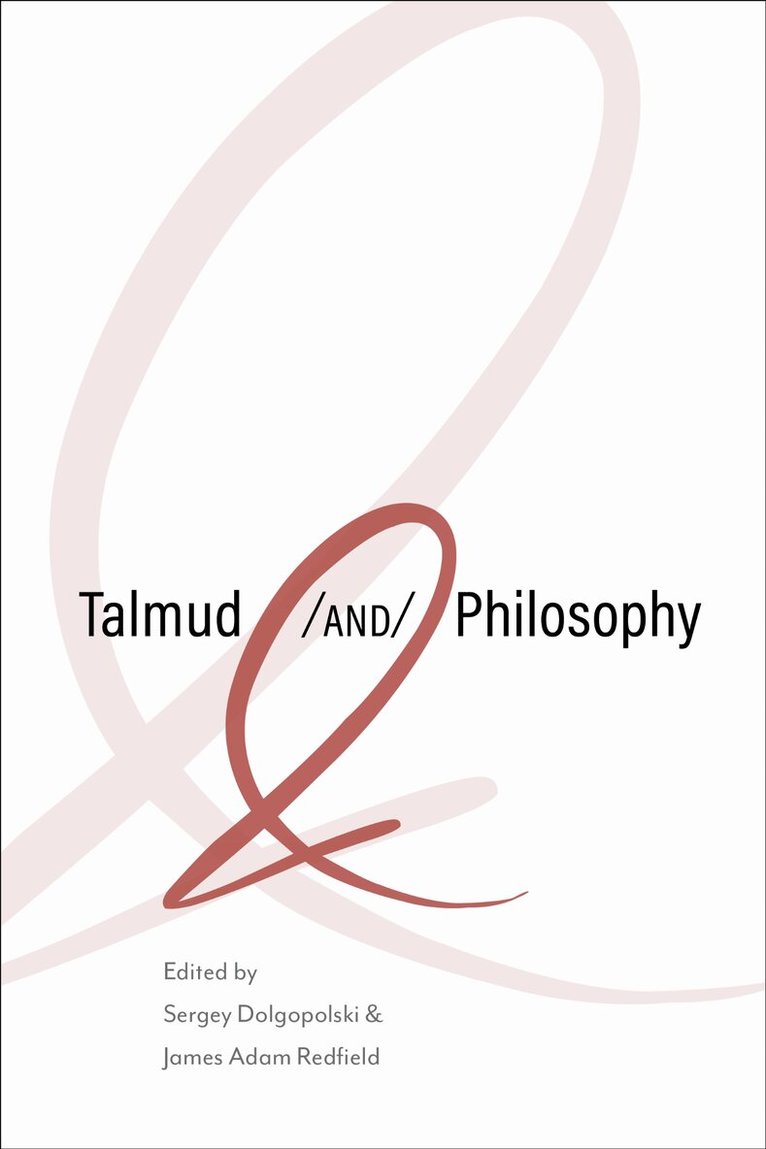
Wide-ranging and astutely argued, Talmud and Philosophy examines the intersections, partitions, and mutual illuminations and problematizations of Western philosophy and the Talmud. Among many philosophers, the Talmud has been at best an idealized and remote object and, at worst, if noticed at all, an object of curiosity. The contributors to this volume collectively ignite and probe a new mode of inquiry by approaching the very question of partitions, conjunctions, and disjunctions between the Talmud and philosophy as the guiding question of their inquiry. Rather than using the Talmud and its modes of argumentation to develop existing philosophical themes, these essays probe the question of how the Talmud as an intellectual discipline sheds new light on the unfolding of philosophy in the history of thought.
466 kr
Skickas inom 7-10 vardagar
Wide-ranging and astutely argued, Talmud and Philosophy examines the intersections, partitions, and mutual illuminations and problematizations of Western philosophy and the Talmud. Among many philosophers, the Talmud has been at best an idealized and remote object and, at worst, if noticed at all, an object of curiosity. The contributors to this volume collectively ignite and probe a new mode of inquiry by approaching the very question of partitions, conjunctions, and disjunctions between the Talmud and philosophy as the guiding question of their inquiry. Rather than using the Talmud and its modes of argumentation to develop existing philosophical themes, these essays probe the question of how the Talmud as an intellectual discipline sheds new light on the unfolding of philosophy in the history of thought.
899 kr
Skickas inom 10-15 vardagar
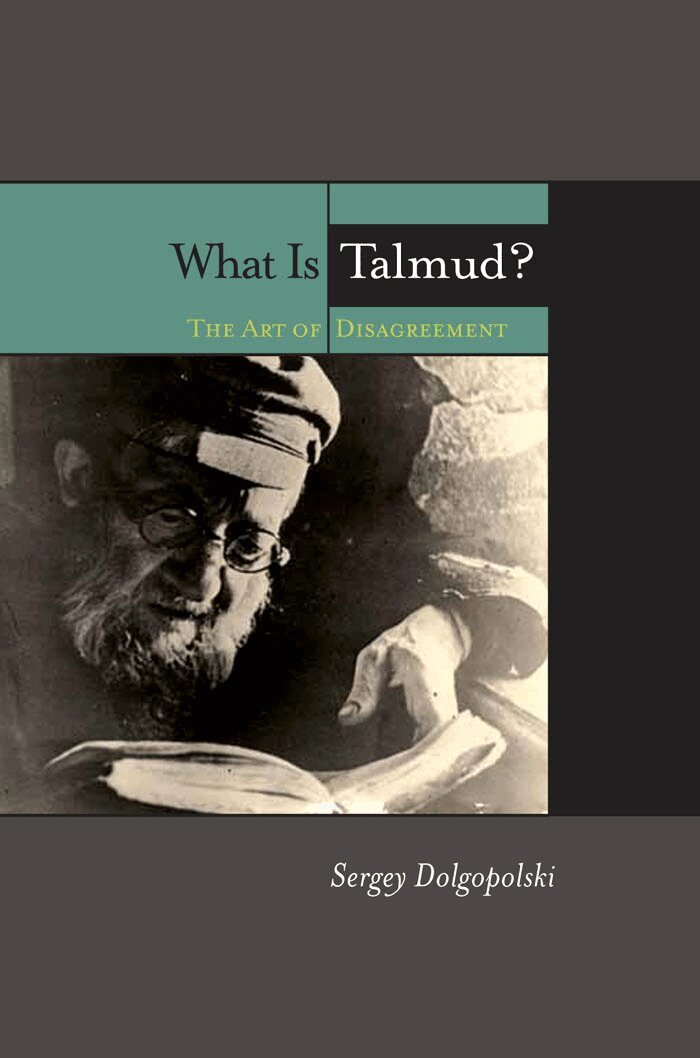
True disagreements are hard to achieve, and even harder to maintain, for the ghost of final agreement constantly haunts them. The Babylonian Talmud, however, escapes from that ghost of agreement, and provokes unsettling questions: Are there any conditions under which disagreement might constitute a genuine relationship between minds? Are disagreements always only temporary steps toward final agreement? Must a community of disagreement always imply agreement, as in an agreement to disagree? What is Talmud? rethinks the task of philological, literary, historical, and cultural analysis of the Talmud. It introduces an aspect of this task that has best been approximated by the philosophical, anthropological, and ontological interrogation of human being in relationship to the Other-whether animal, divine, or human. In both engagement and disengagement with post-Heideggerian traditions of thought, Sergey Dogopolski complements philological-historical and cultural approaches to the Talmud with a rigorous anthropological, ontological, and Talmudic inquiry. He redefines the place of the Talmud and its study, both traditional and academic, in the intellectual map of the West, arguing that Talmud is a scholarly art of its own and represents a fundamental intellectual discipline, not a mere application of logical, grammatical, or even rhetorical arts for the purpose of textual hermeneutics. In Talmudic intellectual art, disagreement is a fundamental category. What Is Talmud? rediscovers disagreement as the ultimate condition of finite human existence or co-existence.
1 338 kr
Skickas inom 10-15 vardagar
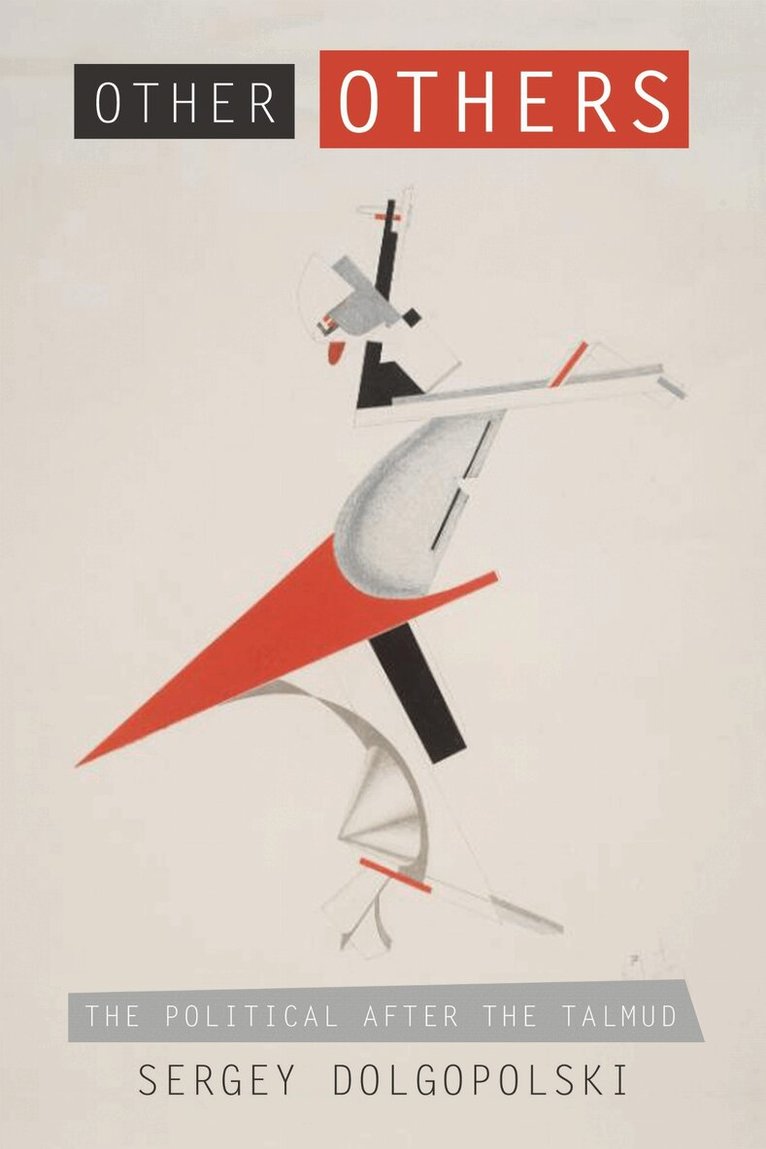
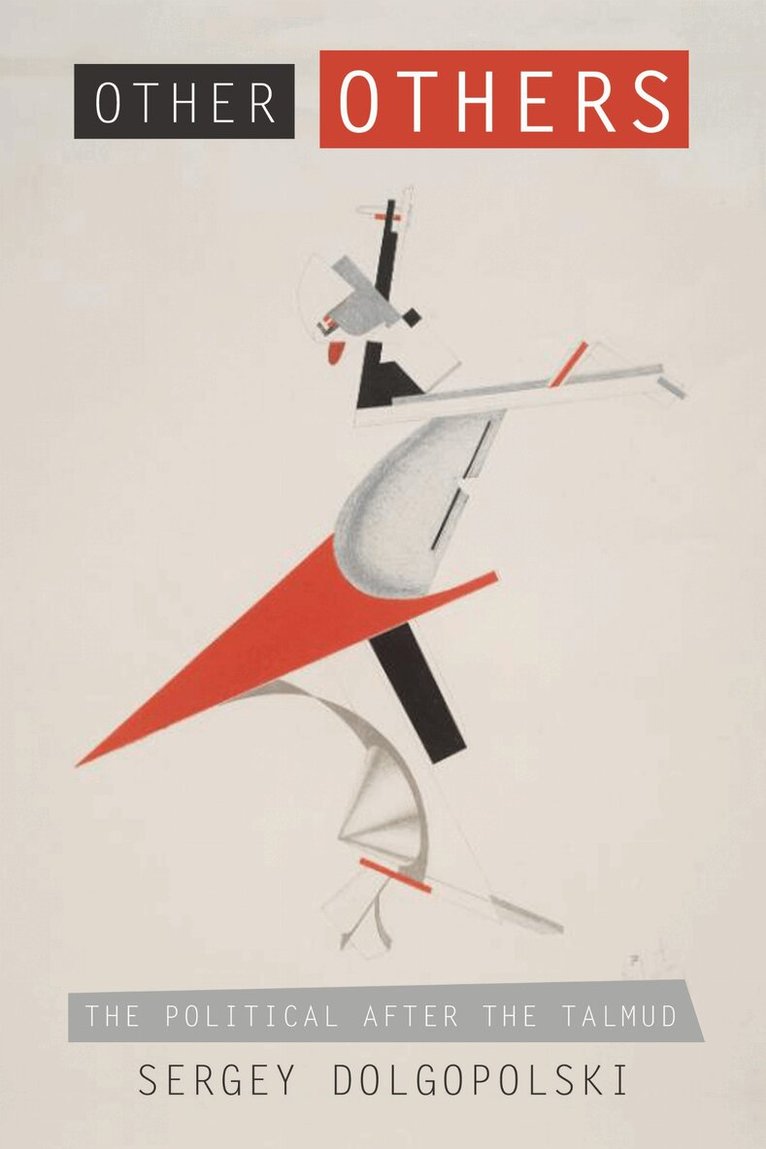
Denying recognition or even existence to certain others, while still tolerating diversity, stabilizes a political order; or does it? Revisiting this classical question of political theory, the book turns to the Talmud. That late ancient body of text and thought displays a new concept of the political, and thus a new take on the question of excluded others. Philosophy- and theology-driven approaches to the concept of the political have tacitly elided a concept of the political which the Talmud displays; yet, that elision becomes noticeable only by a methodical rereading of the pages of the Talmud through and despite the lens of contemporary competing theological and philosophical theories of the political. The book commits such rereading of the Talmud, which at the same time is a reconsideration of contemporary political theory. In that way, The Political intervenes both to the study of the Talmud and Jewish Thought in its aftermath, and to political theory in general.The question of the political for the excluded others, or for those who programmatically do not claim any "original" belonging to a particular territory comes at the forefront of analysis in the book. Other Others approaches this question by moving from a modern political figure of "Jew" as such an "other other" to the late ancient texts of the Talmud. The pages of the Talmud emerge in the book as a (dis)appearing display of the interpersonal rather than intersubjective political. The argument in the book arrives, at the end, to a demand to think earth anew, now beyond the notions of territory, land, nationalism or internationalism, or even beyond the notion of universe, that have defined the thinking of earth so far.
406 kr
Skickas inom 10-15 vardagar
Denying recognition or even existence to certain others, while still tolerating diversity, stabilizes a political order; or does it? Revisiting this classical question of political theory, the book turns to the Talmud. That late ancient body of text and thought displays a new concept of the political, and thus a new take on the question of excluded others. Philosophy- and theology-driven approaches to the concept of the political have tacitly elided a concept of the political which the Talmud displays; yet, that elision becomes noticeable only by a methodical rereading of the pages of the Talmud through and despite the lens of contemporary competing theological and philosophical theories of the political. The book commits such rereading of the Talmud, which at the same time is a reconsideration of contemporary political theory. In that way, The Political intervenes both to the study of the Talmud and Jewish Thought in its aftermath, and to political theory in general.The question of the political for the excluded others, or for those who programmatically do not claim any "original" belonging to a particular territory comes at the forefront of analysis in the book. Other Others approaches this question by moving from a modern political figure of "Jew" as such an "other other" to the late ancient texts of the Talmud. The pages of the Talmud emerge in the book as a (dis)appearing display of the interpersonal rather than intersubjective political. The argument in the book arrives, at the end, to a demand to think earth anew, now beyond the notions of territory, land, nationalism or internationalism, or even beyond the notion of universe, that have defined the thinking of earth so far.
2 103 kr
Skickas inom 10-15 vardagar
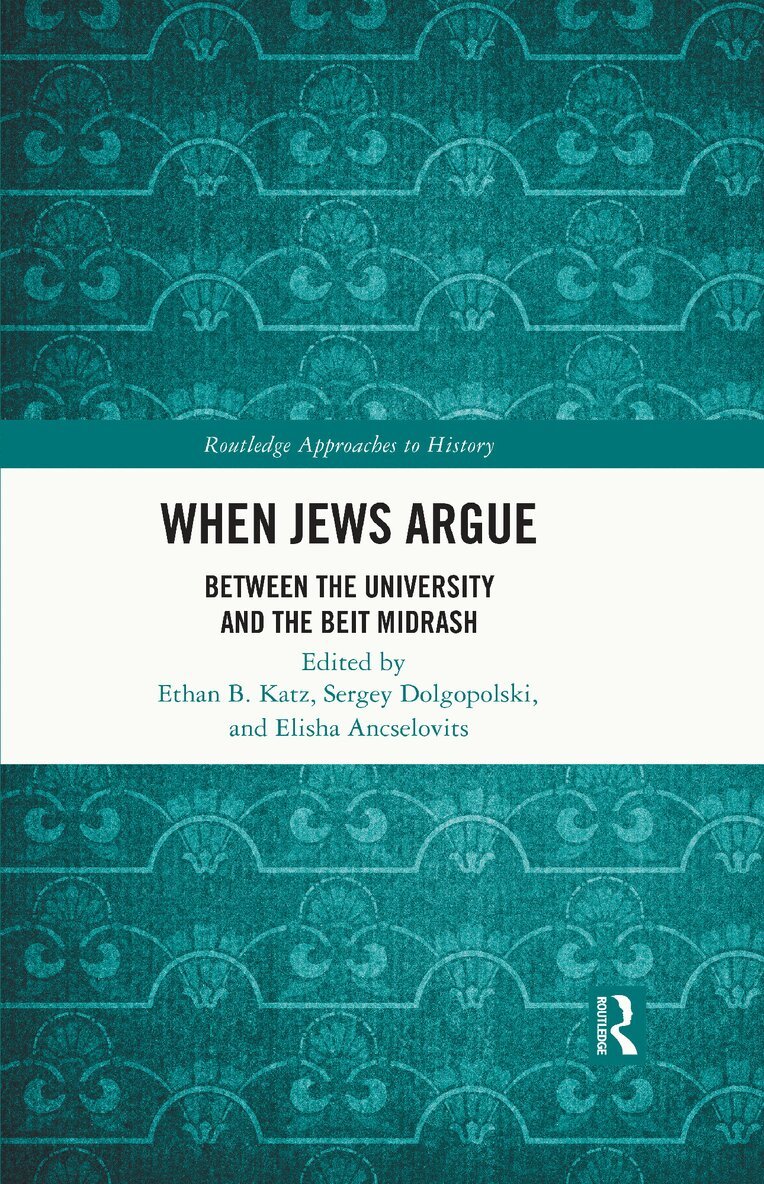
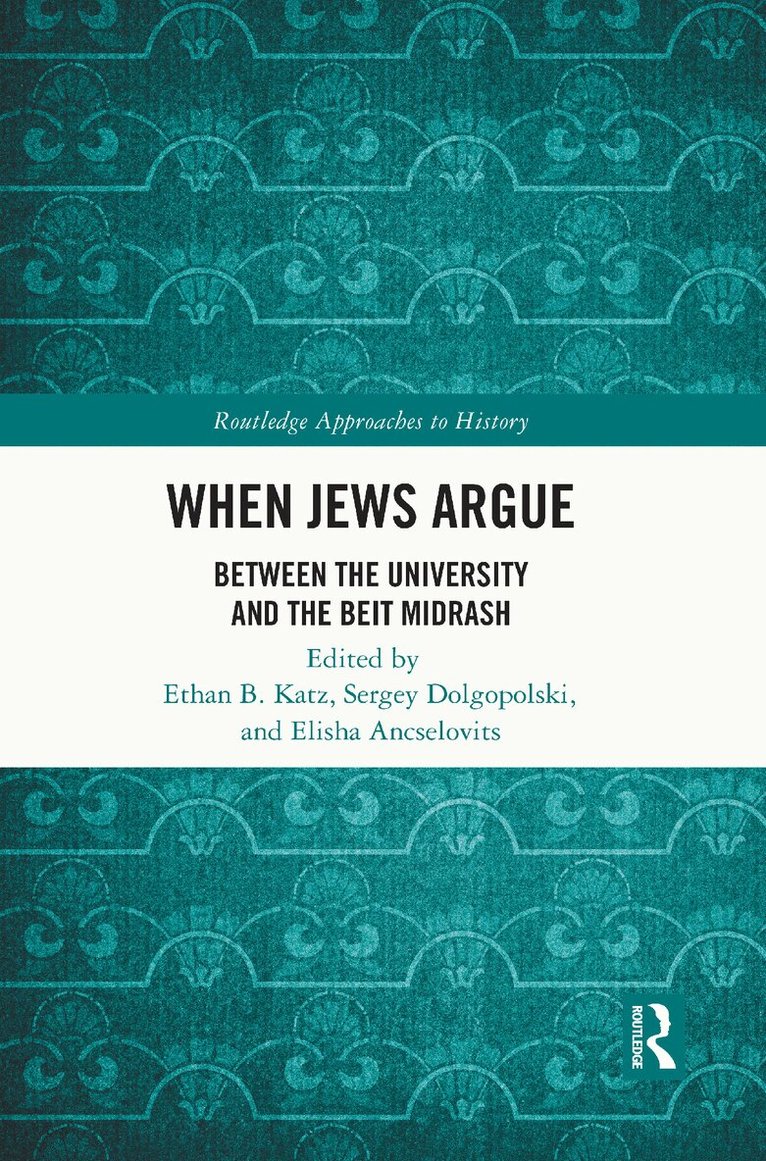
This book re-thinks the relationship between the world of the traditional Jewish study hall (the Beit Midrash) and the academy: Can these two institutions overcome their vast differences? Should they attempt to do so? If not, what could two methods of study seen as diametrically opposed possibly learn from one another? How might they help each other reconceive their interrelationship, themselves, and the broader study of Jews and Judaism? This book begins with three distinct approaches to these challenges. The chapters then follow the approaches through an interdisciplinary series of pioneering case studies that reassess a range of topics including religion and pluralism in Jewish education; pain, sexual consent, and ethics in the Talmud; the place of reason and devotion among Jewish thinkers as diverse as Moses Mendelssohn, Jacob Taubes, Sarah Schenirer, Ibn Chiquitilla, Yair Ḥayim Bacharach, and the Rav Shagar; and Jewish law as a response to the post-Holocaust landscape. The authors are scholars of rabbinics, history, linguistics, philosophy, law, and education, many of whom also have traditional religious training or ordination. The result is a book designed for learned scholars, non-specialists, and students of varying backgrounds, and one that is sure to spark debate in the university, the Beit Midrash, and far beyond.
629 kr
Skickas inom 10-15 vardagar
This book re-thinks the relationship between the world of the traditional Jewish study hall (the Beit Midrash) and the academy: Can these two institutions overcome their vast differences? Should they attempt to do so? If not, what could two methods of study seen as diametrically opposed possibly learn from one another? How might they help each other reconceive their interrelationship, themselves, and the broader study of Jews and Judaism? This book begins with three distinct approaches to these challenges. The chapters then follow the approaches through an interdisciplinary series of pioneering case studies that reassess a range of topics including religion and pluralism in Jewish education; pain, sexual consent, and ethics in the Talmud; the place of reason and devotion among Jewish thinkers as diverse as Moses Mendelssohn, Jacob Taubes, Sarah Schenirer, Ibn Chiquitilla, Yair Ḥayim Bacharach, and the Rav Shagar; and Jewish law as a response to the post-Holocaust landscape. The authors are scholars of rabbinics, history, linguistics, philosophy, law, and education, many of whom also have traditional religious training or ordination. The result is a book designed for learned scholars, non-specialists, and students of varying backgrounds, and one that is sure to spark debate in the university, the Beit Midrash, and far beyond.