Shabir Ahmed Bangroo - Böcker
Visar alla böcker från författaren Shabir Ahmed Bangroo. Handla med fri frakt och snabb leverans.
2 produkter
2 produkter
1 629 kr
Kommande
Sustainable Soil Management: Bridging the Sustainable Development Goals addresses the issue of sustainable soil management and its connection to achieving Sustainable Development Goals (SDGs). It presents a range of strategies, policies, and implementation approaches for sustainable soil management, drawing on examples from around the world. In addition to sustainable soil management practices, the book also covers the dynamics of soil health, the role of soil organic matter, and the integration of agroecology and biodiversity in enhancing food security and environmental sustainability.By examining the interconnectedness of soil with key SDGs-such as zero hunger, clean water, and climate action-this book provides a roadmap for addressing global challenges.Illustrates how soil management practices directly impact various Sustainable Development Goals, including zero hunger, clean water and sanitation, affordable and clean energy, sustainable cities and communities, and life on landProvides a comprehensive overview of sustainable soil management techniques, such as conservation agriculture and integrated soil fertility management that address food security and environmental challengesShowcases successful implementations of sustainable soil practices and their contributions to the SDGs global lessons
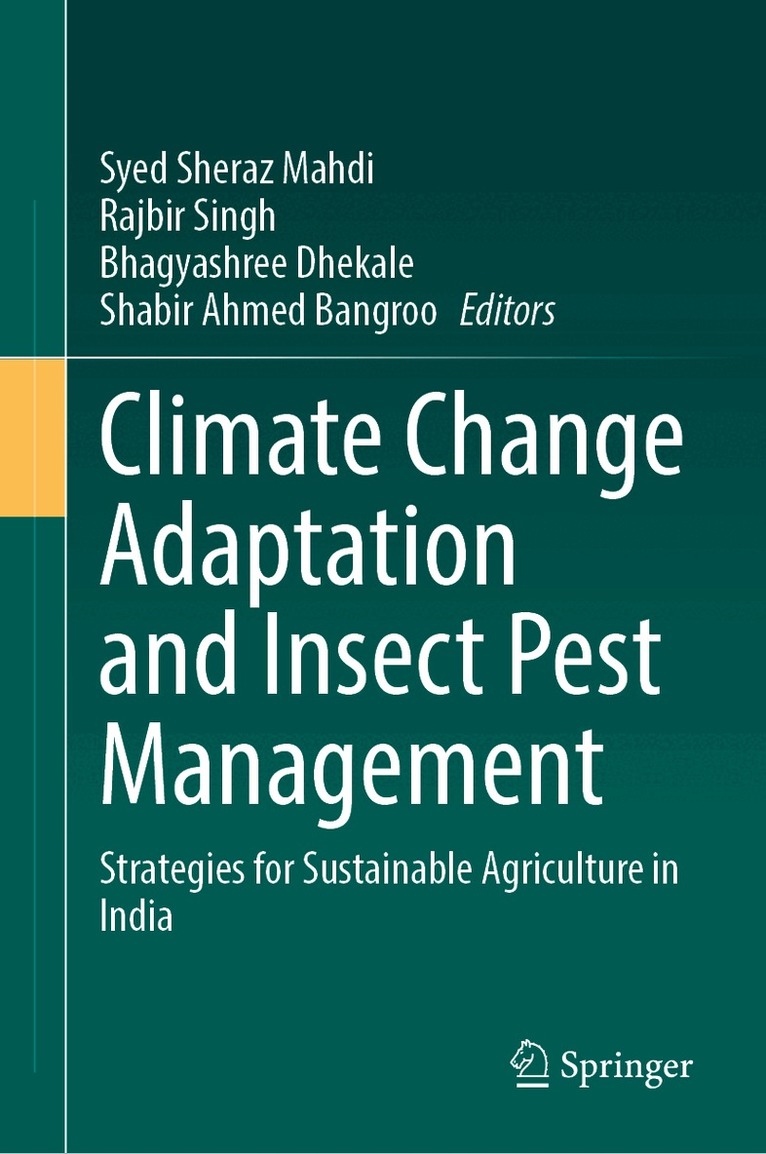
Climate Change Adaptation and Insect Pest Management
Strategies for Sustainable Agriculture in India
Inbunden, Engelska, 2026
2 975 kr
Kommande
This book addresses the urgent need to adapt agricultural practices in response to the dual challenges of climate change and insect pest management. It explores how changing climatic conditions affect insect pests and the resultant impacts on crop production. It provides a thorough analysis of adaptive strategies that can help mitigate these effects, ensuring sustainable agricultural productivity. The book integrates scientific research, practical case studies, and policy recommendations. In this book, the first 10 chapters cover a wide range of climate-resilient and sustainability-oriented themes, including climate-resilient practices for sustainable development of horticulture, enhanced nutrient-use efficiency in millets, the role of bio-inoculants in mitigating climate change in the horticultural ecosystem, indigenous knowledge for climate resilience, groundwater governance in water-intensive sectors, aquatic resource production challenges, pesticide immunogen toxicity, minimal processing techniques for nutritional retention, and nutraceutical and medicinal plants such as Brahmi and Basella. These chapters provide a foundation for understanding how climate resilience, natural resource management, and sustainable practices intersect with modern agriculture.The subsequent chapters expand into awareness and barriers in waste management, the importance of wild flowers as nutraceuticals, emerging issues in aquaculture, major crop diseases such as Stemphylium blight in lentils, and the food value of small indigenous fish species. Further chapters discuss key climate-linked pest management topics, including mating disruption technology, invasive alien insects, and the integration of agronomic fortification for stress management. Additional chapters focus on climate action, the role of synthetic fertilizers as climate accelerants, natural farming as an ecological pathway, and innovative climate-resilient vegetable farming approaches aimed at mitigating climate change impacts. Together, these chapters provide a holistic understanding of the changing climate–agriculture–pest dynamics.This book offers a comprehensive guide for students, researchers, farmers, and policymakers in agriculture, environmental science, and other allied subjects.