Shadi Bartsch – författare
Visar alla böcker från författaren Shadi Bartsch. Handla med fri frakt och snabb leverans.
16 produkter
16 produkter
Häftad, Engelska, 2024
328 kr
Skickas inom 7-10 vardagar
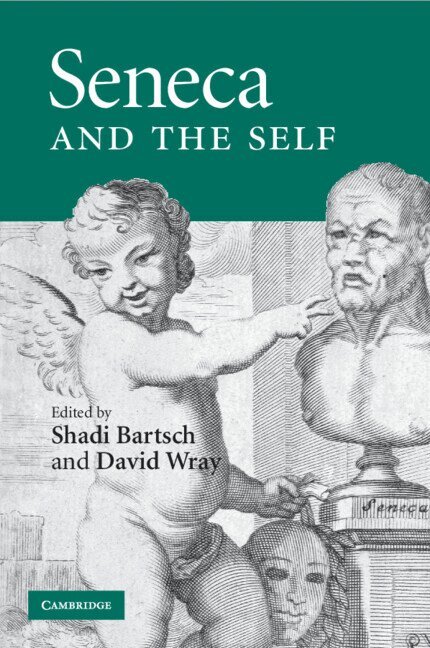
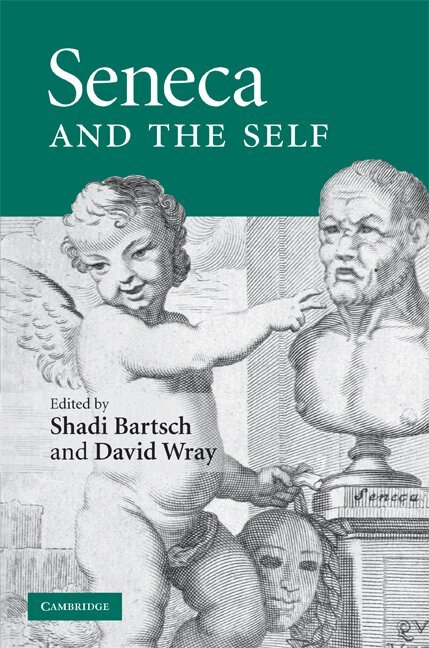
This collection of essays by well-known scholars of Seneca focuses on the multifaceted ways in which Seneca, as philosopher, politician, poet and Roman senator, engaged with the question of ethical selfhood. The contributors explore the main cruces of Senecan scholarship, such as whether Seneca's treatment of the self is original in its historical context; whether Seneca's Stoicism can be reconciled with the pull of rhetorical and literary self-expression; and how Seneca claims to teach psychic self-integration. Most importantly, the contributors debate to what degree, if at all, the absence of a technically articulated concept of selfhood should cause us to hesitate in seeking a distinctively Senecan self - one that stands out not only for the 'intensity of its relations to self', as Foucault famously put it, but also for the way in which those relations to self are couched.
Inbunden, Engelska, 2006
805 kr
Skickas inom 5-8 vardagar
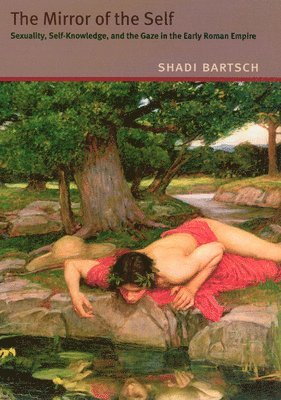
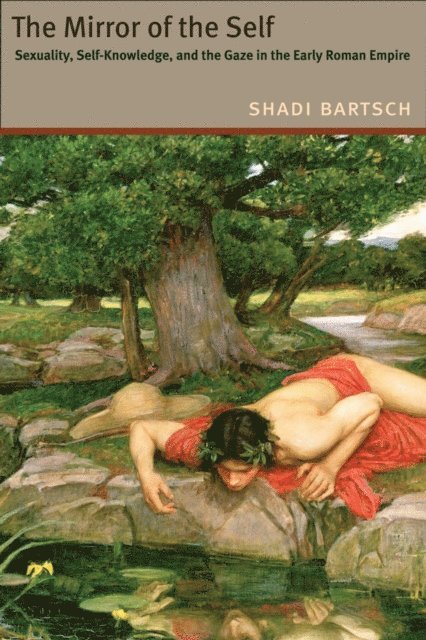
People in the ancient world thought of vision as both an ethical tool and a tactile sense, akin to touch. Gazing upon someone - or oneself - was treated as a path to philosophical self-knowledge, but the question of tactility introduced an erotic element as well. In "The Mirror of the Self", Shadi Bartsch asserts that these links among vision, sexuality, and self-knowledge are key to the classical understanding of the self. Weaving together literary theory, philosophy, and social history, Bartsch traces this complex notion of self from Plato's Greece to Seneca's Rome. She starts by showing how ancient authors envisioned the mirror as both a tool for ethical self-improvement and, paradoxically, a sign of erotic self-indulgence. Her reading of the Phaedrus, for example, demonstrates that the mirroring gaze in Plato, because of its sexual possibilities, could not be adopted by Roman philosophers and their students. Bartsch goes on to examine the Roman treatment of the ethical and sexual gaze, and she traces how self-knowledge, the philosopher's body, and the performance of virtue all played a role in shaping the Roman understanding of the nature of selfhood.Culminating in a profoundly original reading of Medea, "The Mirror of the Self" illustrates how Seneca, in his Stoic quest for self-knowledge, embodies the Roman view, marking a new point in human thought about self-perception. Bartsch leads readers on a journey that unveils divided selves, moral hypocrisy, and lustful Stoics - and offers fresh insights about seminal works. At once sexy and philosophical, "The Mirror of the Self" will be required reading for classicists, philosophers, and anthropologists alike.
Häftad, Engelska, 2006
578 kr
Skickas inom 3-6 vardagar
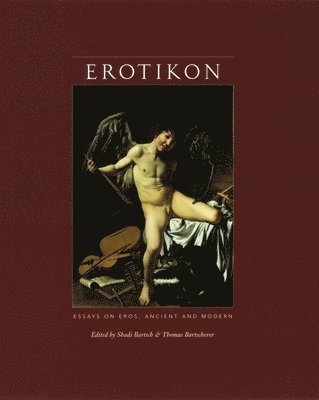
Erotikon brings together leading contemporary intellectuals from a variety of fields for an expansive debate on the full meaning of eros. Renowned scholars of philosophy, literature, classics, psychoanalysis, theology, and art history join poets and a novelist to offer fresh insights into a topic that is at once ancient and forever young. Restricted neither by historical period nor by genre, these contributions explore manifestations of eros throughout Western culture, in subjects ranging from ancient philosophy and baroque architecture to modern literature and Hollywood cinema.An idea charged with paradox, eros has always defied categorization, and yet it cannot—it will not—be ignored. Erotikon aims to raise the difficult question of what, if anything, unifies the erotic manifold. How is eros in a sculpture like eros in a poem? Does the ancient story of Cupid and Psyche still speak meaningfully to modern readers, and if so, why? Is Plato's eros the same as Freud's? Or Proust's? And what is the erotic dimension in Nietzsche's thought? While each essay takes on a specific issue, together they constitute a wide-ranging conversation in which these broader questions are at play. A compilation of the latest, best efforts to reckon with eros, Erotikon will appeal not just to scholars and educators, but also to artists and critics, to the curious and the disillusioned, to the prurient and the prudent.
Häftad, Engelska, 2014
249 kr
Skickas inom 5-8 vardagar
People in the ancient world thought of vision as both an ethical tool and a tactile sense, akin to touch. Gazing upon someone - or oneself - was treated as a path to philosophical self-knowledge, but the question of tactility introduced an crotic element as well. In The Mirror of the Self, Shadi Bartsch asserts that these links among vision, sexuality, and self-knowledge are key to the classical understanding of the self. Weaving together literary theory, philosophy, and social history, Bartsch traces this complex notion of self from Plato's Greece to Seneca's Rome as she unveils divided selves, moral hypocrisy, and lustful Stoics - and offers fresh insights about seminal works. At once sexy and philosophical, The Mirror of the Self will be required reading for classicists, philosophers, and anthropologists alike.
Inbunden, Engelska, 2015
509 kr
Skickas inom 5-8 vardagar
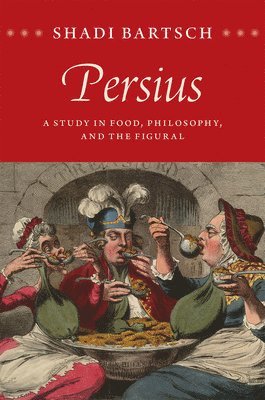
The Roman poet and satirist Persius (34-62 CE) was unique among his peers for lampooning literary and social conventions from a distinctly Stoic point of view. A curious amalgam of mocking wit and philosophy, his Satires are rife with violent metaphors and unpleasant imagery and show little concern for the reader's enjoyment or understanding. In Persius, Shadi Bartsch explores this Stoic framework and argues that Persius sets his own bizarre metaphors of food, digestion, and sexuality against more appealing imagery to show that the latter - and the poetry containing it - harms rather than helps its audience. Ultimately, he encourages us to abandon metaphor altogether in favor of the non-emotive abstract truths of Stoic philosophy, to live in a world where neither alluring poetry, nor rich food, nor sexual charm play a role in philosophical teaching.
Inbunden, Engelska, 2009
1 330 kr
Skickas inom 7-10 vardagar
This collection of essays by well-known scholars of Seneca focuses on the multifaceted ways in which Seneca, as philosopher, politician, poet and Roman senator, engaged with the question of ethical selfhood. The contributors explore the main cruces of Senecan scholarship, such as whether Seneca's treatment of the self is original in its historical context; whether Seneca's Stoicism can be reconciled with the pull of rhetorical and literary self-expression; and how Seneca claims to teach psychic self-integration. Most importantly, the contributors debate to what degree, if at all, the absence of a technically articulated concept of selfhood should cause us to hesitate in seeking a distinctively Senecan self - one that stands out not only for the 'intensity of its relations to self', as Foucault famously put it, but also for the way in which those relations to self are couched.
Häftad, Engelska, 2001
409 kr
Skickas inom 10-15 vardagar
Is Lucan’s brilliant and grotesque epic Civil War an example of ideological poetry at its most flagrant, or is it a work that despairingly proclaims the meaninglessness of ideology? Shadi Bartsch offers a startlingly new answer to this split debate on the Roman poet’s magnum opus.Reflecting on the disintegration of the Roman republic in the wake of the civil war that began in 49 B.C., Lucan (writing during the grim tyranny of Nero’s Rome) recounts that fateful conflict with a strangely ambiguous portrayal of his republican hero, Pompey. Although the story is one of a tragic defeat, the language of his epic is more often violent and nihilistic than heroic and tragic. And Lucan is oddly fascinated by the graphic destruction of lives, the violation of human bodies—an interest paralleled in his deviant syntax and fragmented poetry. In an analysis that draws on contemporary political thought ranging from Hannah Arendt and Richard Rorty to the poetry of Vietnam veterans, as well as on literary theory and ancient sources, Bartsch finds in the paradoxes of Lucan’s poetry both a political irony that responds to the universally perceived need for, yet suspicion of, ideology, and a recourse to the redemptive power of storytelling. This shrewd and lively book contributes substantially to our understanding of Roman civilization and of poetry as a means of political expression.
Inbunden, Engelska, 2023
273 kr
Skickas inom 5-8 vardagar
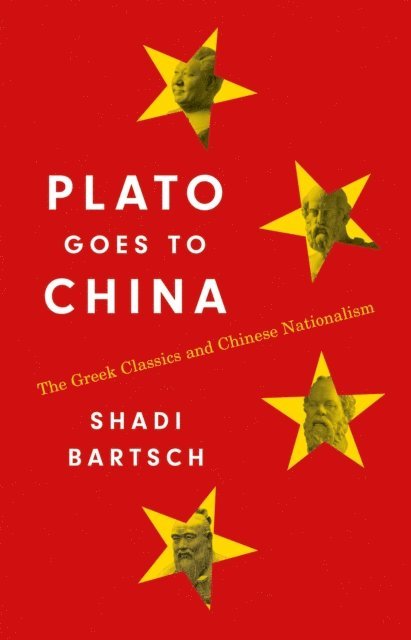
The surprising story of how Greek classics are being pressed into use in contemporary China to support the regime’s political agendaAs improbable as it may sound, an illuminating way to understand today’s China and how it views the West is to look at the astonishing ways Chinese intellectuals are interpreting—or is it misinterpreting?—the Greek classics. In Plato Goes to China, Shadi Bartsch offers a provocative look at Chinese politics and ideology by exploring Chinese readings of Plato, Aristotle, Thucydides, and other ancient writers. She shows how Chinese thinkers have dramatically recast the Greek classics to support China’s political agenda, diagnose the ills of the West, and assert the superiority of China’s own Confucian classical tradition.In a lively account that ranges from the Jesuits to Xi Jinping, Bartsch traces how the fortunes of the Greek classics have changed in China since the seventeenth century. Before the Tiananmen Square crackdown, the Chinese typically read Greek philosophy and political theory in order to promote democratic reform or discover the secrets of the success of Western democracy and science. No longer. Today, many Chinese intellectuals use these texts to critique concepts such as democracy, citizenship, and rationality. Plato’s “Noble Lie,” in which citizens are kept in their castes through deception, is lauded; Aristotle’s Politics is seen as civic brainwashing; and Thucydides’s criticism of Athenian democracy is applied to modern America.What do antiquity’s “dead white men” have left to teach? By uncovering the unusual ways Chinese thinkers are answering that question, Plato Goes to China opens a surprising new window on China today.
Häftad, Engelska, 2025
192 kr
Skickas inom 5-8 vardagar
The surprising story of how Greek classics are being pressed into use in contemporary China to support the regime’s political agendaAs improbable as it may sound, an illuminating way to understand today’s China and how it views the West is to look at the astonishing ways Chinese intellectuals are interpreting—or is it misinterpreting?—the Greek classics. In Plato Goes to China, Shadi Bartsch offers a provocative look at Chinese politics and ideology by exploring Chinese readings of Plato, Aristotle, Thucydides, and other ancient writers. She shows how Chinese thinkers have dramatically recast the Greek classics to support China’s political agenda, diagnose the ills of the West, and assert the superiority of China’s own Confucian classical tradition.In a lively account that ranges from the Jesuits to Xi Jinping, Bartsch traces how the fortunes of the Greek classics have changed in China since the seventeenth century. Before the Tiananmen Square crackdown, the Chinese typically read Greek philosophy and political theory in order to promote democratic reform or discover the secrets of the success of Western democracy and science. No longer. Today, many Chinese intellectuals use these texts to critique concepts such as democracy, citizenship, and rationality. Plato’s “Noble Lie,” in which citizens are kept in their castes through deception, is lauded; Aristotle’s Politics is seen as civic brainwashing; and Thucydides’s criticism of Athenian democracy is applied to modern America.What do antiquity’s “dead white men” have left to teach? By uncovering the unusual ways Chinese thinkers are answering that question, Plato Goes to China opens a surprising new window on China today.
Häftad, Engelska, 2014
370 kr
Skickas inom 5-8 vardagar
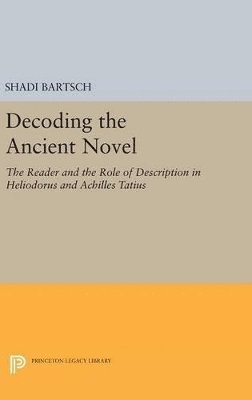
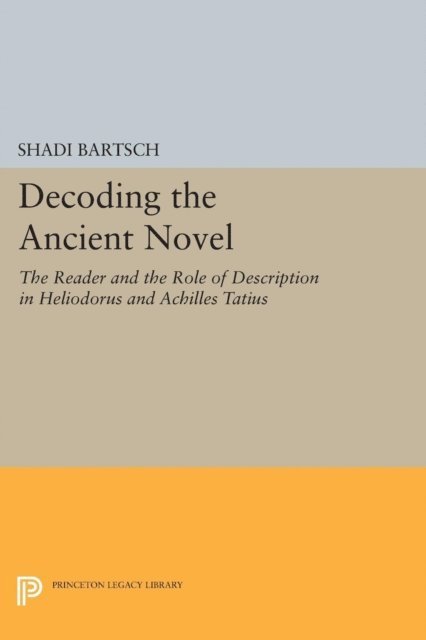
Using a reader-oriented approach, Shadi Bartsch reconsiders the role of detailed descriptive accounts in the ancient Greek novels of Heliodorus and Achilles Tatius and in so doing offers a new view of the genre itself. Bartsch demonstrates that these passages, often misunderstood as mere ornamental devices, form in fact an integral part of the narrative proper, working to activate the audience's awareness of the play of meaning in the story. As the crucial elements in the evolution of a relationship in which the author arouses and then undermines the expectations of his readership, these passages provide the key to a better understanding and interpretation of these two most sophisticated of the ancient Greek romances. In many works of the Second Sophistic, descriptions of visual conveyors of meaning--artworks and dreams--signaled the presence of a deeper meaning. This meaning was revealed in the texts themselves through an interpretation furnished by the author. The two novels at hand, however, manipulate this convention of hermeneutic description by playing upon their readers' expectations and luring them into the trap of incorrect exegesis.Employed for different ends in the context of each work, this process has similar implications in both for the relationship between reader and author as it arises out of the former's involvement with the text. Originally published in 1989. The Princeton Legacy Library uses the latest print-on-demand technology to again make available previously out-of-print books from the distinguished backlist of Princeton University Press. These editions preserve the original texts of these important books while presenting them in durable paperback and hardcover editions. The goal of the Princeton Legacy Library is to vastly increase access to the rich scholarly heritage found in the thousands of books published by Princeton University Press since its founding in 1905.
Inbunden, Engelska, 2016
1 583 kr
Skickas inom 3-6 vardagar
Using a reader-oriented approach, Shadi Bartsch reconsiders the role of detailed descriptive accounts in the ancient Greek novels of Heliodorus and Achilles Tatius and in so doing offers a new view of the genre itself. Bartsch demonstrates that these passages, often misunderstood as mere ornamental devices, form in fact an integral part of the narrative proper, working to activate the audience's awareness of the play of meaning in the story. As the crucial elements in the evolution of a relationship in which the author arouses and then undermines the expectations of his readership, these passages provide the key to a better understanding and interpretation of these two most sophisticated of the ancient Greek romances. In many works of the Second Sophistic, descriptions of visual conveyors of meaning--artworks and dreams--signaled the presence of a deeper meaning. This meaning was revealed in the texts themselves through an interpretation furnished by the author. The two novels at hand, however, manipulate this convention of hermeneutic description by playing upon their readers' expectations and luring them into the trap of incorrect exegesis.Employed for different ends in the context of each work, this process has similar implications in both for the relationship between reader and author as it arises out of the former's involvement with the text. Originally published in 1989. The Princeton Legacy Library uses the latest print-on-demand technology to again make available previously out-of-print books from the distinguished backlist of Princeton University Press. These editions preserve the original texts of these important books while presenting them in durable paperback and hardcover editions. The goal of the Princeton Legacy Library is to vastly increase access to the rich scholarly heritage found in the thousands of books published by Princeton University Press since its founding in 1905.
Inbunden, Engelska, 2015
1 426 kr
Skickas inom 7-10 vardagar
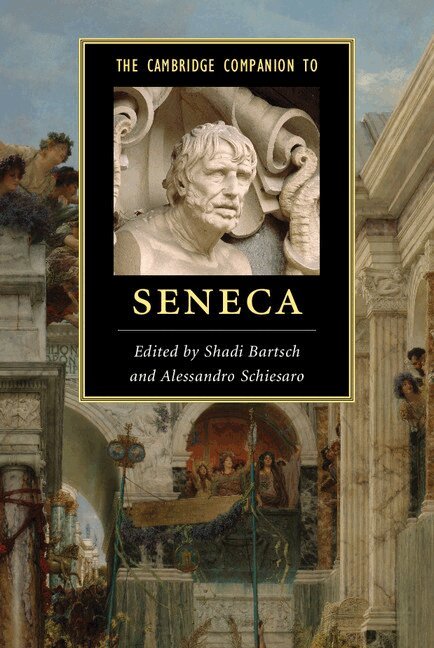
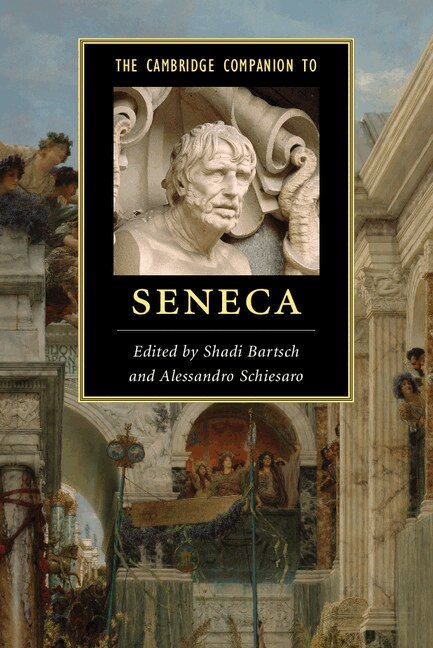
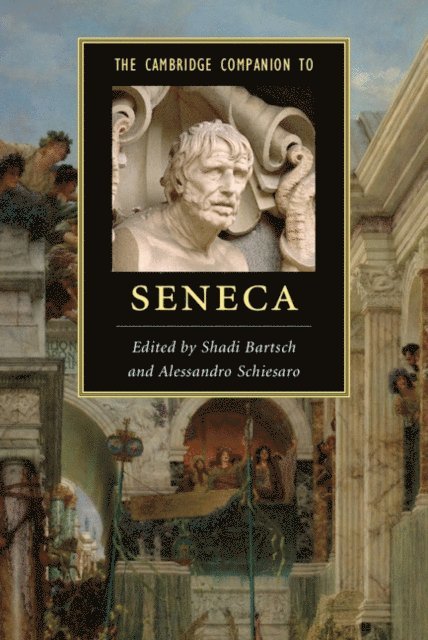
The Roman statesman, philosopher and playwright Lucius Annaeus Seneca dramatically influenced the progression of Western thought. His works have had an unparalleled impact on the development of ethical theory, shaping a code of behavior for dealing with tyranny in his own age that endures today. This Companion thoroughly examines the complete Senecan corpus, with special emphasis on the aspects of his writings that have challenged interpretation. The authors place Seneca in the context of the ancient world and trace his impressive legacy in literature, art, religion, and politics from Neronian Rome to the early modern period. Through critical discussion of the recent proliferation of Senecan studies, this volume compellingly illustrates how the perception of Seneca and his particular type of Stoicism has evolved over time. It provides a comprehensive overview that will benefit students and scholars in classics, comparative literature, history, philosophy and political theory, as well as general readers.
Inbunden, Engelska, 2017
1 237 kr
Skickas inom 7-10 vardagar
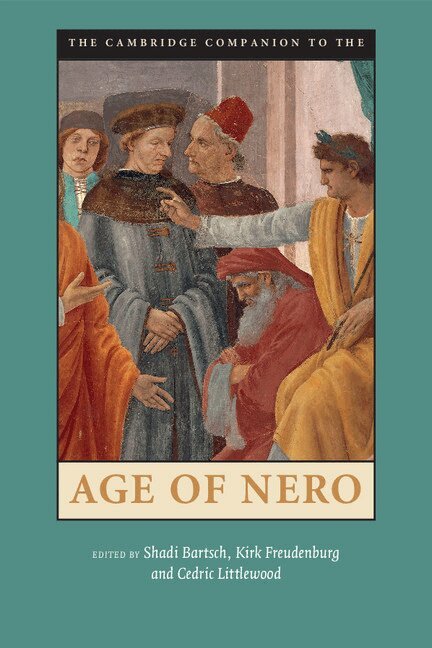
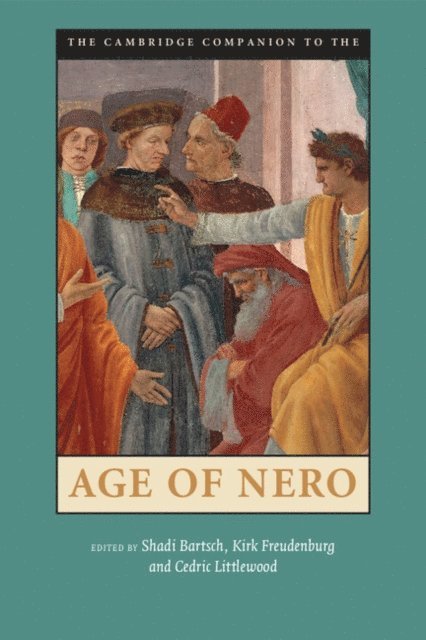
The age of Nero has appealed to the popular imagination more than any other period of Roman history. This volume provides a lively and accessible guide to the various representations and interpretations of the Emperor Nero as well as to the rich literary, philosophical and artistic achievements of his eventful reign. The major achievements of the period in the fields of literature, governance, architecture and art are freshly described and analysed, and special attention is paid to the reception of Nero in the Roman and Christian eras of the first centuries AD and beyond. Written by an international team of leading experts, the chapters provide students and non-specialists with clear and comprehensive accounts of the most important trends in the study of Neronian Rome. They also offer numerous original insights into the period, and open new areas of study for scholars to pursue.
Häftad, Engelska, 2017
442 kr
Skickas inom 7-10 vardagar
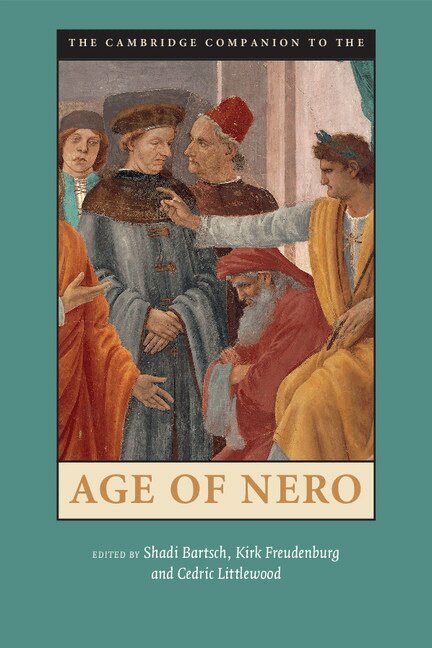
The age of Nero has appealed to the popular imagination more than any other period of Roman history. This volume provides a lively and accessible guide to the various representations and interpretations of the Emperor Nero as well as to the rich literary, philosophical and artistic achievements of his eventful reign. The major achievements of the period in the fields of literature, governance, architecture and art are freshly described and analysed, and special attention is paid to the reception of Nero in the Roman and Christian eras of the first centuries AD and beyond. Written by an international team of leading experts, the chapters provide students and non-specialists with clear and comprehensive accounts of the most important trends in the study of Neronian Rome. They also offer numerous original insights into the period, and open new areas of study for scholars to pursue.
Häftad, Engelska, 2015
493 kr
Skickas inom 7-10 vardagar
The Roman statesman, philosopher and playwright Lucius Annaeus Seneca dramatically influenced the progression of Western thought. His works have had an unparalleled impact on the development of ethical theory, shaping a code of behavior for dealing with tyranny in his own age that endures today. This Companion thoroughly examines the complete Senecan corpus, with special emphasis on the aspects of his writings that have challenged interpretation. The authors place Seneca in the context of the ancient world and trace his impressive legacy in literature, art, religion, and politics from Neronian Rome to the early modern period. Through critical discussion of the recent proliferation of Senecan studies, this volume compellingly illustrates how the perception of Seneca and his particular type of Stoicism has evolved over time. It provides a comprehensive overview that will benefit students and scholars in classics, comparative literature, history, philosophy and political theory, as well as general readers.
Inbunden, Engelska, 1994
879 kr
Tillfälligt slut