Shahab Saquib Sohail – författare
Visar alla böcker från författaren . Handla med fri frakt och snabb leverans.
5 produkter
5 produkter
E-bok
PDF, Engelska, 20261 844 kr
Läs direkt efter köp
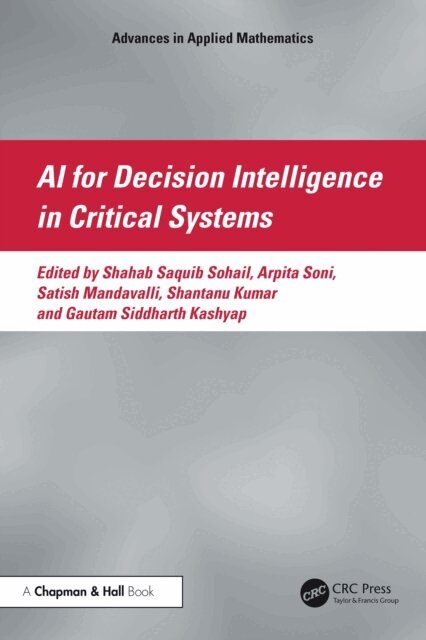
This book is a multi-disciplinary reference on how domain-aware artificial intelligence (AI) models can outperform generic approaches by addressing sector-specific complexities. It offers comparative frameworks, reproducible case studies, and real-world applications of emerging AI methods.Collectively, AI for Decision Intelligence in Critical Systems emphasizes a unifying theme: the effective deployment of AI to strengthen decision-making, enhance system reliability, and mitigate risks in domains where precision, trust, and efficiency are critical.This edited volume brings together twenty-one chapters of original research, each exploring how AI, machine learning (ML), and deep learning (DL) are shaping innovation across critical domains. The book highlights the application of advanced architectures-including Convolutional Neural Networks (CNNs), Quaternion Neural Networks (QCNNs), Large Language Models (LLMs), and Gradient-Boosted Decision Trees (GBDTs)-to solve complex, domain-specific challenges.Concerning computer vision and infrastructure safety, chapters discuss the use of CNNs and QCNNs for automated road crack detection, offering scalable approaches to improving transportation safety while reducing dependence on manual inspections. With regard to software engineering, contributions focus on leveraging ML, DL, and LLMs to enhance software quality assurance, minimize defects, and improve resilience in high-stakes industries. Additional chapters examine ML-driven methods, particularly GBDT, to uncover non-linear drivers of equity valuation across sectors, supporting more accurate forecasts and risk-sensitive decision-making.Academics and researchers in computer science, AI, and data science, industry professionals in transportation, software engineering, finance, and policymakers seeking to apply AI systems effectively will find this book useful.
E-bok
Engelska, 20261 844 kr
Läs direkt efter köp
This book is a multi-disciplinary reference on how domain-aware artificial intelligence (AI) models can outperform generic approaches by addressing sector-specific complexities. It offers comparative frameworks, reproducible case studies, and real-world applications of emerging AI methods.Collectively, AI for Decision Intelligence in Critical Systems emphasizes a unifying theme: the effective deployment of AI to strengthen decision-making, enhance system reliability, and mitigate risks in domains where precision, trust, and efficiency are critical.This edited volume brings together twenty-one chapters of original research, each exploring how AI, machine learning (ML), and deep learning (DL) are shaping innovation across critical domains. The book highlights the application of advanced architectures-including Convolutional Neural Networks (CNNs), Quaternion Neural Networks (QCNNs), Large Language Models (LLMs), and Gradient-Boosted Decision Trees (GBDTs)-to solve complex, domain-specific challenges.Concerning computer vision and infrastructure safety, chapters discuss the use of CNNs and QCNNs for automated road crack detection, offering scalable approaches to improving transportation safety while reducing dependence on manual inspections. With regard to software engineering, contributions focus on leveraging ML, DL, and LLMs to enhance software quality assurance, minimize defects, and improve resilience in high-stakes industries. Additional chapters examine ML-driven methods, particularly GBDT, to uncover non-linear drivers of equity valuation across sectors, supporting more accurate forecasts and risk-sensitive decision-making.Academics and researchers in computer science, AI, and data science, industry professionals in transportation, software engineering, finance, and policymakers seeking to apply AI systems effectively will find this book useful.
Häftad, Engelska, 2026
1 617 kr
Skickas inom 10-15 vardagar
Inbunden, Engelska, 2026
2 640 kr
Skickas inom 10-15 vardagar
Inbunden, Engelska, 2026
2 990 kr
Kommande
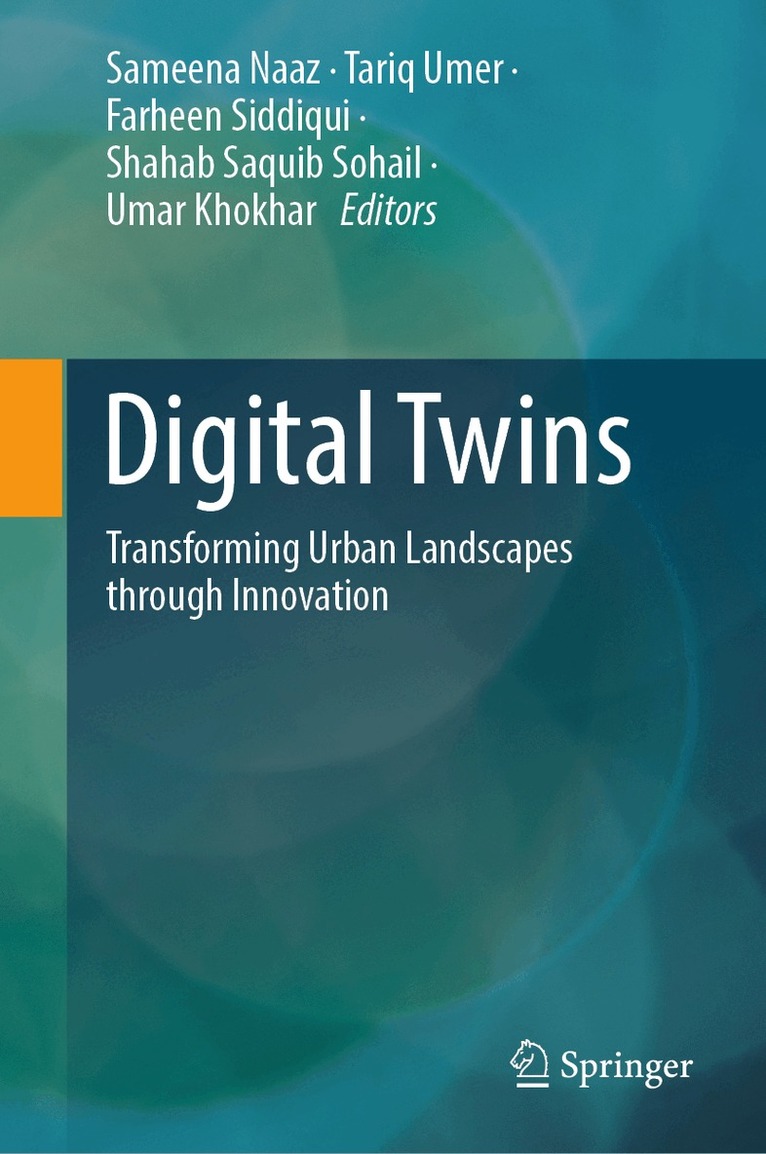
This book explores the transformative role of Digital Twin technology in shaping next-generation smart cities and urban ecosystems. It provides a comprehensive overview of how digital twins—dynamic virtual representations of physical assets, systems, and environments—enable real-time monitoring, simulation, and data-driven decision-making in complex urban infrastructures. The book covers the foundational concepts of digital twins, their integration with enabling technologies such as Artificial Intelligence (AI), the Internet of Things (IoT), big data analytics, and cloud computing, and their practical applications across multiple domains of urban development. Key application areas discussed include transportation systems, energy management, healthcare services, infrastructure planning, public safety, and sustainable urban governance.Beyond conceptual foundations, the book highlights practical frameworks, real-world case studies, and technological architectures that demonstrate how digital twin ecosystems can improve urban efficiency, resilience, and sustainability. It examines the critical role of data integration, predictive analytics, and IoT-driven connectivity in enabling intelligent city management and proactive decision-making. By presenting global examples and interdisciplinary perspectives, the book bridges the gap between theory and practice, illustrating how digital twins can optimise resource utilisation, enhance citizen services, and support sustainable urban transformation.The book also addresses emerging challenges, ethical considerations, and future research directions in deploying digital twins for smart cities. Issues such as data governance, cybersecurity, interoperability, privacy, and implementation complexity are discussed alongside future trends, including AI-driven urban modelling, edge computing, immersive visualization, and next-generation connectivity. By combining technological insights with urban policy perspectives, this book serves as a valuable resource for researchers, policymakers, urban planners, and technology professionals seeking to understand and implement digital twin technologies for innovative and sustainable urban development.