Shamiran Mako - Böcker
Visar alla böcker från författaren Shamiran Mako. Handla med fri frakt och snabb leverans.
5 produkter
5 produkter
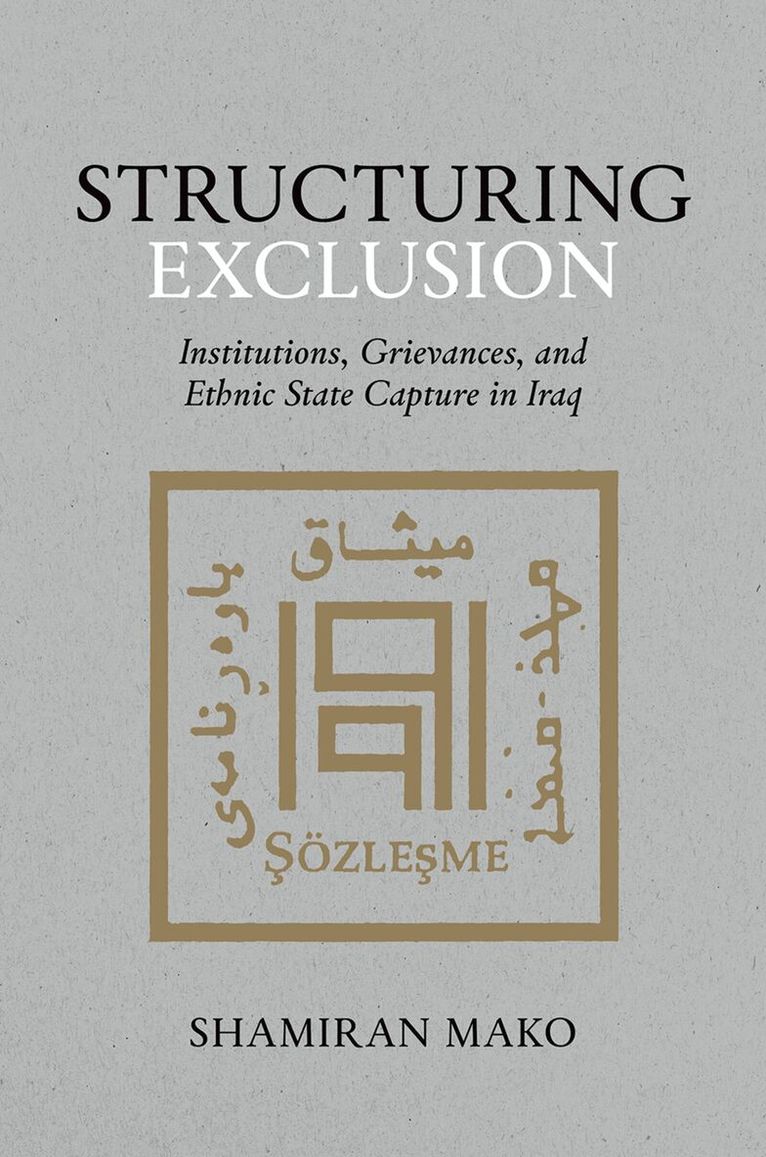
Structuring Exclusion
Institutions, Grievances, and Ethnic State Capture in Iraq
Inbunden, Engelska, 2026
929 kr
Kommande
What role do institutions play in structuring ethnic dominance and state capture in divided societies? How do historical legacies of exclusion and repression influence communal mobilization and elite institutional preferences? In Structuring Exclusion: Institutions, Grievances, and Ethnic State Capture, Mako proposes a historical institutionalist framework to explain how ethnic elites rely on state institutions to entrench group dominance and affect power-sharing outcomes in divided, post-colonial societies. Through a systematic analysis of elite institutional dominance strategies across critical statebuilding junctures, this book posits that ethnic grievances and group mobilization are informed by past collective experiences with exclusion and repression as causal mechanisms that structure communal conflict overtime. Using Iraq as a case study, Mako develops a novel theory of ethnic state capture that links elite institutional choices to strategies of political control. The book advances a processual argument to illustrate how historical legacies shape elite bargaining strategies and institutional preferences during the initial phases of post-conflict statebuilding in deeply divided societies. Drawing on extensive archival research, elite memoirs and interviews, and a systematic examination of legal and institutional changes across various regimes, the book shows how elites construct exclusionary institutions to maintain dominance. By situating Iraq within comparative works on post-colonial state-building, the book advances a processual argument about how historical legacies inform elite bargaining and institutional design as control strategies in deeply divided societies.
Structuring Exclusion
Institutions, Grievances, and Ethnic State Capture in Iraq
Häftad, Engelska, 2026
319 kr
Kommande
What role do institutions play in structuring ethnic dominance and state capture in divided societies? How do historical legacies of exclusion and repression influence communal mobilization and elite institutional preferences? In Structuring Exclusion: Institutions, Grievances, and Ethnic State Capture, Mako proposes a historical institutionalist framework to explain how ethnic elites rely on state institutions to entrench group dominance and affect power-sharing outcomes in divided, post-colonial societies. Through a systematic analysis of elite institutional dominance strategies across critical statebuilding junctures, this book posits that ethnic grievances and group mobilization are informed by past collective experiences with exclusion and repression as causal mechanisms that structure communal conflict overtime. Using Iraq as a case study, Mako develops a novel theory of ethnic state capture that links elite institutional choices to strategies of political control. The book advances a processual argument to illustrate how historical legacies shape elite bargaining strategies and institutional preferences during the initial phases of post-conflict statebuilding in deeply divided societies. Drawing on extensive archival research, elite memoirs and interviews, and a systematic examination of legal and institutional changes across various regimes, the book shows how elites construct exclusionary institutions to maintain dominance. By situating Iraq within comparative works on post-colonial state-building, the book advances a processual argument about how historical legacies inform elite bargaining and institutional design as control strategies in deeply divided societies.
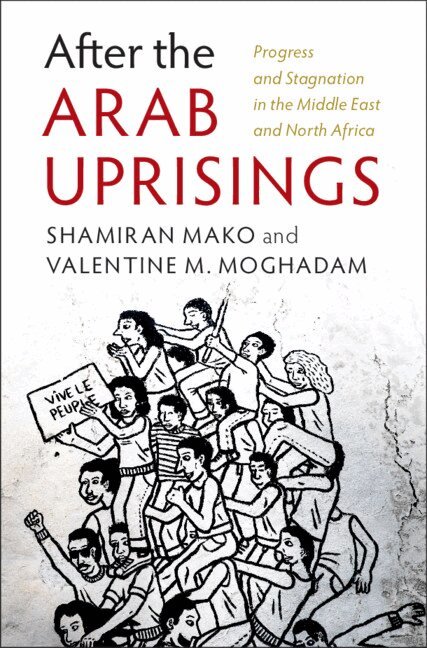
After the Arab Uprisings
Progress and Stagnation in the Middle East and North Africa
Inbunden, Engelska, 2021
968 kr
Skickas inom 7-10 vardagar
Why were some, but not all the Arab mass social protests of 2011 accompanied by relatively quick and nonviolent outcomes in the direction of regime change, democracy, and social transformation? Why was a democratic transition limited to Tunisia, and why did region-wide democratization not occur? After the Arab Uprisings offers an explanatory framework to answer these central questions, based on four key themes: state and regime type, civil society, gender relations and women's mobilizations, and external influence. Applying these to seven cases: Tunisia, Egypt, Morocco, Bahrain, Libya, Syria, and Yemen, Valentine M. Moghadam and Shamiran Mako highlight the salience of domestic and external factors and forces, uniquely presenting women's legal status, social positions, and organizational capacity, along with the presence or absence of external intervention, as key elements in explaining the divergent outcomes of the Arab Spring uprisings, and extending the analysis to the present day.
After the Arab Uprisings
Progress and Stagnation in the Middle East and North Africa
Häftad, Engelska, 2021
379 kr
Skickas
Why were some, but not all the Arab mass social protests of 2011 accompanied by relatively quick and nonviolent outcomes in the direction of regime change, democracy, and social transformation? Why was a democratic transition limited to Tunisia, and why did region-wide democratization not occur? After the Arab Uprisings offers an explanatory framework to answer these central questions, based on four key themes: state and regime type, civil society, gender relations and women's mobilizations, and external influence. Applying these to seven cases: Tunisia, Egypt, Morocco, Bahrain, Libya, Syria, and Yemen, Valentine M. Moghadam and Shamiran Mako highlight the salience of domestic and external factors and forces, uniquely presenting women's legal status, social positions, and organizational capacity, along with the presence or absence of external intervention, as key elements in explaining the divergent outcomes of the Arab Spring uprisings, and extending the analysis to the present day.
State and Society in Iraq
Citizenship Under Occupation, Dictatorship and Democratisation
Inbunden, Engelska, 2017
1 754 kr
Skickas inom 10-15 vardagar
The activities of ISIS since 2014 have brought back to centre stage a series of very old and very troubling questions about the integrity and viability of the Iraqi state. However, most analysts have framed recent events in terms of their immediate past and without the contextual background to explain their evolution. State and Society in Iraq moves beyond a short-sighted analysis to place the complex and contested nature of Iraqi politics within a broader and deeper historical examination. In doing so, the chapters demonstrate that beyond the overwhelming emphasis on failed occupations, cruel tyrants, ethnic separatists and violent religious fanatics, is an Iraqi people who have routinely agitated against the state, advocated for legitimate and accountable government, and called for inter-communal harmony.When, the authors maintain, the Iraqi people are given agency in the complex process of consent, negotiation and resistance that underpin successful state-society relations, the nation can move beyond patterns of oppression and cruelty, of dangerous rhetoric and divisive politics, and towards a cohesive, peaceful and prosperous future - despite the many difficulties and the steep challenges that lie ahead.