Shannon O'Lear - Böcker
Visar alla böcker från författaren Shannon O'Lear. Handla med fri frakt och snabb leverans.
12 produkter
12 produkter
632 kr
Skickas inom 7-10 vardagar
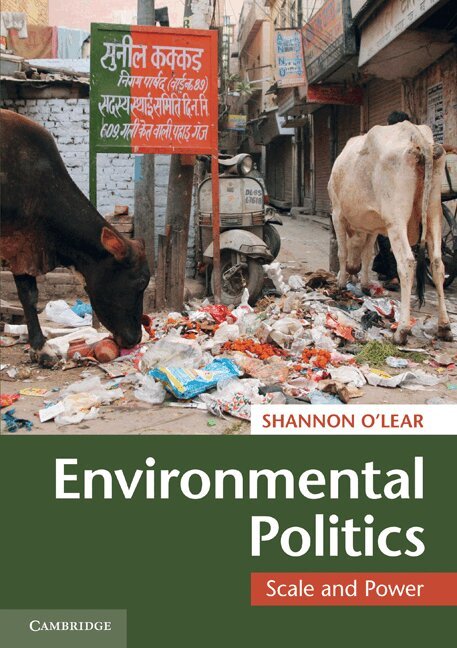
Shannon O'Lear brings a geographer's perspective to environmental politics. The book considers issues of climate change, energy, food security, toxins, waste, and resource conflict to explore how political, economic, ideological and military power have contributed to the generation of environmental issues and the formation of dominant narratives about them. The book encourages the reader to think critically about the power dynamics that shape (and limit) how we think about environmental issues and to expand the reader's understanding of why it matters that these issues are discussed at particular spatial scales. Applying a geographer's sense of scale and power leads to a better understanding of the complexity of environmental issues and will help formulate mitigation and adaptation strategies. The book will appeal mainly to advanced students and researchers from a geography background, but also to social and political scientists who wish to look at the topic from this different perspective.
1 339 kr
Skickas inom 7-10 vardagar
Shannon O'Lear brings a geographer's perspective to environmental politics. The book considers issues of climate change, energy, food security, toxins, waste, and resource conflict to explore how political, economic, ideological and military power have contributed to the generation of environmental issues and the formation of dominant narratives about them. The book encourages the reader to think critically about the power dynamics that shape (and limit) how we think about environmental issues and to expand the reader's understanding of why it matters that these issues are discussed at particular spatial scales. Applying a geographer's sense of scale and power leads to a better understanding of the complexity of environmental issues and will help formulate mitigation and adaptation strategies. The book will appeal mainly to advanced students and researchers from a geography background, but also to social and political scientists who wish to look at the topic from this different perspective.
Thriving in an Academic Career
An International and Interdisciplinary Guide for Early Career Faculty
Inbunden, Engelska, 2024
1 954 kr
Skickas inom 10-15 vardagar
This book provides an invaluable guide on how to achieve a successful and fulfilling academic career. Academics must balance multiple roles and responsibilities, between teaching, research, and offering services to the department, university, and broader community. This book provides practical, research-based guidance on how to adopt a healthy and balanced perspective that accounts for these interconnections.Research shows that faculty who achieve early balance in their academic responsibilities and home life are more likely to succeed in all aspects of their career, while strengthening the quality and climate of their programs and campuses. This book’s chapters accordingly feature case studies and examples that dig deeper into strategies and principles of holistic and balanced career practice and planning. This book assists readers in understanding the relationships between their individual talents as teachers and scholars; the obligations of their department as a community nested with others contributing to the university mission; and the role and responsibility of their university and discipline in the wider society. The themes of balance and harmony underpin this book’s approach to faculty development.Thriving in an Academic Career is for anyone beginning their academic career in geography and related social and environmental sciences, at all types of higher education institutions. This book will be of particular interest to graduate students and early career faculty in geography and nearby social, environmental, and natural sciences.
Thriving in an Academic Career
An International and Interdisciplinary Guide for Early Career Faculty
Häftad, Engelska, 2024
536 kr
Skickas inom 10-15 vardagar
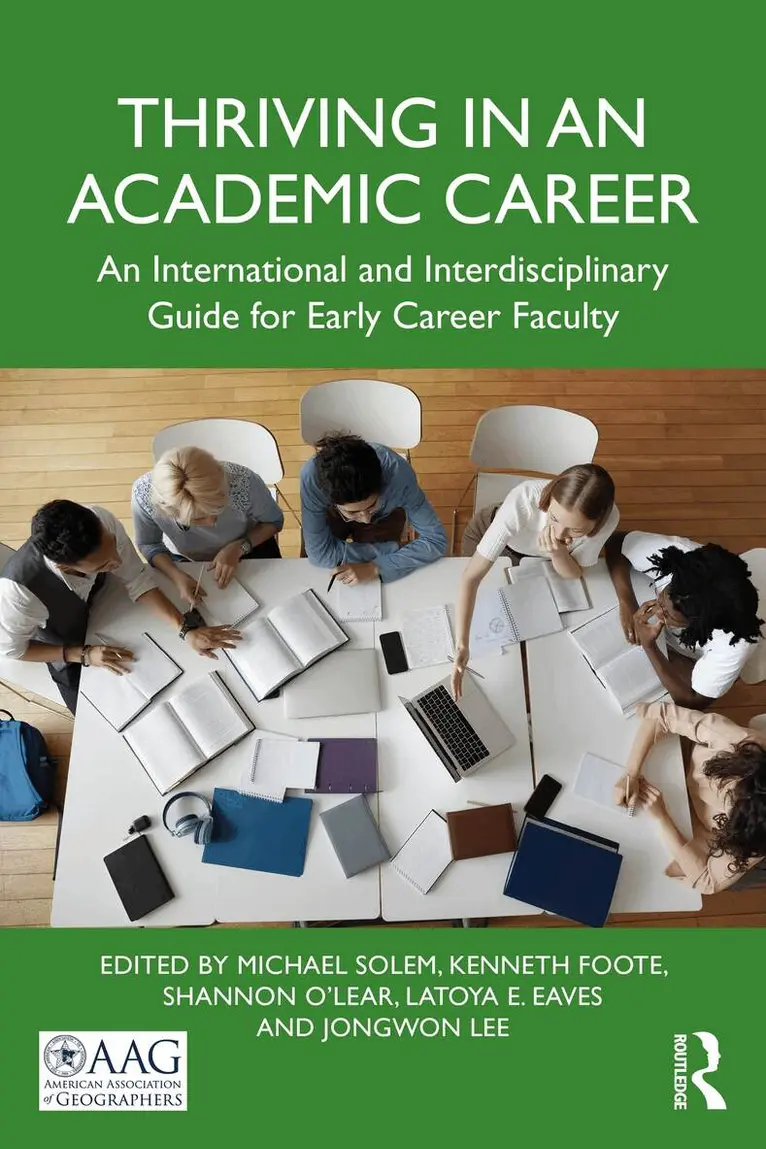
This book provides an invaluable guide on how to achieve a successful and fulfilling academic career. Academics must balance multiple roles and responsibilities, between teaching, research, and offering services to the department, university, and broader community. This book provides practical, research-based guidance on how to adopt a healthy and balanced perspective that accounts for these interconnections.Research shows that faculty who achieve early balance in their academic responsibilities and home life are more likely to succeed in all aspects of their career, while strengthening the quality and climate of their programs and campuses. This book’s chapters accordingly feature case studies and examples that dig deeper into strategies and principles of holistic and balanced career practice and planning. This book assists readers in understanding the relationships between their individual talents as teachers and scholars; the obligations of their department as a community nested with others contributing to the university mission; and the role and responsibility of their university and discipline in the wider society. The themes of balance and harmony underpin this book’s approach to faculty development.Thriving in an Academic Career is for anyone beginning their academic career in geography and related social and environmental sciences, at all types of higher education institutions. This book will be of particular interest to graduate students and early career faculty in geography and nearby social, environmental, and natural sciences.
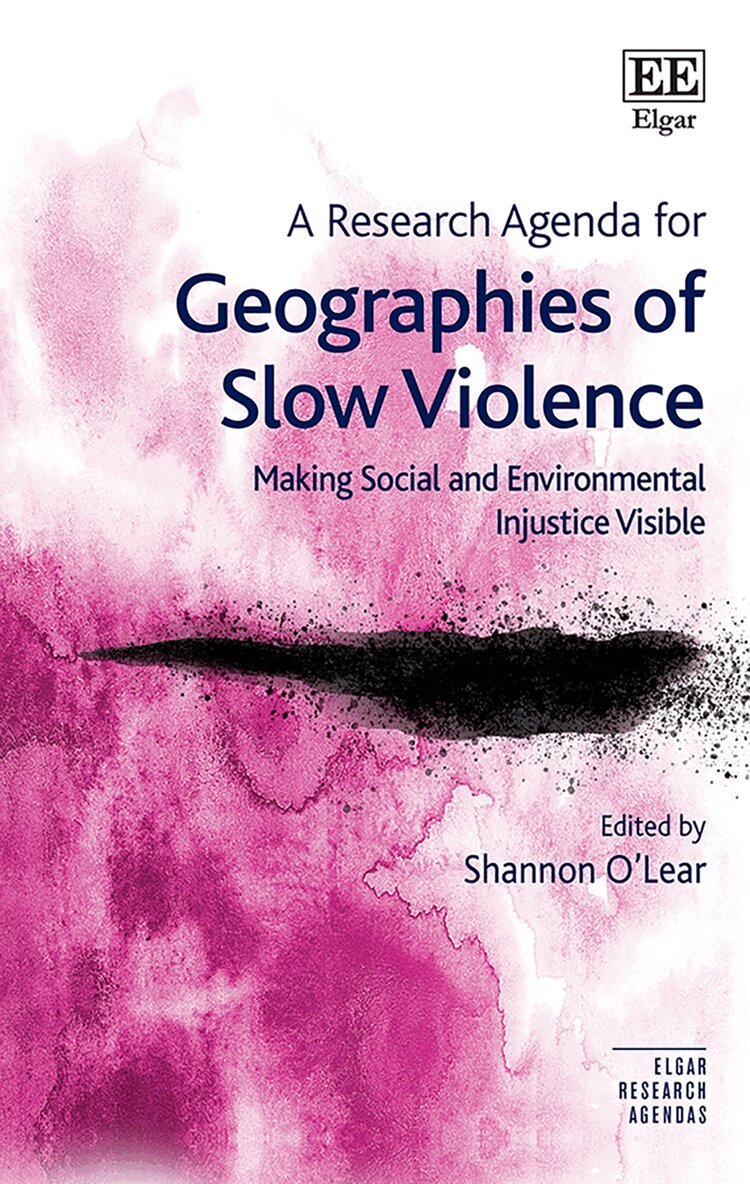
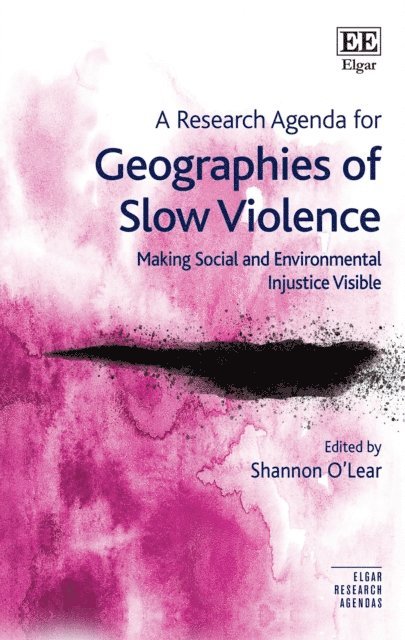
Research Agenda for Geographies of Slow Violence
Making Social and Environmental Injustice Visible
Häftad, Engelska, 2022
502 kr
Skickas inom 7-10 vardagar
Elgar Research Agendas outline the future of research in a given area. Leading scholars are given the space to explore their subject in provocative ways, and map out the potential directions of travel. They are relevant but also visionary.This timely Research Agenda highlights how slow violence, unlike other forms of conflict and direct, physical violence, is difficult to see and measure. It explores ways in which geographers study, analyze and draw attention to forms of harm and violence that have often not been at the forefront of public awareness, including slow violence affecting children, women, Indigenous peoples, and the environment.Demonstrating a range of research methods and theoretical perspectives, this Research Agenda looks at the topic of slow violence through qualitative fieldwork, document analysis, geospatial technologies and cartographic analysis and representation. Key case studies consider slow violence in the form of social injustice, environmental alteration, and harmful human-environment interactions. The chapters also highlight how physical infrastructure, social and legal practices, places that have experienced armed conflict, and groups of people being labeled or marginalised can foster forms of slow violence.Scholars and students of human geography, particularly those looking at decolonization, environmental and social justice and different geographic methods for research, will find this book to be a beneficial read. It will also be useful for those studying structural harm and indirect violence more widely.
2 088 kr
Skickas inom 10-15 vardagar
"Change the system, not the climate" is a common slogan of climate change activists. Yet when this idea comes into the academic and policy realm, it is easy to see how climate change discourse frequently asks the wrong questions. Reframing Climate Change encourages social scientists, policy-makers, and graduate students to critically consider how climate change is framed in scientific, social, and political spheres. It proposes ecological geopolitics as a framework for understanding the extent to which climate change is a meaningful analytical focus, as well as the ways in which it can be detrimental, detracting attention from more productive lines of thought, research, and action. The volume draws from multiple perspectives and disciplines to cover a broad scope of climate change. Chapter topics range from climate science and security to climate justice and literacy. Although these familiar concepts are widely used by scholars and policy-makers, they are discussed here as frequently problematic when used as lenses through which to study climate change. Beyond merely reviewing current trends within these different approaches to climate change, the collection offers a thoughtful assessment of these approaches with an eye towards an overarching reconsideration of the current understanding of our relationship to climate change. Reframing Climate Change is an essential resource for students, policy-makers, and anyone interested in understanding more about this important topic. Who decides what the priorities are? Who benefits from these priorities, and what kinds of systems or actions are justified or hindered? The key contribution of the book is the outlining of ecological geopolitics as a different way of understanding human–environment relationships including and beyond climate change issues.
725 kr
Skickas inom 10-15 vardagar
"Change the system, not the climate" is a common slogan of climate change activists. Yet when this idea comes into the academic and policy realm, it is easy to see how climate change discourse frequently asks the wrong questions. Reframing Climate Change encourages social scientists, policy-makers, and graduate students to critically consider how climate change is framed in scientific, social, and political spheres. It proposes ecological geopolitics as a framework for understanding the extent to which climate change is a meaningful analytical focus, as well as the ways in which it can be detrimental, detracting attention from more productive lines of thought, research, and action. The volume draws from multiple perspectives and disciplines to cover a broad scope of climate change. Chapter topics range from climate science and security to climate justice and literacy. Although these familiar concepts are widely used by scholars and policy-makers, they are discussed here as frequently problematic when used as lenses through which to study climate change. Beyond merely reviewing current trends within these different approaches to climate change, the collection offers a thoughtful assessment of these approaches with an eye towards an overarching reconsideration of the current understanding of our relationship to climate change. Reframing Climate Change is an essential resource for students, policy-makers, and anyone interested in understanding more about this important topic. Who decides what the priorities are? Who benefits from these priorities, and what kinds of systems or actions are justified or hindered? The key contribution of the book is the outlining of ecological geopolitics as a different way of understanding human–environment relationships including and beyond climate change issues.
942 kr
Skickas inom 10-15 vardagar
This thought-provoking and clearly argued text provides a critical geopolitical lens for understanding global environment politics. A subfield of political geography, environmental geopolitics examines how environmental themes are used to support geopolitical arguments and physical realities of power and place. Shannon O’Lear considers common, problematic traits of such familiar but widely misunderstood narratives about human-environment relationships. Mainstream themes about human-environment relationships include narratives about presumed connections between human population trends and resource scarcity; ways in which conflict and violence are linked to resource use or environmental degradation; climate security; and the application of science to solve environmental problems. O’Lear questions these narratives, arguing that the role or meaning of the environment is rarely specified, humans’ role in these situations tends to be considered selectively, and little attention is paid to spatial dimensions of human-environment relationships. She shows that how we tend to think about environmental concerns often obscure value judgments and constrain more dynamic approaches to human-environment relationships. Environmental geopolitics demonstrates how we can question familiar assumptions to generate more just and creative approaches to our many relationships with the environment.
528 kr
Skickas inom 10-15 vardagar
This thought-provoking and clearly argued text provides a critical geopolitical lens for understanding global environment politics. A subfield of political geography, environmental geopolitics examines how environmental themes are used to support geopolitical arguments and physical realities of power and place. Shannon O’Lear considers common, problematic traits of such familiar but widely misunderstood narratives about human-environment relationships. Mainstream themes about human-environment relationships include narratives about presumed connections between human population trends and resource scarcity; ways in which conflict and violence are linked to resource use or environmental degradation; climate security; and the application of science to solve environmental problems. O’Lear questions these narratives, arguing that the role or meaning of the environment is rarely specified, humans’ role in these situations tends to be considered selectively, and little attention is paid to spatial dimensions of human-environment relationships. She shows that how we tend to think about environmental concerns often obscure value judgments and constrain more dynamic approaches to human-environment relationships. Environmental geopolitics demonstrates how we can question familiar assumptions to generate more just and creative approaches to our many relationships with the environment.
1 610 kr
Skickas inom 7-10 vardagar
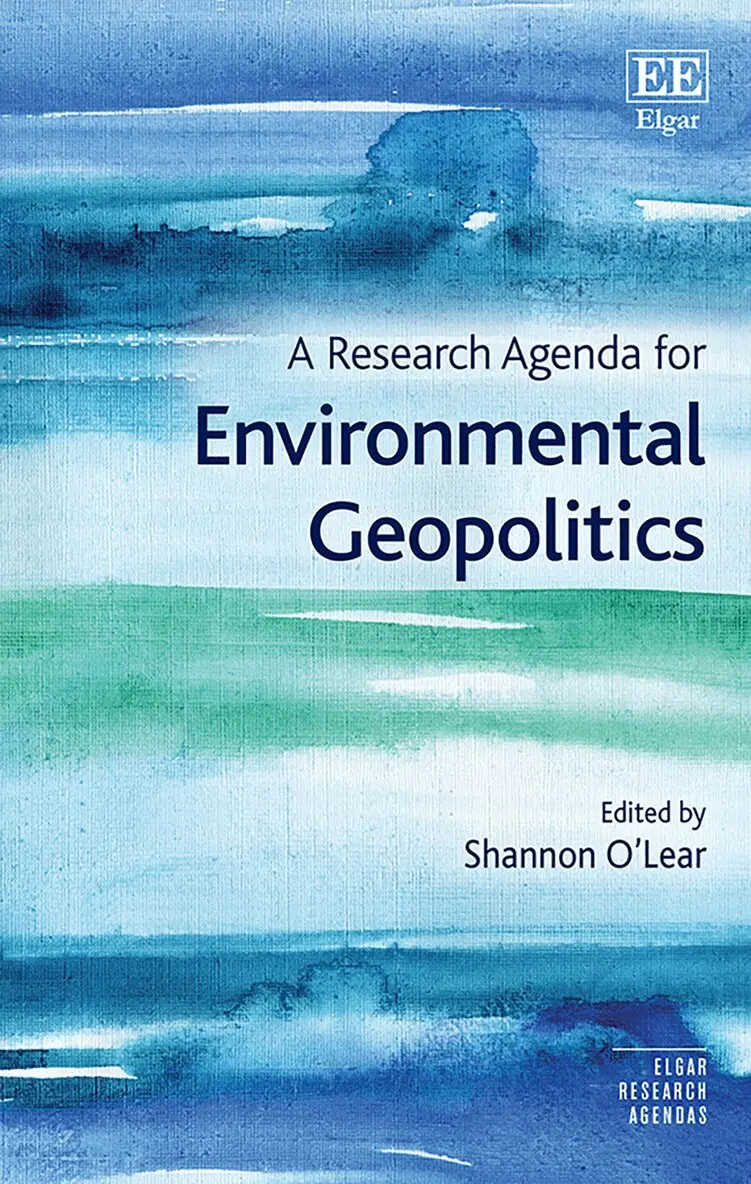
Elgar Research Agendas outline the future of research in a given area. Leading scholars are given the space to explore their subject in provocative ways, and map out the potential directions of travel. They are relevant but also visionary.Challenging the mainstream view of the environment as either threatening or valuable, this book considers how geographic knowledge can be applied to offer a more nuanced understanding. Framed within geopolitics and using a range of methodologies, the chapters encapsulate different approaches to demonstrate how selective forms of knowledge, measurement, and spatial focus both embody and stabilize power, shaping how people perceive and respond to changing features of human-environment interactions.With key case studies analyzed throughout, this will be a timely read for geography and environmental studies scholars. It will also be beneficial to those studying political science and regional studies, as well as those working in NGOs and think tanks.Contributors include: L. Acton, B. Blue, L.M. Campbell, S. Dalby, O. Evrard, C.A. Fox, N.J. Gray, M. Himley, C. Johnson, F. Lasserre, P. Le Billon, M. Mostafanezhad, S. O'Lear, L. Olman, B. Schneider, L. Shykora, C. Sneddon, J. Swann-Quinn, M. Tadaki, P.-L. Têtu, S.D. VanDeveer
Research Agenda for Geographies of Slow Violence
Making Social and Environmental Injustice Visible
Inbunden, Engelska, 2021
1 707 kr
Skickas inom 7-10 vardagar
Elgar Research Agendas outline the future of research in a given area. Leading scholars are given the space to explore their subject in provocative ways, and map out the potential directions of travel. They are relevant but also visionary.This timely Research Agenda highlights how slow violence, unlike other forms of conflict and direct, physical violence, is difficult to see and measure. It explores ways in which geographers study, analyze and draw attention to forms of harm and violence that have often not been at the forefront of public awareness, including slow violence affecting children, women, Indigenous peoples, and the environment.Demonstrating a range of research methods and theoretical perspectives, this Research Agenda looks at the topic of slow violence through qualitative fieldwork, document analysis, geospatial technologies and cartographic analysis and representation. Key case studies consider slow violence in the form of social injustice, environmental alteration, and harmful human-environment interactions. The chapters also highlight how physical infrastructure, social and legal practices, places that have experienced armed conflict, and groups of people being labeled or marginalised can foster forms of slow violence.Scholars and students of human geography, particularly those looking at decolonization, environmental and social justice and different geographic methods for research, will find this book to be a beneficial read. It will also be useful for those studying structural harm and indirect violence more widely.
373 kr
Skickas inom 7-10 vardagar
Elgar Research Agendas outline the future of research in a given area. Leading scholars are given the space to explore their subject in provocative ways, and map out the potential directions of travel. They are relevant but also visionary.Challenging the mainstream view of the environment as either threatening or valuable, this book considers how geographic knowledge can be applied to offer a more nuanced understanding. Framed within geopolitics and using a range of methodologies, the chapters encapsulate different approaches to demonstrate how selective forms of knowledge, measurement, and spatial focus both embody and stabilize power, shaping how people perceive and respond to changing features of human-environment interactions.With key case studies analyzed throughout, this will be a timely read for geography and environmental studies scholars. It will also be beneficial to those studying political science and regional studies, as well as those working in NGOs and think tanks.Contributors include: L. Acton, B. Blue, L.M. Campbell, S. Dalby, O. Evrard, C.A. Fox, N.J. Gray, M. Himley, C. Johnson, F. Lasserre, P. Le Billon, M. Mostafanezhad, S. O'Lear, L. Olman, B. Schneider, L. Shykora, C. Sneddon, J. Swann-Quinn, M. Tadaki, P.-L. Têtu, S.D. VanDeveer