Simon Dalby - Böcker
Visar alla böcker från författaren Simon Dalby. Handla med fri frakt och snabb leverans.
18 produkter
18 produkter
2 103 kr
Skickas inom 10-15 vardagar
This book draws on the expertise of faculty and colleagues at the Balsillie School of International Affairs to both locate the Sustainable Development Goals (SDGs) as a contribution to the development of global government and to examine the political-institutional and financial challenges posed by the SDGs. The contributors are experts in global governance issues in a broad variety of fields ranging from health, food systems, social policy, migration and climate change. An introductory chapter sets out the broad context of the governance challenges involved, and how individual chapters contribute to the analysis. The book begins by focusing on individual SDGs, examining briefly the background to the particular goal and evaluating the opportunities and challenges (particularly governance challenges) in achieving the goal, as well as discussing how this goal relates to other SDGs. The book goes on to address the broader issues of achieving the set of goals overall, examining the novel financing mechanisms required for an enterprise of this nature, the trade-offs involved (particularly between the urgent climate agenda and the social/economic goals), the institutional arrangements designed to enable the achievement of the goals and offering a critical perspective on the enterprise as a whole. Achieving the Sustainable Development Goals makes a distinctive contribution by covering a broad range of individual goals with contributions from experts on governance in the global climate, social and economic areas as well as providing assessments of the overall project – its financial feasibility, institutional requisites, and its failures to tackle certain problems at the core. This book will be of great interest to scholars and students of international affairs, development studies and sustainable development, as well as those engaged in policymaking nationally, internationally and those working in NGOs.
549 kr
Skickas inom 3-6 vardagar
This book draws on the expertise of faculty and colleagues at the Balsillie School of International Affairs to both locate the Sustainable Development Goals (SDGs) as a contribution to the development of global government and to examine the political-institutional and financial challenges posed by the SDGs. The contributors are experts in global governance issues in a broad variety of fields ranging from health, food systems, social policy, migration and climate change. An introductory chapter sets out the broad context of the governance challenges involved, and how individual chapters contribute to the analysis. The book begins by focusing on individual SDGs, examining briefly the background to the particular goal and evaluating the opportunities and challenges (particularly governance challenges) in achieving the goal, as well as discussing how this goal relates to other SDGs. The book goes on to address the broader issues of achieving the set of goals overall, examining the novel financing mechanisms required for an enterprise of this nature, the trade-offs involved (particularly between the urgent climate agenda and the social/economic goals), the institutional arrangements designed to enable the achievement of the goals and offering a critical perspective on the enterprise as a whole. Achieving the Sustainable Development Goals makes a distinctive contribution by covering a broad range of individual goals with contributions from experts on governance in the global climate, social and economic areas as well as providing assessments of the overall project – its financial feasibility, institutional requisites, and its failures to tackle certain problems at the core. This book will be of great interest to scholars and students of international affairs, development studies and sustainable development, as well as those engaged in policymaking nationally, internationally and those working in NGOs.
2 711 kr
Skickas inom 10-15 vardagar
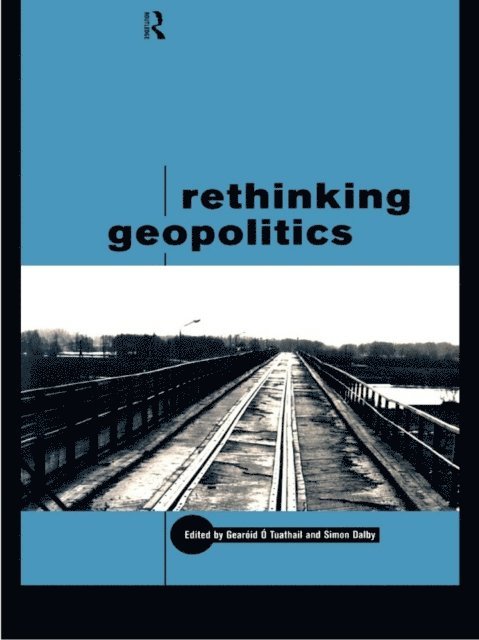
Rethinking Geopolitics argues that the concept of geopolitics needs to be conceptualised anew as the twenty-first century approaches.Challenging conventional geopolitical assumptions, contributors explore:* theories of post-modern geopolitics* historical formulations of states and cold wars* the geopolitics of the Holocaust* the gendered dimension of Kurdish insurgency* the cold war world* political cartoons concerning Bosnia* Time magazine representations of the Persian Gulf* the Zapatistas and the Chiapas revolt* the new cyber politics* conflict simulations in the US military* the emergence of a new geopolitics of global security.Exploring how popular cultural assumptions about geography and politics constitute the discourses of contemporary violence and political economy, Rethinking Geopolitics shows that we must rethink the struggle for knowledge, space and power.
826 kr
Skickas inom 10-15 vardagar
Rethinking Geopolitics argues that the concept of geopolitics needs to be conceptualised anew as the twenty-first century approaches.Challenging conventional geopolitical assumptions, contributors explore:* theories of post-modern geopolitics* historical formulations of states and cold wars* the geopolitics of the Holocaust* the gendered dimension of Kurdish insurgency* the cold war world* political cartoons concerning Bosnia* Time magazine representations of the Persian Gulf* the Zapatistas and the Chiapas revolt* the new cyber politics* conflict simulations in the US military* the emergence of a new geopolitics of global security.Exploring how popular cultural assumptions about geography and politics constitute the discourses of contemporary violence and political economy, Rethinking Geopolitics shows that we must rethink the struggle for knowledge, space and power.
3 556 kr
Skickas inom 10-15 vardagar
This extensively revised second edition of The Geopolitics Reader draws together the most influential and significant geopolitical readings from the last hundred years. A compendium of divergent viewpoints of global conflict and change, it includes readings from Halford Mackinder, Theodore Roosevelt, Adolf Hitler, George Kennan, Samuel Huntington, Edward Said, Osama Bin Laden and American neoconservatives. It draws on the most illuminating examples of imperial, Cold War and contemporary geopolitics, as well as new environmental themes, global dangers and multiple resistances to the practices of geopolitics. Whilst retaining a coherent five part structure, the selection of readings has been updated to account for recent developments in the critical study of geopolitics and the post 9/11 geopolitical landscape (including issues in technoscience, biowarfare, oil politics, and terrorism), and key questions address issues of the transformed nature of threats in the new millennium, the debate over the hegemonic position of the US, and non-American perspectives on contemporary geopolitics.Skilfully guiding the reader through the divergent viewpoints of global conflict and change, the editors, all leading geopolitical authorities, provide comprehensive introductions and critical commentaries at the start of each section. Illustrated with provocative cartoons, this second edition of The Geopolitics Reader is the ideal textbook for introductory classes on international relations, world politics, political geography and, of course, geopolitics, provoking lively discussion of how questions of discourse and power are at the centre of the critical study of geopolitics.
1 085 kr
Skickas inom 10-15 vardagar
This extensively revised second edition of The Geopolitics Reader draws together the most influential and significant geopolitical readings from the last hundred years. A compendium of divergent viewpoints of global conflict and change, it includes readings from Halford Mackinder, Theodore Roosevelt, Adolf Hitler, George Kennan, Samuel Huntington, Edward Said, Osama Bin Laden and American neoconservatives. It draws on the most illuminating examples of imperial, Cold War and contemporary geopolitics, as well as new environmental themes, global dangers and multiple resistances to the practices of geopolitics. Whilst retaining a coherent five part structure, the selection of readings has been updated to account for recent developments in the critical study of geopolitics and the post 9/11 geopolitical landscape (including issues in technoscience, biowarfare, oil politics, and terrorism), and key questions address issues of the transformed nature of threats in the new millennium, the debate over the hegemonic position of the US, and non-American perspectives on contemporary geopolitics.Skilfully guiding the reader through the divergent viewpoints of global conflict and change, the editors, all leading geopolitical authorities, provide comprehensive introductions and critical commentaries at the start of each section. Illustrated with provocative cartoons, this second edition of The Geopolitics Reader is the ideal textbook for introductory classes on international relations, world politics, political geography and, of course, geopolitics, provoking lively discussion of how questions of discourse and power are at the centre of the critical study of geopolitics.
789 kr
Skickas inom 5-8 vardagar
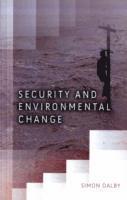
In the early years of the new millennium, hurricanes lashed the Caribbean and flooded New Orleans as heat waves and floods seemed to alternate in Europe. Snows were disappearing on Mount Kilimanjaro while the ice caps on both poles retreated. The resulting disruption caused to many societies and the potential for destabilizing international migration has meant that the environment has become a political priority.The scale of environmental change caused by globalization is now so large that security has to be understood as an ecological process. A new geopolitics is long overdue. In this book Simon Dalby provides an accessible and engaging account of the challenges we face in responding to security and environmental change. He traces the historical roots of current thinking about security and climate change to show the roots of the contemporary concern and goes on to outline modern thinking about securitization which uses the politics of invoking threats as a central part of the analysis. He argues that to understand climate change and the dislocations of global ecology, it is necessary to look back at how ecological change is tied to the expansion of the world economic system over the last few centuries. As the global urban system changes on a local and global scale, the world’s population becomes vulnerable in new ways. In a clear and careful analysis, Dalby shows that theories of human security now require a much more nuanced geopolitical imagination if they are to grapple with these new vulnerabilities and influence how we build more resilient societies to cope with the coming disruptions.This book will appeal to level students and scholars of geography, environmental studies, security studies and international politics, as well as to anyone concerned with contemporary globalization and its transformation of the biosphere.
278 kr
Skickas inom 5-8 vardagar
In the early years of the new millennium, hurricanes lashed the Caribbean and flooded New Orleans as heat waves and floods seemed to alternate in Europe. Snows were disappearing on Mount Kilimanjaro while the ice caps on both poles retreated. The resulting disruption caused to many societies and the potential for destabilizing international migration has meant that the environment has become a political priority.The scale of environmental change caused by globalization is now so large that security has to be understood as an ecological process. A new geopolitics is long overdue. In this book Simon Dalby provides an accessible and engaging account of the challenges we face in responding to security and environmental change. He traces the historical roots of current thinking about security and climate change to show the roots of the contemporary concern and goes on to outline modern thinking about securitization which uses the politics of invoking threats as a central part of the analysis. He argues that to understand climate change and the dislocations of global ecology, it is necessary to look back at how ecological change is tied to the expansion of the world economic system over the last few centuries. As the global urban system changes on a local and global scale, the world’s population becomes vulnerable in new ways. In a clear and careful analysis, Dalby shows that theories of human security now require a much more nuanced geopolitical imagination if they are to grapple with these new vulnerabilities and influence how we build more resilient societies to cope with the coming disruptions.This book will appeal to level students and scholars of geography, environmental studies, security studies and international politics, as well as to anyone concerned with contemporary globalization and its transformation of the biosphere.
387 kr
Skickas inom 3-6 vardagar
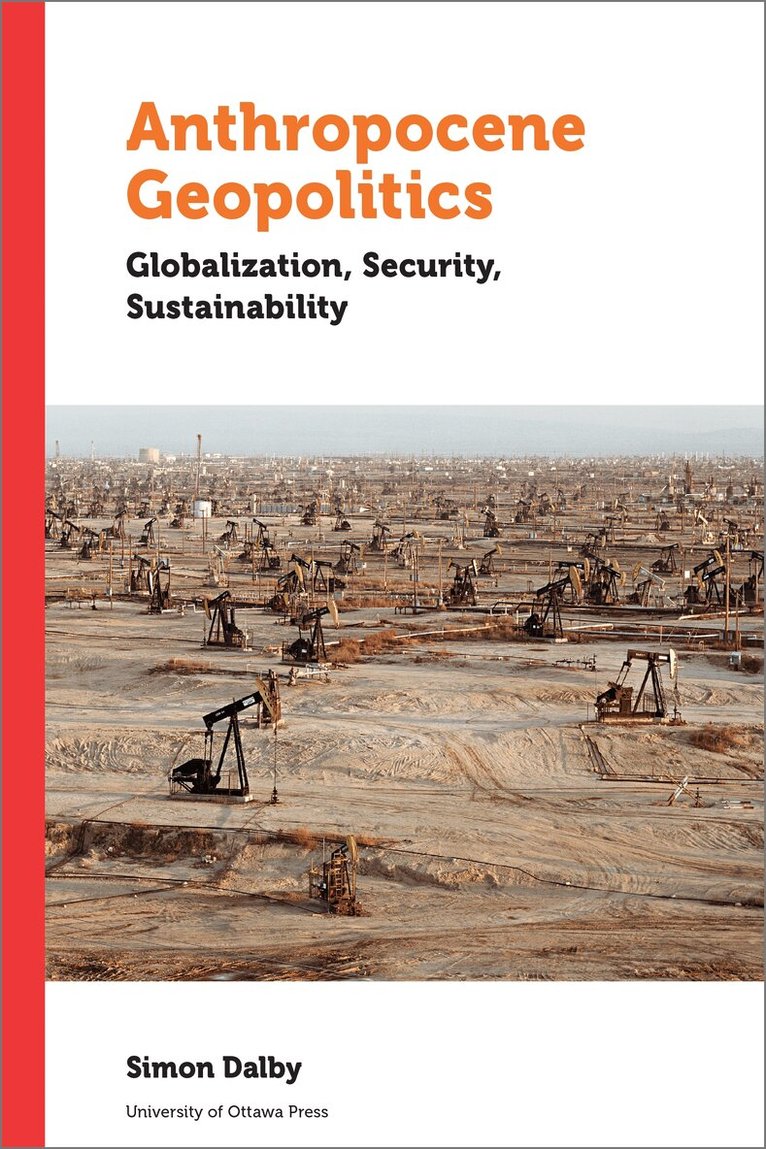
With the new geological age known as the Anthropocene heralding dramatic disruptions in the earth system, geopolitics needs to be fundamentally reconsidered to deal with these new circumstances. Planetary boundaries and ecological change are now the key contextualization for considering future global political arrangements. We now find ourselves in a new geological age: the Anthropocene. The climate is changing and species are disappearing at a rate not seen since Earth’s major extinctions. The rapid, large-scale changes caused by fossil-fuel powered globalization increasingly threaten societies in new, unforeseen ways. But most security policies continue to be built on notions that look backward to a time when geopolitical threats derived mainly from the rivalries of states with fixed boundaries. Instead, Anthropocene Geopolitics shows that security policy must look forward to quickly shape a sustainable world no longer dependent on fossil fuels. A future of long-term peace and geopolitical security depends on keeping the earth in conditions roughly similar to those we have known throughout history. Minimizing disruptions that would further put civilization at risk of extinction urgently requires policies that reflect new Anthropocene “planetary boundaries.” Published in English.
285 kr
Skickas inom 7-10 vardagar
A critical look at the relationship between environmental degradation and international relations.Since the end of the Cold War, environmental matters-especially the international implications of environmental degradation-have figured prominently in debates about rethinking security. But do the assumptions underlying such discussions hold up under close scrutiny? In this first treatment of environmental security from a truly critical perspective, Simon Dalby shows how attempts to explain contemporary insecurity falter over unexamined notions of both environment and security. Adding environmental history, aboriginal perspectives, and geopolitics to the analysis explicitly suggests that the growing disruptions caused by a carbon-fueled and expanding modernity are at the root of contemporary difficulties. Environmental Security argues that rethinking security means revisiting questions of how we conceive identities as endangered and how we perceive threats to these identities. The book clearly demonstrates that the conceptual basis for critical security studies requires an extended engagement with political theory and with the assumptions of the modern subject as progressive political agent. Viewed thus on a global scale, the environmental security discourse raises profoundly troubling political questions as to who we are and what kind of world we are collectively making in our efforts to be secure.
449 kr
Skickas inom 7-10 vardagar
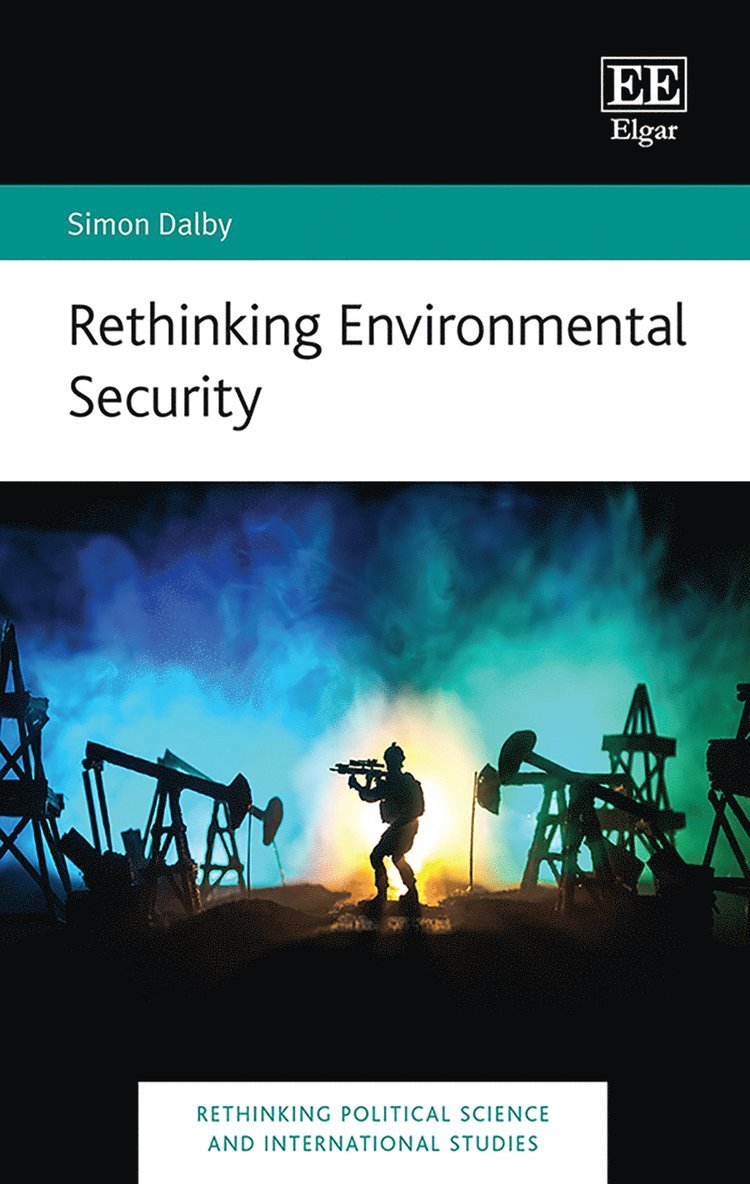
This thought-provoking book explores how the global ecological crisis profoundly challenges conventional meanings of environmental security and raises important questions about how states and other institutions now face the future.Simon Dalby provides unique insights into the traditional search for security in terms of using firepower to dominate states and environments, and how this is now endangering people across the globe. Whereas earlier concerns about nuclear firepower focused on the security dilemmas it posed, Dalby offers a new perspective into the existential threats to civilization presented by the combustion of fossil fuels. Propounding that the constraint of firepower in both senses is now key to a flourishing human future, the book calls for international relations scholars to rethink many of the central premises in the field and formulate new policies that focus on the necessity of ecological flourishing to provide meaningful security in a climate disrupted world.Visionary and inspiring, Rethinking Environmental Security will be a critical read for scholars and students of international relations, climate change, environmental governance and regulation, and political geography and geopolitics. Its novel ideas will also be beneficial for policy makers and practitioners in these fields.
2 103 kr
Skickas inom 10-15 vardagar
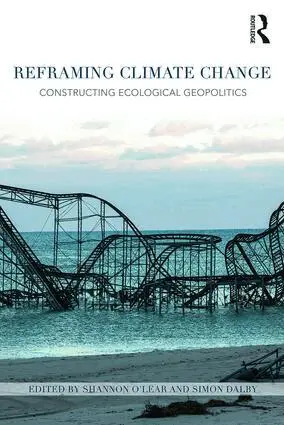
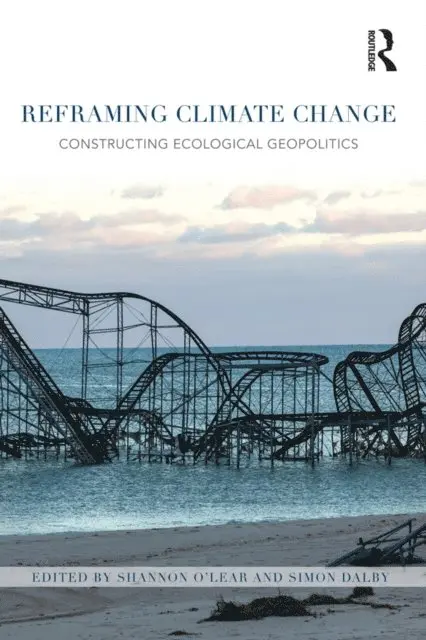
"Change the system, not the climate" is a common slogan of climate change activists. Yet when this idea comes into the academic and policy realm, it is easy to see how climate change discourse frequently asks the wrong questions. Reframing Climate Change encourages social scientists, policy-makers, and graduate students to critically consider how climate change is framed in scientific, social, and political spheres. It proposes ecological geopolitics as a framework for understanding the extent to which climate change is a meaningful analytical focus, as well as the ways in which it can be detrimental, detracting attention from more productive lines of thought, research, and action. The volume draws from multiple perspectives and disciplines to cover a broad scope of climate change. Chapter topics range from climate science and security to climate justice and literacy. Although these familiar concepts are widely used by scholars and policy-makers, they are discussed here as frequently problematic when used as lenses through which to study climate change. Beyond merely reviewing current trends within these different approaches to climate change, the collection offers a thoughtful assessment of these approaches with an eye towards an overarching reconsideration of the current understanding of our relationship to climate change. Reframing Climate Change is an essential resource for students, policy-makers, and anyone interested in understanding more about this important topic. Who decides what the priorities are? Who benefits from these priorities, and what kinds of systems or actions are justified or hindered? The key contribution of the book is the outlining of ecological geopolitics as a different way of understanding human–environment relationships including and beyond climate change issues.
730 kr
Skickas inom 10-15 vardagar
"Change the system, not the climate" is a common slogan of climate change activists. Yet when this idea comes into the academic and policy realm, it is easy to see how climate change discourse frequently asks the wrong questions. Reframing Climate Change encourages social scientists, policy-makers, and graduate students to critically consider how climate change is framed in scientific, social, and political spheres. It proposes ecological geopolitics as a framework for understanding the extent to which climate change is a meaningful analytical focus, as well as the ways in which it can be detrimental, detracting attention from more productive lines of thought, research, and action. The volume draws from multiple perspectives and disciplines to cover a broad scope of climate change. Chapter topics range from climate science and security to climate justice and literacy. Although these familiar concepts are widely used by scholars and policy-makers, they are discussed here as frequently problematic when used as lenses through which to study climate change. Beyond merely reviewing current trends within these different approaches to climate change, the collection offers a thoughtful assessment of these approaches with an eye towards an overarching reconsideration of the current understanding of our relationship to climate change. Reframing Climate Change is an essential resource for students, policy-makers, and anyone interested in understanding more about this important topic. Who decides what the priorities are? Who benefits from these priorities, and what kinds of systems or actions are justified or hindered? The key contribution of the book is the outlining of ecological geopolitics as a different way of understanding human–environment relationships including and beyond climate change issues.
1 619 kr
Skickas inom 10-15 vardagar
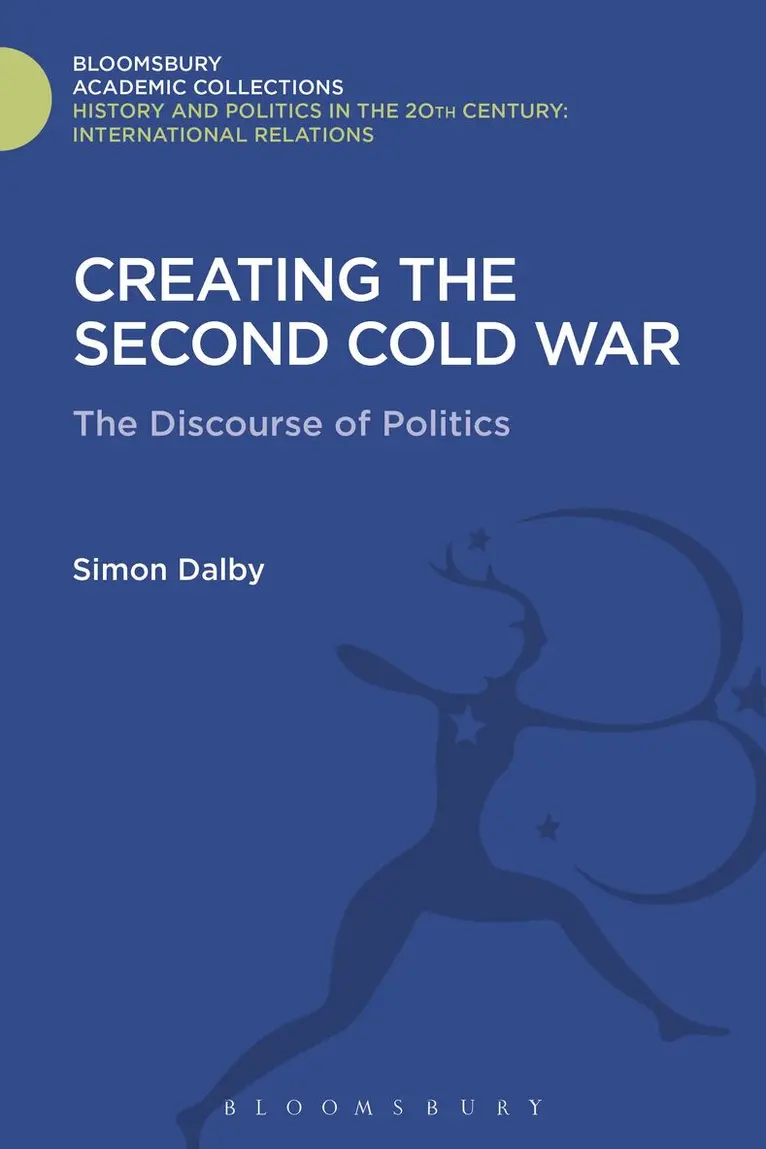
The Cold War is over, yet many attitudes and analyses typical of the period persisted in the strategic thinking of the Great Powers. In this brilliantly original study, Simon Dalby uses the conceptual tools of geopolitical analysis to uncover the essence of American strategic discourse. Focussing on the period of the late 1970s, he shows how Washington pressure groups, political organisations and, in particular, the Committee on the Present Danger, recreated a language of confrontation that deeply influenced Western attitudes towards the Soviet Union in ways that continue to shape foreign policy.
1 479 kr
Skickas inom 5-8 vardagar
We are the only species that uses fire. It has determined how we have made our home on this planet and it has propelled us to the role of the dominant species in the biosphere. But at the heart of contemporary climate change is the process of combustion. Simon Dalby explores what a life without burning things might look like, and how we might get there.Fires make the carbon dioxide in the atmosphere that is heating the planet, melting the ice sheets, changing weather patterns and making wildfires worse. Our civilization is burning things, especially fossil fuels, at prodigious rates. So much so that we are now heading towards a future “Hothouse Earth” with a climate that is very different from what humans have known so far.By focusing on fire and our partial control over one key physical force in the earth system, that of combustion, Simon Dalby is able to ask important and interesting questions about us as humans, including different ways of thinking about how we live, and how we might do so differently in the future. Simply put, there is now far too much “firepower” loose in the world and we need to think much harder about how to live together in ways that don’t require burning stuff to do so.
341 kr
Skickas
We are the only species that uses fire. It has determined how we have made our home on this planet and it has propelled us to the role of the dominant species in the biosphere. But at the heart of contemporary climate change is the process of combustion. Simon Dalby explores what a life without burning things might look like, and how we might get there.Fires make the carbon dioxide in the atmosphere that is heating the planet, melting the ice sheets, changing weather patterns and making wildfires worse. Our civilization is burning things, especially fossil fuels, at prodigious rates. So much so that we are now heading towards a future “Hothouse Earth” with a climate that is very different from what humans have known so far.By focusing on fire and our partial control over one key physical force in the earth system, that of combustion, Simon Dalby is able to ask important and interesting questions about us as humans, including different ways of thinking about how we live, and how we might do so differently in the future. Simply put, there is now far too much “firepower” loose in the world and we need to think much harder about how to live together in ways that don’t require burning stuff to do so.
1 605 kr
Skickas inom 7-10 vardagar
This thought-provoking book explores how the global ecological crisis profoundly challenges conventional meanings of environmental security and raises important questions about how states and other institutions now face the future.Simon Dalby provides unique insights into the traditional search for security in terms of using firepower to dominate states and environments, and how this is now endangering people across the globe. Whereas earlier concerns about nuclear firepower focused on the security dilemmas it posed, Dalby offers a new perspective into the existential threats to civilization presented by the combustion of fossil fuels. Propounding that the constraint of firepower in both senses is now key to a flourishing human future, the book calls for international relations scholars to rethink many of the central premises in the field and formulate new policies that focus on the necessity of ecological flourishing to provide meaningful security in a climate disrupted world.Visionary and inspiring, Rethinking Environmental Security will be a critical read for scholars and students of international relations, climate change, environmental governance and regulation, and political geography and geopolitics. Its novel ideas will also be beneficial for policy makers and practitioners in these fields.
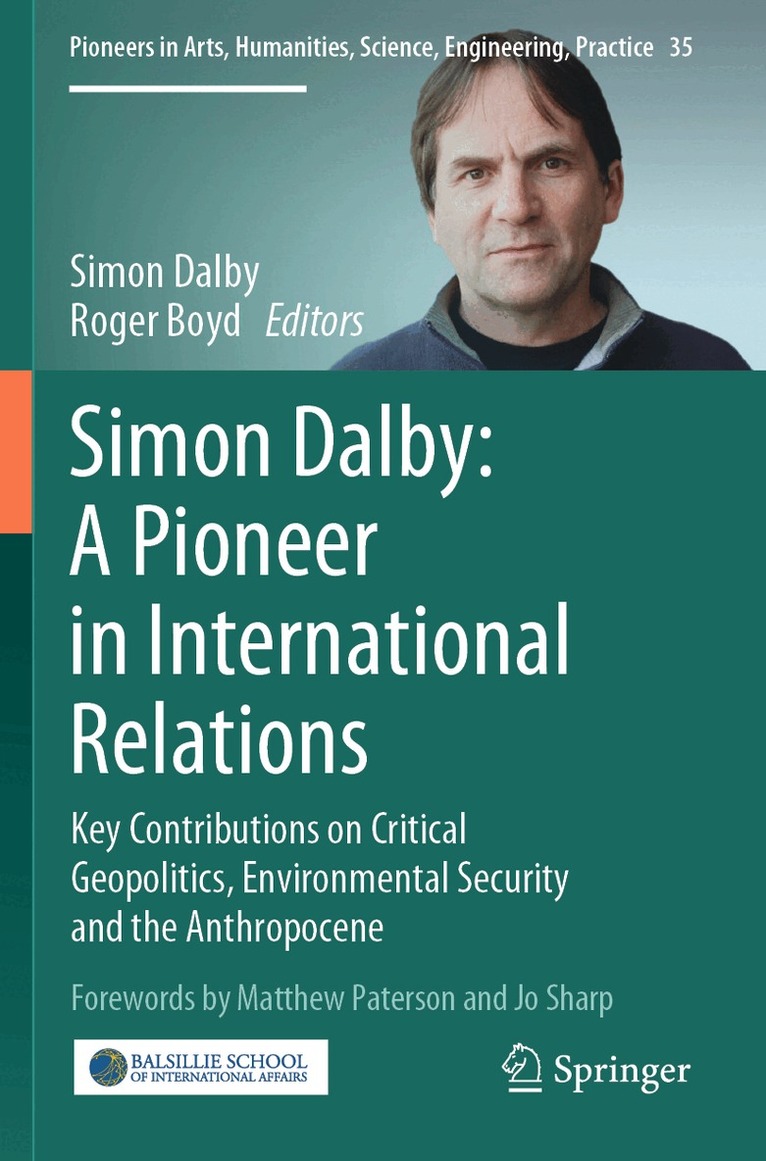
Simon Dalby: A Pioneer in International Relations
Key Contributions on Critical Geopolitics, Environmental Security and the Anthropocene
Inbunden, Engelska, 2025
1 485 kr
Skickas inom 10-15 vardagar
This book profiles Simon Dalby’s academic contributions in the fields of critical geopolitics, environmental security and the intersection of international relations and the Anthropocene. It includes reprints of key essays that highlight innovations in critical thought at the intersections between geopolitics, environment and security.Starting with an analysis of American reconstructions of the Soviet threat in the 1970s, an early contribution to the emerging field of critical geopolitics, subsequent papers focus on the emergent formulations of environmental security in the aftermath of the Cold War and the environmental costs of globalization. Focusing on the implicit geographical framing in discourses of globalization offered a critique that extended the ambit of critical geopolitics to grapple with the issues of environmental security and the rising concern with climate change as well as the political identities invoked in that debate.In the aftermath of 9/11, similar arguments about contextualization applied to the American global war on terror and the revival of discussions of empire and its geographies, both in arguments for invading Iraq, as well as the wider discussions in policy discourse and popular culture. Simultaneously, the emergence of earth system science and the concept of the Anthropocene offered another way to highlight the dangers of fossil fueled economic activities. The necessity of fundamentally rethinking the premises of security policy in light of this recontextualization is emphasized in more recent contributions on climate security and the current ecological crisis.Critical geopoliticsEnvironmental securityGlobal war on terrorFirepower in the Anthropocene