Shenila Khoja-Moolji – författare
Visar alla böcker från författaren Shenila Khoja-Moolji. Handla med fri frakt och snabb leverans.
9 produkter
9 produkter
Inbunden, Engelska, 2023
1 062 kr
Skickas inom 7-10 vardagar
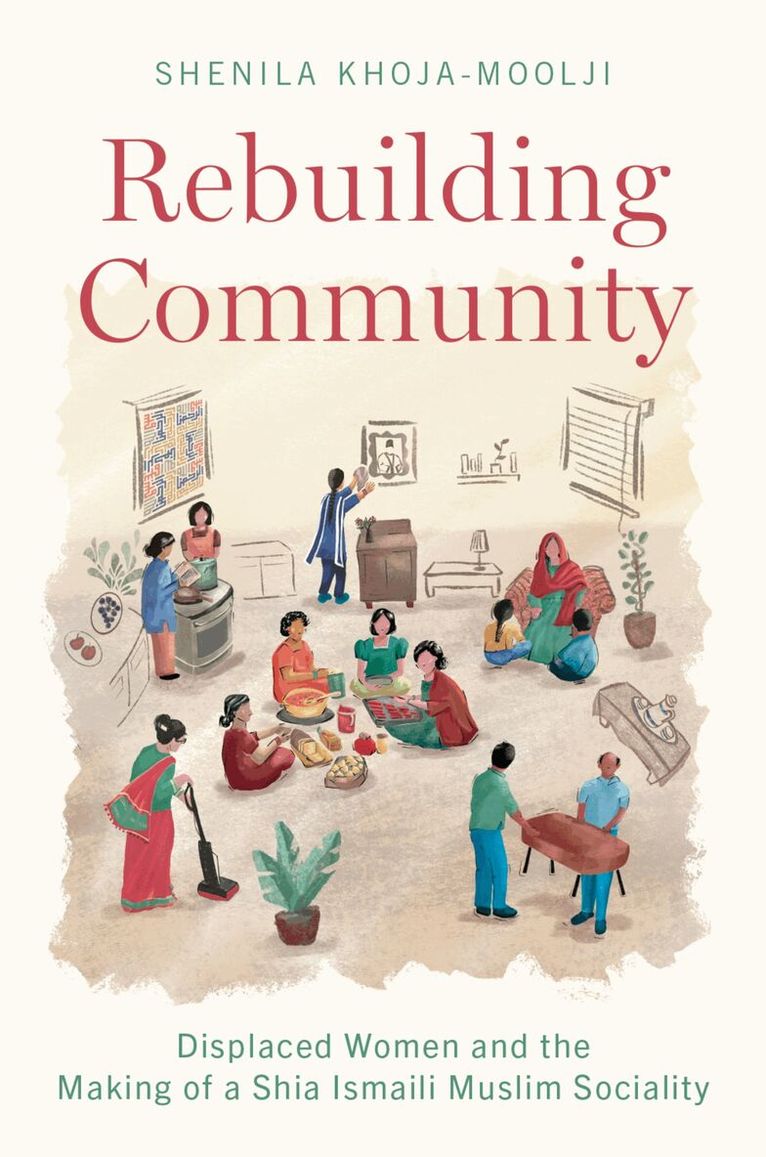
Over the course of the twentieth century, Shia Ismaili Muslim communities were repeatedly displaced. How, in the aftermath of these displacements, did they remake their communities? Shenila Khoja-Moolji highlights women's critical role in this rebuilding process and breaks new ground by writing women into modern Ismaili history.Rebuilding Community tells the story of how Ismaili Muslim women who fled East Pakistan and East Africa in the 1970s recreated religious community (jamat) in North America. Drawing on oral histories, fieldwork, and memory texts, Khoja-Moolji illuminates the placemaking activities through which Ismaili women reproduce bonds of spiritual kinship: from cooking for congregants on feast days and looking after sick coreligionists to engaging in memory work through miracle stories and cookbooks. Khoja-Moolji situates these activities within the framework of ethical norms that more broadly define and sustain the Ismaili sociality. Jamat--and religious community more generally--is not a given, but an ethical relation that is maintained daily and intergenerationally through everyday acts of care. By emphasizing women's care work in producing relationality and repairing trauma, Khoja-Moolji disrupts the conventional articulation of displaced people as dependent subjects.
Häftad, Engelska, 2023
301 kr
Skickas inom 5-8 vardagar
Over the course of the twentieth century, Shia Ismaili Muslim communities were repeatedly displaced. How, in the aftermath of these displacements, did they remake their communities? Shenila Khoja-Moolji highlights women's critical role in this rebuilding process and breaks new ground by writing women into modern Ismaili history.Rebuilding Community tells the story of how Ismaili Muslim women who fled East Pakistan and East Africa in the 1970s recreated religious community (jamat) in North America. Drawing on oral histories, fieldwork, and memory texts, Khoja-Moolji illuminates the placemaking activities through which Ismaili women reproduce bonds of spiritual kinship: from cooking for congregants on feast days and looking after sick coreligionists to engaging in memory work through miracle stories and cookbooks. Khoja-Moolji situates these activities within the framework of ethical norms that more broadly define and sustain the Ismaili sociality. Jamat--and religious community more generally--is not a given, but an ethical relation that is maintained daily and intergenerationally through everyday acts of care. By emphasizing women's care work in producing relationality and repairing trauma, Khoja-Moolji disrupts the conventional articulation of displaced people as dependent subjects.
E-bok
PDF, Engelska, 2023258 kr
Läs direkt efter köp
Over the course of the twentieth century, Shia Ismaili Muslim communities were repeatedly displaced. How, in the aftermath of these displacements, did they remake their communities? Shenila Khoja-Moolji highlights women''s critical role in this rebuilding process and breaks new ground by writing women into modern Ismaili history. Rebuilding Community tells the story of how Ismaili Muslim women who fled East Pakistan and East Africa in the 1970s recreated religious community (jamat) in North America. Drawing on oral histories, fieldwork, and memory texts, Khoja-Moolji illuminates the placemaking activities through which Ismaili women reproduce bonds of spiritual kinship: from cooking for congregants on feast days and looking after sick coreligionists to engaging in memory work through miracle stories and cookbooks. Khoja-Moolji situates these activities within the framework of ethical norms that more broadly define and sustain the Ismaili sociality. Jamat--and religious community more generally--is not a given, but an ethical relation that is maintained daily and intergenerationally through everyday acts of care. By emphasizing women''s care work in producing relationality and repairing trauma, Khoja-Moolji disrupts the conventional articulation of displaced people as dependent subjects.
E-bok
Engelska, 2023258 kr
Läs direkt efter köp
Over the course of the twentieth century, Shia Ismaili Muslim communities were repeatedly displaced. How, in the aftermath of these displacements, did they remake their communities? Shenila Khoja-Moolji highlights women''s critical role in this rebuilding process and breaks new ground by writing women into modern Ismaili history. Rebuilding Community tells the story of how Ismaili Muslim women who fled East Pakistan and East Africa in the 1970s recreated religious community (jamat) in North America. Drawing on oral histories, fieldwork, and memory texts, Khoja-Moolji illuminates the placemaking activities through which Ismaili women reproduce bonds of spiritual kinship: from cooking for congregants on feast days and looking after sick coreligionists to engaging in memory work through miracle stories and cookbooks. Khoja-Moolji situates these activities within the framework of ethical norms that more broadly define and sustain the Ismaili sociality. Jamat--and religious community more generally--is not a given, but an ethical relation that is maintained daily and intergenerationally through everyday acts of care. By emphasizing women''s care work in producing relationality and repairing trauma, Khoja-Moolji disrupts the conventional articulation of displaced people as dependent subjects.
Häftad, Engelska, 2018
298 kr
Skickas inom 5-8 vardagar
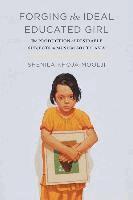
A free ebook version of this title is available through Luminos, University of California Press’s Open Access publishing program for monographs. Visit www.luminosoa.org to learn more.In Forging the Ideal Educated Girl, Shenila Khoja-Moolji traces the figure of the ‘educated girl’ to examine the evolving politics of educational reform and development campaigns in colonial India and Pakistan. She challenges the prevailing common sense associated with calls for women’s and girls’ education and argues that such advocacy is not simply about access to education but, more crucially, concerned with producing ideal Muslim woman-/girl-subjects with specific relationships to the patriarchal family, paid work, Islam, and the nation-state. Thus, discourses on girls’/ women’s education are sites for the construction of not only gender but also class relations, religion, and the nation.
Inbunden, Engelska, 2021
822 kr
Skickas inom 5-8 vardagar
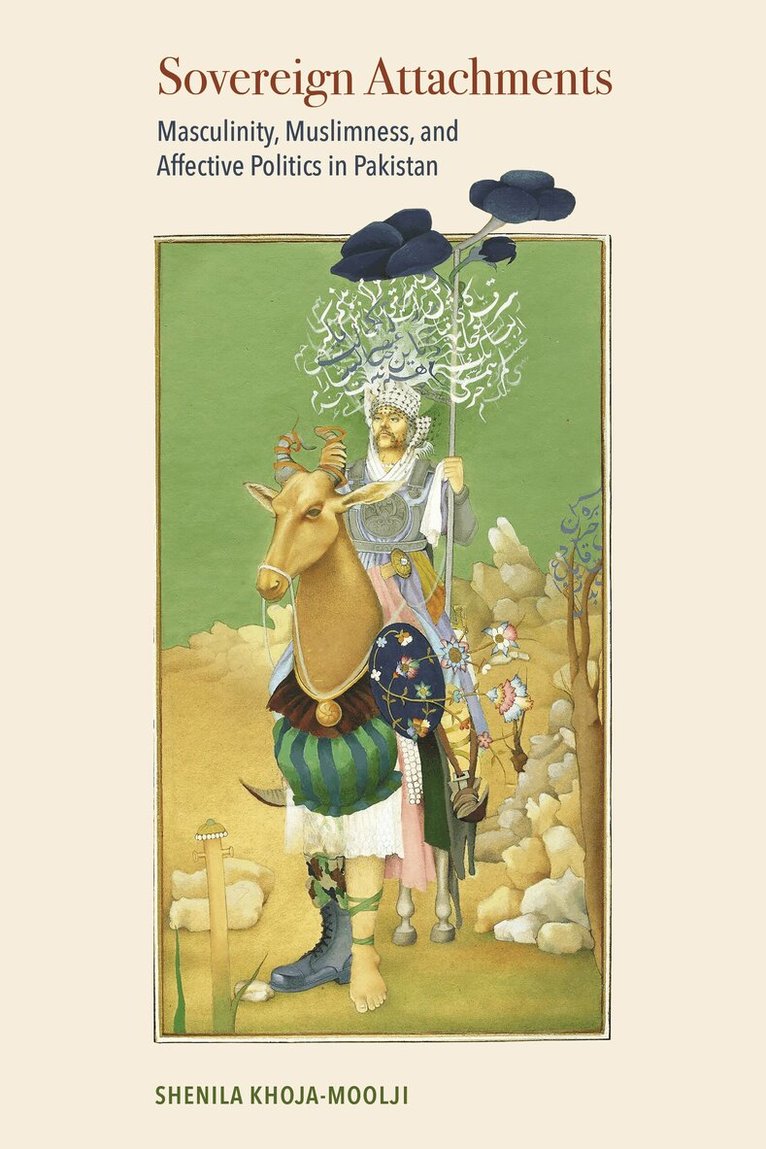
Sovereign Attachments rethinks sovereignty by moving it out of the exclusive domain of geopolitics and legality and into cultural, religious, and gender studies. Through a close reading of a stunning array of cultural texts produced by the Pakistani state and the Pakistan-based Taliban, Shenila Khoja-Moolji theorizes sovereignty as an ongoing attachment that is negotiated in public culture. Both the state and the Taliban recruit publics into relationships of trust, protection, and fraternity by summoning models of Islamic masculinity, mobilizing kinship metaphors, and marshalling affect. In particular, masculinity and Muslimness emerge as salient performances through which sovereign attachments are harnessed. The book shifts the discussion of sovereignty away from questions about absolute dominance to ones about shared repertoires, entanglements, and co-constitution.
Häftad, Engelska, 2021
307 kr
Skickas inom 5-8 vardagar
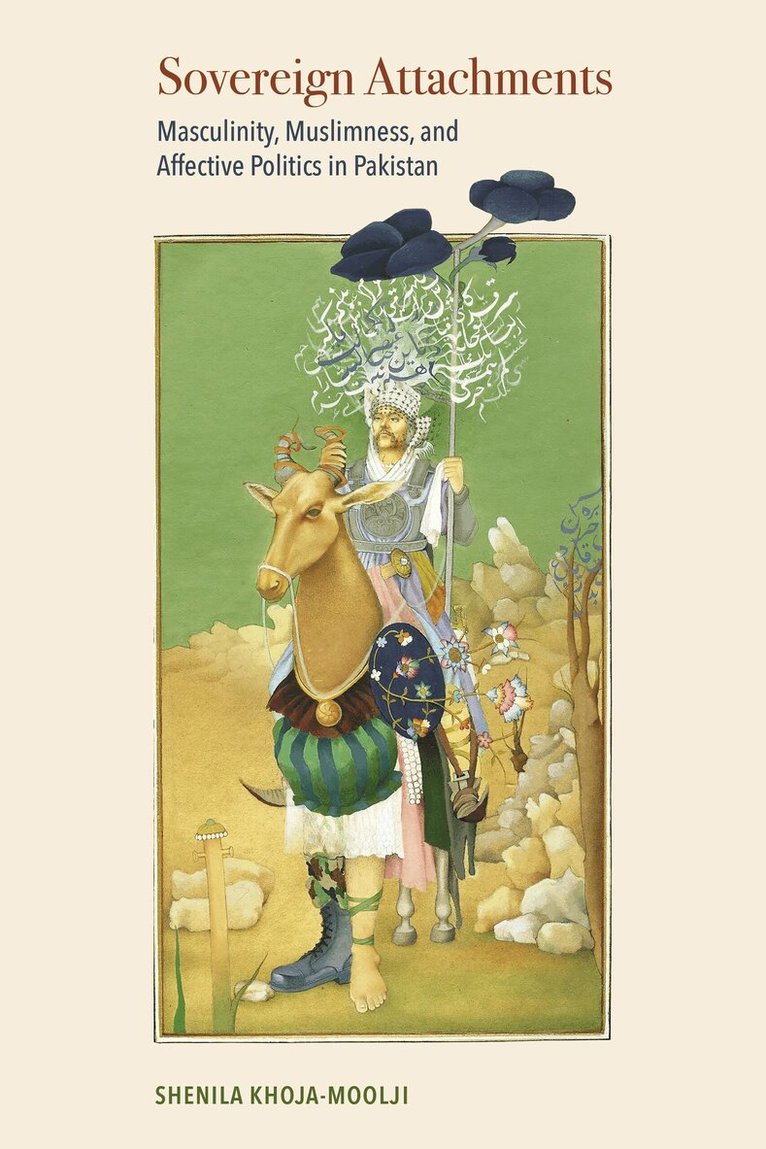
Sovereign Attachments rethinks sovereignty by moving it out of the exclusive domain of geopolitics and legality and into cultural, religious, and gender studies. Through a close reading of a stunning array of cultural texts produced by the Pakistani state and the Pakistan-based Taliban, Shenila Khoja-Moolji theorizes sovereignty as an ongoing attachment that is negotiated in public culture. Both the state and the Taliban recruit publics into relationships of trust, protection, and fraternity by summoning models of Islamic masculinity, mobilizing kinship metaphors, and marshalling affect. In particular, masculinity and Muslimness emerge as salient performances through which sovereign attachments are harnessed. The book shifts the discussion of sovereignty away from questions about absolute dominance to ones about shared repertoires, entanglements, and co-constitution.
Inbunden, Engelska, 2027
1 062 kr
Kommande
Offers a new theory of repair as refiguration through Shia Ismaili Muslim life in North AmericaWars and forced migration disrupt people's sense of continuity in time and place, leaving them out of sync with dominant histories and imagined futures. Thinking Past Crisis examines how Shia Ismaili Muslims in North America have navigated such dislocations across the decades following migrations from East Africa, Central and South Asia, and other sites of Ismaili memory.Rather than treating repair as return or restoration, Shenila Khoja-Moolji draws on Ismaili cultural and community-making practices from 1970 to 2025 to conceptualize repair as refiguration: a spiritual and cultural praxis through which communities reorganize memory, time, and place so that life remains possible amid rupture. Through the work of itinerant preachers, singer-songwriters, educators, novelists, and archivists, Ismailis create new ways of remembering the past and imagining the future. They multiply historical timelines, pluralize religious aesthetics, build solidarity with other minoritized communities, retell the past to confront trauma, and sustain connections across transnational circuits.At the center of these practices are Ismaili understandings of the nur (light) of Imamat, a source of continuity amid upheaval, along with an ethic of tawhid (oneness), justice, and one jamat (community). By tracing these practices, Thinking Past Crisis reframes repair as a form of ethical obligation, communal care, and place-based responsibility.Centering a minority Muslim community often left at the margins of scholarship on Islam, the book reorients debates on crisis, migration, memory, and repair in Islamic studies, migration studies, and American religious history.
Häftad, Engelska, 2024
130 kr
Skickas inom 5-8 vardagar
How the construction of Muslim boys as proto-terrorists is integral to the story of American racial capitalismHow do we understand an incident where a five-year-old Muslim boy arrives at Dulles airport and is preemptively detained as a “threat”? To answer that question, Shenila Khoja-Moolji examines American public culture, arguing that Muslim boyhood has been invented as a threat within an ideology that seeks to predict future terrorism. Muslim boyhood bridges actual past terrorism and possible future events, justifying preemptive enclosure, surveillance, and punishment. Even in the occasional reframing of individual Muslim boys as innocent, Khoja-Moolji identifies a pattern of commodity antiracism, through which elites buy public goodwill but leave intact the collective anti-Muslim notion that fuels an expanding carceral and security state. Framing Muslim boyhood as a heuristic device, she turns to a discussion of Hindutva ideology in India to show how Muslim boyhood may be resituated in global contexts.