Shireen J. Jejeebhoy - Böcker
Visar alla böcker från författaren Shireen J. Jejeebhoy. Handla med fri frakt och snabb leverans.
2 produkter
2 produkter
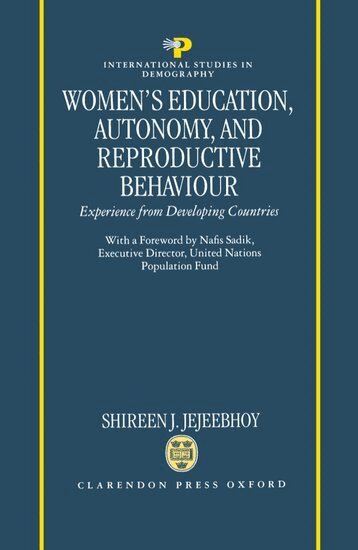
Women's Education, Autonomy, and Reproductive Behaviour
Experience from Developing Countries
Inbunden, Engelska, 1995
1 118 kr
Skickas inom 3-6 vardagar
Women's access to education has been recognized as a fundamental right. At the national level, educating women results in improved productivity, income, and economic development, as well as a better quality of life, notably a healthier and better nourished population. It is important for all kinds of demographic behaviour, affecting mortality, health, fertility, and contraception, The personal benefits that women attach to education vary widely according to region, culture, and level of devlopment, but it is clear that educaiton empowers women, providing them with increased autonomy and resulting in almost every context in fewer children. Beyond these few general assertions, however, there is little consensus on such issues as how much education is required before changes in autonomy or reproductive behaviour occur; whether the education-autonomy relationship exists in all cultural contexts, at all times, and at all levels of development; and which aspects of autonomy are important in the relationship between education and fertility.It is in the need to address these fundamental issues that this book took shape. The author reviews the considerable evidence about education and fertility in the developing world that has emerged over the last twenty years, and then passes beyond the limits of previous studies to address three major questions:BL Does increased education always lead to a decrease in the number of children, or is there a threshold level of education that a woman must achieve before this inverse relationship becomes apparent?BL What are the critical pathways influencing the relationship of women's education to fertility? Is fertility affected because education leads to changes in the duration of breast-feeding? Because it raises the age at marriage? Because it increases the practice of contraception? Or because education reduces women's preferences for large numbers of children?BL Do improvements in education empower women in other areas of life, such as their improving exposure to information, decision-making, control of resources, or confidence in dealing with family and the outside world?Supported by full documentation of the available survey data, this study concludes that such contextual factors as the overall level of socio-economic development and the situation of women in traditional kinship structures complicate the general assumptions about the interrelationships between education, fertility, and female autonomy. It lays out the policy implications of these findings and fruitful directions for future research.
488 kr
Skickas inom 10-15 vardagar
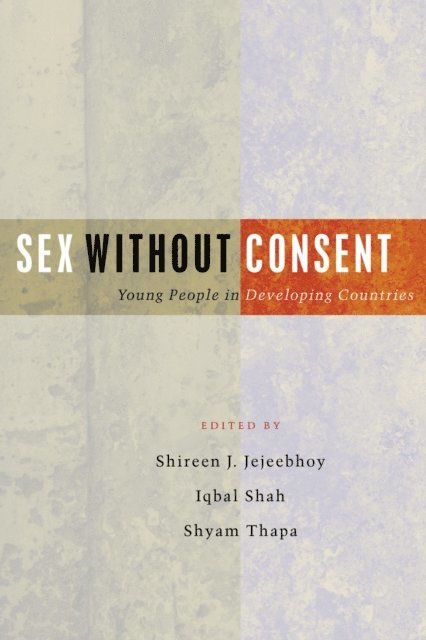
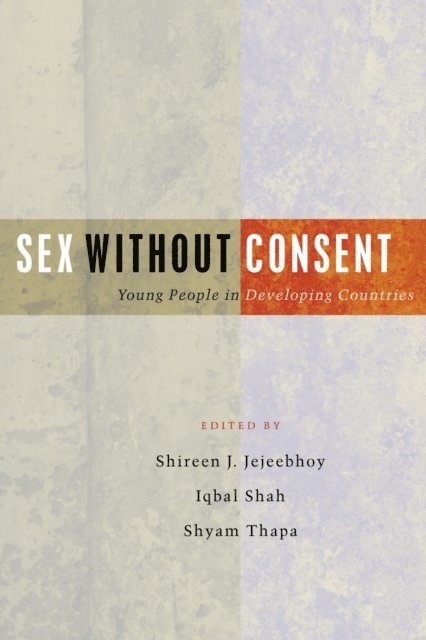
The pressing need to break the silence on non-consensual sex among young people – an issue shrouded by denial, underreporting and stigma – is self-evident. Despite the growing body of research regarding young people’s sexual behaviours, the study of coercive sexual experiences has generally been overlooked by both researchers and national programmes. Available evidence has been scattered and unrepresentative and despite this evidence, non-consensual sex among young people is perceived to be a rare occurrence. This volume dispels any such misconception. It presents a disturbing picture of non-consensual sex among girls as well as boys, and among married as well as unmarried young women in a variety of settings. This volume documents, moreover, the expanse of non-consensual experiences that young people face – from unwanted touch to forced penetrative sex and gang rape. Although the focus is on young females, the volume also sheds light on the experience of young males as both victims and perpetrators.This pioneering volume highlights key factors placing young people at risk, whilst outlining the significant distinctive health and social implications they face. Sex Without Consent also documents the unsupportive – and sometimes abusive or negligent – roles of families, teachers, health care providers and law enforcement agents, outlines promising efforts intended to prevent non-consensual sex or support survivors, and argues for profound changes in norms and values that tolerate or encourage non-consensual sex. The editors, based at the Population Council (New Delhi), the World Health Organization (Geneva), and Family Health International (Virginia) argue compellingly for a radical review and reform of existing programmes designed to prevent this kind of abuse and to support young survivors of sexual trauma in the developing world. Addressing the magnitude, determinants and consequences of sex without consent, this volume provides evidence-based directions for programming.