Shravan Vasishth - Böcker
Visar alla böcker från författaren Shravan Vasishth. Handla med fri frakt och snabb leverans.
8 produkter
8 produkter
2 181 kr
Skickas inom 10-15 vardagar
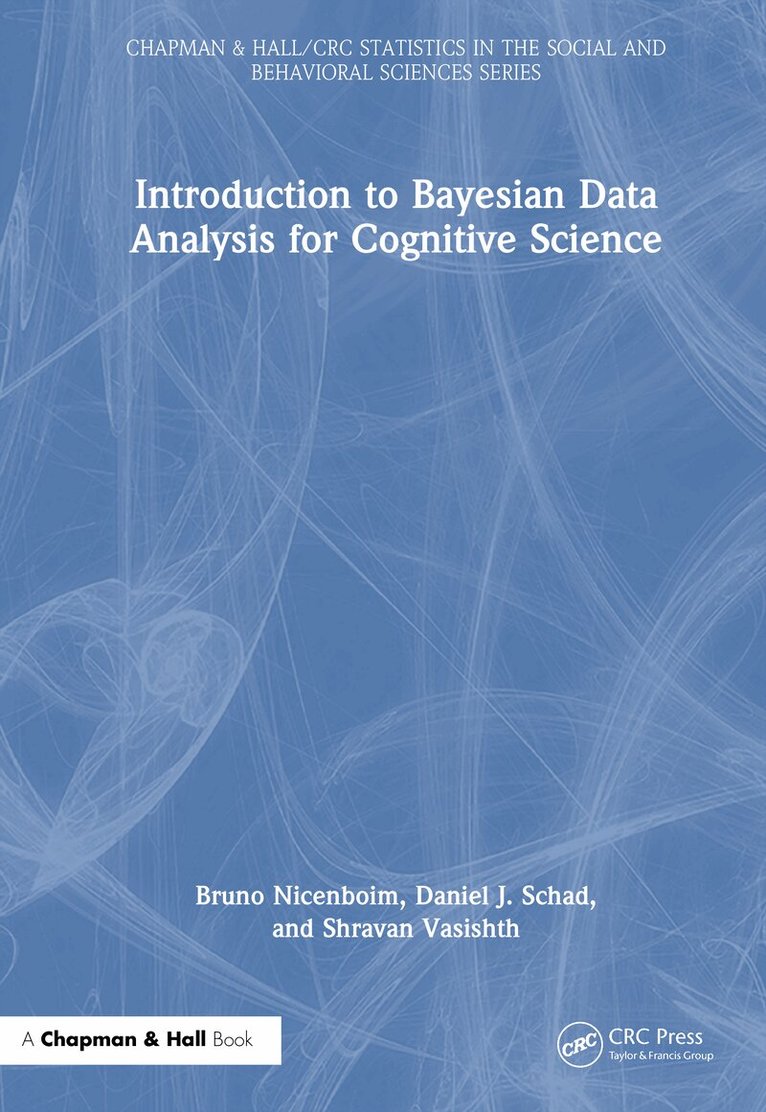
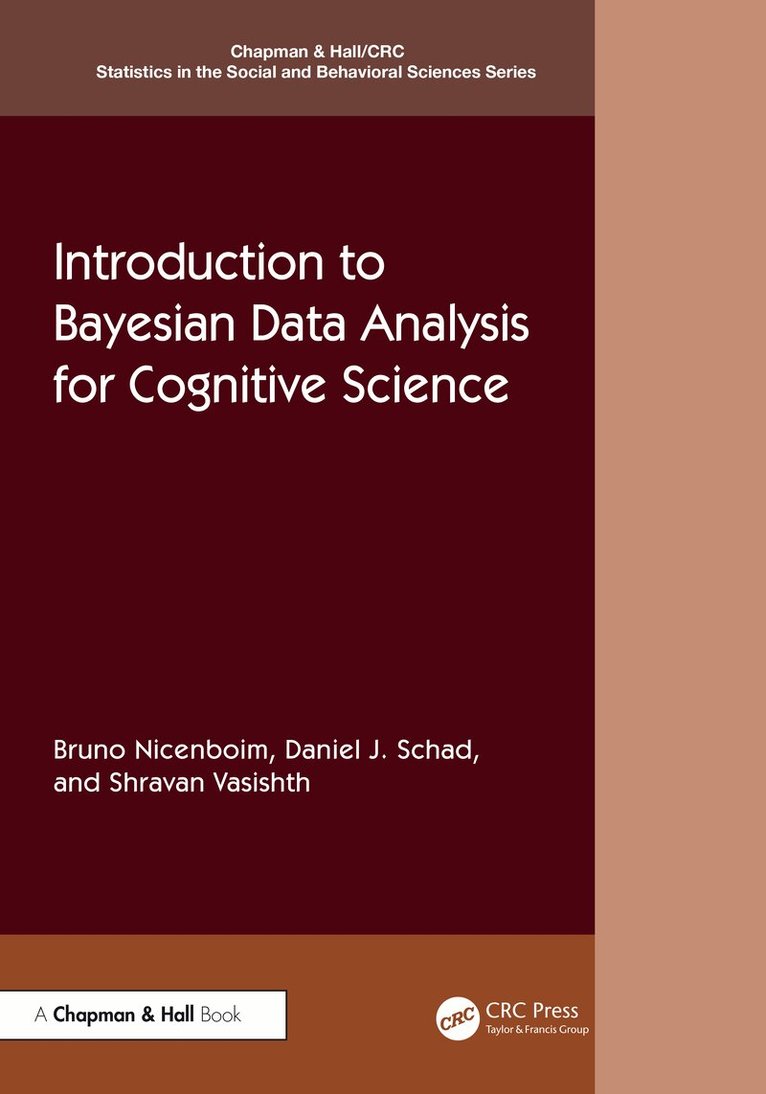
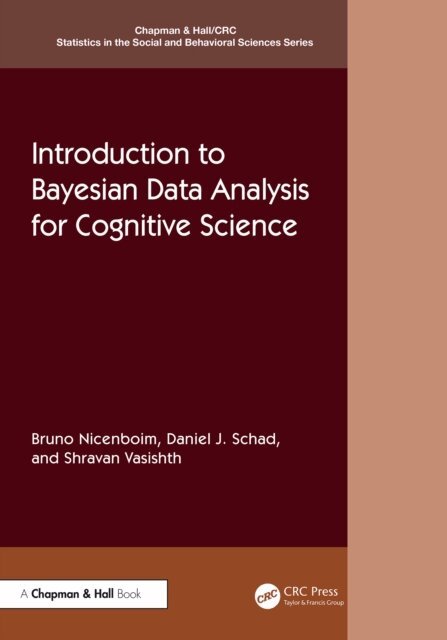
This book introduces Bayesian data analysis and Bayesian cognitive modeling to students and researchers in cognitive science (e.g., linguistics, psycholinguistics, psychology, computer science), with a particular focus on modeling data from planned experiments. The book relies on the probabilistic programming language Stan and the R package brms, which is a front-end to Stan. The book only assumes that the reader is familiar with the statistical programming language R, and has basic high school exposure to pre-calculus mathematics; some of the important mathematical constructs needed for the book are introduced in the first chapter.Through this book, the reader will be able to develop a practical ability to apply Bayesian modeling within their own field. The book begins with an informal introduction to foundational topics such as probability theory, and univariate and bi-/multivariate discrete and continuous random variables. Then, the application of Bayes' rule for statistical inference is introduced with several simple analytical examples that require no computing software; the main insight here is that the posterior distribution of a parameter is a compromise between the prior and the likelihood functions. The book then gradually builds up the regression framework using the brms package in R, ultimately leading to hierarchical regression modeling (aka the linear mixed model). Along the way, there is detailed discussion about the topic of prior selection, and developing a well-defined workflow. Later chapters introduce the Stan programming language, and cover advanced topics using practical examples: contrast coding, model comparison using Bayes factors and cross-validation, hierarchical models and reparameterization, defining custom distributions, measurement error models and meta-analysis, and finally, some examples of cognitive models: multinomial processing trees, finite mixture models, and accumulator models. Additional chapters, appendices, and exercises are provided as online materials and can be accessed here: https://github.com/bnicenboim/bayescogsci. Further additional material can be accessed here: https://open.hpi.de/courses/bayesian-statistics2023 and here:https://vasishth.github.io/LecturesIntroBayes/.
836 kr
Skickas inom 10-15 vardagar
This book introduces Bayesian data analysis and Bayesian cognitive modeling to students and researchers in cognitive science (e.g., linguistics, psycholinguistics, psychology, computer science), with a particular focus on modeling data from planned experiments. The book relies on the probabilistic programming language Stan and the R package brms, which is a front-end to Stan. The book only assumes that the reader is familiar with the statistical programming language R, and has basic high school exposure to pre-calculus mathematics; some of the important mathematical constructs needed for the book are introduced in the first chapter.Through this book, the reader will be able to develop a practical ability to apply Bayesian modeling within their own field. The book begins with an informal introduction to foundational topics such as probability theory, and univariate and bi-/multivariate discrete and continuous random variables. Then, the application of Bayes' rule for statistical inference is introduced with several simple analytical examples that require no computing software; the main insight here is that the posterior distribution of a parameter is a compromise between the prior and the likelihood functions. The book then gradually builds up the regression framework using the brms package in R, ultimately leading to hierarchical regression modeling (aka the linear mixed model). Along the way, there is detailed discussion about the topic of prior selection, and developing a well-defined workflow. Later chapters introduce the Stan programming language, and cover advanced topics using practical examples: contrast coding, model comparison using Bayes factors and cross-validation, hierarchical models and reparameterization, defining custom distributions, measurement error models and meta-analysis, and finally, some examples of cognitive models: multinomial processing trees, finite mixture models, and accumulator models. Additional chapters, appendices, and exercises are provided as online materials and can be accessed here: https://github.com/bnicenboim/bayescogsci. Further additional material can be accessed here: https://open.hpi.de/courses/bayesian-statistics2023 and here:https://vasishth.github.io/LecturesIntroBayes/.
1 336 kr
Skickas inom 10-15 vardagar
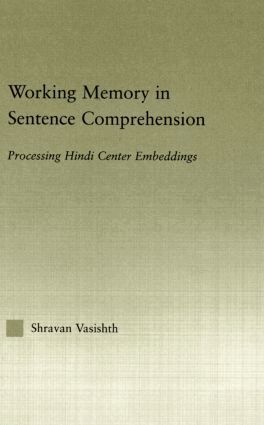
The first-ever investigation of sentence processing in Hindi, Working Memory in Sentence Comprehension studies the predictions of three existing, wide-coverage sentence processing models. In experiments that apply these models to Hindi, Shravan Vasishth develops a new sentence processing model that builds on existing theories and overcomes their empirical problems. Advancing the understanding of human parsing processes, this book is a landmark in cross-linguistic research, presenting a challenging set of sentence processing facts that will impact future theories.
1 417 kr
Skickas inom 7-10 vardagar
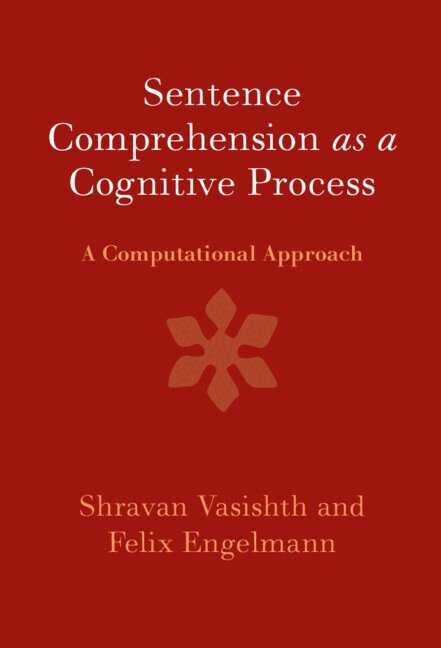
Sentence comprehension - the way we process and understand spoken and written language - is a central and important area of research within psycholinguistics. This book explores the contribution of computational linguistics to the field, showing how computational models of sentence processing can help scientists in their investigation of human cognitive processes. It presents the leading computational model of retrieval processes in sentence processing, the Lewis and Vasishth cue-based retrieval mode, and develops a principled methodology for parameter estimation and model comparison/evaluation using benchmark data, to enable researchers to test their own models of retrieval against the present model. It also provides readers with an overview of the last 20 years of research on the topic of retrieval processes in sentence comprehension, along with source code that allows researchers to extend the model and carry out new research. Comprehensive in its scope, this book is essential reading for researchers in cognitive science.
333 kr
Skickas inom 7-10 vardagar
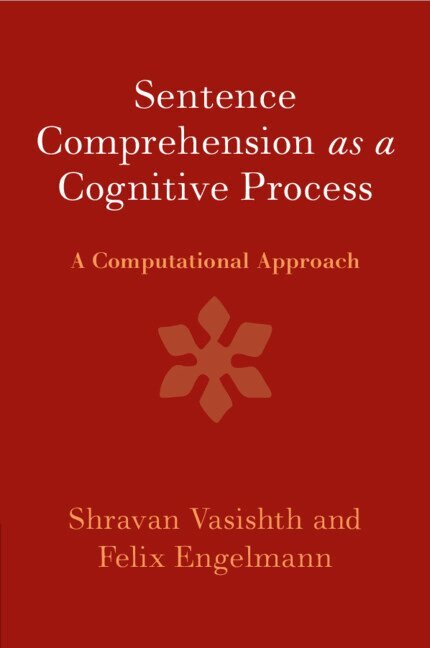
Sentence comprehension - the way we process and understand spoken and written language - is a central and important area of research within psycholinguistics. This book explores the contribution of computational linguistics to the field, showing how computational models of sentence processing can help scientists in their investigation of human cognitive processes. It presents the leading computational model of retrieval processes in sentence processing, the Lewis and Vasishth cue-based retrieval mode, and develops a principled methodology for parameter estimation and model comparison/evaluation using benchmark data, to enable researchers to test their own models of retrieval against the present model. It also provides readers with an overview of the last 20 years of research on the topic of retrieval processes in sentence comprehension, along with source code that allows researchers to extend the model and carry out new research. Comprehensive in its scope, this book is essential reading for researchers in cognitive science.
539 kr
Skickas inom 10-15 vardagar
The first-ever investigation of sentence processing in Hindi, Working Memory in Sentence Comprehension studies the predictions of three existing, wide-coverage sentence processing models. In experiments that apply these models to Hindi, Shravan Vasishth develops a new sentence processing model that builds on existing theories and overcomes their empirical problems. Advancing the understanding of human parsing processes, this book is a landmark in cross-linguistic research, presenting a challenging set of sentence processing facts that will impact future theories.
534 kr
Skickas inom 10-15 vardagar
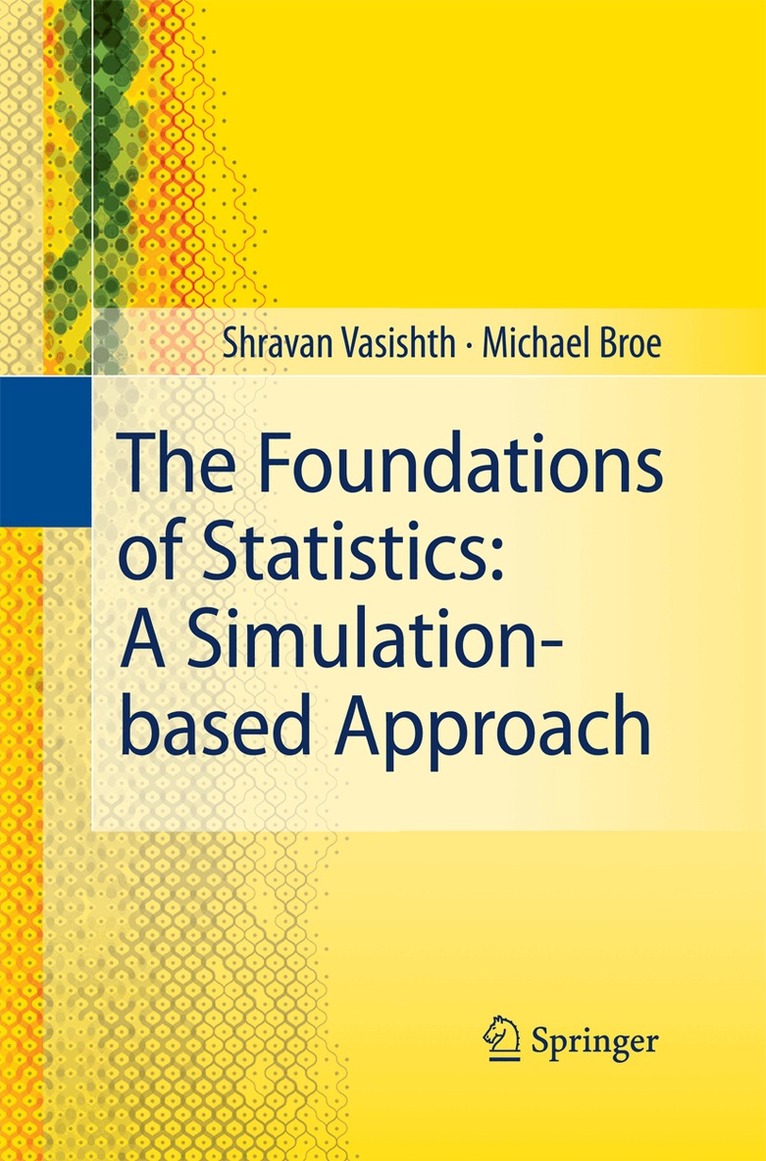
Statistics and hypothesis testing are routinely used in areas (such as linguistics) that are traditionally not mathematically intensive. In such fields, when faced with experimental data, many students and researchers tend to rely on commercial packages to carry out statistical data analysis, often without understanding the logic of the statistical tests they rely on. As a consequence, results are often misinterpreted, and users have difficulty in flexibly applying techniques relevant to their own research — they use whatever they happen to have learned. A simple solution is to teach the fundamental ideas of statistical hypothesis testing without using too much mathematics. This book provides a non-mathematical, simulation-based introduction to basic statistical concepts and encourages readers to try out the simulations themselves using the source code and data provided (the freely available programming language R is used throughout). Since the code presented in the text almost always requires the use of previously introduced programming constructs, diligent students also acquire basic programming abilities in R. The book is intended for advanced undergraduate and graduate students in any discipline, although the focus is on linguistics, psychology, and cognitive science. It is designed for self-instruction, but it can also be used as a textbook for a first course on statistics. Earlier versions of the book have been used in undergraduate and graduate courses in Europe and the US. ”Vasishth and Broe have written an attractive introduction to the foundations of statistics. It is concise, surprisingly comprehensive,self-contained and yet quite accessible. Highly recommended.” Harald Baayen, Professor of Linguistics, University of Alberta, Canada ”By using the text students not only learn to do the specific things outlined in the book, they also gain a skill set that empowers them to explore new areas that lie beyond the book’s coverage.” Colin Phillips, Professor of Linguistics, University of Maryland, USA
534 kr
Skickas inom 10-15 vardagar
Statistics and hypothesis testing are routinely used in areas (such as linguistics) that are traditionally not mathematically intensive. In such fields, when faced with experimental data, many students and researchers tend to rely on commercial packages to carry out statistical data analysis, often without understanding the logic of the statistical tests they rely on. As a consequence, results are often misinterpreted, and users have difficulty in flexibly applying techniques relevant to their own research — they use whatever they happen to have learned. A simple solution is to teach the fundamental ideas of statistical hypothesis testing without using too much mathematics. This book provides a non-mathematical, simulation-based introduction to basic statistical concepts and encourages readers to try out the simulations themselves using the source code and data provided (the freely available programming language R is used throughout). Since the code presented in the text almost always requires the use of previously introduced programming constructs, diligent students also acquire basic programming abilities in R. The book is intended for advanced undergraduate and graduate students in any discipline, although the focus is on linguistics, psychology, and cognitive science. It is designed for self-instruction, but it can also be used as a textbook for a first course on statistics. Earlier versions of the book have been used in undergraduate and graduate courses in Europe and the US. ”Vasishth and Broe have written an attractive introduction to the foundations of statistics. It is concise, surprisingly comprehensive,self-contained and yet quite accessible. Highly recommended.” Harald Baayen, Professor of Linguistics, University of Alberta, Canada ”By using the text students not only learn to do the specific things outlined in the book, they also gain a skill set that empowers them to explore new areas that lie beyond the book’s coverage.” Colin Phillips, Professor of Linguistics, University of Maryland, USA