Simon Reich - Böcker
Visar alla böcker från författaren Simon Reich. Handla med fri frakt och snabb leverans.
13 produkter
13 produkter
1 667 kr
Skickas inom 5-8 vardagar
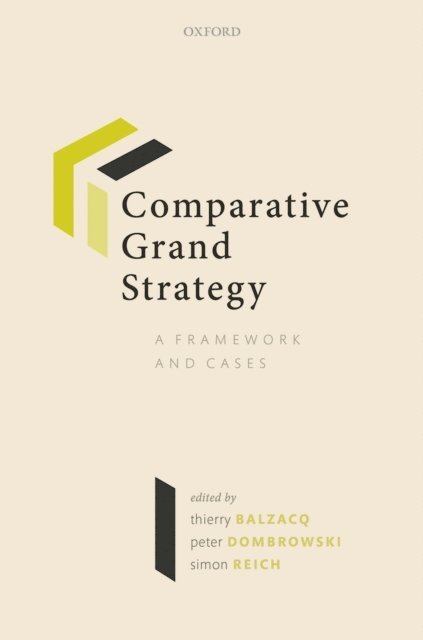
This book develops a new approach in explaining how a nation's Grand Strategy is constituted, how to assess its merits, and how grand strategies may be comparatively evaluated within a broader framework.The volume responds to three key problems common to both academia and policymaking. First, the literature on the concept of grand strategy generally focuses on the United States, offering no framework for comparative analysis. Indeed, many proponents of US grand strategy suggest that the concept can only be applied, at most, to a very few great powers such as China and Russia. Second, characteristically it remains prescriptive rather than explanatory, ignoring the central conundrum of why differing countries respond in contrasting ways to similar pressures. Third, it often understates the significance of domestic politics and policymaking in the formulation of grand strategies - emphasizing mainly systemic pressures. This book addresses these problems. It seeks to analyze and explain grand strategies through the intersection of domestic and international politics in ten countries grouped distinctively as great powers (The G5), regional powers (Brazil and India) and pivotal powers hostile to each other who are able to destabilize the global system (Iran, Israel, and Saudi Arabia). The book thus employs a comparative framework that describes and explains why and how domestic actors and mechanisms, coupled with external pressures, create specific national strategies. Overall, the book aims to fashion a valid, cross-contextual framework for an emerging research program on grand strategic analysis.
495 kr
Skickas inom 5-8 vardagar
This book develops a new approach in explaining how a nation's Grand Strategy is constituted, how to assess its merits, and how grand strategies may be comparatively evaluated within a broader framework.The volume responds to three key problems common to both academia and policymaking. First, the literature on the concept of grand strategy generally focuses on the United States, offering no framework for comparative analysis. Indeed, many proponents of US grand strategy suggest that the concept can only be applied, at most, to a very few great powers such as China and Russia. Second, characteristically it remains prescriptive rather than explanatory, ignoring the central conundrum of why differing countries respond in contrasting ways to similar pressures. Third, it often understates the significance of domestic politics and policymaking in the formulation of grand strategies - emphasizing mainly systemic pressures. This book addresses these problems. It seeks to analyze and explain grand strategies through the intersection of domestic and international politics in ten countries grouped distinctively as great powers (The G5), regional powers (Brazil and India) and pivotal powers hostile to each other who are able to destabilize the global system (Iran, Israel, and Saudi Arabia). The book thus employs a comparative framework that describes and explains why and how domestic actors and mechanisms, coupled with external pressures, create specific national strategies. Overall, the book aims to fashion a valid, cross-contextual framework for an emerging research program on grand strategic analysis.
407 kr
Skickas inom 7-10 vardagar
Critics and defenders of multinational corporations often agree on at least one thing: that the activities of multinationals are creating an overwhelmingly powerful global market that is quickly rendering national borders obsolete. The authors of this book, however, argue that such expectations commonly rest on a myth. They examine key activities of multinational corporations in the United States, Japan, and Europe and explore the relationship between corporate behavior and national institutions and cultures. They demonstrate that the world's leading multinationals continue to be shaped decisively by the policies and values of their home countries and that their core operations are not converging to create a seamless global market. With a wealth of fresh evidence, the authors show that Japanese and German multinationals, in particular, remain only weakly committed to laissez-faire policy orientations and continue to exhibit strong allegiance to national goals in such areas as investment and employment. They also bring to light the consequences of enduring differences in government policies on, for example, industrial cartels, capital markets, and research and development.The authors agree that the world economy is becoming more complex and integrated as overt barriers to trade and investment fall away. But they conclude that the extent of this integration is decisively limited by structural divergence at the level of the firm. The book will be essential reading for those seeking to understand the growing interdependence of still-distinctive industrial societies and the wellsprings of the true global economy.
1 103 kr
Skickas inom 7-10 vardagar
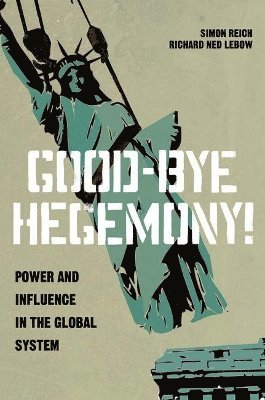
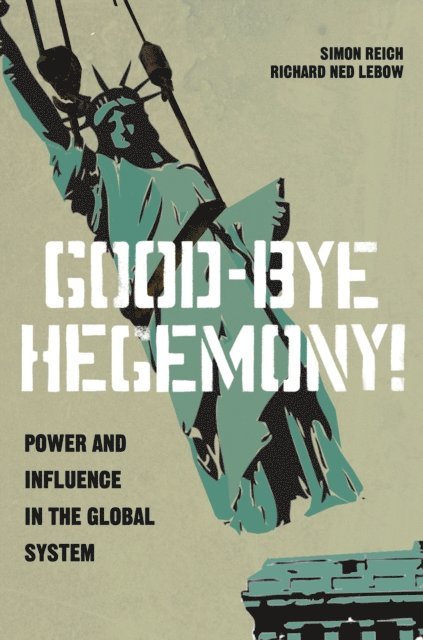
Many policymakers, journalists, and scholars insist that U.S. hegemony is essential for warding off global chaos. Good-Bye Hegemony! argues that hegemony is a fiction propagated to support a large defense establishment, justify American claims to world leadership, and buttress the self-esteem of voters. It is also contrary to American interests and the global order. Simon Reich and Richard Ned Lebow argue that hegemony should instead find expression in agenda setting, economic custodianship, and the sponsorship of global initiatives. Today, these functions are diffused through the system, with European countries, China, and lesser powers making important contributions. In contrast, the United States has often been a source of political and economic instability. Rejecting the focus on power common to American realists and liberals, the authors offer a novel analysis of influence. In the process, they differentiate influence from power and power from material resources. Their analysis shows why the United States, the greatest power the world has ever seen, is increasingly incapable of translating its power into influence.Reich and Lebow use their analysis to formulate a more realistic place for America in world affairs.
279 kr
Skickas inom 7-10 vardagar
Many policymakers, journalists, and scholars insist that U.S. hegemony is essential for warding off global chaos. Good-Bye Hegemony! argues that hegemony is a fiction propagated to support a large defense establishment, justify American claims to world leadership, and buttress the self-esteem of voters. It is also contrary to American interests and the global order. Simon Reich and Richard Ned Lebow argue that hegemony should instead find expression in agenda setting, economic custodianship, and the sponsorship of global initiatives. Today, these functions are diffused through the system, with European countries, China, and lesser powers making important contributions. In contrast, the United States has often been a source of political and economic instability. Rejecting the focus on power common to American realists and liberals, the authors offer a novel analysis of influence. In the process, they differentiate influence from power and power from material resources. Their analysis shows why the United States, the greatest power the world has ever seen, is increasingly incapable of translating its power into influence.Reich and Lebow use their analysis to formulate a more realistic place for America in world affairs.
1 574 kr
Skickas inom 10-15 vardagar
The West German "economic miracle," Simon Reich suggests, may be best understood as a result of the discriminatory economic policies of the Nazi regime. Reich contends that ideological and institutional characteristics originating under fascism were sustained despite Germany's return to democracy and heavily influenced the economic success of its automobile industry. By contrast, the liberal economic policies of the British state led in time to the decline of an industrial sector that in 1930 had closely resembled its German counterpart. Through detailed comparative histories of German and British automobile firms, Reich challenges traditional explanations of the divergent performances of the two nations' economies and sheds new light on the relationship between state policy and economic success in pre- and postwar Europe. Liberal, nondiscriminatory British policies favorable to multinational investment contributed significantly to the decline of domestic firms, he argues, so that eventually multinationals could threaten the health of the entire British economy by investing elsewhere. The Nazi state, however, thwarted the development of American subsidiaries and fostered a core of producers, government officials, bankers, and labor union leaders.
561 kr
Skickas inom 10-15 vardagar
The West German "economic miracle," Simon Reich suggests, may be best understood as a result of the discriminatory economic policies of the Nazi regime. Reich contends that ideological and institutional characteristics originating under fascism were sustained despite Germany's return to democracy and heavily influenced the economic success of its automobile industry. By contrast, the liberal economic policies of the British state led in time to the decline of an industrial sector that in 1930 had closely resembled its German counterpart. Through detailed comparative histories of German and British automobile firms, Reich challenges traditional explanations of the divergent performances of the two nations' economies and sheds new light on the relationship between state policy and economic success in pre- and postwar Europe. Liberal, nondiscriminatory British policies favorable to multinational investment contributed significantly to the decline of domestic firms, he argues, so that eventually multinationals could threaten the health of the entire British economy by investing elsewhere. The Nazi state, however, thwarted the development of American subsidiaries and fostered a core of producers, government officials, bankers, and labor union leaders.
Managing Ethnic Diversity After 9/11
Integration, Security, and Civil Liberties in Transatlantic Perspective
Inbunden, Engelska, 2010
1 356 kr
Skickas inom 5-8 vardagar
America's approach to terrorism has focused on traditional national security methods, under the assumption that terrorism's roots are foreign and the solution to greater security lies in conventional practices. Europe offers a different model, with its response to internal terrorism relying on police procedures.Managing Ethnic Diversity after 9/11 compares these two strategies and considers that both may have engendered greater radicalization--and a greater chance of home-grown terrorism. Essays address how transatlantic countries, including the United Kingdom, the United States, France, Germany, Spain, Italy, and the Netherlands have integrated ethnic minorities, especially Arabs and Muslims, since 9/11. Discussing the "securitization of integration," contributors argue that the neglect of civil integration has challenged the rights of these minorities and has made greater security more remote.
Managing Ethnic Diversity After 9/11
Integration, Security, and Civil Liberties in Transatlantic Perspective
Häftad, Engelska, 2011
394 kr
Skickas inom 5-8 vardagar
America's approach to terrorism has focused on traditional national security methods, under the assumption that terrorism's roots are foreign and the solution to greater security lies in conventional practices. Europe offers a different model, with its response to internal terrorism relying on police procedures.Managing Ethnic Diversity after 9/11 compares these two strategies and considers that both may have engendered greater radicalization--and a greater chance of home-grown terrorism. Essays address how transatlantic countries, including the United Kingdom, the United States, France, Germany, Spain, Italy, and the Netherlands have integrated ethnic minorities, especially Arabs and Muslims, since 9/11. Discussing the "securitization of integration," contributors argue that the neglect of civil integration has challenged the rights of these minorities and has made greater security more remote.
Immigration, Integration, and Security
America and Europe in Comparative Perspective
Häftad, Engelska, 2008
762 kr
Skickas inom 7-10 vardagar
Recent acts of terrorism in Britain and Europe and the events of 9/11 in the United States have greatly influenced immigration, security, and integration policies in these countries. Yet many of the current practices surrounding these issues were developed decades ago, and are ill-suited to the dynamics of today's global economies and immigration patterns.At the core of much policy debate is the inherent paradox whereby immigrant populations are frequently perceived as posing a potential security threat yet bolster economies by providing an inexpensive workforce. Strict attention to border controls and immigration quotas has diverted focus away from perhaps the most significant dilemma: the integration of existing immigrant groups. Often restricted in their civil and political rights and targets of xenophobia, racial profiling, and discrimination, immigrants are unable or unwilling to integrate into the population. These factors breed distrust, disenfranchisement, and hatred-factors that potentially engender radicalization and can even threaten internal security.The contributors compare policies on these issues at three relational levels: between individual EU nations and the U.S., between the EU and U.S., and among EU nations. What emerges is a timely and critical examination of the variations and contradictions in policy at each level of interaction and how different agencies and different nations often work in opposition to each other with self-defeating results. While the contributors differ on courses of action, they offer fresh perspectives, some examining significant case studies and laying the groundwork for future debate on these crucial issues.
644 kr
Skickas inom 7-10 vardagar
Current global estimates of children engaged in warfare range from 200,000 to 300,000. Children's roles in conflict range from armed and active participants to spies, cooks, messengers, and sex slaves. Child Soldiers in the Age of Fractured States examines the factors that contribute to the use of children in war, the effects of war upon children, and the perpetual cycle of warfare that engulfs many of the world's poorest nations.The contributors seek to eliminate myths of historic or culture-based violence, and instead look to common traits of chronic poverty and vulnerable populations. Individual essays examine topics such as: the legal and ethical aspects of child soldiering; internal UN debates over enforcement of child protection policies; economic factors; increased access to small arms; displaced populations; resource endowments; forced government conscription; rebel-enforced quota systems; motivational techniques employed in recruiting children; and the role of girls in conflict.The contributors also offer viable policies to reduce the recruitment of child soldiers such as the protection of refugee camps by outside forces, \u201cnaming and shaming,\u201d and criminal prosecution by international tribunals. Finally, they focus on ways to reintegrate former child soldiers into civil society in the aftermath of war.
234 kr
Skickas inom 7-10 vardagar
The field of grand strategy is exceptionally American-centric theoretically, methodologically and empirically. Indeed, many scholars treat the United States as a unique case, and thus incomparable. This Element addresses the shortcomings of this approach by developing a novel framework for the purpose of systematic comparison, both within and among different countries. Using the United States as a benchmark, three dimensions are considered in which grand strategy can be compared: first, attributes of the major types commonly discussed in the literature; second, similarities and differences in the implementation of grand strategies over time, using US strategic relations with contemporary Russia as an example; and finally, across space, properties of the grand strategies that are interactively employed by other major powers in relation to the United States in the Indo-Pacific. The Element can be used by scholars and students alike to expand analysis beyond the confines that currently dominate the field.
327 kr
Skickas inom 10-15 vardagar
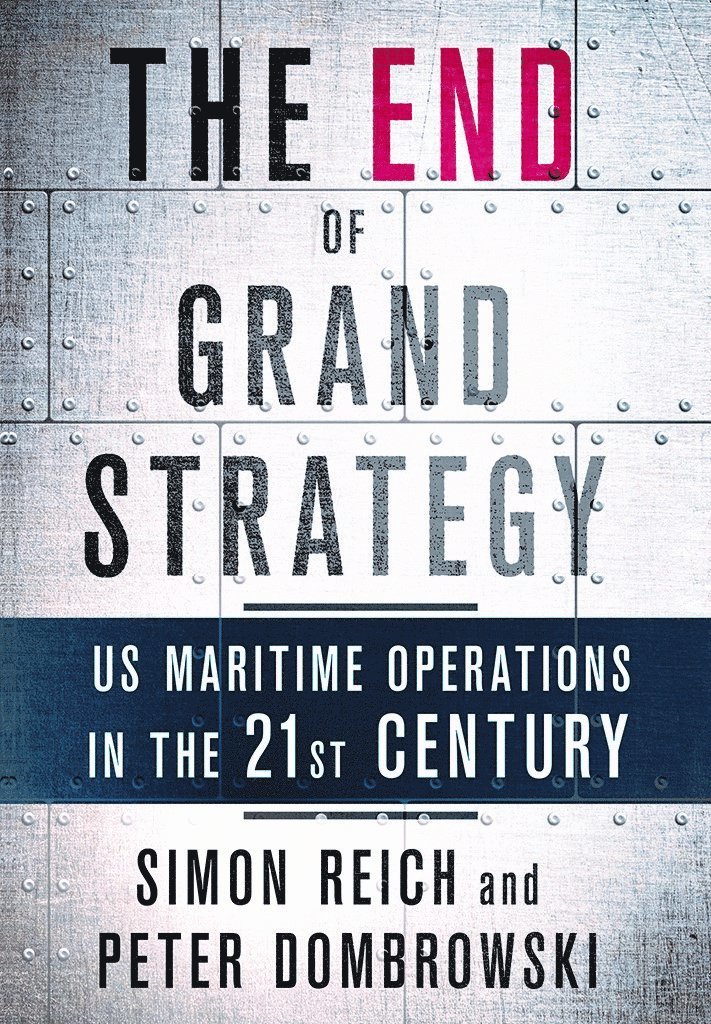
In The End of Grand Strategy, Simon Reich and Peter Dombrowski challenge the common view of grand strategy as unitary. They eschew prescription of any one specific approach, chosen from a spectrum that stretches from global primacy to restraint and isolationism, in favor of describing what America's military actually does, day to day. They argue that a series of fundamental recent changes in the global system, the inevitable jostling of bureaucratic politics, and the practical limitations of field operations combine to ensure that each presidential administration inevitably resorts to a variety of strategies. Proponents of different American grand strategies have historically focused on the pivotal role of the Navy. In response, Reich and Dombrowski examine six major maritime operations, each of which reflects one major strategy. One size does not fit all, say the authors—the attempt to impose a single overarching blueprint is no longer feasible. Reich and Dombrowski declare that grand strategy, as we know it, is dead. The End of Grand Strategy is essential reading for policymakers, military strategists, and analysts and critics at advocacy groups and think tanks.