
Simon van Rysewyk – författare
Visar alla böcker från författaren Simon van Rysewyk. Handla med fri frakt och snabb leverans.
6 produkter
6 produkter
1 602 kr
Skickas inom 10-15 vardagar
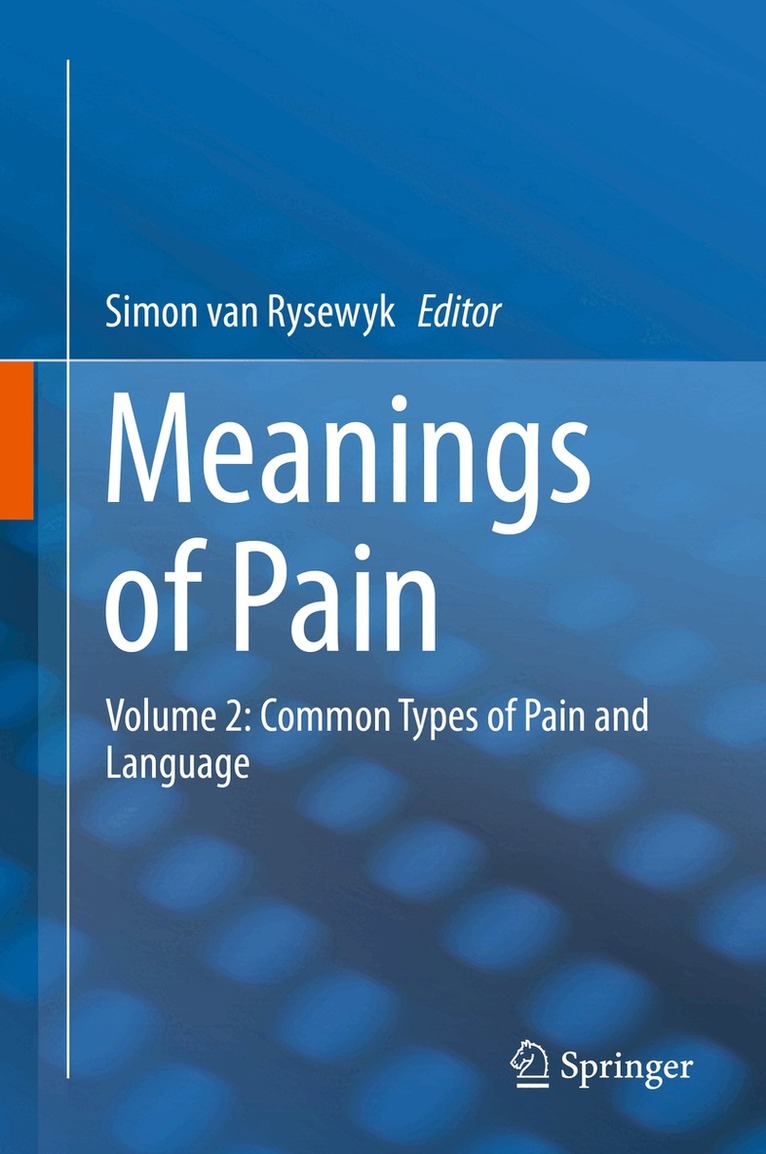
The lived experiences of pain described here involve various types of chronic pain, including spinal pain, labour pain, rheumatic pain, diabetic peripheral neuropathic pain, fibromyalgia, complex regional pain syndrome, endometriosis-associated pain, and cancer-related pain.
1 602 kr
Skickas inom 10-15 vardagar
The lived experiences of pain described here involve various types of chronic pain, including spinal pain, labour pain, rheumatic pain, diabetic peripheral neuropathic pain, fibromyalgia, complex regional pain syndrome, endometriosis-associated pain, and cancer-related pain.
1 869 kr
Skickas inom 10-15 vardagar
This book, the third and final volume in the Meaning of Pain series, describes what pain means to people with pain in “vulnerable” groups, and how meaning changes pain – and them – over time. Immediate pain warns of harm or injury to the person with pain.
1 869 kr
Skickas inom 10-15 vardagar
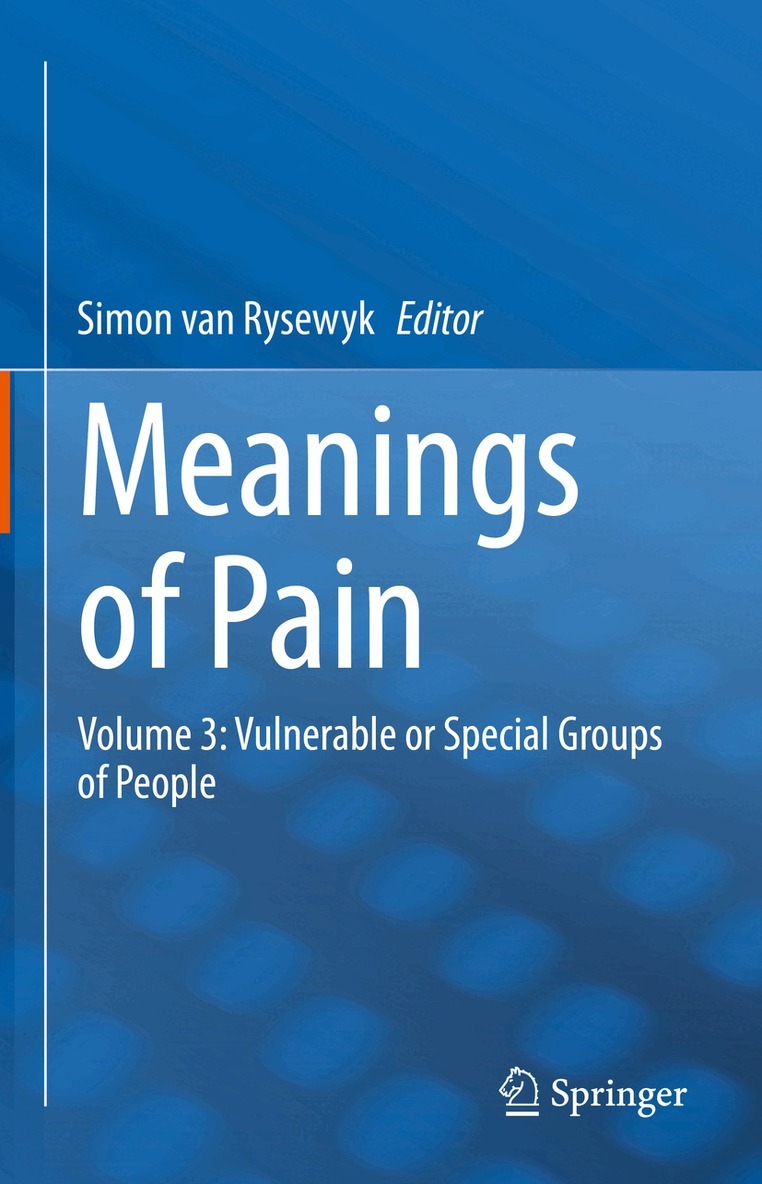
This book, the third and final volume in the Meaning of Pain series, describes what pain means to people with pain in “vulnerable” groups, and how meaning changes pain – and them – over time.Immediate pain warns of harm or injury to the person with pain. If pain persists over time, more complex meanings can become interwoven with this primitive meaning of threat. These cognitive meanings include thoughts and anxiety about the adverse consequences of pain. Such meanings can nourish existential sufferings, which are more about the person than the pain, such as loss, loneliness, or despair. Although chronic pain can affect anyone, there are some groups of people for whom particular clinical support and understanding is urgently needed. This applies to “vulnerable” or “special” groups of people, and to the question of what pain means to them. These groups include children, women, older adults, veterans, addicts, people with mental health problems, homeless people, or people in rural or indigenous communities. Several chapters in the book focus on the lived experience of pain in vulnerable adults, including black older adults in the US, rural Nigerians, US veterans, and adults with acquired brain injury. The question of what pain experience could mean in the defenceless fetus, neonate, pre-term baby, and child, is examined in depth across three contributions.This book series aspires to create a vocabulary on the “meanings of pain” and a clinical framework with which to use it. It is hoped that the series stimulates self-reflection about the role of meaning in optimal pain management. Meanings of Pain is intended for people with pain, family members or caregivers of people with pain, clinicians, researchers, advocates, and policy makers. Volume I was published in 2016; Volume II in 2019.
1 815 kr
Skickas inom 10-15 vardagar
Although pain is widely recognized by clinicians and researchers as an experience, pain is always felt in a patient-specific way rather than experienced for what it objectively is, making perceived meaning important in the study of pain. The book contributors explain why meaning is important in the way that pain is felt and promote the integration of quantitative and qualitative methods to study meanings of pain. For the first time in a book, the study of the meanings of pain is given the attention it deserves.All pain research and medicine inevitably have to negotiate how pain is perceived, how meanings of pain can be described within the fabric of a person’s life and neurophysiology, what factors mediate them, how they interact and change over time, and how the relationship between patient, researcher, and clinician might be understood in terms of meaning.Though meanings of pain are not intensively studied in contemporary painresearch or thoroughly described as part of clinical assessment, no pain researcher or clinician can avoid asking questions about how pain is perceived or the types of data and scientific methods relevant in discovering the answers.
1 815 kr
Skickas inom 10-15 vardagar
Although pain is widely recognized by clinicians and researchers as an experience, pain is always felt in a patient-specific way rather than experienced for what it objectively is, making perceived meaning important in the study of pain. The book contributors explain why meaning is important in the way that pain is felt and promote the integration of quantitative and qualitative methods to study meanings of pain. For the first time in a book, the study of the meanings of pain is given the attention it deserves.All pain research and medicine inevitably have to negotiate how pain is perceived, how meanings of pain can be described within the fabric of a person’s life and neurophysiology, what factors mediate them, how they interact and change over time, and how the relationship between patient, researcher, and clinician might be understood in terms of meaning.Though meanings of pain are not intensively studied in contemporary painresearch or thoroughly described as part of clinical assessment, no pain researcher or clinician can avoid asking questions about how pain is perceived or the types of data and scientific methods relevant in discovering the answers.