Simon Varey - Böcker
Visar alla böcker från författaren Simon Varey. Handla med fri frakt och snabb leverans.
8 produkter
8 produkter
2 368 kr
Skickas inom 7-10 vardagar
A scholarly edition of a work by Henry St John Bolingbroke. The edition presents an authoritative text, together with an introduction, commentary notes, and scholarly apparatus.
Del 7 - Cambridge Studies in Eighteenth-Century English Literature and Thought
Space and the Eighteenth-Century English Novel
Häftad, Engelska, 2006
614 kr
Skickas inom 7-10 vardagar
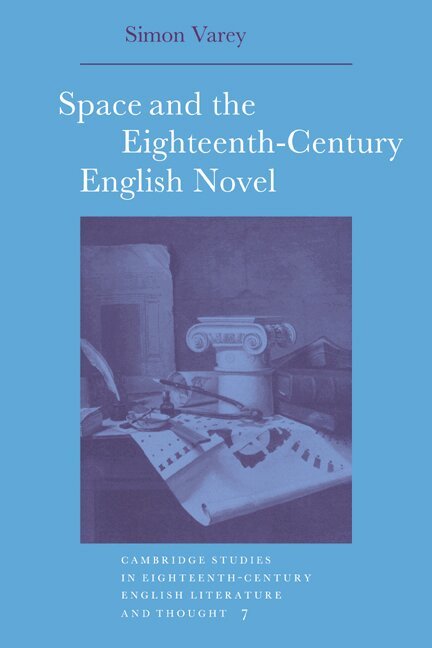
In this challenging and illustrated study, first published in 1990, Simon Varey relates the idea of space in the major novels of Defoe, Fielding and Richardson to its use in the theory and practice of eighteenth-century architecture. Concepts of divine design, expressed in the work of philosophers and theologians, introduced an ideological element to the notion of space which gave it a heightened significance in contemporary thought. Professor Varey's central argument is that space becomes a political instrument used to establish conformity, assert power and give form to the aspirations of social classes. He draws on a wide range of architectural books, both English and European, and on the example of Bath (focusing in particular on its chief architect in the eighteenth century, John Wood). The discussion of novels such as Robinson Crusoe, Tom Jones and Clarissa examines narrative as a form of spatial design, the use of architectural imagery to describe people, and the political control of social space.
426 kr
Skickas inom 7-10 vardagar
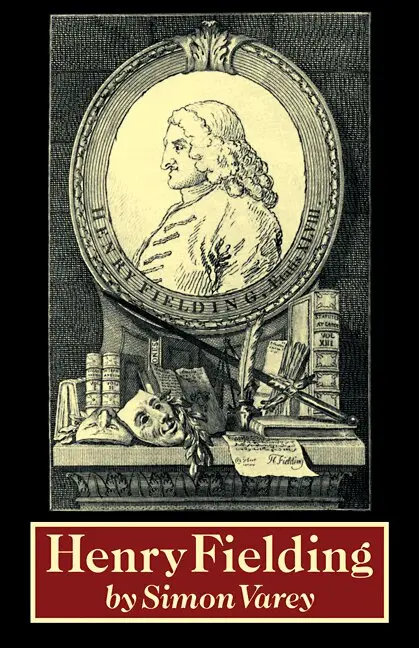
This concise and lucid study provides an ideal introduction to the major work of Henry Fielding for all students. Fielding's stature as a great comic novelist is assured, but as Professor Varey illustrates, he was a remarkably versatile writer. In his day Fielding was one of England's leading dramatists and also pursued a career in law. He founded, edited, and contributed essays for four different periodicals, and wrote a political-satirical novel Jonathan Wild, in addition to a work of powerful social protest Amelia and his two outstanding contributions to the development of English prose fiction: Tom Jones and Joseph Andrews. Professor Varey clarifies and explains this varied body of writing, concentrating on Fielding's technique of combining opposites or apparently ill-matched elements - of language, character, narrative made, and even philosophical thought.
Del 7 - Cambridge Studies in Eighteenth-Century English Literature and Thought
Space and the Eighteenth-Century English Novel
Inbunden, Engelska, 1990
1 734 kr
Skickas inom 7-10 vardagar
In this challenging and illustrated study, first published in 1990, Simon Varey relates the idea of space in the major novels of Defoe, Fielding and Richardson to its use in the theory and practice of eighteenth-century architecture. Concepts of divine design, expressed in the work of philosophers and theologians, introduced an ideological element to the notion of space which gave it a heightened significance in contemporary thought. Professor Varey's central argument is that space becomes a political instrument used to establish conformity, assert power and give form to the aspirations of social classes. He draws on a wide range of architectural books, both English and European, and on the example of Bath (focusing in particular on its chief architect in the eighteenth century, John Wood). The discussion of novels such as Robinson Crusoe, Tom Jones and Clarissa examines narrative as a form of spatial design, the use of architectural imagery to describe people, and the political control of social space.
935 kr
Skickas inom 7-10 vardagar
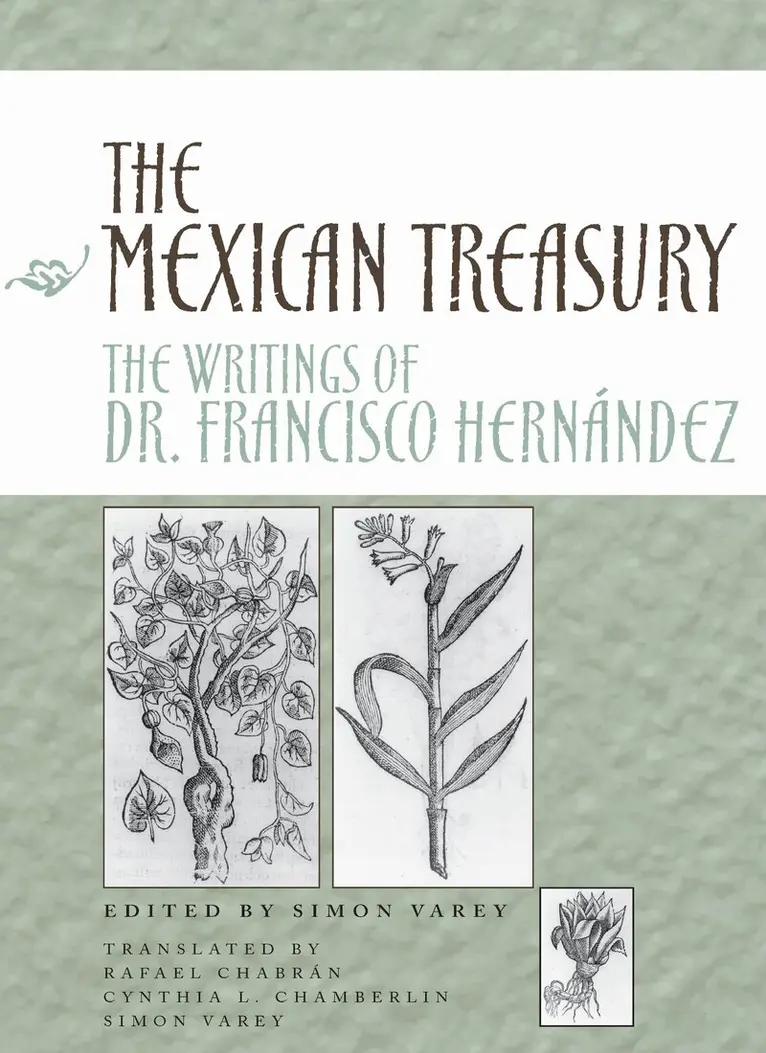
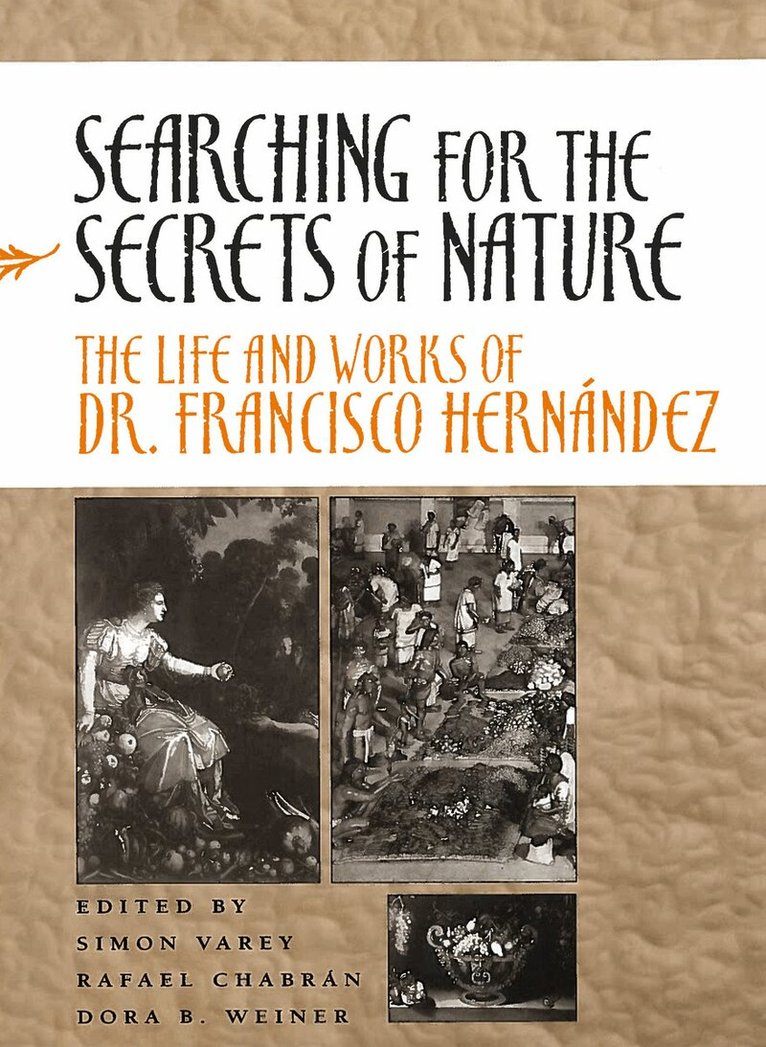
This volume consists of a selection of English translations from the extensive writings of Dr. Francisco Hernández (1515-87). Celebrated in his own day as one of Spain's leading physicians and naturalists, he is now best remembered for his monumental work on the native plants and materia medica of central Mexico.Sent to New Spain in 1570 by King Philip II to research and describe the natural history of the region, to assess the medical usefulness of the natural resources, and to gather ethnographic materials for an anthropological history, Hernández was the first trained scientist to undertake scientific work in the New World. For seven years he gathered information throughout the Valley of Mexico, learning Nahuatl, recording local medical customs, studying indigenous medicines, and writing down all his observations. The result was The Natural History of New Spain, written in Latin, which consisted of six folio volumes filled with descriptions of over 3,000 plants previously unknown in Europe (along with descriptions of a much smaller number of animals and minerals) and ten folio volumes of paintings by Mexican artists illustrating the plants and animals he described.Hernández died before he could publish his Natural History, and the materials were placed in the Escorial, where they were extensively consulted, copied, abstracted, and translated by generations of scientists, medical specialists, and natural philosophers before they were destroyed by fire in 1671. Hernández's work was still regarded as authoritative on a number of New World botanical topics as late as the nineteenth century, and his writings remain in use in popular form in Mexico today.Only a tiny fragment of the Natural History has previously appeared in English. The selections in this volume are designed to reflect the historical patterns of dissemination of the work of Hernández, giving modern readers a sense of which portions of his vast corpus entered scientific discourse and spread across two continents in the seventeenth and eighteenth centuries.
Searching for the Secrets of Nature
The Life and Works of Dr. Francisco Hernández
Inbunden, Engelska, 2002
855 kr
Skickas inom 7-10 vardagar
This collection of essays by historians, historians of science and medicine, and literary and textual scholars—from the United States, Canada, Mexico, and Spain—analyzes the achievements of Dr. Francisco Hernández (1515-87) in the history of medicine and science in Europe and the Americas. Celebrated in his own day as one of Spain's leading physicians and naturalists, he is now best remembered for his monumental work on the native plants and materia medica of central Mexico.Sent to New Spain in 1570 by King Philip II to research and describe the natural history of the region, to assess the medical usefulness of the natural resources, and to gather ethnographic materials for an anthropological history, Hernández was the first trained scientist to undertake scientific work in the New World. For seven years he gathered information throughout the Valley of Mexico, learning Nahuatl, recording local medical customs, studying indigenous medicines, and writing down all his observations. The result was The Natural History of New Spain, written in Latin, which consisted of six folio volumes filled with descriptions of over 3,000 plants previously unknown in Europe (along with descriptions of a much smaller number of animals and minerals) and ten folio volumes of paintings by Mexican artists illustrating the plants and animals he described.Hernández died before he could publish his Natural History, and the materials were placed in the Escorial, where they were extensively consulted, copied, abstracted, and translated by generations of scientists, medical specialists, and natural philosophers before they were destroyed by fire in 1671. Hernández's work was still regarded as authoritative on a number of New World botanical topics as late as the nineteenth century, and his writings remain in use in popular form in Mexico today.The sixteen essays in this volume treat the most important aspects of Hernández's experience, including his education, his heterodox beliefs, and the state of medicine in both Spain and New Spain during his era. Other essays show the dissemination of the knowledge Hernández accumulated, including his contributions to European botany and materia medica, his relationship to Spanish Baroque painting, the "globalization" of his work in the eighteenth century, and his place in nineteenth-century debates among Spanish scientists.
1 816 kr
Skickas inom 5-8 vardagar
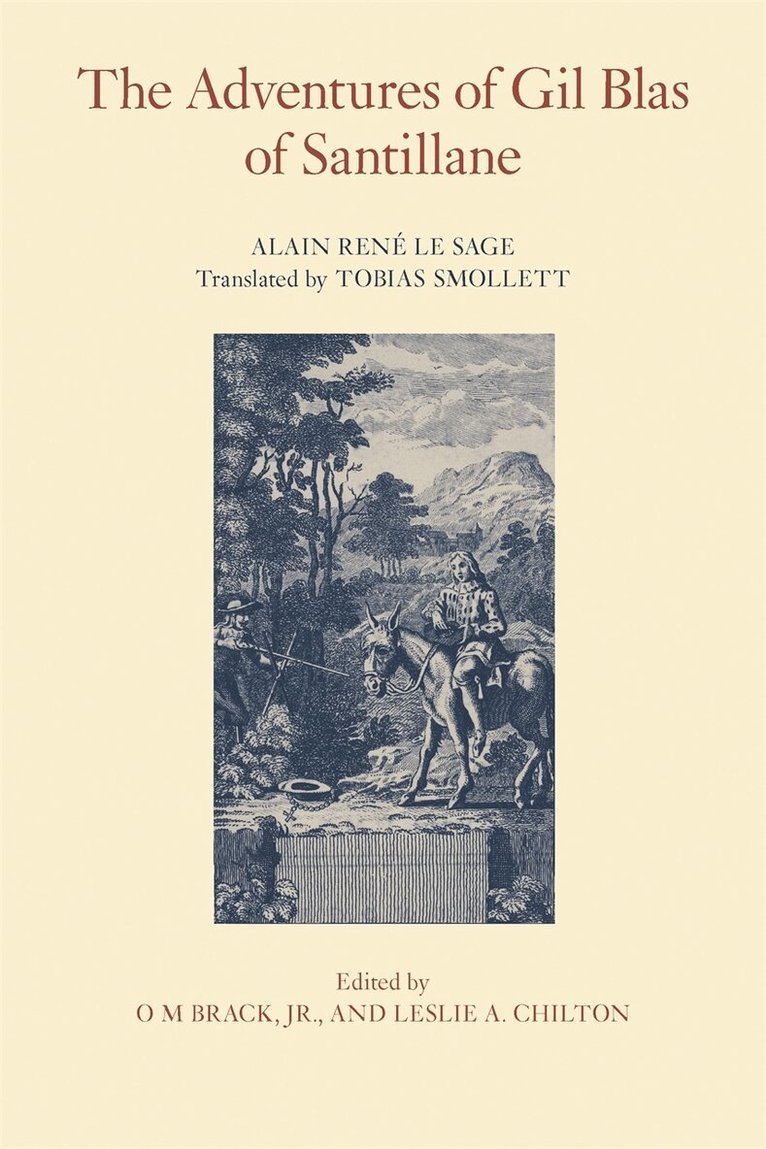
Tobias Smollett, in the preface to his first novel, The Adventures of Roderick Random (1748), acknowledges the influence of Alain René Le Sage’s L’Histoire de Gil Blas de Santillane (1715–35 in four volumes) on his work. By far the most successful of “useful and entertaining” romances, Smollett writes, Gil Blas describes “the knavery and foibles of life, with infinite humour and sagacity.” “The following sheets,” he adds significantly, “I have modeled on his plan.”Smollett’s translation of Gil Blas appeared nine months after the publication of Roderick Random. This chronicle of a merry, philosophical young man whose adventures lead him into all levels of society from the highest to the lowest, presents special problems for a translator. Smollett, without always adhering to the literal expression of the novel’s language, is true to its style, spirit, and ideas. After two and a half centuries, his remains the finest translation of this humorous, satiric, and classic French novel.In his early years in London, Smollett struggled to find a way to distinguish himself through his medical practice, medical writings, poetry, and plays. None of these attempts, however, allowed him to demonstrate the full range of his personality and talents. Only when he combined his own boundless imagination with the skills he had learned from translating Gil Blas was he able to create energetic narratives filled with vivid and original characters.
909 kr
Skickas inom 3-6 vardagar
Tobias Smollett, in the preface to his first novel, The Adventures of Roderick Random (1748), acknowledges the influence of Alain René Le Sage’s L’Histoire de Gil Blas de Santillane (1715–35 in four volumes) on his work. By far the most successful of “useful and entertaining” romances, Smollett writes, Gil Blas describes “the knavery and foibles of life, with infinite humour and sagacity.” “The following sheets,” he adds significantly, “I have modeled on his plan.”Smollett’s translation of Gil Blas appeared nine months after the publication of Roderick Random. This chronicle of a merry, philosophical young man whose adventures lead him into all levels of society from the highest to the lowest, presents special problems for a translator. Smollett, without always adhering to the literal expression of the novel’s language, is true to its style, spirit, and ideas. After two and a half centuries, his remains the finest translation of this humorous, satiric, and classic French novel.In his early years in London, Smollett struggled to find a way to distinguish himself through his medical practice, medical writings, poetry, and plays. None of these attempts, however, allowed him to demonstrate the full range of his personality and talents. Only when he combined his own boundless imagination with the skills he had learned from translating Gil Blas was he able to create energetic narratives filled with vivid and original characters.