Sonny Shiu-Hing Lo – författare
Visar alla böcker från författaren Sonny Shiu-Hing Lo. Handla med fri frakt och snabb leverans.
41 produkter
Competing Chinese Political Visions
Hong Kong vs. Beijing on Democracy
Inbunden, 2010
994 kr
Lägg i varukorg
A fascinating analysis of the features of the Hong Kong-style democracy viewed as alien, hostile, potentially subversive, and substantially dangerous by the mainland Chinese Communist Party.Competing Chinese Political Visions: Hong Kong vs. Beijing on Democracy examines the uniqueness of the Hong …
Competing Chinese Political Visions
Hong Kong vs. Beijing on Democracy
E-bok, 2010
1124 kr
Lägg i varukorg
A fascinating analysis of the features of the Hong Kong-style democracy viewed as alien, hostile, potentially subversive, and substantially dangerous by the mainland Chinese Communist Party. Competing Chinese Political Visions: Hong Kong vs. Beijing on Democracy examines the uniqueness of the Hong …
Interest Groups and the New Democracy Movement in Hong Kong
Häftad, 2019
740 kr
Lägg i varukorg
A new era in the democracy movement in Hong Kong began on July 1, 2003, when half a million people protested on the streets, and has included the 2012 anti-National Education campaign, the 2014 Occupy Central Movement and the rapid rise of localist groups. The new democracy movement in Hong Kong is …
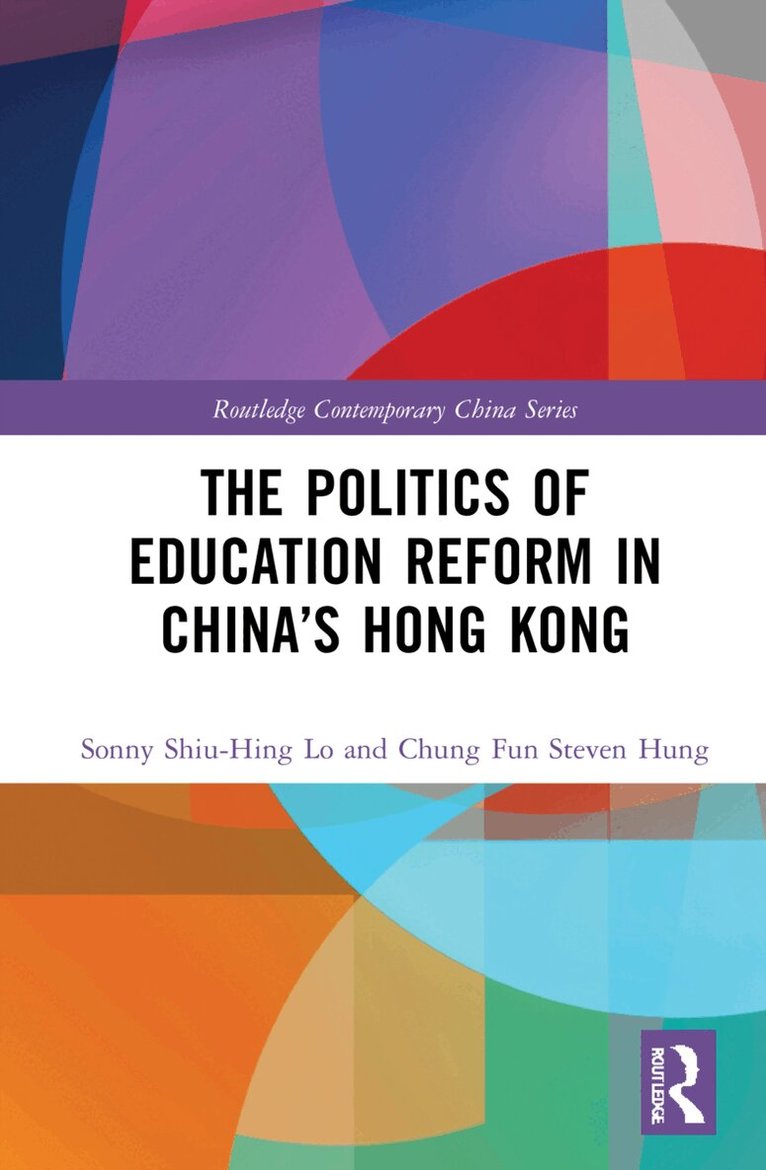
Politics of Education Reform in China’s Hong Kong
Av Sonny Shiu-Hing Lo, Chung Fun Steven Hung
Häftad, 2024
671 kr
Lägg i varukorg
Education reform has become a highly political issue in the Hong Kong Special Administrative Region (HKSAR) since the transfer of sovereignty to the People’s Republic of China (PRC). Lo and Hung focus on the political struggles among stakeholders, including the government of Hong Kong, the Catholic …
Politics of Education Reform in China’s Hong Kong
Av Sonny Shiu-Hing Lo, Chung Fun Steven Hung
Inbunden, 2022
2439 kr
Lägg i varukorg
Education reform has become a highly political issue in the Hong Kong Special Administrative Region (HKSAR) since the transfer of sovereignty to the People’s Republic of China (PRC). Lo and Hung focus on the political struggles among stakeholders, including the government of Hong Kong, the Catholic …
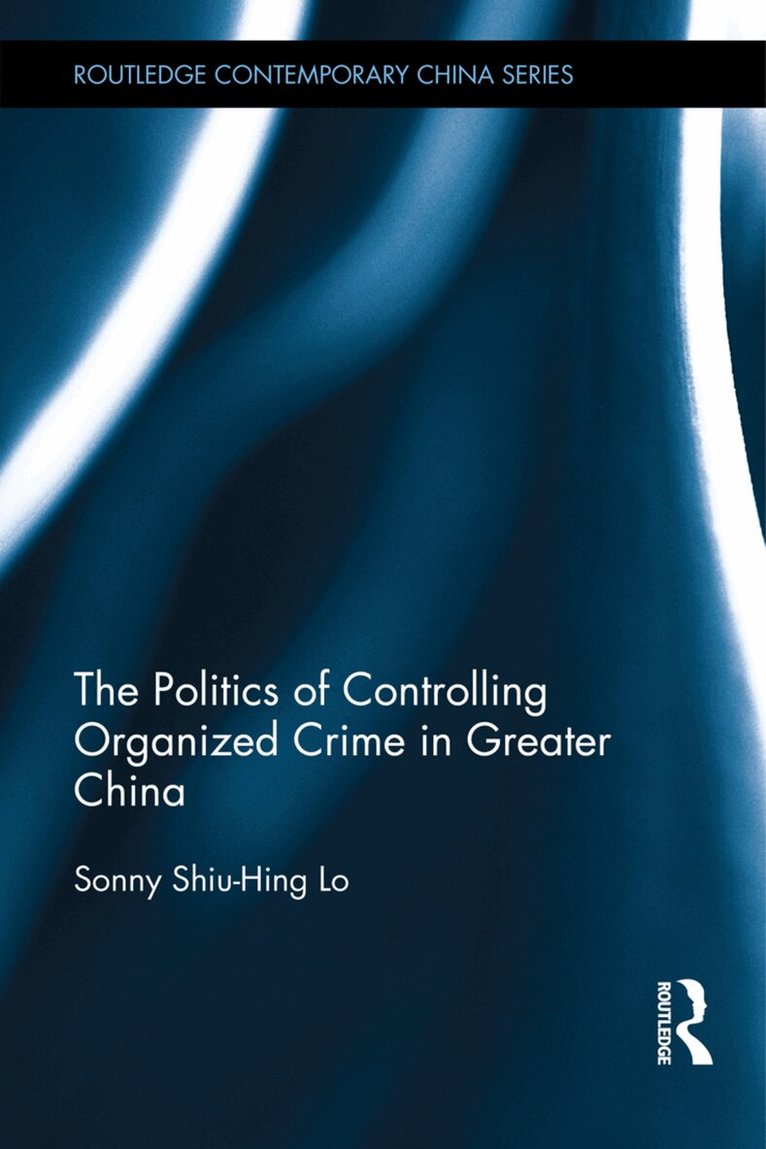
Politics of Controlling Organized Crime in Greater China
Inbunden, 2015
2506 kr
Lägg i varukorg
In China, the central government has the political will to control organized crime, which is seen as a national security threat. The crux of the problem is how to control local governments that have demonstrated lax enforcement without sufficient regulation from the provincial governments. The …
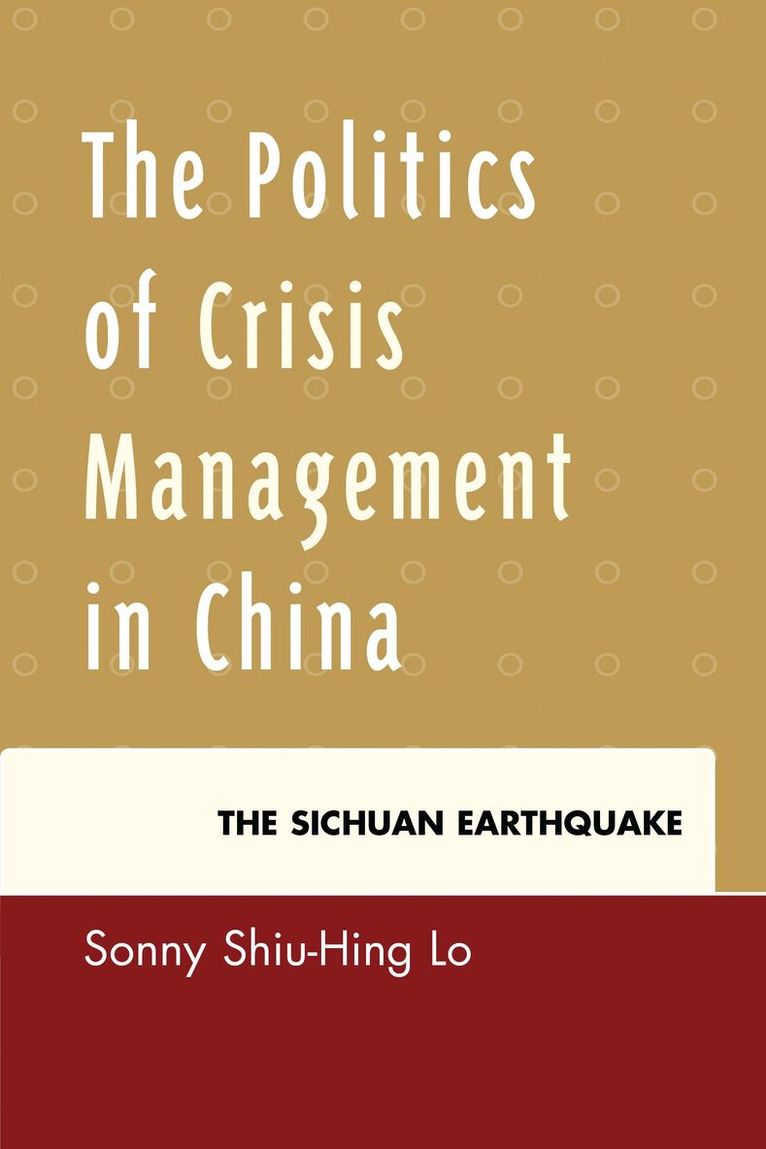
Politics of Crisis Management in China
The Sichuan Earthquake
Inbunden, 2014
1388 kr
Lägg i varukorg
This book analyzes the ways in which the Chinese government and military responded to the 2008 Wenchuan earthquake in Sichuan province. It adopts a comparative and historical perspective in studying the responses of the Chinese government in the first critical 72 hours, the mobilization of the …
Politics of Cross-border Crime in Greater China
Case Studies of Mainland China, Hong Kong, and Macao
Inbunden, 2009
2749 kr
Lägg i varukorg
Organized crime has been on the rise in the Greater China region since the People's Republic opened up its economy and society in the mid-1980s. Today, triads from Hong Kong, Macao, and even Taiwan are involved in businesses in Guangdong Province, and often recruit local Chinese for illegal …
Historical Dictionary of the Hong Kong SAR and the Macao SAR
Av Ming K. Chan, Sonny Shiu-Hing Lo
Inbunden, 2006
1749 kr
Lägg i varukorg
The Hong Kong Special Administrative Region of the People's Republic of China is located on the southeastern coast of China, and the Macao SAR can be found off of China's southern coast. Both regions have recently been released from European colonial rule: Hong Kong from British control in 1997 and …
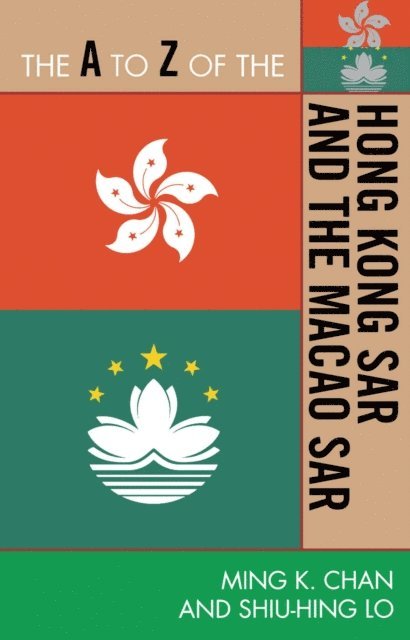
A to Z of the Hong Kong SAR and the Macao SAR
Av Ming K. Chan, Sonny Shiu-Hing Lo
Häftad, 2010
733 kr
Lägg i varukorg
The Hong Kong Special Administrative Region of the People's Republic of China is located on the southeastern coast of China, and the Macao SAR can be found off of China's southern coast. Both regions have recently been released from European colonial rule: Hong Kong from British control in 1997 and …
Politics of Cross-border Crime in Greater China
Case Studies of Mainland China, Hong Kong, and Macao
E-bok, 2020
2998 kr
Lägg i varukorg
Organized crime has been on the rise in the Greater China region since the People''s Republic opened up its economy and society in the mid-1980s. Today, triads from Hong Kong, Macao, and even Taiwan are involved in businesses in Guangdong Province, and often recruit local Chinese for illegal …
Politics of Cross-border Crime in Greater China
Case Studies of Mainland China, Hong Kong, and Macao
E-bok, 2020
2998 kr
Lägg i varukorg
Organized crime has been on the rise in the Greater China region since the People''s Republic opened up its economy and society in the mid-1980s. Today, triads from Hong Kong, Macao, and even Taiwan are involved in businesses in Guangdong Province, and often recruit local Chinese for illegal …
Politics of Education Reform in China's Hong Kong
Av Chung Fun Steven Hung, Sonny Shiu-Hing Lo
E-bok, 2022
791 kr
Lägg i varukorg
Education reform has become a highly political issue in the Hong Kong Special Administrative Region (HKSAR) since the transfer of sovereignty to the People’s Republic of China (PRC). Lo and Hung focus on the political struggles among stakeholders, including the government of Hong Kong, the Catholic …
Politics of Education Reform in China's Hong Kong
Av Chung Fun Steven Hung, Sonny Shiu-Hing Lo
E-bok, 2022
774 kr
Lägg i varukorg
Education reform has become a highly political issue in the Hong Kong Special Administrative Region (HKSAR) since the transfer of sovereignty to the People’s Republic of China (PRC). Lo and Hung focus on the political struggles among stakeholders, including the government of Hong Kong, the Catholic …
Interest Groups and the New Democracy Movement in Hong Kong
E-bok, 2017
830 kr
Lägg i varukorg
A new era in the democracy movement in Hong Kong began on July 1, 2003, when half a million people protested on the streets, and has included the 2012 anti-National Education campaign, the 2014 Occupy Central Movement and the rapid rise of localist groups. The new democracy movement in Hong Kong is …
Interest Groups and the New Democracy Movement in Hong Kong
E-bok, 2017
849 kr
Lägg i varukorg
A new era in the democracy movement in Hong Kong began on July 1, 2003, when half a million people protested on the streets, and has included the 2012 anti-National Education campaign, the 2014 Occupy Central Movement and the rapid rise of localist groups. The new democracy movement in Hong Kong is …
Politics of Controlling Organized Crime in Greater China
E-bok, 2015
864 kr
Lägg i varukorg
In China, the central government has the political will to control organized crime, which is seen as a national security threat. The crux of the problem is how to control local governments that have demonstrated lax enforcement without sufficient regulation from the provincial governments. The …
Politics of Controlling Organized Crime in Greater China
E-bok, 2015
864 kr
Lägg i varukorg
In China, the central government has the political will to control organized crime, which is seen as a national security threat. The crux of the problem is how to control local governments that have demonstrated lax enforcement without sufficient regulation from the provincial governments. The …
Politics of Policing in Greater China
Inbunden, 2016
1205 kr
Lägg i varukorg
This book examines the politics of policing in Greater China, including mainland China, Taiwan, Hong Kong, and Macao. As the author shows, police ideological indoctrination is strongest in mainland China, followed by Hong Kong, and Taiwan, where the police is under increasing political stress, in …
Politics of Policing in Greater China
E-bok, 2016
1686 kr
Lägg i varukorg
This book examines the politics of policing in Greater China, including mainland China, Taiwan, Hong Kong, and Macao. As the author shows, police ideological indoctrination is strongest in mainland China, followed by Hong Kong, and Taiwan, where the police is under increasing political stress, in …
Hong Kong's Indigenous Democracy
Origins, Evolution and Contentions
Inbunden, 2015
1096 kr
Lägg i varukorg
This book is a unique contribution to the study of democratization in Hong Kong, with chapters including the legal tradition in Hong Kong, the features of Hong Kong's indigenous democracy, the 2014 Umbrella Movement, and the evolution of the Chief Executive election.
Hong Kong's Indigenous Democracy
Origins, Evolution and Contentions
E-bok, 2016
1550 kr
Lägg i varukorg
This book is a unique contribution to the study of democratization in Hong Kong, with chapters including the legal tradition in Hong Kong, the features of Hong Kong''s indigenous democracy, the 2014 Umbrella Movement, and the evolution of the Chief Executive election.
Politics of Controlling Organized Crime in Greater China
Häftad, 2018
751 kr
Lägg i varukorg
In China, the central government has the political will to control organized crime, which is seen as a national security threat. The crux of the problem is how to control local governments that have demonstrated lax enforcement without sufficient regulation from the provincial governments. The …
Interest Groups and the New Democracy Movement in Hong Kong
Inbunden, 2017
2749 kr
Lägg i varukorg
A new era in the democracy movement in Hong Kong began on July 1, 2003, when half a million people protested on the streets, and has included the 2012 anti-National Education campaign, the 2014 Occupy Central Movement and the rapid rise of localist groups. The new democracy movement in Hong Kong is …
A to Z of the Hong Kong SAR and the Macao SAR
Av Ming K. Chan, Sonny Shiu-Hing Lo
E-bok, 2010
803 kr
Lägg i varukorg
The Hong Kong Special Administrative Region of the People''s Republic of China is located on the southeastern coast of China, and the Macao SAR can be found off of China''s southern coast. Both regions have recently been released from European colonial rule: Hong Kong from British control in 1997 …
Creativity and Culture in Greater China
The Role of Government, Individuals and Groups
Av Chi-Cheung Leung, Sonny Shiu-Hing Lo
Häftad, 2014
722 kr
Lägg i varukorg
This publication unveils creative ideas on knowledge transfer from historical references to commercialization of cultural products. It adopts multidisciplinary, cross cultural, and experimental approaches to study the cultural industries, including art, music, popular culture, psychology, …
Macau in the Second World War, 1937-1945
Diplomacy, Politics and Society
Inbunden, 2022
1567 kr
Lägg i varukorg
This book offers a re-interpretation of the political history of Macau from 1937 to 1945, during which Japan and China were engulfed in the Second World War. Using an array of English and Chinese sources, the author explores the diplomatic and social landscape of war-time Macau under Portuguese …
Macau in the Second World War, 1937-1945
Diplomacy, Politics and Society
E-bok, 2022
1962 kr
Lägg i varukorg
This book offers a re-interpretation of the political history of Macau from 1937 to 1945, during which Japan and China were engulfed in the Second World War. Using an array of English and Chinese sources, the author explores the diplomatic and social landscape of war-time Macau under Portuguese …
Macau in the Second World War, 1937-1945
Diplomacy, Politics and Society
Häftad, 2023
1567 kr
Lägg i varukorg
This book offers a re-interpretation of the political history of Macau from 1937 to 1945, during which Japan and China were engulfed in the Second World War. Using an array of English and Chinese sources, the author explores the diplomatic and social landscape of war-time Macau under Portuguese …
Politics of District Elections and Administration in Hong Kong
Av Sonny Shiu-Hing Lo, Steven Chung-Fun Hung m. fl.
Häftad, 2023
343 kr
Lägg i varukorg