
Sophie Wahnich – författare
Visar alla böcker från författaren Sophie Wahnich. Handla med fri frakt och snabb leverans.
3 produkter
3 produkter

270 kr
Skickas inom 3-6 vardagar
For two hundred years after the French Revolution, the Republican tradition celebrated the execution of princes and aristocrats, defending the Terror that the Revolution inflicted upon on its enemies. But recent decades have brought a marked change in sensibility. The Revolution is no longer judged in terms of historical necessity but rather by "timeless" standards of morality. In this succinct essay, Sophie Wahnich explains how, contrary to prevailing interpretations, the institution of Terror sought to put a brake on legitimate popular violence-in Danton's words, to "be terrible so as to spare the people the need to be so"-and was subsequently subsumed in a logic of war. The Terror was "a process welded to a regime of popular sovereignty, the only alternatives being to defeat tyranny or die for liberty."
1 351 kr
Skickas inom 10-15 vardagar
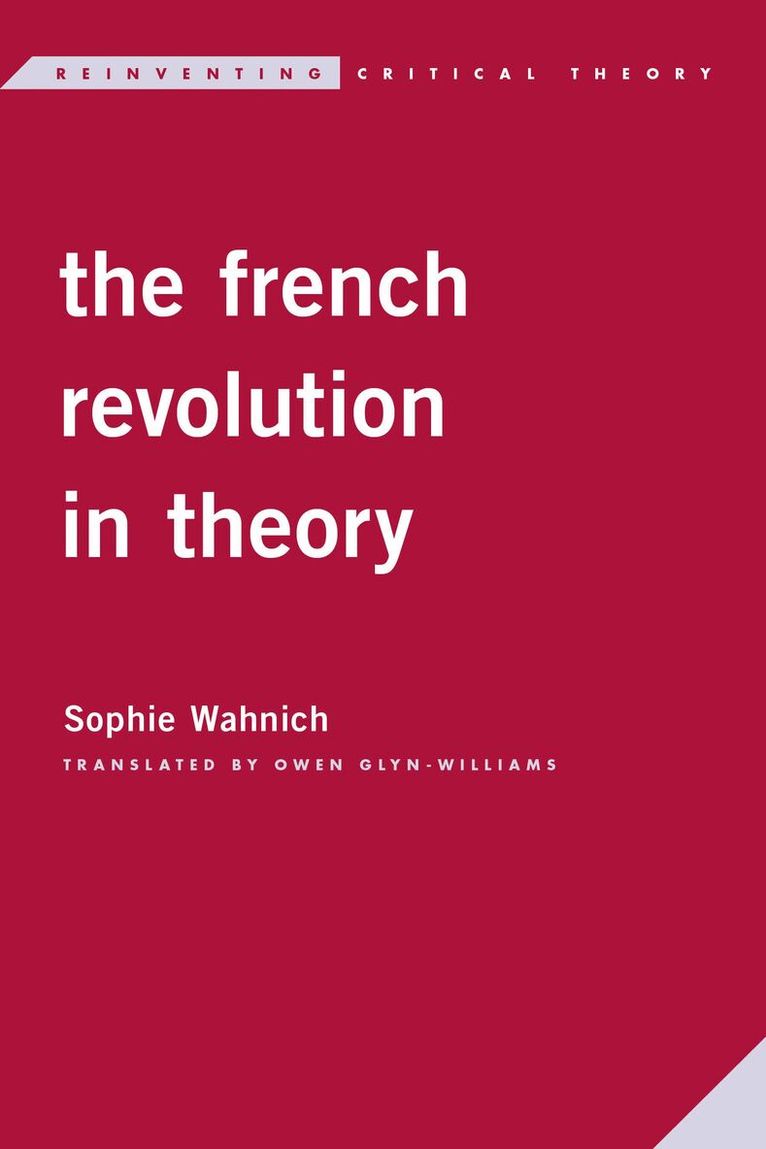
It is time to re-examine the French Revolution as a political resource. The historiography has so far ignored the question of popular sovereignty and emancipation; instead the Revolution has been vilified as a matrix of totalitarianisms by the liberals and as an ethnocentric phenomenon by postcolonial studies. This book examines why.More so than historians, it is philosophers that have played the leading role in the portrayal of this major event in French political history. The philosophical quarrels of the 1960s placed the French Revolution at the heart of their debates. The most well-documented among these is the conflict between Jean-Paul Sartre and Claude Lévi-Strauss and subsequently, Michel Foucault. Do we need an ethics of the history of the French Revolution? Rancière, Derrida, Balibar, Lefort, Robin, and Loraux can help answer this question, in an epistemological approach to history. These successive explorations allow us to move away from a myth of identity and to rediscover a real Revolution, capable of offering Enlightenment and political utility and interrogating what democracy and emancipation mean for us today.
437 kr
Skickas inom 10-15 vardagar
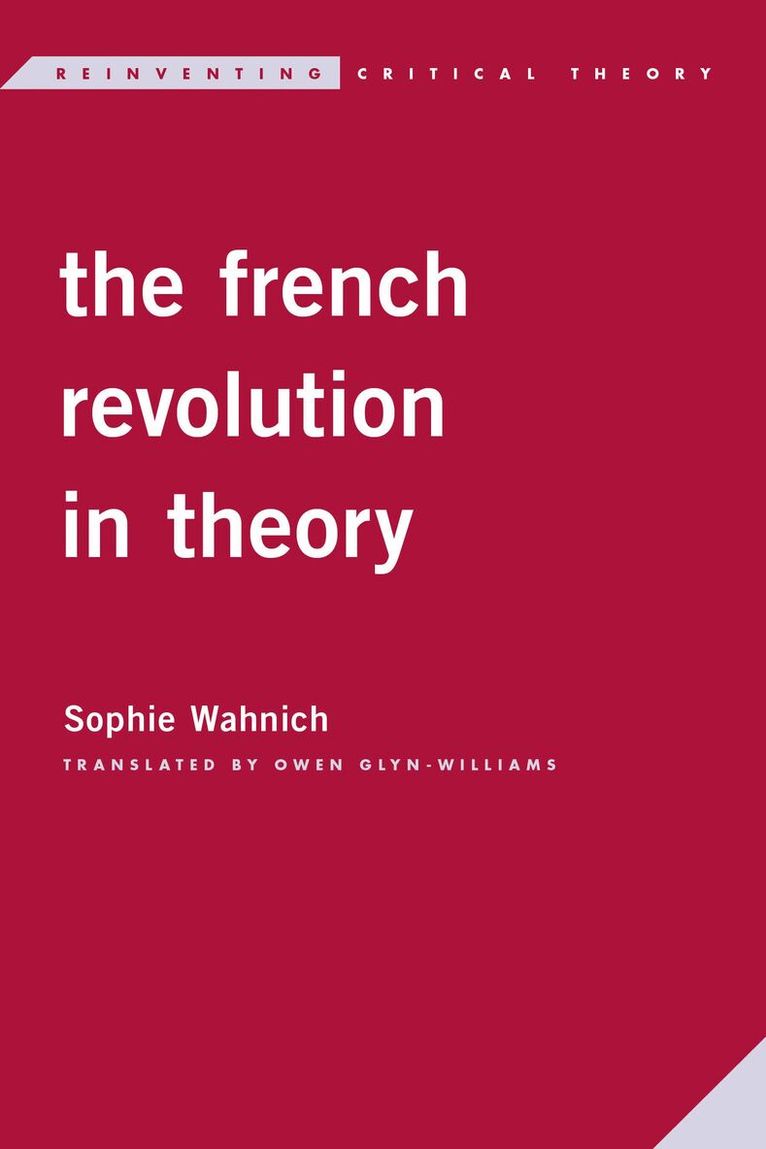
It is time to re-examine the French Revolution as a political resource. The historiography has so far ignored the question of popular sovereignty and emancipation; instead the Revolution has been vilified as a matrix of totalitarianisms by the liberals and as an ethnocentric phenomenon by postcolonial studies. This book examines why.More so than historians, it is philosophers that have played the leading role in the portrayal of this major event in French political history. The philosophical quarrels of the 1960s placed the French Revolution at the heart of their debates. The most well-documented among these is the conflict between Jean-Paul Sartre and Claude Lévi-Strauss and subsequently, Michel Foucault. Do we need an ethics of the history of the French Revolution? Rancière, Derrida, Balibar, Lefort, Robin, and Loraux can help answer this question, in an epistemological approach to history. These successive explorations allow us to move away from a myth of identity and to rediscover a real Revolution, capable of offering Enlightenment and political utility and interrogating what democracy and emancipation mean for us today.