
Stanislaw Baranczak - Böcker
Visar alla böcker från författaren Stanislaw Baranczak. Handla med fri frakt och snabb leverans.
2 produkter
2 produkter
750 kr
Skickas inom 10-15 vardagar
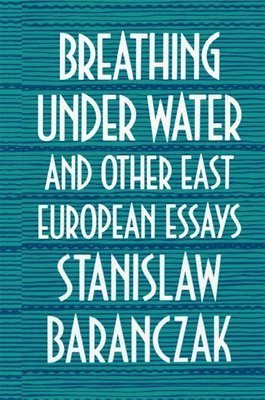
Stanislaw Baranczak, a Polish writer in exile, turns to his colleagues and their plights, in Poland, Czechoslovakia, Hungary, and the Soviet Union, to explain why oppressive regimes could not succeed in their attempts to transform the Eastern European into Homo sovieticus.These superb essays focus on the role that culture, and particularly literature, has played in keeping the spirit of intellectual independence alive in Eastern and Central Europe. Exploring a variety of issues from censorship to underground poetry, Baranczak shows why, in societies where people struggle to survive under totalitarian rule, art is believed to have the power to make things happen.He brings into sharp relief the works and personalities of many legendary figures of recent Eastern European political and cultural history from Lech Walesa and Pope John Paul II to Václav Havel and Adam Michnik to Czeslaw Milosz, Witold Gombrowicz, Bruno Schulz, and Joseph Brodsky--and makes vivid the context from which they spring. Some of the essays probe the sense of inarticulateness experienced by writers in exile; many represent the literary essay at its best; all reveal that Baranczak is a sophisticated, often savagely funny writer on whom nothing is lost. This refreshing and provocative book guides us toward a clearer understanding of what has led to the present moment, in which the nations of Eastern and Central Europe, tired of striving to "breathe under water," are finally "coming up for air." It is rewarding reading for anyone interested in art's confrontation with an intractable political reality--wherever it occurs in the world.

850 kr
Skickas inom 10-15 vardagar
The leading Polish poet still residing in his native land, Zbigniew Herbert as not been the subject of a book-length study in English until now. Stanislaw Baranczak, himself a poet, critic, and translator, emigrated from Poland only in 1981, and is therefore eminently qualified to supply a politico-cultural context for Herbert while describing and analyzing the texts and themes of his poems. Herbert's poetry is based on permanent confrontation--the confrontation of Western tradition with the experience of a "barbarian" from Eastern Europe, of the classical past with the modern era, of cultural myth with a practical, empirical point of view. Baranczak illustrates these oppositions by examining, first, the complex relations between "disinheritance" and "heritage" as they appear in Herbert's work on various structural levels, from symbolic key words to lyrical characters; second, the forms and functions of Herbert's "unmasking metaphor"; third, his uses of irony; fourth, his ethical system, which enables him to be both ironist and moralist. Baranczak pays special attention to irony as the most conspicuous feature of Herbert's poetic method.A Fugitive from Utopia makes Herbert's poetic ideas fully accessible to the general reader, and will also be of interest to students of Polish literature, of East European culture and society, and of modern poetry. Those who have already encountered Herbert's poetry in one of the several translations into English currently available will welcome this lucid explication of his work.