Stavros Kousoulas - Böcker
Visar alla böcker från författaren Stavros Kousoulas. Handla med fri frakt och snabb leverans.
7 produkter
7 produkter
2 088 kr
Skickas inom 10-15 vardagar
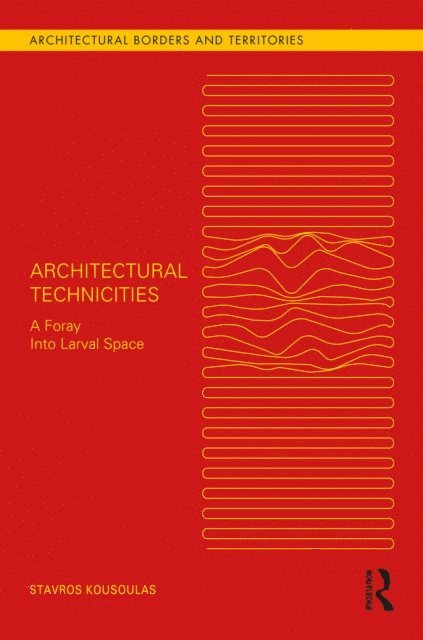
This book poses a simple question: how is this architecture possible? To respond, it will embark on a captivating journey through many singular architectural concepts. The entasis of Doric columns, Ulysses and desert islands will outline an architectural act that moves beyond representation. A ferryman who stutters will present two different types of architectural minds. A stilus and a theory of signs will reconsider the ways architects can develop a particular kind of intuition, while architectural technicities will bring forth a membranic and territorial understanding of architecture. Finally, as a melody that sings itself, a larval architecture will be introduced, bringing space and time together.Assisting this endeavour, the thought of philosophers like Gilles Deleuze, Felix Guattari, Gilbert Simondon and Raymond Ruyer will meet the latest developments in fields like affect theory, cognitive sciences, environmental studies and neuroanthropology. Eventually, by the end of this book, the readers – from architecture students and researchers to academics and practitioners with an interest in theory – will have been exposed to a comprehensive and original philosophy of architecture and the built environment.
617 kr
Skickas inom 10-15 vardagar
This book poses a simple question: how is this architecture possible? To respond, it will embark on a captivating journey through many singular architectural concepts. The entasis of Doric columns, Ulysses and desert islands will outline an architectural act that moves beyond representation. A ferryman who stutters will present two different types of architectural minds. A stilus and a theory of signs will reconsider the ways architects can develop a particular kind of intuition, while architectural technicities will bring forth a membranic and territorial understanding of architecture. Finally, as a melody that sings itself, a larval architecture will be introduced, bringing space and time together.Assisting this endeavour, the thought of philosophers like Gilles Deleuze, Felix Guattari, Gilbert Simondon and Raymond Ruyer will meet the latest developments in fields like affect theory, cognitive sciences, environmental studies and neuroanthropology. Eventually, by the end of this book, the readers – from architecture students and researchers to academics and practitioners with an interest in theory – will have been exposed to a comprehensive and original philosophy of architecture and the built environment.
766 kr
Skickas inom 10-15 vardagar
Focusing on the city of Athens, this book examines architecture as something that produces culture and ideology — rather than the opposite. Therefore, this book aims to complement architectural and urban theories that are based only on historical overviews or typological assumptions; to do so, it boldly opens architectural discourse to philosophy, affect theory, and social and cognitive sciences.By examining Athens after its denomination as Greek capital in 1834, the moments, actors, and transformations that assist the individuation of the Athenian urban ecologies are problematised. Opting for theoretical speculations, the readers will witness architecture as a collective equipment that produces modes of life that can either enhance or diminish our collective potentials. As such, the ambition of this book is to provide the theoretical and methodological groundings for thorough extrapolations on how new collectivities can be produced.Readers of this book will be exposed to a transdisciplinary approach that identifies and addresses shared problems and concerns regarding the production of contemporary urban environments. This book will also explore theoretical innovations that can inform and trigger new ways of speculative thinking and offers a non-reductionist account of the development of Athens from the perspective of multiple architectural technicities. This book will be of interest to researchers and students of architecture, architectural theory, architectural history, and philosophy.
2 258 kr
Kommande
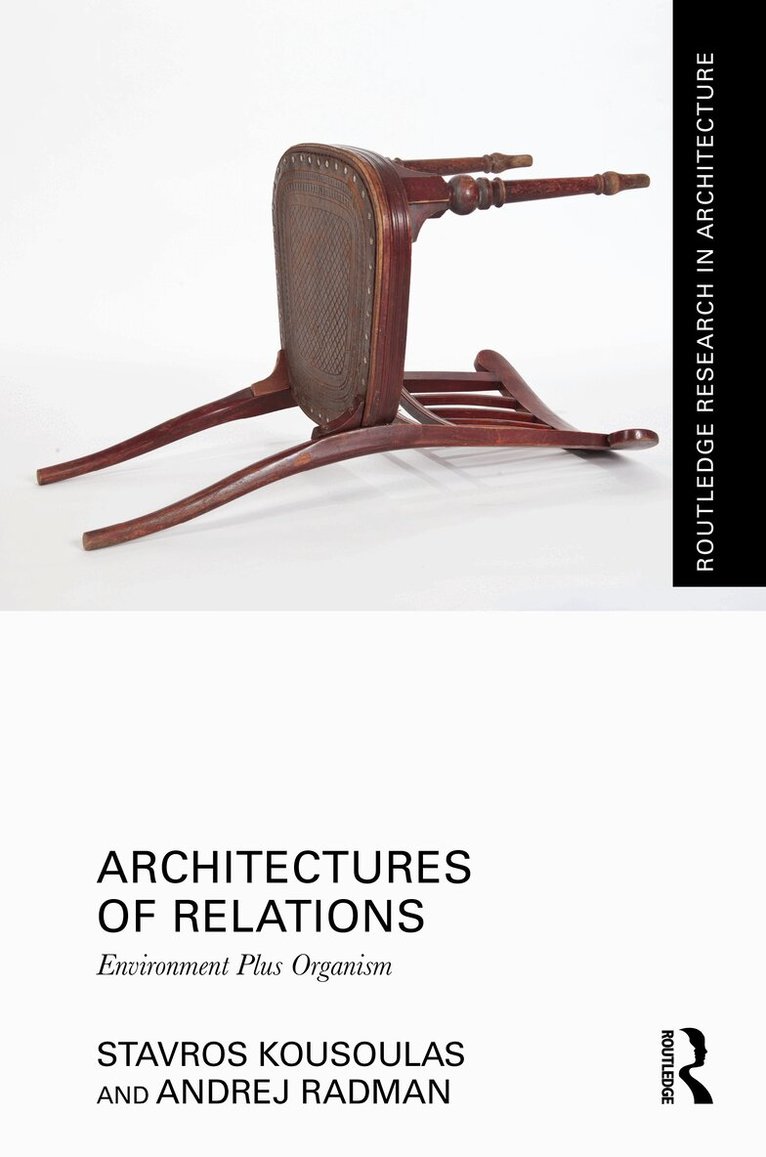
This book examines how environments and organisms dynamically produce one another. As such, it takes its title very seriously (and very literally): to speak of environment plus organism is the only viable way where neither term gets to be reduced to the other. It is rather their coming together, what thinkers like Gilbert Simondon call transindividuation, and it’s unfolding that stand as the most exigent ambition of this book. In simple terms, this book claims that the minimum unit of analysis in any architectural account is always the environment, the organism and their (technological) plusing, examined as one.The book has three interrelated ambitions, which are fundamentally pedagogical: 1) Irreducibility: it ‘makes no sense whatsoever to try to understand the anatomy of half a chicken’ as Gregory Bateson puts it, and this book makes a constant plea for an architectural account of the Batesonian claim. 2) A Real Copernican Revolution: our engrained anthropocentrism always sees the organism as antecedent to the environment. To counter it, this book cultivates an architectural ethos that sees organisms and environments as co-constitutive equals. 3) Exteriority of Relations: highlighting the power of plusing, this book underscores the ever-changing how of a form of life. A mode of existence never pre-exists an event of plusing environments and organisms.Readers of this book will be exposed to an original philosophy of architecture that brings together transdisciplinary concerns through concrete architectural examples, while opening its audience to a broad population of interests, from social sciences to media studies and affect theory. Written in a playful manner, it wishes to make accessible notions, concepts and ideas that can transform contemporary architectural thinking and open it to a broad speculative logic. This book will be of interest to researchers and students of architecture, architectural theory, architectural history, and philosophy.
1 209 kr
Skickas inom 10-15 vardagar
Driven by the Foucauldian attitude of subsuming architectural history into a genealogy of techne, Architectures of Life and Death advances a transdisciplinary approach rethinking subjectivity and exploring the political ramifications of these processes for the discipline of architecture and beyond. In contrast to mainstream approaches, architecture will not be seen as representative of culture, but as the mechanism of culture, the ‘collective equipment’ that rests on the reciprocal determination of social habits and technological habitats. In this sense, the idea that we shape our environments, therefore they shape us, is not to be taken as a metaphor. The animate has always been utterly dependent on the inanimate. A livable habitat is one which the inhabitant actively co-evolves with and which does not constitute a ready-made condition to which the inhabitant would simply have to passively adapt.
1 517 kr
Skickas inom 10-15 vardagar
This book directly links the notion of the commons with different design praxes, and explores their social, cultural, and ecological ramifications. It draws out material conditions in four areas of design interest: social design, commons and culture, ecology and transdisciplinary design.
1 517 kr
Skickas inom 10-15 vardagar
This book directly links the notion of the commons with different design praxes, and explores their social, cultural, and ecological ramifications. It draws out material conditions in four areas of design interest: social design, commons and culture, ecology and transdisciplinary design. As a collection of positions, the diversity of arguments advances the understanding of the commons as both concepts and modes of thinking, and their material translation when contextualised in the domain of design questions. In other words, it moves abstract social science concepts towards concrete design debates. This text appeals to students, researchers and practitioners working on design in architecture, architecture theory, urbanism, and ecology.