Stefan H.e. Kaufmann - Böcker
Visar alla böcker från författaren Stefan H.e. Kaufmann. Handla med fri frakt och snabb leverans.
4 produkter
4 produkter
1 118 kr
Tillfälligt slut
1 091 kr
Skickas inom 10-15 vardagar
It has been said that the development of vaccines against a variety of infectious diseases is among the greatest triumphs of immunology. Indeed, several pathogens have lost their horror through the availability of effective vaccination measures. Unfortunately, this does not hold true for the pathogens dealt within this volume. Malaria, schistosomiasis, leishmaniasis, leprosy, and tuberculosis together are prevalent in more than 100 countries, and over 400 million persons suffer from these diseases. It is becoming increasingly clear that the failure to control these infections in a satisfactory way is directly related to the complexity oftheir interactions with the immune system. These agents have lived with their hosts for long enough to give both-host and parasite-ample opportunity to develop a highly sophisticated interrelationship. The central role of T lymphocytes both in acquired resistance to and pathogenesis of these microbes is well appreciated. In the beginning it may have been thought that acq uired resistance against infectious agents is nothing but another aspect of the immune response, studied with soluble and particulate antigens. This simple concept has gradually changed, and it has become clear that the viability not only of the immune cells but also of the 'antigens' adds another dimension to the game. Several achievements in cellular immunology and molecular biology have now made it possible to better understand at least some mechanisms in this intricate interplay.
Del 167 - Current Topics in Microbiology and Immunology
Heat Shock Proteins and Immune Response
Häftad, Engelska, 2011
549 kr
Skickas inom 10-15 vardagar
Almost 30 years ago RITOSSA described a new puffing pattern in salivary gland chromosomes of Drosophila following heat shock. This was the first description of a heat shock response. For years, development in this field remained modest and it took another decade before the relevant gene products-the heat shock proteins (hsp's)-were made visible by TISSIERES and co-workers. Subsequently, progress advanced more rapidly and we can now state that studies on the heat shock response have contributed much to our understanding of various principles in molecular and cellular biology such as control of gene expression and regulation of protein translocation. More recently, the study of hsp's has converged with immunology. There are several reasons for this: The chaperone function of certain hsp's makes them particularly apt for central functions of immunity, including antigen presentation and immunoglobulin synthesis. Furthermore, an effective immune response is often caused or followed by stress situations as they arise during trauma, inflammation, transformation, infection, or autoimmune disease. Due to their abundance during stress, hsp's can provide prominent antigens in many of these situations. This volume contains 11 chapters written by well-known experts dealing with various facets of the fascinating liaison between hsp's and immunity. The particular relation of hsp's to the immune system may be best illustrated by their intimate association with the major histocompatibility gene complex. Still, as discussed by GONTHER, the relevance of this fact to our understanding of hsp functions in immunity remaif)s speculative.
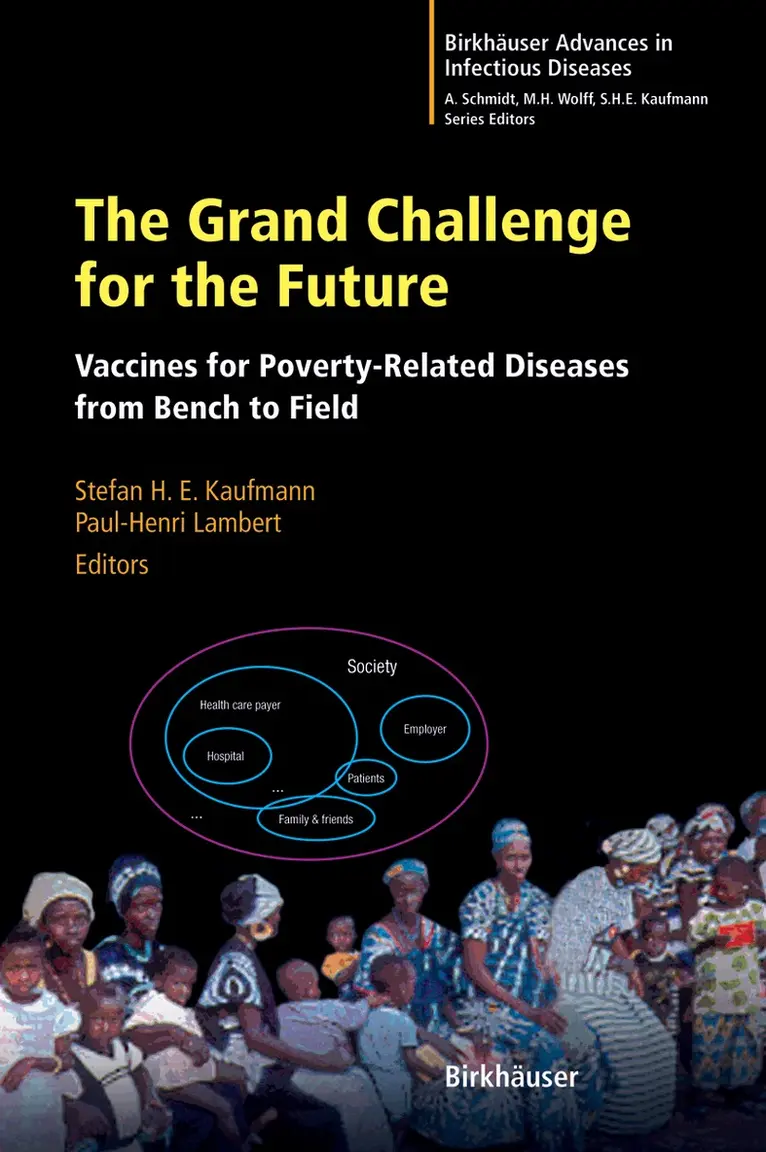
Grand Challenge for the Future
Vaccines for Poverty-Related Diseases from Bench to Field
Inbunden, Engelska, 2005
1 091 kr
Skickas inom 10-15 vardagar
The vaccines most urgently needed are those against poverty-related diseases such as tuberculosis, malaria and HIV. However, there is a considerable gap between the development of a vaccine and the implementation as a useful measure for disease control. Major obstacles need to be overcome even after successful completion of the preclinical stage. This book provides an important link between vaccine development and application under the particular conditions in developing countries. The editors, S. H. E. Kaufmann and P. H. Lambert - one from the field of basic research and the other an expert on the side of applied vaccinology - have gathered contributions from specialists of both fields in an attempt to create a source of information that has thus far not been available.