Stefan Ihrig - Böcker
Visar alla böcker från författaren Stefan Ihrig. Handla med fri frakt och snabb leverans.
7 produkter
7 produkter
409 kr
Skickas inom 10-15 vardagar
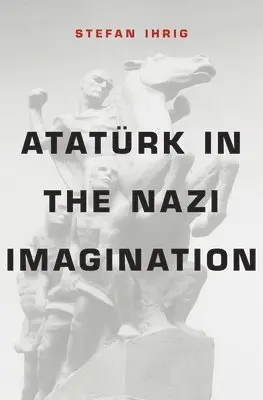
Early in his career, Adolf Hitler took inspiration from Benito Mussolini, his senior colleague in fascism—this fact is widely known. But an equally important role model for Hitler and the Nazis has been almost entirely neglected: Mustafa Kemal Atatürk, the founder of modern Turkey. Stefan Ihrig’s compelling presentation of this untold story promises to rewrite our understanding of the roots of Nazi ideology and strategy.Hitler was deeply interested in Turkish affairs after 1919. He not only admired but also sought to imitate Atatürk’s radical construction of a new nation from the ashes of defeat in World War I. Hitler and the Nazis watched closely as Atatürk defied the Western powers to seize government, and they modeled the Munich Putsch to a large degree on Atatürk’s rebellion in Ankara. Hitler later remarked that in the political aftermath of the Great War, Atatürk was his master, he and Mussolini his students.This was no fading fascination. As the Nazis struggled through the 1920s, Atatürk remained Hitler’s “star in the darkness,” his inspiration for remaking Germany along nationalist, secular, totalitarian, and ethnically exclusive lines. Nor did it escape Hitler’s notice how ruthlessly Turkish governments had dealt with Armenian and Greek minorities, whom influential Nazis directly compared with German Jews. The New Turkey, or at least those aspects of it that the Nazis chose to see, became a model for Hitler’s plans and dreams in the years leading up to the invasion of Poland.
409 kr
Skickas inom 10-15 vardagar
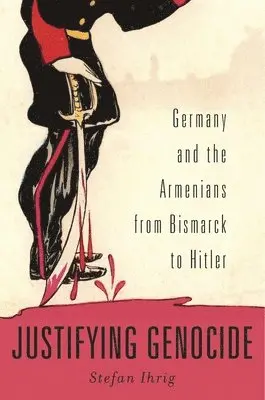
The Armenian Genocide and the Nazi Holocaust are often thought to be separated by a large distance in time and space. But Stefan Ihrig shows that they were much more connected than previously thought. Bismarck and then Wilhelm II staked their foreign policy on close relations with a stable Ottoman Empire. To the extent that the Armenians were restless under Ottoman rule, they were a problem for Germany too. From the 1890s onward Germany became accustomed to excusing violence against Armenians, even accepting it as a foreign policy necessity. For many Germans, the Armenians represented an explicitly racial problem and despite the Armenians’ Christianity, Germans portrayed them as the “Jews of the Orient.”As Stefan Ihrig reveals in this first comprehensive study of the subject, many Germans before World War I sympathized with the Ottomans’ longstanding repression of the Armenians and would go on to defend vigorously the Turks’ wartime program of extermination. After the war, in what Ihrig terms the “great genocide debate,” German nationalists first denied and then justified genocide in sweeping terms. The Nazis too came to see genocide as justifiable: in their version of history, the Armenian Genocide had made possible the astonishing rise of the New Turkey.Ihrig is careful to note that this connection does not imply the Armenian Genocide somehow caused the Holocaust, nor does it make Germans any less culpable. But no history of the twentieth century should ignore the deep, direct, and disturbing connections between these two crimes.
1 054 kr
Kommande
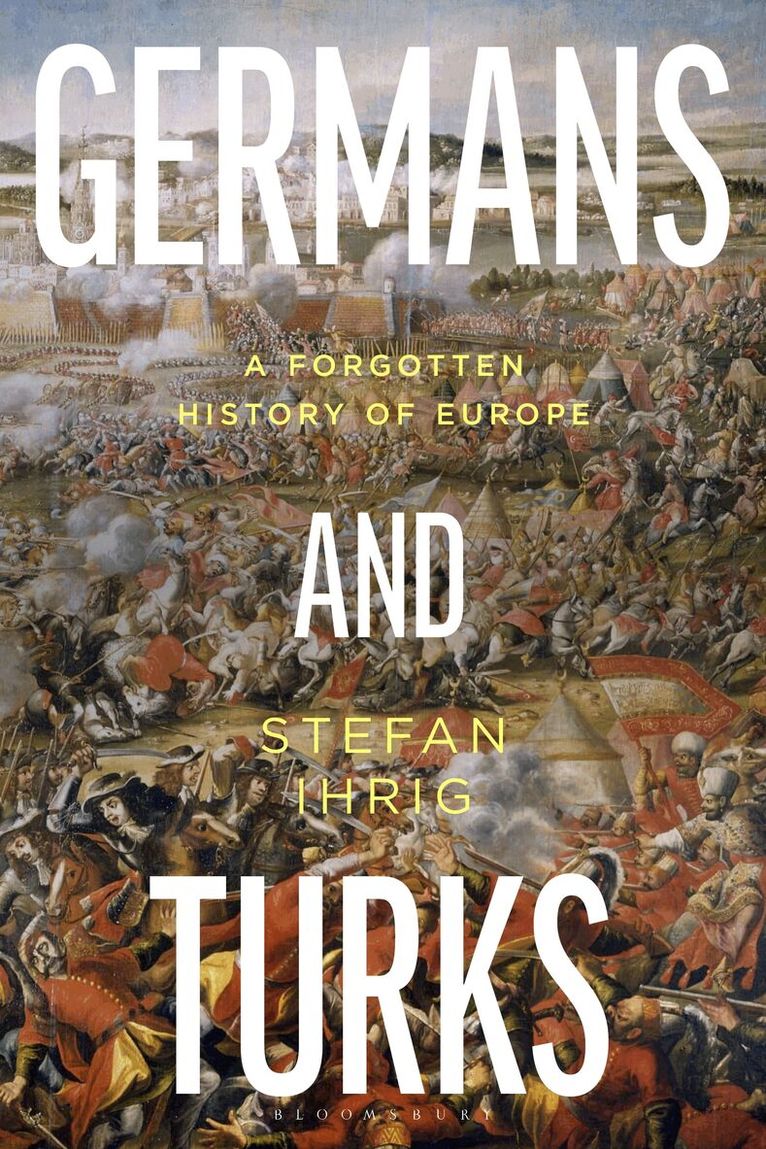
German-Turkish relations form an integral backdrop to many of today’s most pressing political concerns, including the absorption of refugees from the Middle East in Europe, debates about coexistence with Muslims in Western societies, and European geopolitics in Western Asia. Yet the story of this relationship, its 800-year history and often fateful consequences, has never been fully told.In this book, Stefan Ihrig presents the first history of the relationship of these two peoples, from the Middle Ages until today. It is a relationship that has had many twists and turns, from adversaries in the early modern conflict between the Ottoman Empire and Christian Central Europe to allies at the end of the nineteenth century and during WWI. In a way it is a story that shows that this is one of the longest-lasting relationships between peoples in Europe. It is also one that contradicts many of the basic tenets of Edward Said’s Orientalism. And, as Ihrig shows, it’s a relationship that surprises and confounds simplistic narratives. Far from one sided, the encounter between German and Turkish-speaking people over the centuries reveals a mutual fascination that stands in contrast to British, French or American interactions with the Middle East and North Africa.The coda to this story is the now up to four million people of Turkish descent living in Germany. With modern Turkey taking an increasingly prominent role on the global stage and the German state the most powerful in the European Union, understanding the history of this complicated and dynamic relationship is more important than ever.
356 kr
Kommande
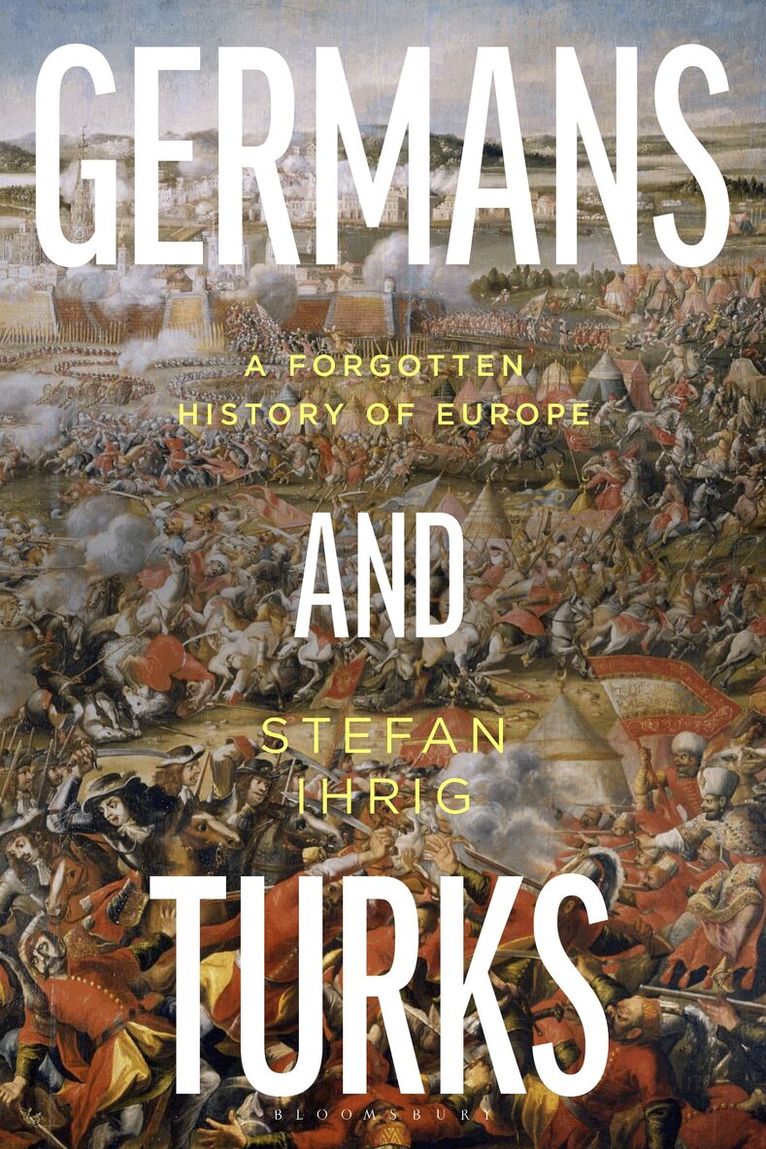
German-Turkish relations form an integral backdrop to many of today’s most pressing political concerns, including the absorption of refugees from the Middle East in Europe, debates about coexistence with Muslims in Western societies, and European geopolitics in Western Asia. Yet the story of this relationship, its 800-year history and often fateful consequences, has never been fully told.In this book, Stefan Ihrig presents the first combined history of the two peoples, from the Middle Ages until today. It is a relationship that has had many twists and turns, from adversaries in the early modern conflict between the Ottoman Empire and Christian Central Europe to allies at the end of the nineteenth century and during WWI. It is also a relationship that has shaped world history, often to disastrous effect: Ihrig shows how the Armenian Genocide of the early twentieth century and Mustafa Kemal’s ethno-nationalist ‘Turkification’ project influenced Nazi Germany’s murderous policies. And, as Ihrig shows, it’s a relationship that surprises and confounds simplistic narratives. Far from one sided, the encounter between German and Turkish-speaking people over the centuries reveals a mutual fascination that stands in contrast to British, French or American interactions with the Middle East and North Africa.The coda to this story is the now up to four million people of Turkish descent living in Germany. With modern Turkey taking an increasingly prominent role on the global stage and the German state the most powerful in the European Union, understanding the history of this complicated and dynamic relationship is more important than ever.
396 kr
Kommande
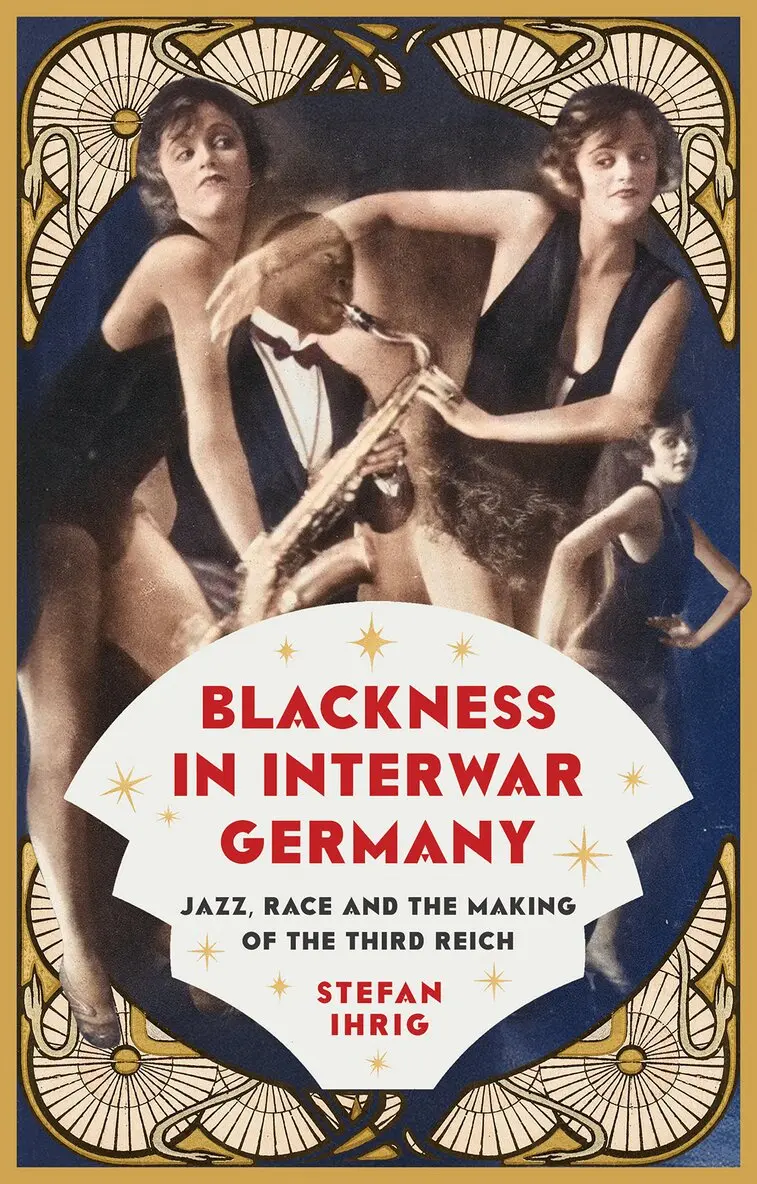
The first comprehensive account of Blackness in Germany, spanning the late Empire, the Roaring Twenties and the aftermath of World War Two. Germany’s past in relation to Blackness is often dismissed as peripheral: its colonial enterprise lasted merely three decades, and, until the end of World War Two, the Black population in Germany was small. Yet debates about Blackness, especially in the 1920s, were part of wider discussions in which social and political problems were articulated through race—problems the Nazis later claimed to have answers for. Through a deep exploration of Germany’s imperial experiences in Africa, Stefan Ihrig reveals that ideas about Blackness played a significant role in German history, even when there were few Black people in Germany or, as under Hitler, Africa largely fell outside the regime’s predatory gaze. He examines the Weimar period, when Blackness served as a symbol—and to some extent the embodiment—of the Jazz Age. And he analyses how anxieties about racial mixing, the New Woman and the perceived corrupting influence of a Black and American modernity fuelled the cultural backlash in the years up to Hitler’s appointment as Chancellor. As Ihrig uncovers, anti-Blackness was a central theme in Nazi discourse. This illuminating investigation is both a prehistory of the Third Reich and a history of an important, often overlooked dimension of modern Germany.
Del 510 - Europaeische Hochschulschriften / European University Studie
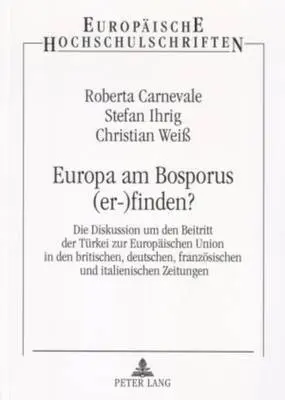
Europa Am Bosporus (Er-)Finden?
Die Diskussion Um Den Beitritt Der Tuerkei Zur Europaeischen Union in Den Britischen, Deutschen, Franzoesischen Und Italienischen Zeitungen- Eine Presseanalyse
Häftad, Tyska, 2005
510 kr
Tillfälligt slut
Del 76 - Soviet and Post-Soviet Politics and Society
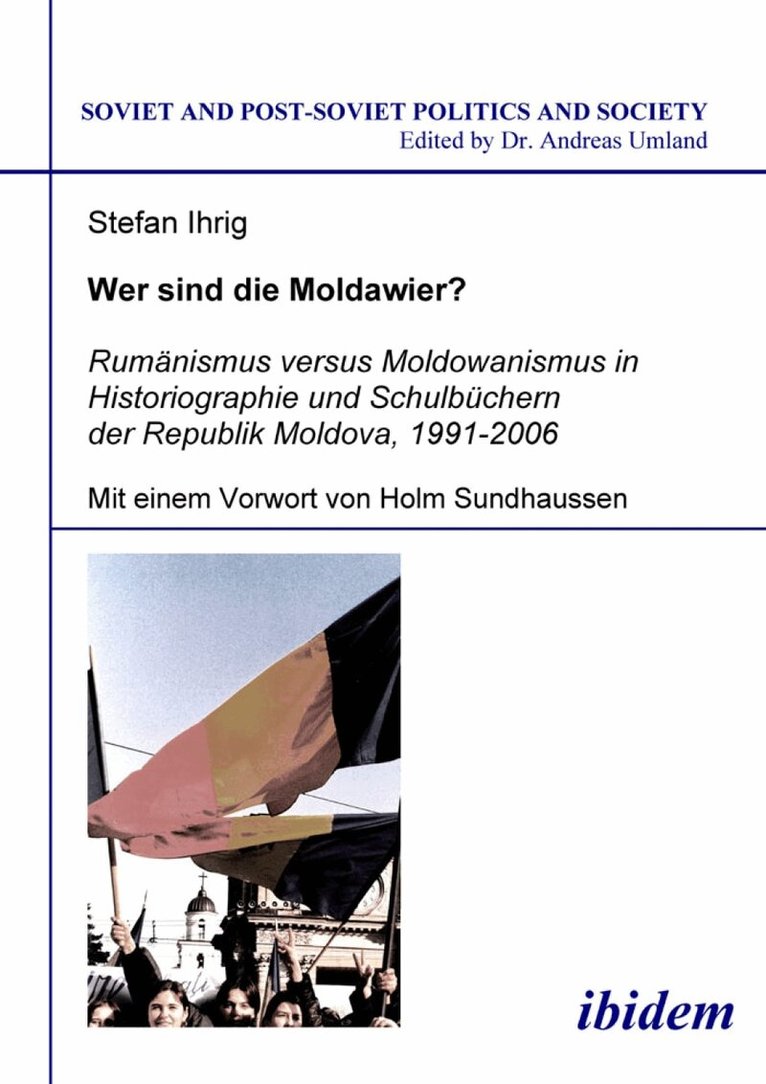
Wer sind die Moldawier?
Rumänismus versus Moldowanismus in Historiographie und Schulbüchern der Republik Moldova, 1991-2006
Häftad, Tyska, 2008
582 kr
Skickas inom 3-6 vardagar