Stefanie Buchenau – författare
Visar alla böcker från författaren Stefanie Buchenau. Handla med fri frakt och snabb leverans.
9 produkter
9 produkter
Inbunden, Engelska, 2017
939 kr
Skickas inom 3-6 vardagar
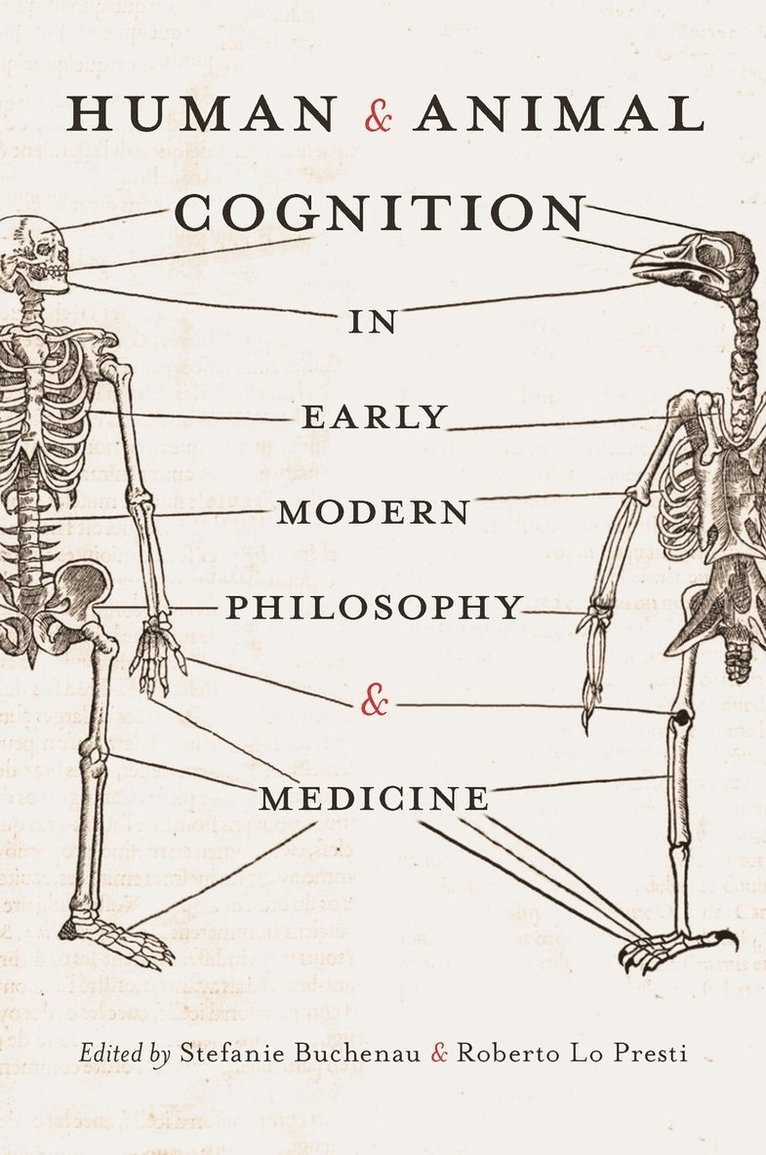
From the sixteenth to the eighteenth century, new anatomical investigations of the brain and the nervous system, together with a renewed interest in comparative anatomy, allowed doctors and philosophers to ground their theories on sense perception, the emergence of human intelligence, and the soul/body relationship in modern science. They investigated the anatomical structures and the physiological processes underlying the rise, differentiation, and articulation of human cognitive activities, and looked for the "anatomical roots" of the specificity of human intelligence when compared to other forms of animal sensibility.This edited volume focuses on medical and philosophical debates on human intelligence and animal perception in the early modern age, providing fresh insights into the influence of medical discourse on the rise of modern philosophical anthropology. Contributions from distinguished historians of philosophy and medicine focus on sixteenth-century zoological, psychological, and embryological discourses on man; the impact of mechanism and comparative anatomy on philosophical conceptions of body and soul; and the key status of sensibility in the medical and philosophical enlightenment.
Inbunden, Engelska, 2013
1 292 kr
Skickas inom 7-10 vardagar
When, in 1735, Alexander Gottlieb Baumgarten added a new discipline to the philosophical system, he not only founded modern aesthetics but also contributed to shaping the modern concept of art or 'fine art'. In The Founding of Aesthetics in the German Enlightenment, Stefanie Buchenau offers a rich analysis and reconstruction of the origins of this new discipline in its wider context of German Enlightenment philosophy. Present-day scholars commonly regard Baumgarten's views as an imperfect prefiguration of Kantian and post-Kantian aesthetics, but Buchenau argues that Baumgarten defended a consistent and original project which must be viewed in the context of the modern debate on the art of invention. Her book offers new perspectives on Kantian aesthetics and beauty in art and science.
Häftad, Engelska, 2015
448 kr
Skickas inom 7-10 vardagar
When, in 1735, Alexander Gottlieb Baumgarten added a new discipline to the philosophical system, he not only founded modern aesthetics but also contributed to shaping the modern concept of art or 'fine art'. In The Founding of Aesthetics in the German Enlightenment, Stefanie Buchenau offers a rich analysis and reconstruction of the origins of this new discipline in its wider context of German Enlightenment philosophy. Present-day scholars commonly regard Baumgarten's views as an imperfect prefiguration of Kantian and post-Kantian aesthetics, but Buchenau argues that Baumgarten defended a consistent and original project which must be viewed in the context of the modern debate on the art of invention. Her book offers new perspectives on Kantian aesthetics and beauty in art and science.
Inbunden, Engelska, 2023
1 248 kr
Skickas inom 10-15 vardagar
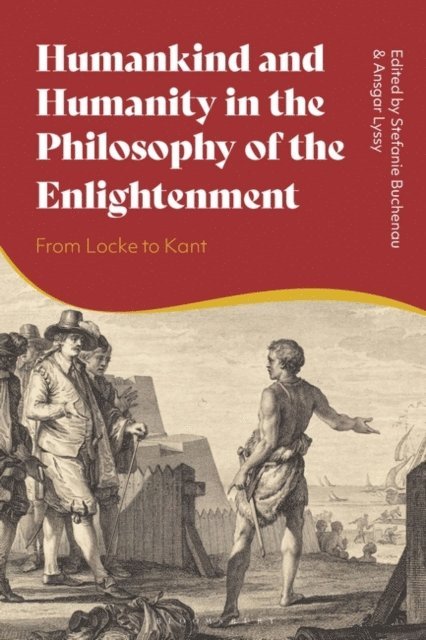
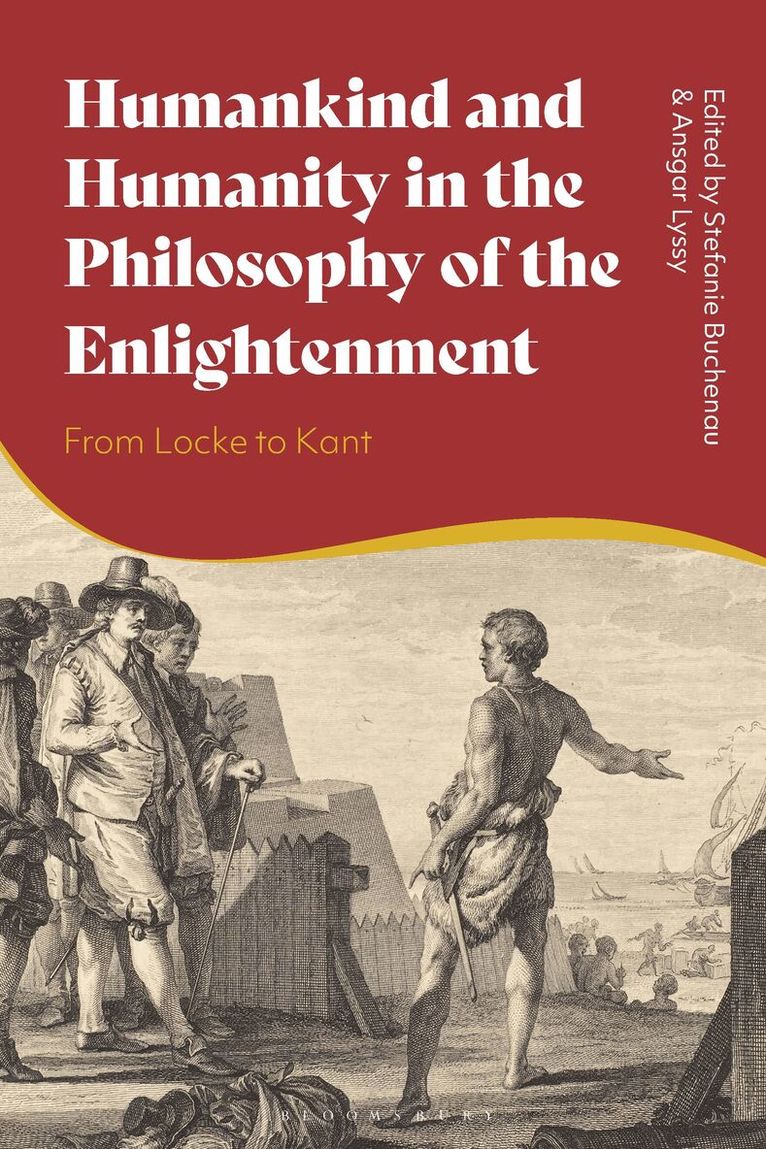
What makes us human beings? Is it merely some corporeal aspect, or rather some specific mental capacity, language, or some form of moral agency or social life? Is there a gendered bias within the concept of humanity? How do human beings become more human, and can we somehow cease to be human? This volume provides some answers to these fundamental questions and more by charting the increased preoccupation of the European Enlightenment with the concepts of humankind and humanity.Chapters investigate the philosophical concerns of major figures across Western Europe, including Montesquieu, Diderot, Rousseau, Locke, Hume, Ferguson, Kant, Herder, Johann Friedrich Blumenbach and the Comte de Buffon. As these philosophers develop important descriptive and comparative approaches to the human species and moral and social ideals of humanity, they present a view of the Enlightenment project as a particular kind of humanism that is different from its Ancient and Renaissance predecessors. With contributions from a team of internationally recognized scholars, including Stephen Gaukroger, Michael Forster, Céline Spector, Jacqueline Taylor, and Günter Zöller, this book offers a novel interpretation of the Enlightenment that is both clear in focus and impressive in scope.
E-bok
PDF, Engelska, 2023424 kr
Läs direkt efter köp
What makes us human beings? Is it merely some corporeal aspect, or rather some specific mental capacity, language, or some form of moral agency or social life? Is there a gendered bias within the concept of humanity? How do human beings become more human, and can we somehow cease to be human? This volume provides some answers to these fundamental questions and more by charting the increased preoccupation of the European Enlightenment with the concepts of humankind and humanity. Chapters investigate the philosophical concerns of major figures across Western Europe, including Montesquieu, Diderot, Rousseau, Locke, Hume, Ferguson, Kant, Herder, Johann Friedrich Blumenbach and the Comte de Buffon. As these philosophers develop important descriptive and comparative approaches to the human species and moral and social ideals of humanity, they present a view of the Enlightenment project as a particular kind of humanism that is different from its Ancient and Renaissance predecessors. With contributions from a team of internationally recognized scholars, including Stephen Gaukroger, Michael Forster, Céline Spector, Jacqueline Taylor, and Günter Zöller, this book offers a novel interpretation of the Enlightenment that is both clear in focus and impressive in scope.
424 kr
Läs direkt efter köp
What makes us human beings? Is it merely some corporeal aspect, or rather some specific mental capacity, language, or some form of moral agency or social life? Is there a gendered bias within the concept of humanity? How do human beings become more human, and can we somehow cease to be human? This volume provides some answers to these fundamental questions and more by charting the increased preoccupation of the European Enlightenment with the concepts of humankind and humanity. Chapters investigate the philosophical concerns of major figures across Western Europe, including Montesquieu, Diderot, Rousseau, Locke, Hume, Ferguson, Kant, Herder, Johann Friedrich Blumenbach and the Comte de Buffon. As these philosophers develop important descriptive and comparative approaches to the human species and moral and social ideals of humanity, they present a view of the Enlightenment project as a particular kind of humanism that is different from its Ancient and Renaissance predecessors. With contributions from a team of internationally recognized scholars, including Stephen Gaukroger, Michael Forster, Céline Spector, Jacqueline Taylor, and Günter Zöller, this book offers a novel interpretation of the Enlightenment that is both clear in focus and impressive in scope.
Häftad, Engelska, 2025
407 kr
Skickas inom 10-15 vardagar
What makes us human beings? Is it merely some corporeal aspect, or rather some specific mental capacity, language, or some form of moral agency or social life? Is there a gendered bias within the concept of humanity? How do human beings become more human, and can we somehow cease to be human? This volume provides some answers to these fundamental questions and more by charting the increased preoccupation of the European Enlightenment with the concepts of humankind and humanity.Chapters investigate the philosophical concerns of major figures across Western Europe, including Montesquieu, Diderot, Rousseau, Locke, Hume, Ferguson, Kant, Herder, Johann Friedrich Blumenbach and the Comte de Buffon. As these philosophers develop important descriptive and comparative approaches to the human species and moral and social ideals of humanity, they present a view of the Enlightenment project as a particular kind of humanism that is different from its Ancient and Renaissance predecessors. With contributions from a team of internationally recognized scholars, including Stephen Gaukroger, Michael Forster, Céline Spector, Jacqueline Taylor, and Günter Zöller, this book offers a novel interpretation of the Enlightenment that is both clear in focus and impressive in scope.
Häftad, Tyska, 2023
638 kr
Skickas inom 3-6 vardagar
E-bok
PDF, Tyska, 2023508 kr
Läs direkt efter köp
Stefanie Buchenau befasst sich in diesem Buch mit den historischen Wurzeln des Begriffs Menschenwürde. Indem sie diesen erstmals als einen Leitbegriff Kants und der Aufklärung deutet, werden die Voraussetzungen geschaffen, um die Sprache der Aufklärung überhaupt wieder zu verstehen und zu diskutieren. In diesem Sinne trägt ihre Untersuchung auch zur Klärung aktueller gesellschaftlicher Fragen und Debatten bei.Es kann kein Zweifel daran bestehen, dass Kant unser heutiges Verständnis von Menschenwürde nachhaltig geprägt hat. Nur ist dieser Begriff bisher ausschließlich in seiner praktischen Dimension erfasst worden, und man hat vor allem Kants Widerstand gegen die Anthropologie der Aufklärung hervorgehoben. In diesem Buch werden die gängigen Perspektiven nun umgekehrt. Der leitende Gedanke ist, dass Kants Begriff von Menschenwürde durchaus eine anthropologische Dimension im weiteren Sinne besitzt, insofern er sich auf eine Bestimmung, eine Perfektibilität und einen Titel aller Menschen und vernünftigen Weltbürger bezieht. Seinen anthropologischen Begriff von Würde entwickelt Kant in einer intensiven Debatte mit seinen aufklärerischen Zeitgenossen Mendelssohn, Herder, Garve, Schiller, Blumenbach und Forster. Er liegt sowohl seiner praktischen als auch seiner kritischen Philosophie allgemein zugrunde, die Kant in einer berühmten Reflexion als eine »transzendentale Anthropologie« bezeichnet. Der hier versuchte anthropologische Zugriff auf Kant erfordert zwar eine radikale Umdeutung, eröffnet aber auch ganz neue Einsichten. Er erlaubt es, Kants Thesen in ihrer Genese und in ihrem Kontext zu lesen und sie philosophiehistorisch einzuordnen.