Steffen Köhn - Böcker
Visar alla böcker från författaren Steffen Köhn. Handla med fri frakt och snabb leverans.
4 produkter
4 produkter
837 kr
Skickas inom 7-10 vardagar
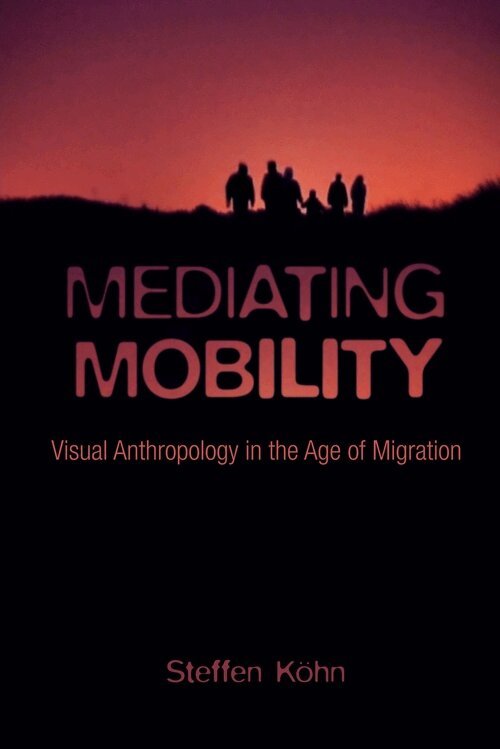
Images have become an integral part of the political regulation of migration: they help produce categories of legality versus illegality, foster stereotypes, and mobilize political convictions. Yet how are we to understand the relationship between these images and the political in the discourse surrounding migration? How can we, as anthropologists, migration scholars, or documentary filmmakers visually represent people who are excluded from political representation? And how can such visual representations gain political momentum? This volume not only considers the images that circulate with reference to migrants or draw attention to those that accompany, show, or conceal them. The book explores the phenomena of migration with the help of images. It offers an in-depth analysis of the documentary approaches of Ursula Biemann, Renzo Martens, Bouchra Khalili, Silvain George, Raphael Cuomo and Maria Iorio, Alex Rivera, and Rania Stepha, which evoke the particularities of migrant lifeworlds and examine urgent questions regarding the interrelations between politics and poetics, mobility and mediation, and the ethics of probability and possibility.The author also discusses his own cinematic practice in the making of Tell Me When...(2011), A Tale of Two Islands (2012), and Intimate Distance (2015), a trilogy of films that explore the potential to communicate the bodily, spatial, and temporal dimensions of the experience of migration.
260 kr
Skickas inom 7-10 vardagar
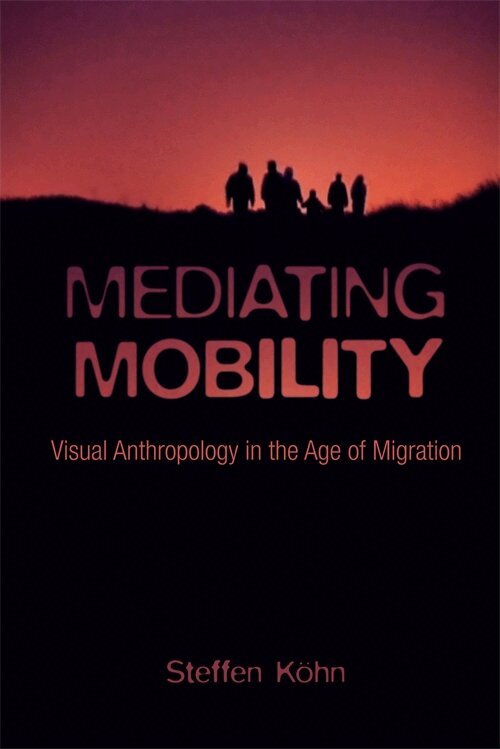
Images have become an integral part of the political regulation of migration: they help produce categories of legality versus illegality, foster stereotypes, and mobilize political convictions. Yet how are we to understand the relationship between these images and the political in the discourse surrounding migration? How can we, as anthropologists, migration scholars, or documentary filmmakers visually represent people who are excluded from political representation? And how can such visual representations gain political momentum? This volume not only considers the images that circulate with reference to migrants or draw attention to those that accompany, show, or conceal them. The book explores the phenomena of migration with the help of images. It offers an in-depth analysis of the documentary approaches of Ursula Biemann, Renzo Martens, Bouchra Khalili, Silvain George, Raphael Cuomo and Maria Iorio, Alex Rivera, and Rania Stepha, which evoke the particularities of migrant lifeworlds and examine urgent questions regarding the interrelations between politics and poetics, mobility and mediation, and the ethics of probability and possibility.The author also discusses his own cinematic practice in the making of Tell Me When...(2011), A Tale of Two Islands (2012), and Intimate Distance (2015), a trilogy of films that explore the potential to communicate the bodily, spatial, and temporal dimensions of the experience of migration.
1 542 kr
Skickas inom 3-6 vardagar
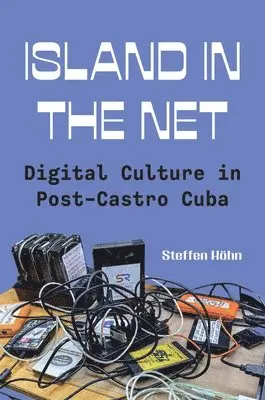
An exploration of Cuba’s emerging digital culture and Cubans’ creation of grassroots networks, digital black markets, and online spaces for public debateUntil just a few years ago, Cuba was one of the least-connected countries in the world. But as digital technology has become increasingly available, Cubans have found inventive ways to work around such remaining barriers as slow speeds, high costs, and inadequate infrastructure. In Island in the Net, Steffen Köhn examines Cuba’s nascent digital culture and how it has reconfigured the relationship between the state and its citizens. Köhn shows that through innovations including “sneakernets” (the physical transfer of information by flash drives and other devices), digital black markets, and online spaces for political debates, Cubans have successfully challenged the government’s monopoly on media and public discourse.Drawing on multisited ethnographic research, Köhn documents Cuba’s digital awakening, from the introduction of accessible Wi-Fi in 2015 to the social media–fueled protests in July 2021. Cubans’ community-driven digital innovations, he suggests, could be models for potential alternatives to the current Big Tech–dominated internet.Each chapter in Island in the Net is accompanied by a multimodal anthropology work: a video game, interactive installations, video art, an ethnographic documentary, and an expanded cinema installation. These unique media, created with Cuban artist Nestor Siré and other local collaborators, and accessible to readers via a QR code, bring the book’s argument vividly to life.
260 kr
Skickas inom 7-10 vardagar
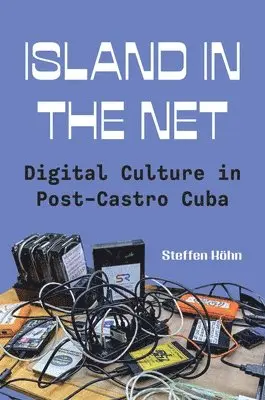
An exploration of Cuba’s emerging digital culture and Cubans’ creation of grassroots networks, digital black markets, and online spaces for public debateUntil just a few years ago, Cuba was one of the least-connected countries in the world. But as digital technology has become increasingly available, Cubans have found inventive ways to work around such remaining barriers as slow speeds, high costs, and inadequate infrastructure. In Island in the Net, Steffen Köhn examines Cuba’s nascent digital culture and how it has reconfigured the relationship between the state and its citizens. Köhn shows that through innovations including “sneakernets” (the physical transfer of information by flash drives and other devices), digital black markets, and online spaces for political debates, Cubans have successfully challenged the government’s monopoly on media and public discourse.Drawing on multisited ethnographic research, Köhn documents Cuba’s digital awakening, from the introduction of accessible Wi-Fi in 2015 to the social media–fueled protests in July 2021. Cubans’ community-driven digital innovations, he suggests, could be models for potential alternatives to the current Big Tech–dominated internet.Each chapter in Island in the Net is accompanied by a multimodal anthropology work: a video game, interactive installations, video art, an ethnographic documentary, and an expanded cinema installation. These unique media, created with Cuban artist Nestor Siré and other local collaborators, and accessible to readers via a QR code, bring the book’s argument vividly to life.