Stephanie Masta - Böcker
Visar alla böcker från författaren Stephanie Masta. Handla med fri frakt och snabb leverans.
4 produkter
4 produkter
Indigenous Voices of Girls and Women in Educational Spaces
Celebrating Presence
Inbunden, Engelska, 2025
2 029 kr
Skickas inom 10-15 vardagar
Centered on personal reflection and storytelling, this volume weaves together narratives of educational resilience, kinship, and auntie support to highlight the importance of Indigenous perspectives in all learning spaces. Bringing together the experiences of community members, students, mothers, aunties, and academics, it shows how the voices of Indigenous women and girls represent their ongoing survival within spaces often focused on assimilation and erasure and puts forward a new way of thinking about the value of Indigenous knowledge. It does so using a storytelling approach, which celebrates the experiences of Indigenous girls and women and expands the definition of education to include more informal spaces of learning in order to address the contentious relationship between Indigenous communities and formal schooling. This celebration of presence accentuates and amplifies the degree to which Indigenous peoples and communities have successfully retained their values and authenticity, despite ongoing attempts at assimilation by the dominant culture. As such, it centers Indigenous perspectives in ways that affirm the experiences of Indigenous women and girls in educational spaces and demonstrate how girls and women have overcome existing structures to ensure the survival of Indigenous knowledges, cultures, and authenticity.Presenting an innovative new approach to supporting Indigenous girls and women and centering the need to create new modes of scholarship and thinking that exist outside of the academic system, this book is designed for scholars, faculty, graduates, and educators with interests in education, Indigenous studies, anthropology, sociology, and women’s studies.
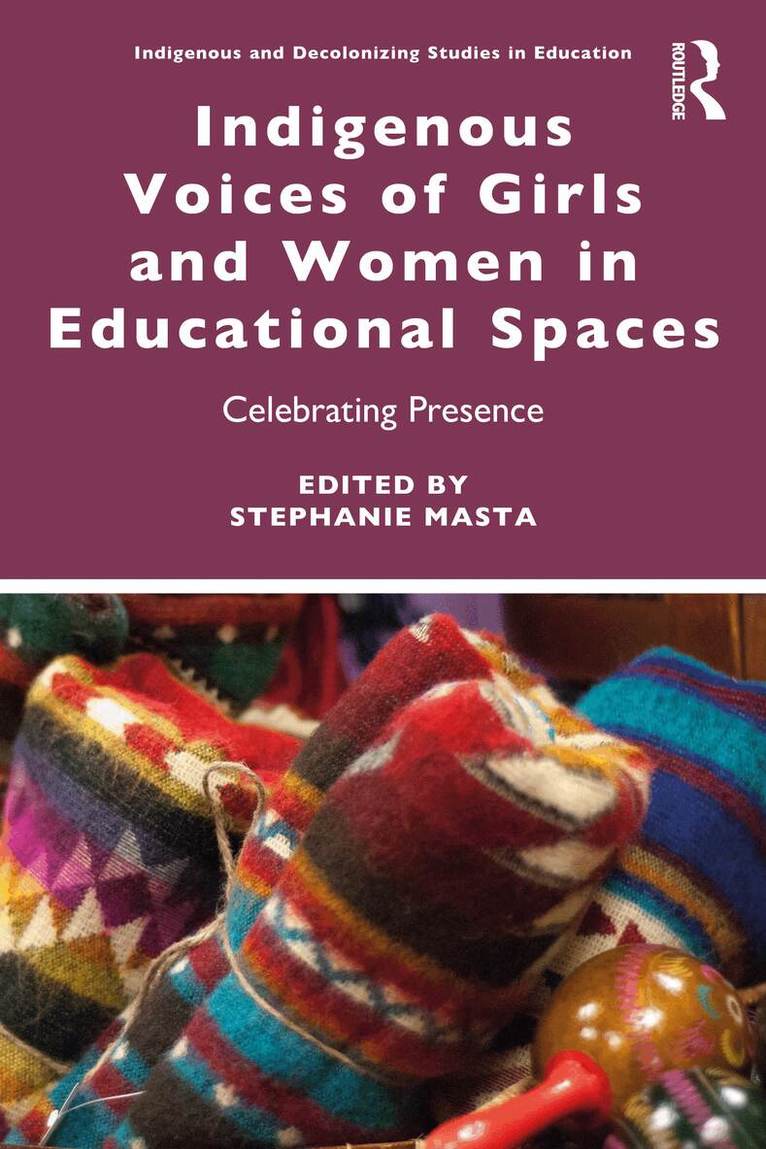
Indigenous Voices of Girls and Women in Educational Spaces
Celebrating Presence
Häftad, Engelska, 2025
613 kr
Skickas inom 10-15 vardagar
Centered on personal reflection and storytelling, this volume weaves together narratives of educational resilience, kinship, and auntie support to highlight the importance of Indigenous perspectives in all learning spaces. Bringing together the experiences of community members, students, mothers, aunties, and academics, it shows how the voices of Indigenous women and girls represent their ongoing survival within spaces often focused on assimilation and erasure and puts forward a new way of thinking about the value of Indigenous knowledge. It does so using a storytelling approach, which celebrates the experiences of Indigenous girls and women and expands the definition of education to include more informal spaces of learning in order to address the contentious relationship between Indigenous communities and formal schooling. This celebration of presence accentuates and amplifies the degree to which Indigenous peoples and communities have successfully retained their values and authenticity, despite ongoing attempts at assimilation by the dominant culture. As such, it centers Indigenous perspectives in ways that affirm the experiences of Indigenous women and girls in educational spaces and demonstrate how girls and women have overcome existing structures to ensure the survival of Indigenous knowledges, cultures, and authenticity.Presenting an innovative new approach to supporting Indigenous girls and women and centering the need to create new modes of scholarship and thinking that exist outside of the academic system, this book is designed for scholars, faculty, graduates, and educators with interests in education, Indigenous studies, anthropology, sociology, and women’s studies.
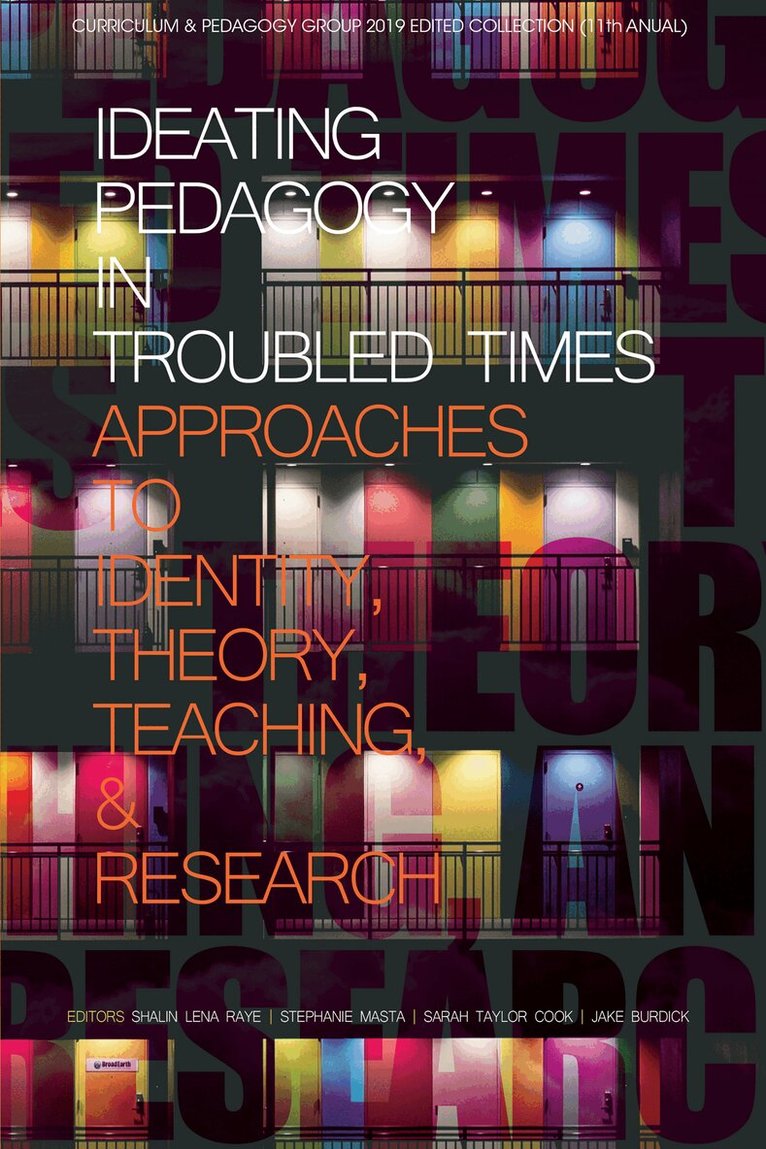
Ideating Pedagogy in Troubled Times
Approaches to Identity, Theory, Teaching and Research
Häftad, Engelska, 2019
599 kr
Skickas inom 7-10 vardagar
We began the call for this book by asking authors to ideate on activism -to take up and seek to extend- the interbraided values from the Curriculum and Pedagogy group’s espoused mission and vision, collocating activist ideologies, theoretical traditions, and practical orientations as a means of creatively, reflectively, and productively responding to the increasingly dire social moment. This moment is framed by a landscape denigrated beyond even Pinar’s (2004) original declaration of the present-as-nightmare. The current, catastrophic political climate provides challenges and (albeit scant) opportunities for curriculum scholars and workers as we reflect on past and future directions of our field, and grapple with our locations and roles as educators, researchers, practitioners, and beings in the world. These troubled times force us to think critically about our scholarship and pedagogy, our influence on educational practices in multiple registers, and the surrounding communities we claim to serve. This is where the call began: from a desire to think through modern conceptions regarding what counts as activism in the fields of education, curriculum, and pedagogy, and to consider how activist voices and enactments might emerge differently through curriculum and pedagogy writ large.A guiding source of inspiration for this book, weaving among the emerging themes between the collected manuscripts, reflections, and poems, was a passage in Sara Ahmed’s (2013) book, The Cultural Politics of Emotion. In this passage, Ahmed works through the complicated relationship between the testimonies of pain that injustice causes, the recognition of this pain, and the potential of these wounds to move us into a different relationship with healing (p. 200). The chapters, reflections, and poems within this volume, thus, effect a collective ideation on how specific cultural politics and deleterious ideological formations – racism, colonialism, homophobia, ableism, to name only a few – persist and mobilize. The authors seek to expose and name some of these injustices, asking readers not only see and hear these experiences, but to inhabit our complicities in their promulgation.It is important to acknowledge that these named social troubles do not exist in isolation, and will enmesh, weave, wind, and entangle with one another. The section headings parallel Ahmed’s (2013) own ideations: testimony, recognition, and wounds, not as a formula to follow as an activist call, or as a model for a means to a more just end, but as a way to engage in these issues as a trope of activist confrontation of readers who are, as many of our authors suggest, complicit in maintaining many of these social troubles. The chapters do not need to be read in any particular order, though the ordering of the chapters moves from the naming of social troubles, to showing how teaching, research, and theory ask us to take a more active role in recognizing and acknowledging the prevalence of these issues, and then theorizing ways to engage the wounds.
Ideating Pedagogy in Troubled Times
Approaches to Identity, Theory, Teaching and Research
Inbunden, Engelska, 2019
1 059 kr
Skickas inom 7-10 vardagar
We began the call for this book by asking authors to ideate on activism -to take up and seek to extend- the interbraided values from the Curriculum and Pedagogy group’s espoused mission and vision, collocating activist ideologies, theoretical traditions, and practical orientations as a means of creatively, reflectively, and productively responding to the increasingly dire social moment. This moment is framed by a landscape denigrated beyond even Pinar’s (2004) original declaration of the present-as-nightmare. The current, catastrophic political climate provides challenges and (albeit scant) opportunities for curriculum scholars and workers as we reflect on past and future directions of our field, and grapple with our locations and roles as educators, researchers, practitioners, and beings in the world. These troubled times force us to think critically about our scholarship and pedagogy, our influence on educational practices in multiple registers, and the surrounding communities we claim to serve. This is where the call began: from a desire to think through modern conceptions regarding what counts as activism in the fields of education, curriculum, and pedagogy, and to consider how activist voices and enactments might emerge differently through curriculum and pedagogy writ large.A guiding source of inspiration for this book, weaving among the emerging themes between the collected manuscripts, reflections, and poems, was a passage in Sara Ahmed’s (2013) book, The Cultural Politics of Emotion. In this passage, Ahmed works through the complicated relationship between the testimonies of pain that injustice causes, the recognition of this pain, and the potential of these wounds to move us into a different relationship with healing (p. 200). The chapters, reflections, and poems within this volume, thus, effect a collective ideation on how specific cultural politics and deleterious ideological formations – racism, colonialism, homophobia, ableism, to name only a few – persist and mobilize. The authors seek to expose and name some of these injustices, asking readers not only see and hear these experiences, but to inhabit our complicities in their promulgation.It is important to acknowledge that these named social troubles do not exist in isolation, and will enmesh, weave, wind, and entangle with one another. The section headings parallel Ahmed’s (2013) own ideations: testimony, recognition, and wounds, not as a formula to follow as an activist call, or as a model for a means to a more just end, but as a way to engage in these issues as a trope of activist confrontation of readers who are, as many of our authors suggest, complicit in maintaining many of these social troubles. The chapters do not need to be read in any particular order, though the ordering of the chapters moves from the naming of social troubles, to showing how teaching, research, and theory ask us to take a more active role in recognizing and acknowledging the prevalence of these issues, and then theorizing ways to engage the wounds.