Stephanie Olsen – författare
Visar alla böcker från författaren Stephanie Olsen. Handla med fri frakt och snabb leverans.
13 produkter
13 produkter
E-bok
PDF, Engelska, 20141 719 kr
Läs direkt efter köp
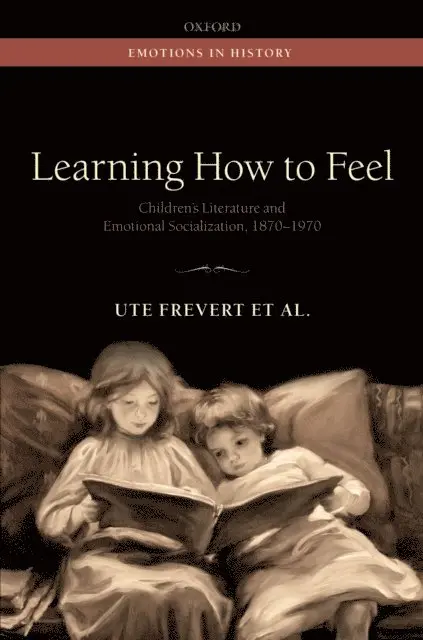
Learning How to Feel explores the ways in which children and adolescents learn not just how to express emotions that are thought to be pre-existing, but actually how to feel. The volume assumes that the embryonic ability to feel unfolds through a complex dialogue with the social and cultural environment and specifically through reading material. The fundamental formation takes place in childhood and youth. A multi-authored historical monograph, Learning How to Feel uses children''s literature and advice manuals to access the training practices and learning processes for a wide range of emotions in the modern age, circa 1870-1970. The study takes an international approach, covering a broad array of social, cultural, and political milieus in Britain, Germany, India, Russia, France, Canada, and the United States.Learning How to Feel places multidirectional learning processes at the centre of the discussion, through the concept of practical knowledge. The book innovatively draws a framework for broad historical change during the course of the period. Emotional interaction between adult and child gave way to a focus on emotional interactions among children, while gender categories became less distinct. Children were increasingly taught to take responsibility for their own emotional development, to find ''authenticity'' for themselves. In the context of changing social, political, cultural, and gender agendas, the building of nations, subjects and citizens, and the forging of moral and religious values, Learning How to Feel demonstrates how children were provided with emotional learning tools through their reading matter to navigate their emotional lives.
Inbunden, Engelska, 2014
1 656 kr
Skickas inom 5-8 vardagar
Learning How to Feel explores the ways in which children and adolescents learn not just how to express emotions that are thought to be pre-existing, but actually how to feel. The volume assumes that the embryonic ability to feel unfolds through a complex dialogue with the social and cultural environment and specifically through reading material. The fundamental formation takes place in childhood and youth. A multi-authored historical monograph, Learning How to Feel uses children's literature and advice manuals to access the training practices and learning processes for a wide range of emotions in the modern age, circa 1870-1970. The study takes an international approach, covering a broad array of social, cultural, and political milieus in Britain, Germany, India, Russia, France, Canada, and the United States.Learning How to Feel places multidirectional learning processes at the centre of the discussion, through the concept of practical knowledge. The book innovatively draws a framework for broad historical change during the course of the period. Emotional interaction between adult and child gave way to a focus on emotional interactions among children, while gender categories became less distinct. Children were increasingly taught to take responsibility for their own emotional development, to find 'authenticity' for themselves. In the context of changing social, political, cultural, and gender agendas, the building of nations, subjects and citizens, and the forging of moral and religious values, Learning How to Feel demonstrates how children were provided with emotional learning tools through their reading matter to navigate their emotional lives.
Inbunden, Engelska, 2015
1 333 kr
Skickas inom 10-15 vardagar
Childhood, Youth and Emotions in Modern History is the first book to innovatively combine the history of childhood and youth with the history of emotions, combining multiple national, colonial, and global perspectives.
E-bok
PDF, Engelska, 20151 785 kr
Läs direkt efter köp
Childhood, Youth and Emotions in Modern History is the first book to innovatively combine the history of childhood and youth with the history of emotions, combining multiple national, colonial, and global perspectives.
7 451 kr
Skickas inom 5-8 vardagar
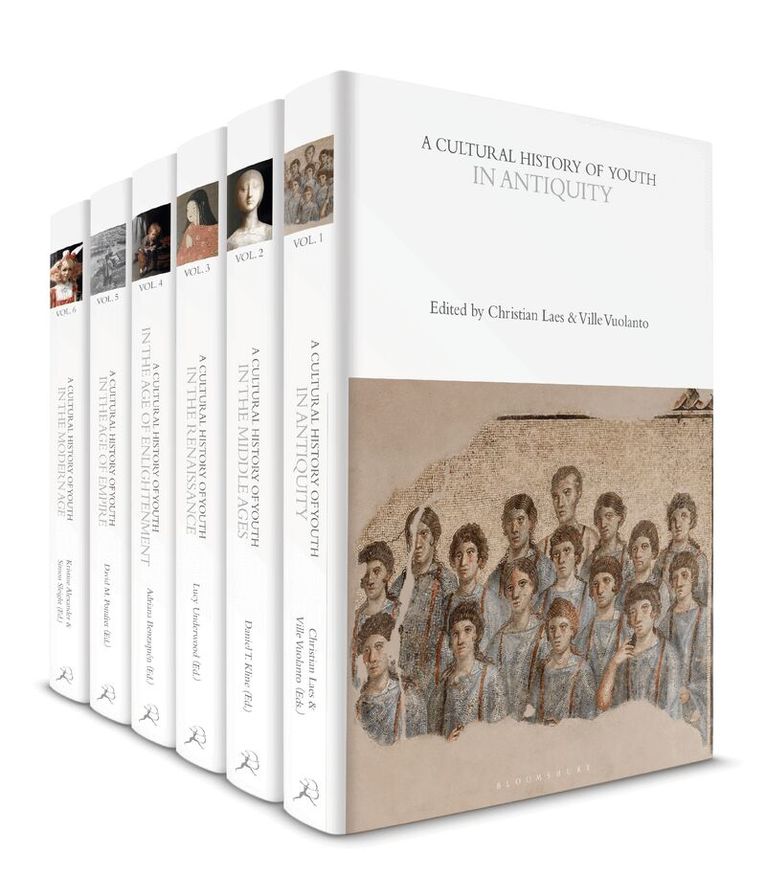
These six highly-illustrated volumes provide the first truly global, interdisciplinary history of youth covering the last 2,500 years. Leading scholars from around the world have leant their expertise to create an innovative resource for historians, and scholars and students of related fields.Chapter titles are identical across each of the volumes. This gives the choice of reading about a specific period in one of the volumes, or following a theme across history by reading the relevant chapter in each of the six.The themes (and chapter titles) are: Concepts of Youth; Spaces and Places; Education and Work; Leisure and Play; Emotions; Gender, Sexuality and the Body; Belief and Ideology; Authority and Agency; War and Conflict; and Towards a Global History.The six volumes cover: 1 – Antiquity (500BC-500AD); 2 – The Medieval Age (500-1450); 3 – The Renaissance (1450-1650); 4 – The Age of Enlightenment (1650-1800); 5 – The Age of Empire (1800-1920); 6 – the Modern Age (1920-2000+).The page extent for the pack is 1728pp. Each volume opens with Notes on Contributors and an Introduction and concludes with Notes, Bibliography, and an Index.Volume 6 is available open access under a CC-BY-ND 3.0 license on bloomsburycollections.com. Open access was funded by The Social Science and Humanities Research Council of Canada.The Cultural Histories SeriesA Cultural History of Youth is part of The Cultural Histories Series. Titles are available as hardcover sets for libraries needing just one subject or preferring a tangible reference for their shelves or as part of a fully-searchable digital library. The digital product is available to institutions by annual subscription or on perpetual access via www.bloomsburyculturalhistory.com. Individual volumes for academics and researchers interested in specific historical periods are also available in print or digitally via www.bloomsburycollections.com .
E-bok
PDF, Engelska, 2014608 kr
Läs direkt efter köp
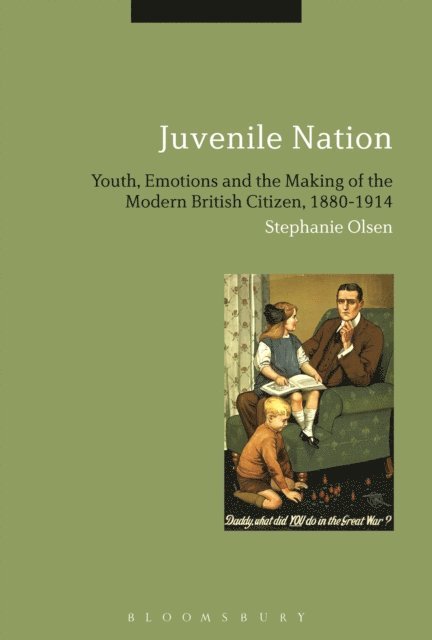
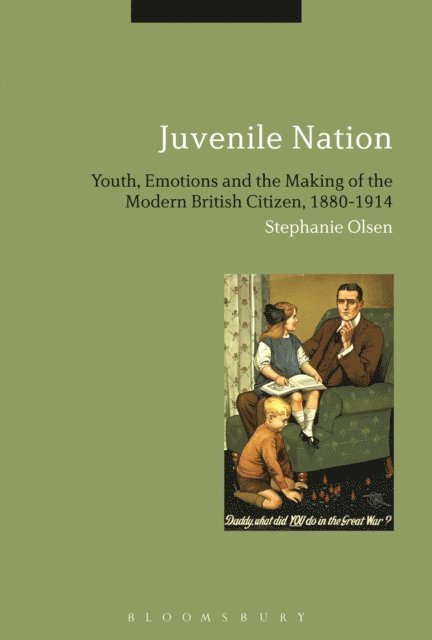
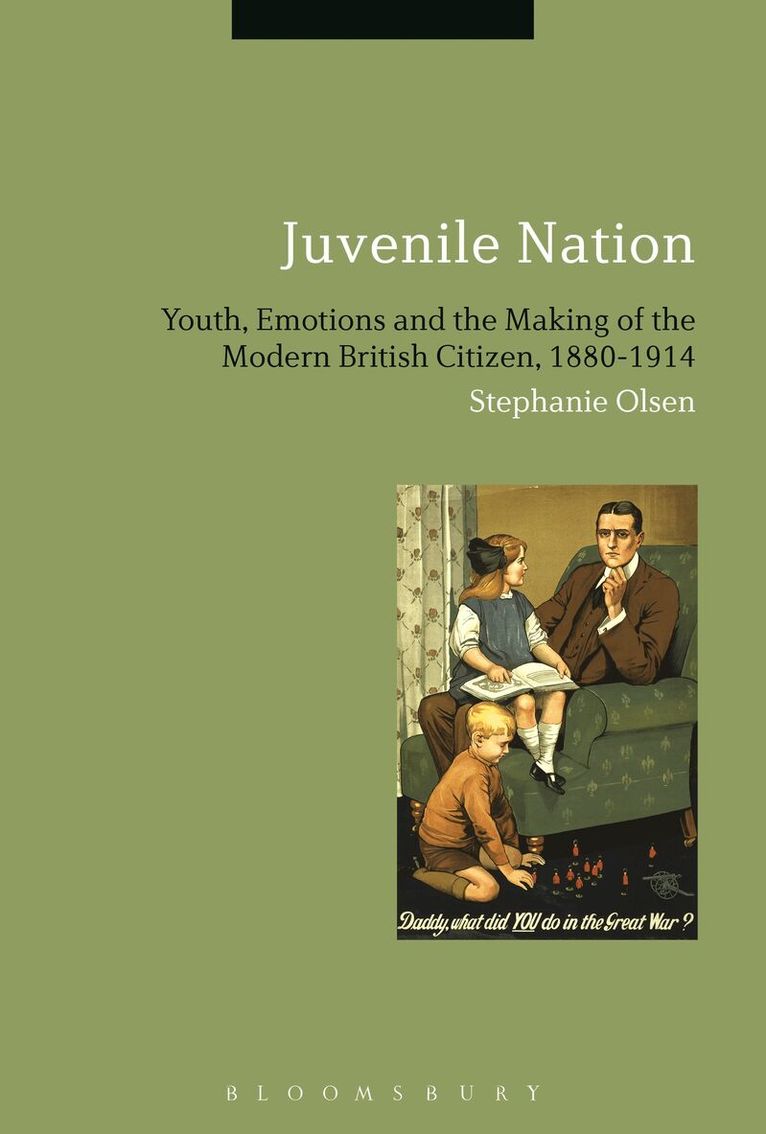
In the first five months of the Great War, one million men volunteered to fight. Yet by the end of 1915, the British government realized that conscription would be required. Why did so many enlist, and conversely, why so few? Focusing on analyses of widely felt emotions related to moral and domestic duty, Juvenile Nation broaches these questions in new ways.Juvenile Nation examines how religious and secular youth groups, the juvenile periodical press, and a burgeoning new group of child psychologists, social workers and other ''experts'' affected society''s perception of a new problem character, the ''adolescent''. By what means should this character be turned into a ''fit'' citizen? Considering qualities such as loyalty, character, temperance, manliness, fatherhood, and piety, Stephanie Olsen discusses the idea of an ''informal education'', focused on building character through emotional control, and how this education was seen as key to shaping the future citizenry of Britain and the Empire.Juvenile Nation recasts the militarism of the 1880s onwards as part of an emotional outpouring based on association to family, to community and to Christian cultural continuity. Significantly, the same emotional responses explain why so many men turned away from active militarism, with duty to family and community perhaps thought to have been best carried out at home. By linking the historical study of the emotions with an examination of the individual''s place in society, Olsen provides an important new insight on how a generation of young men was formed.
E-bok
Engelska, 2014608 kr
Läs direkt efter köp
In the first five months of the Great War, one million men volunteered to fight. Yet by the end of 1915, the British government realized that conscription would be required. Why did so many enlist, and conversely, why so few? Focusing on analyses of widely felt emotions related to moral and domestic duty, Juvenile Nation broaches these questions in new ways.Juvenile Nation examines how religious and secular youth groups, the juvenile periodical press, and a burgeoning new group of child psychologists, social workers and other ''experts'' affected society''s perception of a new problem character, the ''adolescent''. By what means should this character be turned into a ''fit'' citizen? Considering qualities such as loyalty, character, temperance, manliness, fatherhood, and piety, Stephanie Olsen discusses the idea of an ''informal education'', focused on building character through emotional control, and how this education was seen as key to shaping the future citizenry of Britain and the Empire.Juvenile Nation recasts the militarism of the 1880s onwards as part of an emotional outpouring based on association to family, to community and to Christian cultural continuity. Significantly, the same emotional responses explain why so many men turned away from active militarism, with duty to family and community perhaps thought to have been best carried out at home. By linking the historical study of the emotions with an examination of the individual''s place in society, Olsen provides an important new insight on how a generation of young men was formed.
Häftad, Engelska, 2015
562 kr
Skickas inom 10-15 vardagar
In the first five months of the Great War, one million men volunteered to fight. Yet by the end of 1915, the British government realized that conscription would be required. Why did so many enlist, and conversely, why so few? Focusing on analyses of widely felt emotions related to moral and domestic duty, Juvenile Nation broaches these questions in new ways.Juvenile Nation examines how religious and secular youth groups, the juvenile periodical press, and a burgeoning new group of child psychologists, social workers and other ‘experts’ affected society’s perception of a new problem character, the ‘adolescent’. By what means should this character be turned into a ‘fit’ citizen? Considering qualities such as loyalty, character, temperance, manliness, fatherhood, and piety, Stephanie Olsen discusses the idea of an ‘informal education’, focused on building character through emotional control, and how this education was seen as key to shaping the future citizenry of Britain and the Empire.Juvenile Nation recasts the militarism of the 1880s onwards as part of an emotional outpouring based on association to family, to community and to Christian cultural continuity. Significantly, the same emotional responses explain why so many men turned away from active militarism, with duty to family and community perhaps thought to have been best carried out at home. By linking the historical study of the emotions with an examination of the individual’s place in society, Olsen provides an important new insight on how a generation of young men was formed.
Inbunden, Engelska, 2014
1 999 kr
Skickas inom 10-15 vardagar
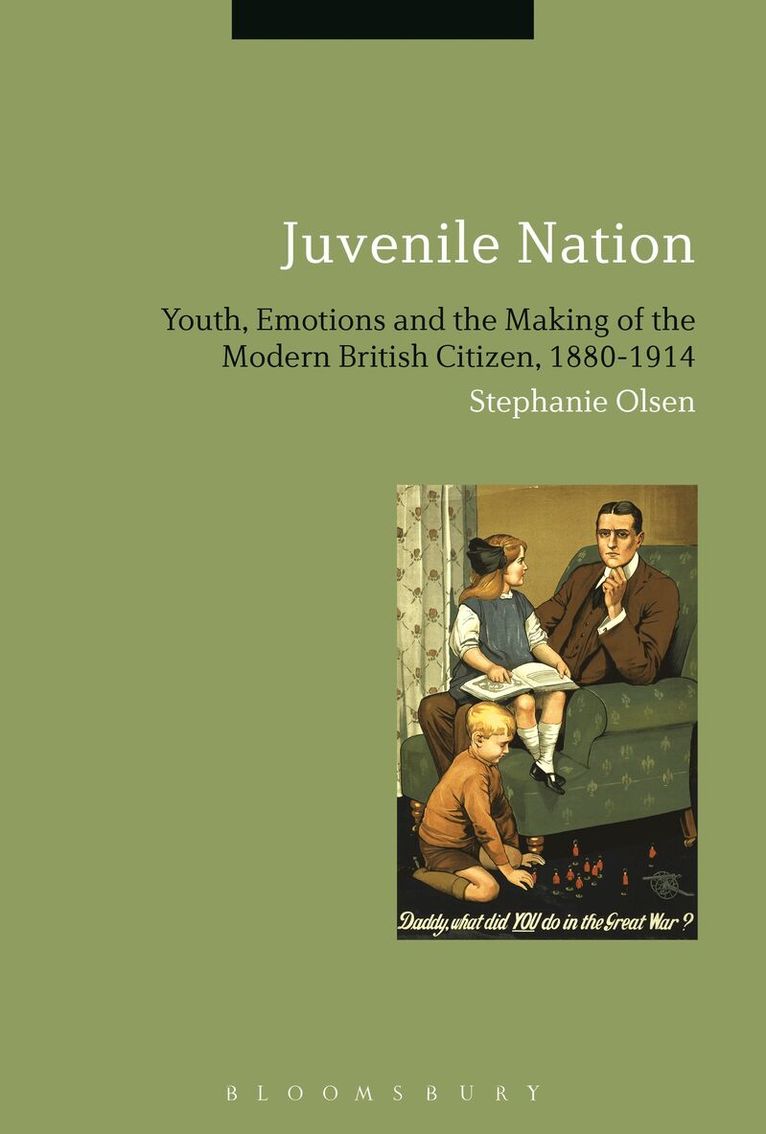
In the first five months of the Great War, one million men volunteered to fight. Yet by the end of 1915, the British government realized that conscription would be required. Why did so many enlist, and conversely, why so few? Focusing on analyses of widely felt emotions related to moral and domestic duty, Juvenile Nation broaches these questions in new ways.Juvenile Nation examines how religious and secular youth groups, the juvenile periodical press, and a burgeoning new group of child psychologists, social workers and other ‘experts’ affected society’s perception of a new problem character, the ‘adolescent’. By what means should this character be turned into a ‘fit’ citizen? Considering qualities such as loyalty, character, temperance, manliness, fatherhood, and piety, Stephanie Olsen discusses the idea of an ‘informal education’, focused on building character through emotional control, and how this education was seen as key to shaping the future citizenry of Britain and the Empire.Juvenile Nation recasts the militarism of the 1880s onwards as part of an emotional outpouring based on association to family, to community and to Christian cultural continuity. Significantly, the same emotional responses explain why so many men turned away from active militarism, with duty to family and community perhaps thought to have been best carried out at home. By linking the historical study of the emotions with an examination of the individual’s place in society, Olsen provides an important new insight on how a generation of young men was formed.
E-bok
Tyska, 202658 kr
Läs direkt efter köp
Wenn das Leben nimmt und doch wieder schenkt ... WENN DAS LEBEN ANKLOPFT: Die Hoffnung auf den Traumprinzen hatte Stefanie schon lange abgeschrieben doch als sie auf einer ihrer Arbeitsreisen dem charmanten Journalisten Wolf begegnet, ist es Liebe auf den ersten Blick. Ein Wirbelwind aus Gluck fegt durch Stefanies Leben. Bis zu dem Moment, in dem sie den Anruf erhalt: Wolf ist verschwunden. Zuruck bleibt eine gro e Leere. Und die Frage, wie sie es schaffen soll, sich allein um das Kind zu kummern, das sie unter dem Herzen tragt. Doch Stefanies beste Freundin Britta, ihre wunderbar verruckten Nachbarn in dem kleinen Hamburger Wohnhaus und der Streuner-Hund Seelchen scheinen fest entschlossen, Stefanie wieder all die bunten Farben des Lebens zu zeigen MORGEN GEHT DAS LEBEN WEITER: Fur ihre Freundin lauten die Hochzeitsglocken, doch fur Britta ist es der reinste Regentag. Frisch verlassen wegen einer anderen Frau, ist ihr so uberhaupt nicht nach Tanzen zumute. Selbst der gutmutige, aber unscheinbare Fotograf Helmut kann sie heute nicht aufmuntern. Doch dann scheint das Universum ihre Wunsche ausnahmsweise zu erhoren und wenig spater lauft Britta geradewegs ihrem Traummann in die Arme. Nur, ist er vielleicht zu schon, um wahr zu sein? Und warum wird Britta das Gefuhl nicht los, dass sie womoglich einen kleinen, aber entscheidenden Wegweiser zum Gluck ubersehen hat?
E-bok
Tyska, 202458 kr
Läs direkt efter köp
Gemeinsam ist man weniger alleinDie Hoffnung auf den Traumprinzen hatte Stefanie schon lange abgeschrieben doch als sie auf einer ihrer Arbeitsreisen dem charmanten Journalisten Wolf begegnet, ist es Liebe auf den ersten Blick. Ein Wirbelwind aus Gluck fegt durch Stefanies Leben. Bis zu dem Moment, in dem sie den Anruf erhalt: Wolf ist verschwunden. Zuruck bleibt eine gro e Leere. Und die Frage, wie sie es schaffen soll, sich allein um das Kind zu kummern, das sie unter dem Herzen tragt. Doch Stefanies beste Freundin Britta, ihre wunderbar verruckten Nachbarn in dem kleinen Hamburger Wohnhaus und der Streuner-Hund Seelchen scheinen fest entschlossen, Stefanie wieder all die bunten Farben des Lebens zu zeigen Ein tolles Buch zum Lachen und Weinen. Absolut lesenswert. Neue Welt fur die Frau
E-bok
Tyska, 202458 kr
Läs direkt efter köp
Was machst du, wenn der glucklichste Tag im Leben deiner besten Freundin gleichzeitig dein unglucklichster ist?Fur ihre Freundin lauten die Hochzeitsglocken, doch fur Britta ist es der reinste Regentag. Frisch verlassen wegen einer anderen Frau, ist ihr so uberhaupt nicht nach Tanzen zumute. Selbst der gutmutige, aber unscheinbare Fotograf Helmut kann sie heute nicht aufmuntern. Doch dann scheint das Universum ihre Wunsche ausnahmsweise zu erhoren und wenig spater lauft Britta geradewegs ihrem Traummann in die Arme. Nur, ist er vielleicht zu schon, um wahr zu sein? Und warum wird Britta das Gefuhl nicht los, dass sie womoglich einen kleinen, aber entscheidenden Wegweiser zum Gluck ubersehen hat?Tauchen Sie mit dem gefuhlvollen zweiten Roman der Gluckssucherinnen-Reihe in Brittas Geschichte ein der Roman kann unabhangig vom ersten Band gelesen werden. Ein tolles Buch zum Lachen und Weinen. Absolut lesenswert. Neue Welt fur die Frau
E-bok
Engelska11 kr
Läs direkt efter köp