Stephen Casper - Böcker
Visar alla böcker från författaren Stephen Casper. Handla med fri frakt och snabb leverans.
4 produkter
4 produkter
1 202 kr
Skickas inom 5-8 vardagar
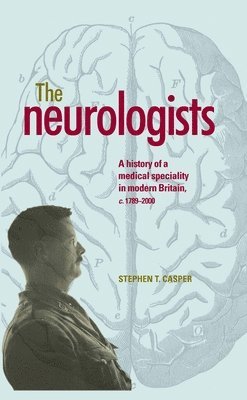
The neurologists describes how Victorian physicians located in a medical culture that privileged general knowledge over narrow specialism came to be transformed into the specialised physicians we now call neurologists. Relying entirely upon hitherto unseen primary sources drawn from archives across Britain, Europe and North America, this book analyses the emergence of neurology in the context of the development of modern medicine in Britain. The neurologists thus surveys the patterns of change and modernisation that influenced British medical culture throughout the nineteenth and twentieth centuries. In so doing, it ultimately seeks an account of how neurological knowledge acquired such an expansive view of human nature as to become concerned in the last decades of the twentieth century with the human sciences, philosophy, art and literature.
364 kr
Skickas inom 5-8 vardagar
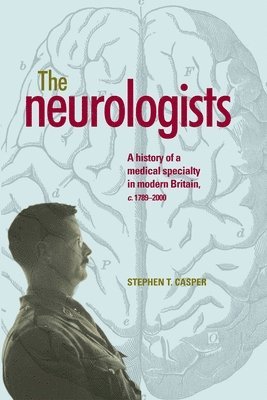
The neurologists describes how Victorian physicians located in a medical culture that privileged general knowledge over narrow specialism came to be transformed into the specialised physicians we now call neurologists. Relying entirely upon hitherto unseen primary sources drawn from archives across Britain, Europe and North America, this book analyses the emergence of neurology in the context of the development of modern medicine in Britain. The neurologists thus surveys the patterns of change and modernisation that influenced British medical culture throughout the nineteenth and twentieth centuries. In so doing, it ultimately seeks an account of how neurological knowledge acquired such an expansive view of human nature as to become concerned in the last decades of the twentieth century with the human sciences, philosophy, art and literature.
343 kr
Skickas inom 7-10 vardagar
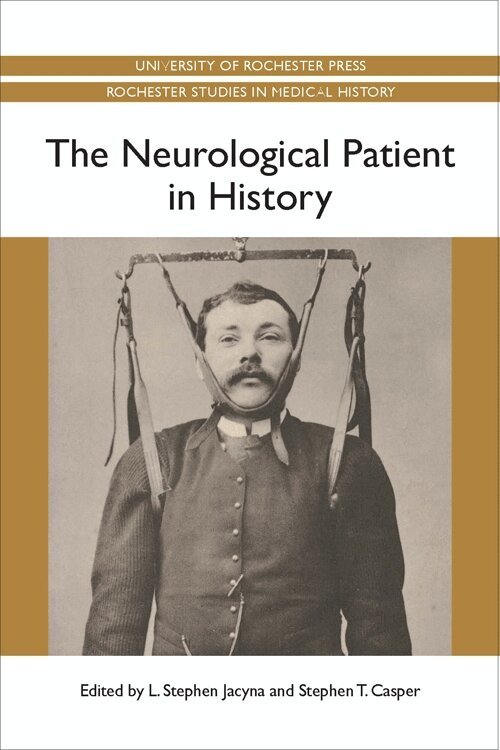
Essays from noted contributors trace the evolution of the neurological patient's role, treatment, and place in the history of medicine.Parkinson's, Alzheimer's, Tourette's, multiple sclerosis, stroke: all are neurological illnesses that create dysfunction, distress, and disability. With their symptoms ranging from impaired movement and paralysis to hallucinationsand dementia, neurological patients present myriad puzzling disorders and medical challenges. Throughout the nineteenth and twentieth centuries countless stories about neurological patients appeared in newspapers, books, medical papers, and films. Often the patients were romanticized; indeed, it was common for physicians to cast neurological patients in a grand performance, allegedly giving audiences access to deep philosophical insights about the meaning of life and being.Beyond these romanticized images, however, the neurological patient was difficult to diagnose. Experiments often approached unethical realms, and treatment created challenges for patients, courts, caregivers, and even for patient advocacy organizations. In this kaleidoscopic study, the contributors illustrate how the neurological patient was constructed in history and came to occupy its role in Western culture. Stephen T. Casper is assistant professor in Humanities and Social Sciences at Clarkson University. L. Stephen Jacyna is reader in the History of Medicine and Director of the Centre for the History of Medicine at University College London.
Del 40 - Rochester Studies in Medical History
History of the Brain and Mind Sciences
Technique, Technology, Therapy
Inbunden, Engelska, 2017
1 205 kr
Skickas inom 10-15 vardagar
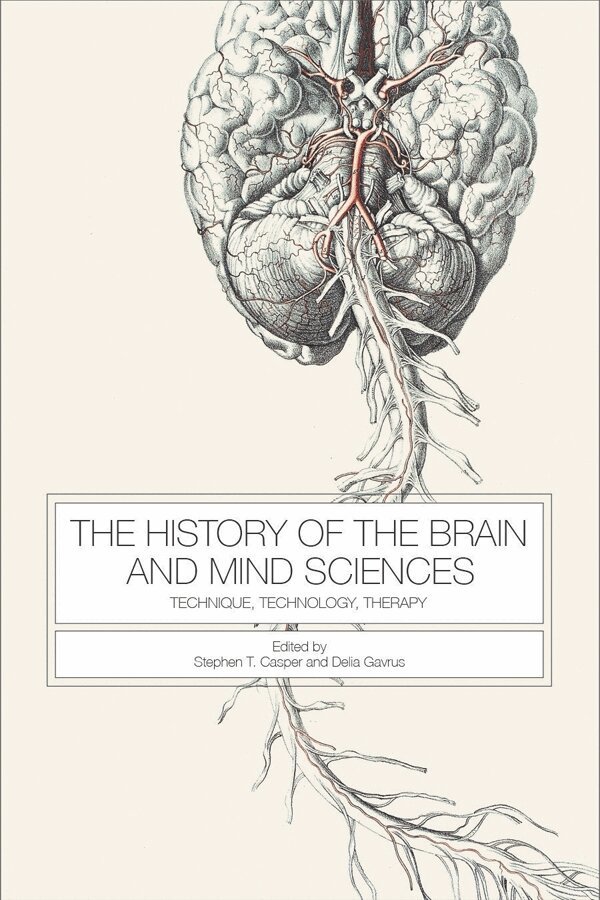
How did epidemics, zoos, German exiles, methamphetamine, disgruntled technicians, modern bureaucracy, museums, and whipping cream shape the emergence of modern neuroscience?This history explores the exceptionally complex scientific and medical techniques and practices that have allowed practitioners to claim expertise in the brain and mind sciences over the past two centuries. Based on meticulous historical studies, essays in the volume move from the postrevolutionary Parisian Menagerie of the Jardin des Plantes to the political contexts of neuroscience within the National Institute of Mental Health in the United States in the late twentieth century. Touching on such disparate topics as the luggage of German exiles, the role of whipping cream in industrial food production, the emergence of neurosurgery, and the private musings of a disgruntled medicaltechnician, the contributors to this volume make a powerful case for concentrating scholarly attention on seemingly marginal chapters of the history of the mind and brain sciences. By so doing, the authors contend that it is in the obscure, peripheral, and marginal stories of the past that we can best see the emerging futures of the medicine and science of the brain and the mind. Collectively these essays thus reveal that the richness of the history of the brain and mind sciences cannot and should not be reduced to a unitary, uncomplicated narrative of progressive discovery.CONTRIBUTORS: Brian P. Casey, Stephen T. Casper, Justin Garson, Delia Gavrus, Katja Guenther, L.Stephen Jacyna, Kenton Kroker, Thomas Schlich, Max Stadler, Frank W. Stahnisch Stephen Casper is Associate Professor of History at Clarkson University. Delia Gavrus is Assistant Professor of the History of Science at the University of Winnipeg.