Stephen David Ross - Böcker
Visar alla böcker från författaren Stephen David Ross. Handla med fri frakt och snabb leverans.
21 produkter
21 produkter
382 kr
Tillfälligt slut
This book asks how we may undertake to represent representation.
402 kr
Tillfälligt slut
This book addresses the nature and injustice of authority, retracing the ideas of reason and law from ancient Greece to the present, pursuing a line of thought begun with Anaximander, who speaks of the ordinance of time as restitution for immemorial injustice, and Heraclitus, who speaks of justice as strife. Predominantly philosophical, exploring the authority of Western philosophy in twentieth-century continental and pragmatist writings, the book explores alternative voices as challenges to authority, in feminist and multicultural writings, in Greek mythology and African narratives, in Greek drama and twentieth-century literature.
1 057 kr
Tillfälligt slut
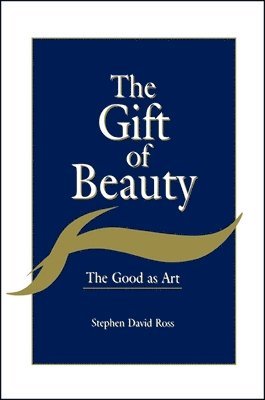
Traces the history of the idea of art as an ethical movement, interpreting the good as nature's abundance, giving rise to an ethics of inclusion, expressed in art.Ross explores the developments in Western thought, from Plato and Aristotle through Kant and Hegel, when art was separated from science and philosophy. At the heart of the project is a reexamination of the good, found in Plato as that which makes being possible, which gives authority to knowledge and beckons to art, preserved in Levinas as infinite responsibility. The idea of the good is interpreted as nature's abundance, giving beauty and truth as gifts, calling us to respond. It gives rise to an ethics of inclusion, expressed in art.
402 kr
Tillfälligt slut
Traces the history of the idea of art as an ethical movement, interpreting the good as nature's abundance, giving rise to an ethics of inclusion, expressed in art.Ross explores the developments in Western thought, from Plato and Aristotle through Kant and Hegel, when art was separated from science and philosophy. At the heart of the project is a reexamination of the good, found in Plato as that which makes being possible, which gives authority to knowledge and beckons to art, preserved in Levinas as infinite responsibility. The idea of the good is interpreted as nature's abundance, giving beauty and truth as gifts, calling us to respond. It gives rise to an ethics of inclusion, expressed in art.
382 kr
Tillfälligt slut
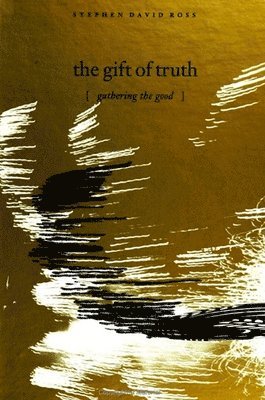
Reexamines the good, tracing the history of the idea of truth as an ethical movement, and interpreting the good as nature's abundance, giving beauty and truth as gifts.This volume traces the history of the idea of truth as an ethical movement, exploring those developments in Western thought, from Plato and Aristotle through Kant and Hegel, when ethics was separated from science and philosophy. At the heart of the project is a reexamination of the good, found in Plato as that which makes being possible, which gives authority to knowledge and beckons to art, preserved in Levinas as infinite responsibility. The idea of the good is interpreted as nature's abundance, giving beauty and truth as gifts. It gives rise to an ethics of inclusion.
372 kr
Skickas inom 7-10 vardagar
Traces Western ideas of corporeal bodies from Plato to contemporary feminist and postructuralist writings, with the purpose of reexamining the good, identified in Plato as that which gives authority to knowledge and truth.The Gift of Touch is the third volume in Ross's ongoing examination of the Western philosophical tradition in ethical terms, from the standpoint of the good, giving rise to endless responsibilities, resisting the neutrality of being and truth. The first volume, The Gift of Beauty, explored the link between art and the good in the light of Nietzsche's revaluation of all values and the second volume, The Gift of Truth, explored the ways in which truth and knowledge answer to a responsibility beyond themselves, given from the good. This third book traces Western ideas for corporeal bodies from Plato to contemporary feminist and poststructuralist writings, understanding corporeal things throughout nature as heterogeneous and expressive, interpreted in ethical terms, in relation to histories of domination and resistance. At the heart of the book is a reexamination of the good, found in Plato as that which gives authority to knowledge and truth. The good gives being in abundance, understood in terms of endless responsibility, giving rise to an ethics of inclusion.
402 kr
Tillfälligt slut
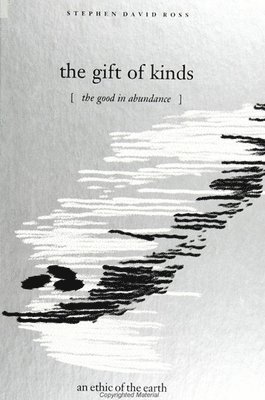
Explores the idea of human and natural kinds, pursuing an ethics of the earth responsive to social, political, and environmental issues.In this fourth volume of Stephen David Ross's ongoing project reexamining the Western philosophical tradition, The Gift of Kinds explores the order of things, linking the kinds of the natural world to disciplinary distinctions and to social divisions by gender, race, class, and nationality. It pursues a local and contingent ethics that pervades human life and the earth that responds to the expressiveness of things everywhere, resisting the tyranny of kinds, human and otherwise. The book examines the idea of natural and human kinds as requisite to any thought of heterogeneity and any resistance to neutrality, developed in relation to ecological and environmental issues. The giving of the good is understood in terms of species and kinds, linked with genealogy: family, gender, race, kin, and kind. Levinas's sense of exposure–expression and proximity–is interpreted as propinquity. Kinds are interpreted as intermediary figures between histories of domination and celebrations of responsibility, between essentialism and identity politics.
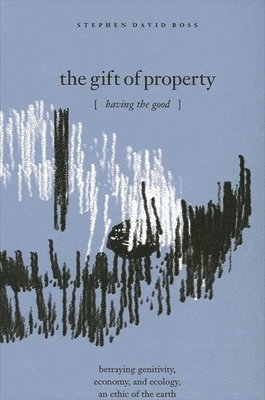
Gift of Property
Having the Good / betraying genitivity, economy and ecology, an ethic of the earth
Häftad, Engelska, 2001
402 kr
Tillfälligt slut
Explores the human propensity for owning and having.This is the fifth volume in an ongoing project reexamining the philosophic tradition from the standpoint of the good. The ongoing project seeks to understand humanity's relation to nature in a profoundly ethical way. This volume develops an understanding in ecological terms. It does so by examining the notion of giving in relation to having, calling into question the ways in which being human, and being itself, have been understood in terms of what one must have and possess in order to live well-goods, qualities, a body, a dwelling, freedom, land, children, family, things, knowledge, power, authenticity-all forms of genitivity. Having is explored in terms of ecstasy, squander, generosity, and sustenance, then as betrayal and forgiveness. Betrayal is understood as the expressiveness of things, always promised to circulation in abundance beyond containment, use or profit: the circulation of goods and commodities together with the circulation of images, meanings, language, and writing.
647 kr
Skickas inom 10-15 vardagar
At a time when the metaphysical tradition is being called profoundly into question by proponents of pragmatism and continental philosophy, Inexhaustibility and Human Being examines a specific aspect of metaphysics: the nature of being human, acknowledging the force of these critiques and discussing their ramifications. Exploring the possibility of a systematic metaphysics that acknowledges the limits of every thought, the book offers a metaphysics of human being based on locality and inexhaustibility. Its major focus is on a corresponding "anthropology" in which human being is both local and exhaustive – that is, based on limitation and on the limitation of limitation. Among the book's major topics are: being as locality and inexhaustibility; human being as judgment and perspective; knowing and reason as query; language and meaning as semasis; emotion; sociality; politics; life and death. Clearly written, and wide-ranging in scope, Inexhaustibility and Human Being covers a multitude of subjects – history, love, sexuality, consciousness, suffering, the body, instrumentality, government, and law – in the development of its thesis. The book will appeal not only to philosophers – but also to those involved in studying the various arenas of human activity Professor Ross examines.
603 kr
Skickas inom 7-10 vardagar
The Limits of Language concerns itself with the nature and limits of language at a time when our understanding of the world and of ourselves is intimately related to what we understand of language.
594 kr
Skickas inom 10-15 vardagar
This work completes Ross's trilogy examining the inexhaustible complexity of the world and our relation to our surroundings.
1 057 kr
Tillfälligt slut
"This is my major thesis. Mystery is inherent in both the nature of things and the nature of rationality. I will sustain this thesis by a review of some of the central issues of philosophy to elucidate their mysterious qualities. More important, however, I will develop in detail an explanation of mystery and trace some of its important ramifications.""I will argue that an ordinal metaphysics, with its associated theory of query, provides an account of mystery that no other theory can provide."While the theory presented here is a theory of philosophical mystery, it has fundamental implications for all branches of knowledge, including the physical and social sciences."In short, I speak against a simplistic view of the world and of experience based on a simplistic and narrow conception of understanding and rationality. Mystery calls not for veneration and awe, but for a full and complex activity of mind, broaching all established conditions in its pursuit of answers....Reason is fulfilled as completely in mysteries which persevere throughout our efforts to resolve them as in mysteries which are resolved and dissipated, passing into new questions to which we must find new answers, in an unterminating process of rational interrogation." - From the Preface by Stephen David Ross
376 kr
Tillfälligt slut
"This is my major thesis. Mystery is inherent in both the nature of things and the nature of rationality. I will sustain this thesis by a review of some of the central issues of philosophy to elucidate their mysterious qualities. More important, however, I will develop in detail an explanation of mystery and trace some of its important ramifications.""I will argue that an ordinal metaphysics, with its associated theory of query, provides an account of mystery that no other theory can provide."While the theory presented here is a theory of philosophical mystery, it has fundamental implications for all branches of knowledge, including the physical and social sciences."In short, I speak against a simplistic view of the world and of experience based on a simplistic and narrow conception of understanding and rationality. Mystery calls not for veneration and awe, but for a full and complex activity of mind, broaching all established conditions in its pursuit of answers....Reason is fulfilled as completely in mysteries which persevere throughout our efforts to resolve them as in mysteries which are resolved and dissipated, passing into new questions to which we must find new answers, in an unterminating process of rational interrogation." - From the Preface by Stephen David Ross
394 kr
Tillfälligt slut
The richness of art is manifested in contrast: contrast with other works of art, other features of human experience, other times and places, and other forms of judgment and understanding. The possibilities of contrast are inexhaustible. Every being shares this inexhaustibility of openness to novel possibilities, although inexhaustibility is most fully realized in art.The general theory of art and aesthetic value developed in this book is based on the notions of inexhaustibility and contrast and has important forebears in Kant, Coleridge, and Whitehead. The theory allows art to be located relative to otheR spheres of judgment-science, action, and philosophy. The theory allows a new perspective on interpretation and criticism. Ross presents and defines a new synthetic form of understanding works of art that offers an alternative to the skepticism that haunts so many theories of interpretation.
1 057 kr
Tillfälligt slut
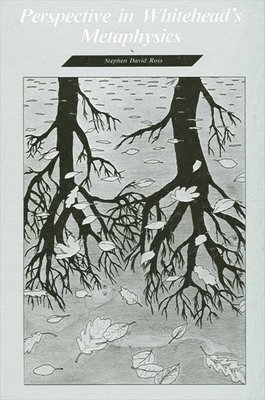
Stephen David Ross presents an extensive, detailed, and critical interpretation of Whitehead's mature thought, emphasizing the fundamental role of perspective in Whitehead's cosmology, and tracing the conflicts and difficulties therein to tensions involving perspective in relation to other central features of Whitehead's thought. Ross isolates four principles as having a fundamental role in whitehead's metaphysics: perspective, cosmology, experience, and mechanical analysis. He argues that many of Whitehead's difficulties can be eliminated by raising the principle of perspective to prominence and by revising the other central features of Whitehead's theory accordingly.This book addresses key Whiteheadian texts and secondary interpretations of Whitehead. The discussion ranges over most of Whitehead's theory in Process and Reality, and offers a number of significant and, in some cases, novel views on different aspects of Whitehead's theory: perception, prehension, causation, objective immortality, self-causation, the extensive continuum, natural order, possiblity, concreteness, and God. Ross's concluding suggestions for modifying Whitehead's system promise to occasion much debate among process philosophers, theologians, and anyone concerned with Whitehead's thought.
983 kr
Tillfälligt slut
Explores how we might think and live in the enchantment of the secular, modern world.Taking his departure from Max Weber's famous description of the world as disenchanted, by which he meant that everything could now be accounted for by theoretical and empirical science, Stephen David Ross asks how we might think and live in the enchantment of the secular, modern world. Enchanting offers a three-fold response: first, it takes seriously Weber's claim and seeks to understand what is important about the disenchantment of the world; second, it takes seriously the ways in which the world exceeds its disenchantments (which is to say that the world, along with everything in it, is both disenchanted and enchanted, unaccountable in myriad ways); and third, it takes seriously the possibility that we cannot express enchantment in a disenchanted voice (which is to say that the voice in which it is written is evocative and poetic while at the same time concerned with understanding and explaining). One of the book's most provocative claims is that all the posts of our time-including postmodernity, poststructuralism, postcoloniality, postmarxism, postsecularity, postcritique, postgender, postchristianity-are concerned with ways to think about enchanting.Among the topics explored are the death of nature in the advance of modern science, the uncertainties of truth, infinite and immeasurable ethics, the enchantments of art, the magic and provocation of human and other material bodies, and finally the excessiveness of things under the heading of betraying, understood as the nonidentity of every identity with itself. Everything is other to itself-uncertain, unthinkable, unspeakable, yet expressive-and Enchanting offers a thoughtful approach to understanding the ordinary things of the world as extraordinary in unlimited ways.
356 kr
Tillfälligt slut
Explores how we might think and live in the enchantment of the secular, modern world.Taking his departure from Max Weber's famous description of the world as disenchanted, by which he meant that everything could now be accounted for by theoretical and empirical science, Stephen David Ross asks how we might think and live in the enchantment of the secular, modern world. Enchanting offers a three-fold response: first, it takes seriously Weber's claim and seeks to understand what is important about the disenchantment of the world; second, it takes seriously the ways in which the world exceeds its disenchantments (which is to say that the world, along with everything in it, is both disenchanted and enchanted, unaccountable in myriad ways); and third, it takes seriously the possibility that we cannot express enchantment in a disenchanted voice (which is to say that the voice in which it is written is evocative and poetic while at the same time concerned with understanding and explaining). One of the book's most provocative claims is that all the posts of our time-including postmodernity, poststructuralism, postcoloniality, postmarxism, postsecularity, postcritique, postgender, postchristianity-are concerned with ways to think about enchanting.Among the topics explored are the death of nature in the advance of modern science, the uncertainties of truth, infinite and immeasurable ethics, the enchantments of art, the magic and provocation of human and other material bodies, and finally the excessiveness of things under the heading of betraying, understood as the nonidentity of every identity with itself. Everything is other to itself-uncertain, unthinkable, unspeakable, yet expressive-and Enchanting offers a thoughtful approach to understanding the ordinary things of the world as extraordinary in unlimited ways.
356 kr
Tillfälligt slut
Explores themes of dispossession, shattering, and fragmentation that arise in contemporary writings from the point of view of the selves whose subjectivities and practices are said to be fragmented, shattered, and dispossessed.In this book Stephen David Ross explores themes of dispossession, shattering, and fragmentation that arise in contemporary writings from the point of view of the selves whose subjectivities and practices are said to be fragmented, shattered, and dispossessed. He thereby addresses the question of what it might mean to be a poststructuralist, postmodern, post-enlightenment, post-religious, postcolonial, or post-capitalist self (if there be such) in the context of worldwide changes in thought and practice that have occurred in the interstices of global developments and local traditions. One of his major concerns is with a self in the world with relations that surpass relations with other human beings, an ethical, caring, relational self that inhabits the earth with other creatures and things, a self with ecological relations. Ross argues that ethical, political, social, religious, and ecological concerns cannot be separated from the images, representations, and discourses that frame the contemporary world, that a self must relate to itself and others in aesthetic, mimetic, imagistic terms if it is to address questions of identity, identification, and responsibility; moreover that such images, identifications, and representations are, in Derrida's words, not only human, that they disrupt the categories of humanity and nature. In this way, boundaries that separate selves from others, humans from nature, finite from infinite, present themselves for crossing and double crossing.The book continues the themes of giving, generosity, betrayal, forgiveness, responsibility, relationality, and the good developed in his previous writings, especially the five volumes of the gift series (The Gift of Beauty: The Good as Art; The Gift of Truth: Gathering the Good; The Gift of Touch: Embodying the Good; The Gift of Kinds: The Good in Abundance, an ethic of the earth; The Gift of Property: Having the Good, betraying genitivity, economy, and ecology, an ethic of the earth) and the three immediately preceding volumes (The Ring of Representation; Injustice and Restitution: The Ordinance of Time; Plenishment in the Earth: An Ethic of Inclusion). Ross explores these themes here in relation to the possibilities of life for a self among others in the world.The book proceeds from the themes of care of self and technologies of self developed in Foucault's later writings, preceded by an examination of the notion of sôphrosunê in Plato's Charmides. These themes are framed from the beginning by Derrida's writings on responsibility-its impossibilities, temptations, and excesses-and by Levinas's insistence that the self, the ego, is composed by relations toward the other, in alterity. It is not I who decides to accept my responsibilities toward my neighbor but those responsibilities determine who and what I am. The self is not constituted by what it has or possesses but by generosity beyond itself. In this double sense, from Levinas and Derrida, the self is constituted by relations with others that exceed any categories and measures. This excess of relation and expression pervades all things.The major themes of the book are named in the chapter titles (slightly amended): I myself, self knowledge, self care, self identity, self image, self love, self possession, self and others, self and world, shattering, emptiness, responsiveness, self betrayal. Betrayal is taken from Levinas as exposition-exposure and expression-reworked in relation to Derrida as performativity and responsibility. It strongly retains its double meaning as violation and revelation. Generosity and forgiveness are situated in the space where the self betrays itself.Authors discussed at length are Plato, Nietzsche, Levinas, Derrida, Foucault, Freud (together with Erikson and Lacan), Blanchot, Nancy, and Irigaray, with extended references to Spinoza, Heidegger, Sartre, Beauvoir, and Deleuze and Guattari. Throughout, Ross discusses writings that pertain to other cultures-African and Asian-to further complicate the discussions.A long chapter is devoted to Buddhist themes of emptiness, nonattachment, and nonself in relation to the shattering, fragmentation, and dispossession of the modern self, exploring how Buddhism and other Asian texts and practices may define a different multiple, relational sense of self in some of the countries in which they have become socially widespread. This discussion concerns itself in part with ways in which continental writings on self and other retain a European, Christian, and Enlightenment attachment to individuals, persons, and selves. In return, however, the discussion also examines how Buddhist and other views of self that may have in some respects achieved a far greater multiplicity and relationality than European views become captive to social and political developments that frequently appear incompatible with their central tenetsThe author's hope is that the social-ethical-political critique that emerges from post-enlightenment critiques of modernity can be brought into relation with themes of emptiness and nonattachment in productive ways. His goal is to open up discussions of self and world that move beyond the boundaries that have framed them historically.

356 kr
Tillfälligt slut
Re-calling time lost.To un-forget is to return from forgetting, to re-member nothing as if it were anything, to interpret oblivion with exposition, to re-call the sound of silence and unearth the depth of loss.
521 kr
Skickas inom 10-15 vardagar
502 kr
Skickas
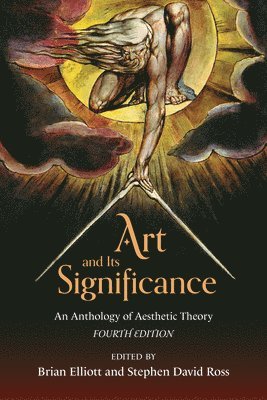
A topical, art-practice focused anthology that caters to diverse interests in aesthetics.Art and Its Significance is a highly engaging and readable anthology, which ranges from ancient Greek writing on epic and theater to contemporary issues relating to how art is impacted by augmented reality technologies. This collection offers a firm foundation in classic and modern aesthetics by a diverse range of authors from Plato and Aristotle to Judith Butler, Jacques Rancière, and Mary Devereaux. Its thematic organization allows readers to focus on particular topics and genres and make connections between different approaches to a wide range of artistic expression. Each article is introduced with details on the author and a summary of the main arguments offered in the text. Additional section introductions help the reader to understanding how the grouped texts relate to one another. This anthology does not assume prior knowledge of philosophy or aesthetics and is well suited to college course use.