Stephen E. Gottlieb - Böcker
Visar alla böcker från författaren Stephen E. Gottlieb. Handla med fri frakt och snabb leverans.
4 produkter
4 produkter
1 170 kr
Skickas inom 10-15 vardagar
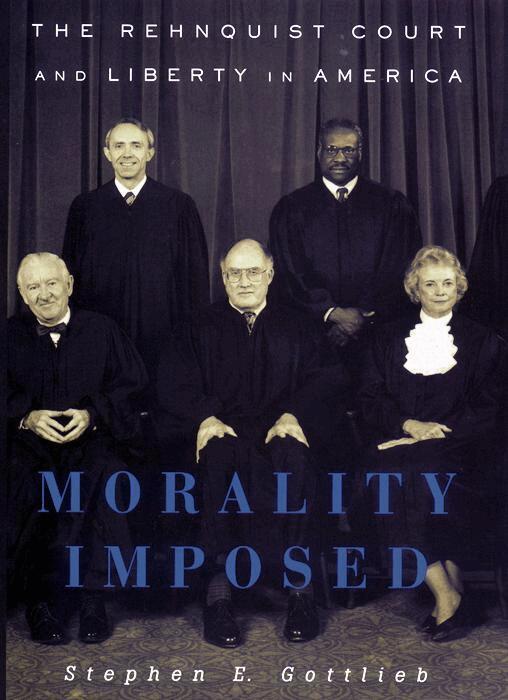
We like to think of judges and justices as making decisions based on the facts and the law. But to what extent do jurists decide cases in accordance with their own preexisting philosophy of law, and what specific ideological assumptions account for their decisions?Stephen E. Gottlieb adopts a unique perspective on the decision-making of Supreme Court justices, blending and re-characterizing traditional accounts of political philosophy in a way that plausibly explains many of the justices' voting patterns. A seminal study of the Rehnquist Court, Morality Imposed illustrates how, in contrast to previous courts which took their mandate to be a move toward a freer and/or happier society, the current court evidences little concern for this goal, focusing instead on thinly veiled moral judgments. Delineating a fault line between liberal and conservative justices on the Rehnquist Court, Gottlieb suggests that conservative justices have rejected the basic principles that informed post-New Deal individual rights jurisprudence and have substituted their own conceptions of moral character for these fundamental principles.Morality Imposed adds substantially to our understanding of the Supreme Court, its most recent cases, and the evolution of judicial philosophy in the U.S.
876 kr
Skickas inom 10-15 vardagar
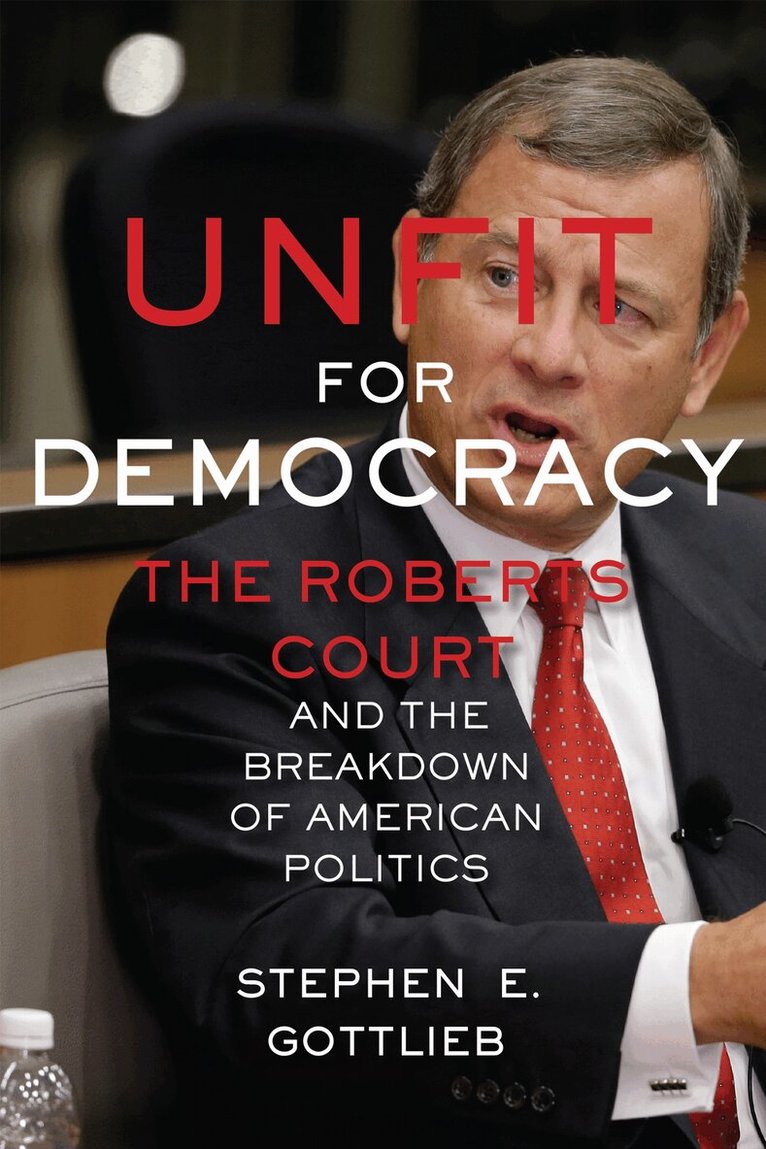
Asked if the country was governed by a republic or a monarchy, Benjamin Franklin replied, "A republic, if you can keep it."Since its founding, Americans have worked hard to nurture and protect their hard-won democracy. And yet few consider the role of constitutional law in America's survival. In Unfit for Democracy, Stephen Gottlieb argues that constitutional law without a focus on the future of democratic government is incoherent—illogical and contradictory. Approaching the decisions of the Roberts Court from political science, historical, comparative, and legal perspectives, Gottlieb highlights the dangers the court presents by neglecting to interpret the law with an eye towards preserving democracy.A senior scholar of constitutional law, Gottlieb brings a pioneering will to his theoretical and comparative criticism of the Roberts Court. The Roberts Court decisions are not examined in a vacuum but instead viewed in light of constitutional politics in India, South Africa, emerging Eastern European nations, and others. While constitutional decisions abroad have contributed to both the breakdown and strengthening of democratic politics, decisions in the Roberts Court have aggravated the potential destabilizing factors in democratic governments. Ultimately, Unfit for Democracy calls for an interpretation of the Constitution that takes the future of democracy seriously. Gottlieb warns that the Roberts Court's decisions have hurt ordinary Americans economically, politically, and in the criminal process. They have damaged the historic American melting pot, increased the risk of anti-democratic paramilitaries, and clouded the democratic future.
491 kr
Skickas inom 5-8 vardagar
The United States Supreme Court's relegation of many rights to definition under state constitutional law, combined with the tendency of recent administrations to entrust the states with the task of preserving individual rights, is increasingly making state constitutions the arena where the battles to preserve the rights to life, liberty, property, due process, and equal protection of laws must be fought.Ranging in time from the late 1700s to the late 1900s, Toward a Usable Past offers a series of case studies that examine the protection afforded individual rights by state constitutions and state constitutional law. As it explores the history of liberty at the state level, this volume also investigates the promise and risks of turning to state constitutions to guarantee and expand individual rights.In this book, major scholars and legal practitioners discuss state protections of civil liberty, and ponder the contemporary implications of the state record. The cases examined cover topics ranging from religion in schools during the Federalist era to criminal justice in the late nineteenth century, from racial integration in Kansas before Brown v. Board of Education to legal battles over birth control in the Connecticut Supreme Court.The introduction presents the historical and contemporary significance of the topic and traces the evolution of the federal constitutional law establishing the parameters of state regulation of individual rights.
308 kr
Skickas inom 7-10 vardagar
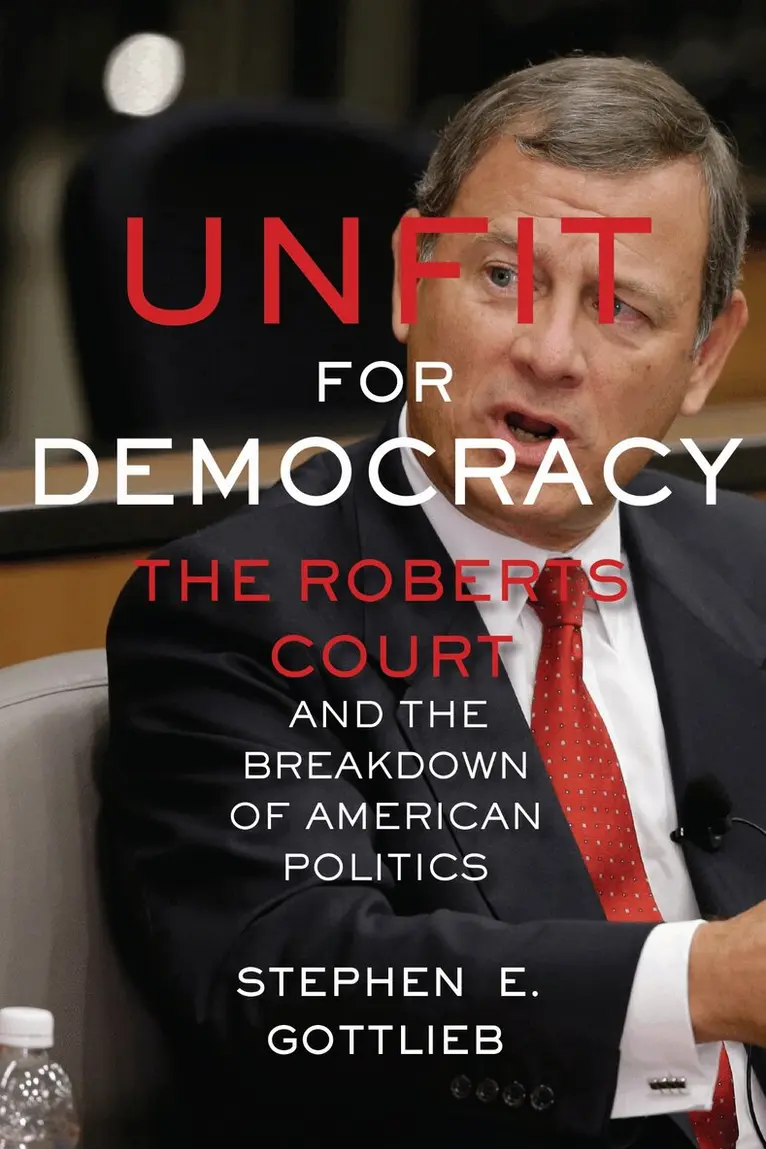
Asked if the country was governed by a republic or a monarchy, Benjamin Franklin replied, "A republic, if you can keep it."Since its founding, Americans have worked hard to nurture and protect their hard-won democracy. And yet few consider the role of constitutional law in America's survival. In Unfit for Democracy, Stephen Gottlieb argues that constitutional law without a focus on the future of democratic government is incoherent—illogical and contradictory. Approaching the decisions of the Roberts Court from political science, historical, comparative, and legal perspectives, Gottlieb highlights the dangers the court presents by neglecting to interpret the law with an eye towards preserving democracy.A senior scholar of constitutional law, Gottlieb brings a pioneering will to his theoretical and comparative criticism of the Roberts Court. The Roberts Court decisions are not examined in a vacuum but instead viewed in light of constitutional politics in India, South Africa, emerging Eastern European nations, and others. While constitutional decisions abroad have contributed to both the breakdown and strengthening of democratic politics, decisions in the Roberts Court have aggravated the potential destabilizing factors in democratic governments. Ultimately, Unfit for Democracy calls for an interpretation of the Constitution that takes the future of democracy seriously. Gottlieb warns that the Roberts Court's decisions have hurt ordinary Americans economically, politically, and in the criminal process. They have damaged the historic American melting pot, increased the risk of anti-democratic paramilitaries, and clouded the democratic future.