Stephen F. Eisenman - Böcker
Visar alla böcker från författaren Stephen F. Eisenman. Handla med fri frakt och snabb leverans.
5 produkter
5 produkter
645 kr
Tillfälligt slut
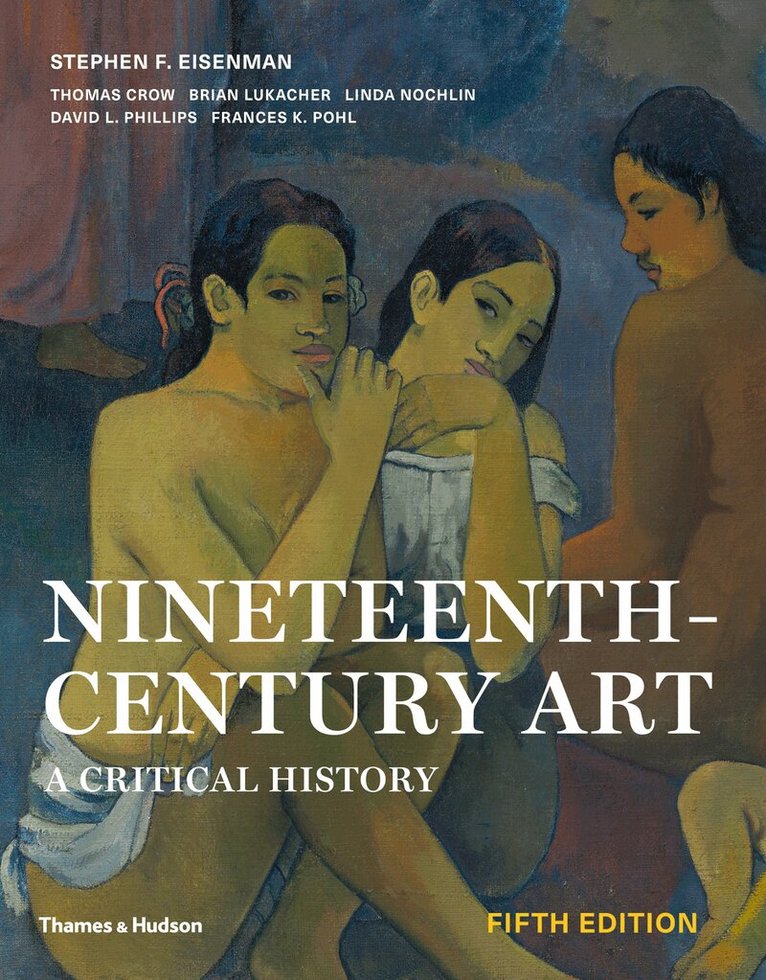
Written by a group of highly respected art historians, the fifth edition of this classic book now features full-colour artworks throughout, new chapter introductions, examinations of key ideas, and other helpful pedagogical support. Emphasizing the vitality of 19th-century art, the authors demonstrate how paintings, sculptures, prints and drawings by David, Géricault, Turner, Homer, Cassatt, Rodin, Van Gogh and many others remain relevant today. Using evocative and lucid prose, the authors reveal how concerns about class and gender, race and ethnicity, modernity and tradition, and popular and elite culture – ideas that arose in the course of the 19th century – motivated artists and propelled the movements under review.
453 kr
Skickas inom 7-10 vardagar
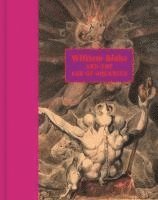
A stunningly illustrated look at how Blake's radical vision influenced artists of the Beat generation and 1960s counterculture In his own lifetime, William Blake (1757-1827) was a relatively unknown nonconventional artist with a strong political bent. William Blake and the Age of Aquarius is a beautifully illustrated look at how, some two hundred years after his birth, the antiestablishment values embodied in Blake's art and poetry became a model for artists of the American counterculture. This book provides new insights into the politics and protests of Blake's own lifetime, and the generation of artists who revived and reimagined his work in the mid-1940s through 1970, or what might be called the "long sixties." Contributors explore Blake's outsider status in Georgian England and how his individualistic vision spoke to members of the Beat Generation, hippies, radical poets and writers, and other voices of the counterculture.Among the artists, musicians, and writers who looked to Blake were such diverse figures as Diane Arbus, Jay DeFeo, the Doors, Sam Francis, Allen Ginsberg, Jess, Agnes Martin, Ad Reinhardt, Charles Seliger, Maurice Sendak, Robert Smithson, Clyfford Still, and many others. This book also explores visual cultures around such galvanizing moments of the 1960s as Woodstock and the Summer of Love. William Blake and the Age of Aquarius shows how Blake's myths, visions, and radicalism found new life among American artists who valued individualism and creativity, explored expanded consciousness, and celebrated youth, peace, and the power of love in a turbulent age. Exhibition schedule: Mary and Leigh Block Museum of Art, Northwestern University September 23, 2017-March 11, 2018
169 kr
Skickas inom 7-10 vardagar
180 kr
Skickas inom 7-10 vardagar
The line between punishment and torture can be thin, but the entire world agreed it was crossed at Abu Ghraib. Or was it? George W. Bush emerged from the scandal relatively unscathed, winning a second term months later, only a few low-ranking soldiers involved in the crimes were prosecuted, and the issue went almost entirely unmentioned during the mid-term elections in 2006. Where was the public outcry? Why was the American public largely unmoved by the images of torture and humiliation? Stephen F. Eisenman posits an unsettling explanation, which is rooted in the character of the Abu Ghraib photographs themselves.Eisenman argues that the complex of violent and sexual motifs found in the photographs constitutes the ‘Abu Ghraib effect’, an instance of a longstanding Western ‘pathos formula’, whereby victims are shown taking pleasure in their own chastisement and pain. The cruel formula is widespread in the history of art and visual culture from Hellenistic Greece to modern times, and generally serves as an instrument of imperialist self-justification and racist violence. But Eisenman also argues that it has not gone unchallenged. Artists from Hogarth and Goya to Picasso and Leon Golub, as well as other dissidents, have worked assiduously to undermine this vicious tradition of torture images.By identifying the pathos formula at work in the Abu Ghraib images, and by explaining how this insidious form of visual propaganda has been resisted, Eisenman points the way towards a more effective use of political images in the war against the war on terror.
426 kr
Skickas
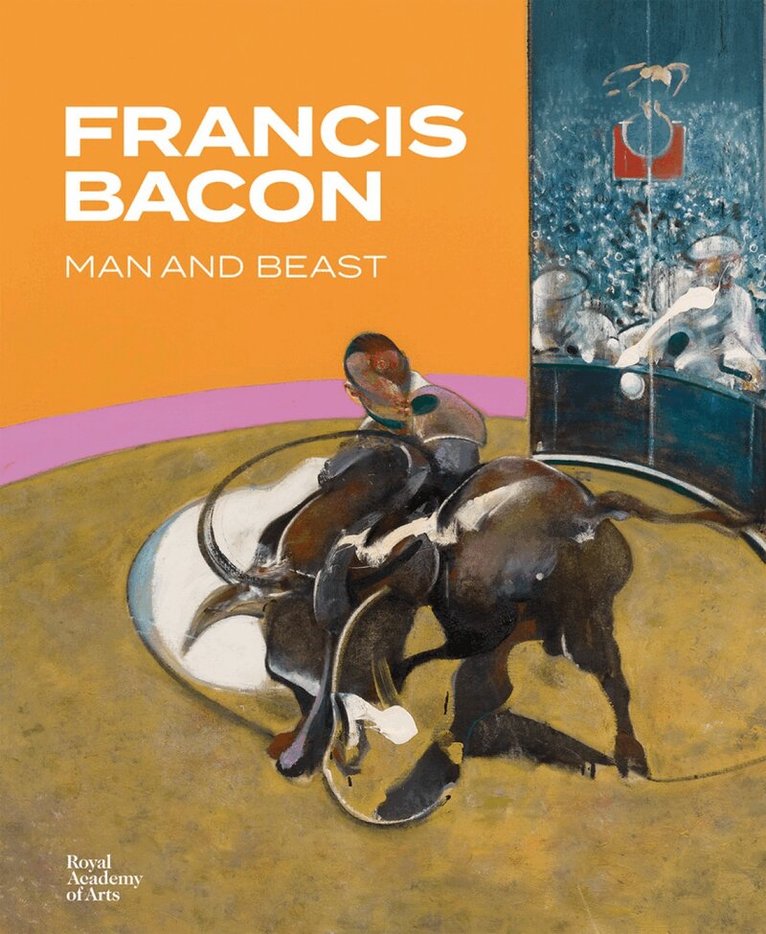
Francis Bacon is considered one of the most important painters of the 20th century. A major exhibition of his paintings at the Royal Academy of Arts, planned for 2020 but postponed because of the pandemic, explores the role of animals in his work – not least the human animal.Having often painted dogs and horses, in 1969 Bacon first depicted bullfights. In this powerful series of works, the interaction between man and beast is dangerous and cruel, but also disturbingly intimate. Both are contorted in their anguished struggle, and the erotic lurks not far away: ‘Bullfighting is like boxing,’ Bacon once said. ‘A marvellous aperitif to sex.’ Twenty-two years later, a lone bull was to be the subject of his final painting.In this fascinating publication – a significant addition to the literature on Bacon – expert authors discuss Bacon’s approach to animals and identify his varied sources of inspiration, which included wildlife photography and the motion studies of Eadweard Muybridge. They contend that, by considering animals in states of vulnerability, anger and unease, Bacon was able to lay bare the role of instinctual behaviour in the human condition.Images below, left to right:Francis Bacon (1909-1992), Fragment of a Crucifixion, 1950. Oil and cotton wool on canvas, 140 x 108.5 cm. Stedelijk van Abbemuseum, Eindhoven. Photo Hugo MaertensFrancis Bacon (1909-1992), Study for Portrait (with Two Owls), 1963. Oil on canvas, 198.1 x 144.8 cm. Private collection. Photo Prudence Cuming Associates LtdFrancis Bacon (1909-1992), Man with Dog, 1953. Oil on canvas, 152 x 117 cm. Albright-Knox Art Gallery, Buffalo, New York. Gift of Seymour H. Knox Jr, 1955, inv. K1955:3. Photo Prudence Cuming Associates LtdAll images © The Estate of Francis Bacon. All rights reserved, DACS/Artimage 2020.