Stephen M Walt - Böcker
Visar alla böcker från författaren Stephen M Walt. Handla med fri frakt och snabb leverans.
8 produkter
8 produkter
186 kr
Skickas
Does America’s pro-Israel lobby wield inappropriate control over US foreign policy?This book has created a storm of controversy by bringing out into the open America’s relationship with the Israel lobby: a loose coalition of individuals and organizations that actively work to shape foreign policy in a way that is profoundly damaging both to the United States and Israel itself. Israel is an important, valued American ally, yet Mearsheimer and Walt show that, by encouraging unconditional US financial and diplomatic support for Israel and promoting the use of its power to remake the Middle East, the lobby has jeopardized America’s and Israel’s long-term security and put other countries – including Britain – at risk.
239 kr
Skickas inom 3-6 vardagar
What is the impact of the Israel lobby on U.S. foreign policy and is it in America's national interest?
286 kr
Skickas inom 5-8 vardagar
At a time when America's dominance abroad was being tested like never before, Taming American Power provided for the first time a "rigorous critique of current U.S. strategy" (Washington Post Book World) from the vantage point of its fiercest opponents. Stephen M. Walt examines America's place as the world's singular superpower and the strategies that rival states have devised to counter it. Hailed as a "landmark book" by Foreign Affairs, Taming American Power makes the case that this ever-increasing tide of opposition not only could threaten America's ability to achieve its foreign policy goals today but also may undermine its dominant position in years to come.
605 kr
Skickas inom 10-15 vardagar
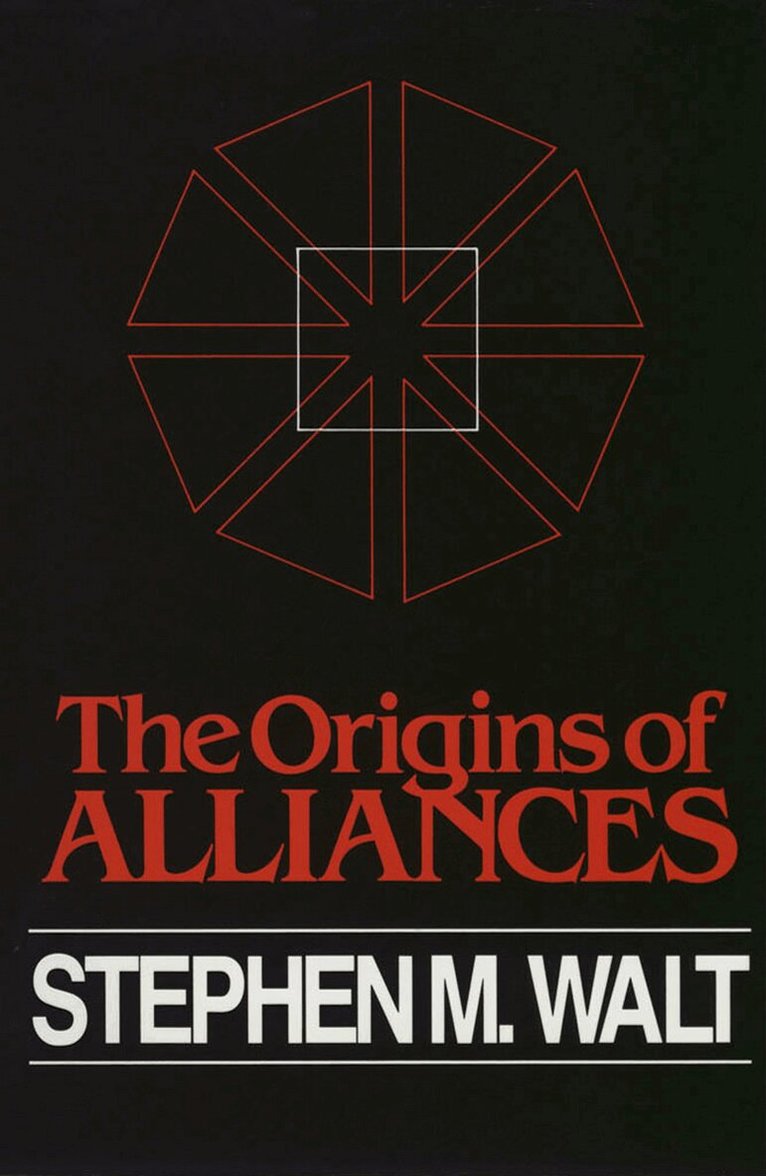
"The Origins of Alliances offers a different way of thinking about our security and thus about our diplomacy. It ought to be read by anyone with a serious interest in understanding why our foreign policy is so often self-defeating."―New RepublicHow are alliances made? In this book, Stephen M. Walt makes a significant contribution to this topic, surveying theories of the origins of international alliances and identifying the most important causes of security cooperation between states. In addition, he proposes a fundamental change in the present conceptions of alliance systems. Contrary to traditional balance-of-power theories, Walt shows that states form alliances not simply to balance power but in order to balance threats.Walt begins by outlining five general hypotheses about the causes of alliances. Drawing upon diplomatic history and a detailed study of alliance formation in the Middle East between 1955 and 1979, he demonstrates that states are more likely to join together against threats than they are to ally themselves with threatening powers. Walt also examines the impact of ideology on alliance preferences and the role of foreign aid and transnational penetration. His analysis show, however, that these motives for alignment are relatively less important. In his conclusion, he examines the implications of "balance of threat" for U.S. foreign policy.
697 kr
Skickas inom 10-15 vardagar
Revolution within a state almost invariably leads to intense security competition between states, and often to war. In Revolution and War, Stephen M. Walt explains why this is so, and suggests how the risk of conflicts brought on by domestic upheaval might be reduced in the future. In doing so, he explores one of the basic questions of international relations: What are the connections between domestic politics and foreign policy?Walt begins by exposing the flaws in existing theories about the relationship between revolution and war. Drawing on the theoretical literature about revolution and the realist perspective on international politics, he argues that revolutions cause wars by altering the balance of threats between a revolutionary state and its rivals. Each state sees the other as both a looming danger and a vulnerable adversary, making war seem both necessary and attractive.Walt traces the dynamics of this argument through detailed studies of the French, Russian, and Iranian revolutions, and through briefer treatment of the American, Mexican, Turkish, and Chinese cases. He also considers the experience of the Soviet Union, whose revolutionary transformation led to conflict within the former Soviet empire but not with the outside world. An important refinement of realist approaches to international politics, this book unites the study of revolution with scholarship on the causes of war.
435 kr
Skickas inom 10-15 vardagar
Revolution within a state almost invariably leads to intense security competition between states, and often to war. In Revolution and War, Stephen M. Walt explains why this is so, and suggests how the risk of conflicts brought on by domestic upheaval might be reduced in the future. In doing so, he explores one of the basic questions of international relations: What are the connections between domestic politics and foreign policy?Walt begins by exposing the flaws in existing theories about the relationship between revolution and war. Drawing on the theoretical literature about revolution and the realist perspective on international politics, he argues that revolutions cause wars by altering the balance of threats between a revolutionary state and its rivals. Each state sees the other as both a looming danger and a vulnerable adversary, making war seem both necessary and attractive.Walt traces the dynamics of this argument through detailed studies of the French, Russian, and Iranian revolutions, and through briefer treatment of the American, Mexican, Turkish, and Chinese cases. He also considers the experience of the Soviet Union, whose revolutionary transformation led to conflict within the former Soviet empire but not with the outside world. An important refinement of realist approaches to international politics, this book unites the study of revolution with scholarship on the causes of war.
382 kr
Skickas inom 10-15 vardagar
"The Origins of Alliances offers a different way of thinking about our security and thus about our diplomacy. It ought to be read by anyone with a serious interest in understanding why our foreign policy is so often self-defeating."―New RepublicHow are alliances made? In this book, Stephen M. Walt makes a significant contribution to this topic, surveying theories of the origins of international alliances and identifying the most important causes of security cooperation between states. In addition, he proposes a fundamental change in the present conceptions of alliance systems. Contrary to traditional balance-of-power theories, Walt shows that states form alliances not simply to balance power but in order to balance threats.Walt begins by outlining five general hypotheses about the causes of alliances. Drawing upon diplomatic history and a detailed study of alliance formation in the Middle East between 1955 and 1979, he demonstrates that states are more likely to join together against threats than they are to ally themselves with threatening powers. Walt also examines the impact of ideology on alliance preferences and the role of foreign aid and transnational penetration. His analysis show, however, that these motives for alignment are relatively less important. In his conclusion, he examines the implications of "balance of threat" for U.S. foreign policy.
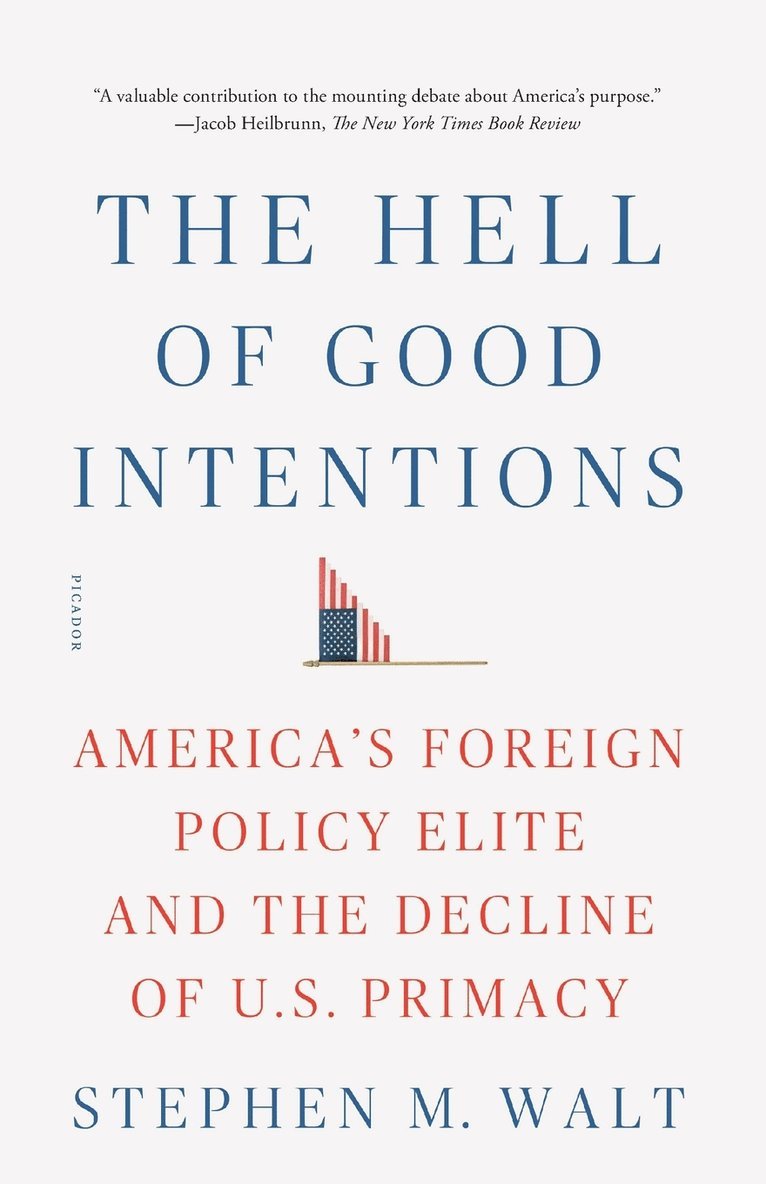
The Hell of Good Intentions: America's Foreign Policy Elite and the Decline of U.S. Primacy
Häftad, Engelska, 2019
259 kr
Skickas inom 3-6 vardagar