Stephen Polasky - Böcker
Visar alla böcker från författaren Stephen Polasky. Handla med fri frakt och snabb leverans.
4 produkter
4 produkter
2 454 kr
Skickas inom 5-8 vardagar
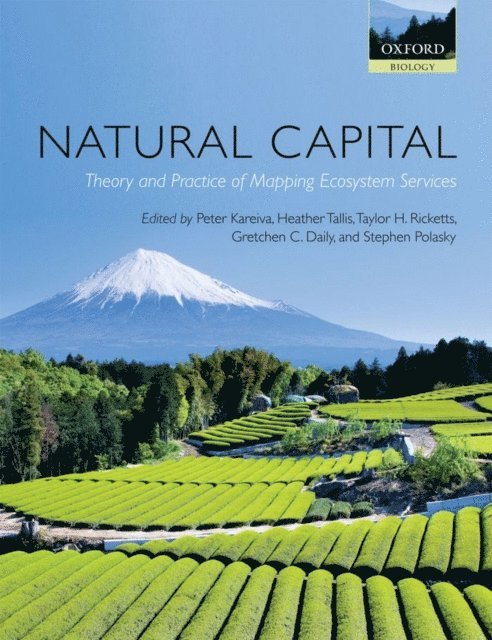
In 2005, The Millennium Ecosystem Assessment (MA) provided the first global assessment of the world's ecosystems and ecosystem services. It concluded that recent trends in ecosystem change threatened human wellbeing due to declining ecosystem services. This bleak prophecy has galvanized conservation organizations, ecologists, and economists to work toward rigorous valuations of ecosystem services at a spatial scale and with a resolution that can inform public policy. The editors have assembled the world's leading scientists in the fields of conservation, policy analysis, and resource economics to provide the most intensive and best technical analyses of ecosystem services to date. A key idea that guides the science is that the modelling and valuation approaches being developed should use data that are readily available around the world. In addition, the book documents a toolbox of ecosystem service mapping, modeling, and valuation models that both The Nature Conservancy and the World Wide Fund for Nature (WWF) are beginning to apply around the world as they transform conservation from a biodiversity only to a people and ecosystem services agenda. The book addresses land, freshwater, and marine systems at a variety of spatial scales and includes discussion of how to treat both climate change and cultural values when examining tradeoffs among ecosystem services.
987 kr
Skickas inom 7-10 vardagar
In 2005, The Millennium Ecosystem Assessment (MA) provided the first global assessment of the world's ecosystems and ecosystem services. It concluded that recent trends in ecosystem change threatened human wellbeing due to declining ecosystem services. This bleak prophecy has galvanized conservation organizations, ecologists, and economists to work toward rigorous valuations of ecosystem services at a spatial scale and with a resolution that can inform public policy. The editors have assembled the world's leading scientists in the fields of conservation, policy analysis, and resource economics to provide the most intensive and best technical analyses of ecosystem services to date. A key idea that guides the science is that the modelling and valuation approaches being developed should use data that are readily available around the world. In addition, the book documents a toolbox of ecosystem service mapping, modeling, and valuation models that both The Nature Conservancy and the World Wide Fund for Nature (WWF) are beginning to apply around the world as they transform conservation from a biodiversity only to a people and ecosystem services agenda. The book addresses land, freshwater, and marine systems at a variety of spatial scales and includes discussion of how to treat both climate change and cultural values when examining tradeoffs among ecosystem services.
1 035 kr
Skickas inom 7-10 vardagar
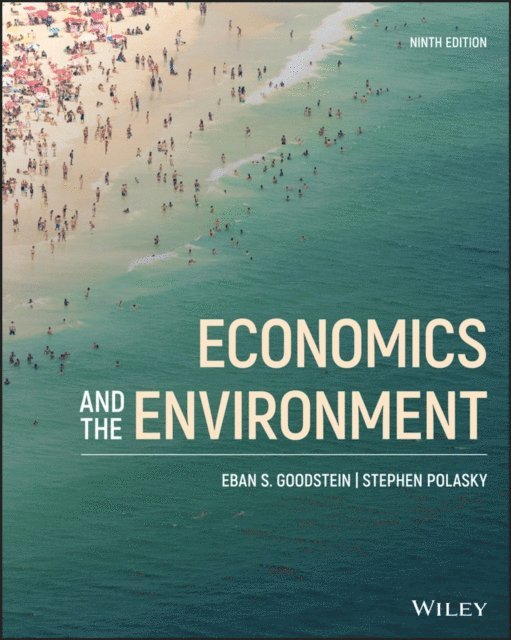
Now in its ninth edition, Economics and the Environment offers an accessible approach to the latest debates, concerns, standards, and legislation related to contemporary environmental issues. Featuring new and updated content throughout, this student-friendly textbook organizes its discussion around four specific questions — How much pollution is too much? Is the government up to the job? How can we do better? How can we resolve global issues? — to provide an inclusive and highly-engaging examination of environmental economics. Following a unique four-question format, the text provides an integrated pedagogy that is simpler and more useful than a “topics” approach to the subject. Students are encouraged to discuss the government’s role in environmental policy, the benefits and costs of environmental protection, methods for promoting clean technology and sustainability, global pollution and resource issues, environmental justice and ethics, and more. Throughout the text, illustrative examples and real-world case studies are complemented by end-of-chapter problems and exercises that both strengthen student comprehension and increase retention.
1 052 kr
Skickas inom 7-10 vardagar
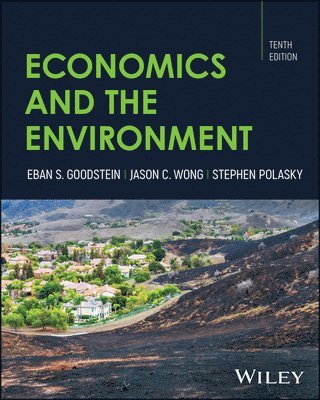
Enables students to understand and shape environmental policy through economics Economics and the Environment equips students with a structured and insightful approach to examining critical questions at the heart of contemporary policy and sustainability debates through the lens of economics. Empowering students to evaluate real-world issues while building a strong foundation in environmental economics, this popular textbook explores critical questions such as “How much pollution is too much?” and “Is the government up to the job?” The fully updated tenth edition of Economics and the Environment combines theoretical rigor with practical application, employing case studies, illustrative examples, and end-of-chapter exercises that enhance understanding and retention. Each concise chapter is designed to foster critical thinking, covering topics including pollution control, government policy, clean technology, and sustainable development. Throughout the text, students are encouraged to consider economic incentives, ethical implications, and the role of global cooperation in the context of pressing environmental issues. A vital tool for analyzing and addressing environmental issues in today’s world, Economics and the Environment, Tenth Edition is perfect for undergraduate and graduate courses on environmental economics, policy analysis, and sustainable development within economics, business, and environmental studies programs. New to this Edition: New discussions on climate change, resource economics, and energy policyNew coverage of the implications of rapidly declining costs for solar power, battery storage, and electric vehiclesUp-to-date Social Cost of Carbon (SCC) estimates with the latest high-impact figures currently used in policy analysisInsights on the 2022 Inflation Reduction Act (IRA) and its technology-promotion strategiesNew analysis of the potential for a disruptive energy technology transition in the 2020s Revised content on “peak oil” centered on a demand-side peak rather than a supply-side peak Expanded coverage of the shifting regulatory environment at the Environmental Protection AgencyFully revised chapters on valuation of the environment and cost-benefit analysisNew and updated data, examples, figures, and review questions throughout the textWiley Advantage: Presents the latest debates, standards, and regulations to provide an engaging and relevant experience for students and instructors alikeFrames complex environmental issues through a unique four-question approach that strengthens critical thinkingEmphasizes sustainability and ecological economics with a focus on strong sustainability principlesOffers diverse perspectives on government roles and limitations in environmental regulationHighlights ethical foundations of environmental decision-making to support deeper discussions on policy impactsExplores ecological economic critiques of economic growth to prepare students for advanced environmental discussionsPresents a rigorous approach to efficient pollution control, benefit-estimation procedures, and incentive-based regulation techniques