Stephen T. Jackson – författare
Visar alla böcker från författaren Stephen T. Jackson. Handla med fri frakt och snabb leverans.
9 produkter
9 produkter
262 kr
Skickas inom 5-8 vardagar
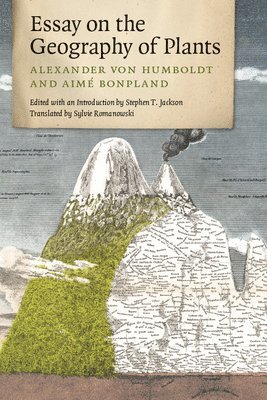
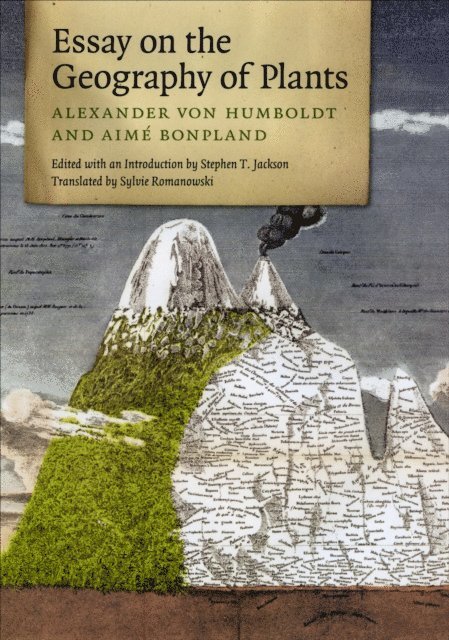
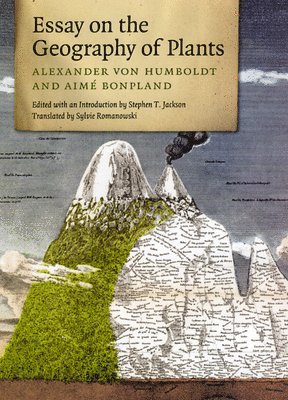
The legacy of Alexander von Humboldt (1769-1859) looms large over the natural sciences. His 1799-1804 research expedition to Central and South America with botanist Aime Bonpland set the course for the great scientific surveys of the nineteenth century, and inspired such essayists and artists as Emerson, Goethe, Thoreau, Poe, and Church. The chronicles of the expedition were published in Paris after von Humboldt's return, and first among them was the 1807 "Essay on the Geography of Plants." Among the most cited writings in natural history, after the works of Darwin and Wallace, this work appears here for the first time in a complete English-language translation. Covering far more than its title implies, it represents the first articulation of an integrative "science of the earth," encompassing most of today's environmental sciences. Ecologist Stephen T. Jackson introduces the treatise and explains its enduring significance two centuries after its publication.
499 kr
Tillfälligt slut
The legacy of Alexander von Humboldt (1769-1859) looms large over the natural sciences. His 1799-1804 research expedition to Central and South America with botanist Aime Bonpland set the course for the great scientific surveys of the nineteenth century and inspired such essayists and artists as Emerson, Goethe, Thoreau, Poe, and Frederic Edwin Church. The chronicles of the expedition were published in Paris after Humboldt's return, and first among them was the "1807 Essay on the Geography of Plants". Among the most cited writings in natural history, after the works of Darwin and Wallace, this work appears here for the first time in a complete English-language translation. Covering far more than its title implies, it represents the first articulation of an integrative 'science of the earth', encompassing most of today's environmental sciences. Ecologist Stephen T. Jackson introduces the treatise and explains its enduring significance two centuries after its publication. The edition also includes a poster-sized color reproduction of the Mt. Chimborazo tableau, an icon in the history of science and scientific graphics.
238 kr
Skickas inom 5-8 vardagar
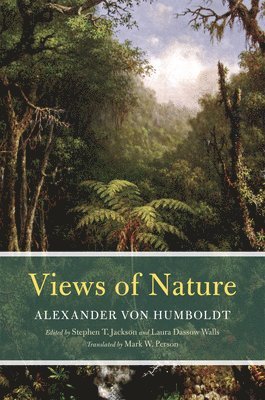
While the influence of Alexander von Humboldt (1769 1859) looms large over the natural sciences, his legacy reaches far beyond the field notebooks of naturalists. Von Humboldt's 1799 1804 research expedition to Central and South America with botanist Aime Bonpland not only set the course for the great scientific surveys of the nineteenth century, but also served as the raw material for his many volumes works of both scientific rigor and aesthetic beauty that inspired such essayists and artists as Emerson, Goethe, Thoreau, Poe, and Frederic Edwin Church. Views of Nature, or Ansichten der Natur, was von Humboldt's best-known and most influential work and his personal favorite. While the essays that comprise it are themselves remarkable as innovative, early pieces of nature writing they were cited by Thoreau as a model for his own work the book's extensive endnotes incorporate some of von Humboldt's most beautiful prose and mature thinking on vegetation structure, its origins in climate patterns, and its implications for the arts.Written for both a literary and a scientific audience, Views of Nature was translated into English (twice), Spanish, and French in the nineteenth century, and it was read widely in Europe and the Americas. But in contrast to many of von Humboldt's more technical works, Views of Nature has been unavailable in English for more than one hundred years. Largely neglected in the United States during the twentieth century, von Humboldt's contributions to the humanities and the sciences are now undergoing a revival to which this new translation will be a critical contribution.
654 kr
Kommande
The first English translation of an essay that is among Alexander von Humboldt’s least known but most important scientific works.In the nineteenth century, Alexander von Humboldt was arguably the world’s most famous celebrity after Napoleon. What started in 1799 as a serendipitous trip to the New World tropics with his friend Aimé Bonpland to collect plants and minerals expanded into a five-year exploration of Venezuela, Colombia, Ecuador, Peru, Mexico, and Cuba. The discoveries the two amassed were nothing short of staggering, and much of our knowledge of tropical botany, zoology, geography, and geology can be traced back to these journeys. The voyage, and the publication of Humboldt’s travel narratives and scientific studies from these expeditions, which totaled dozens of books, elevated Humboldt to cult status. In the last two decades, Humboldt’s writings have been rediscovered in multiple fields, including biogeography; Earth and environmental sciences; American and Latin American studies; nineteenth-century art, poetry, and literature; and transatlantic cultural history. His ideas are profoundly relevant to twenty-first-century thought on the relationship between humans and nature, and the ecological framework in which he viewed the world remains essential two centuries after his travels.Among his many interests and explorations, Humboldt invested considerable effort in explaining the underlying causes of the uneven distribution of plant species across the globe. His extended essay, On the Geographical Distribution of Plants, is among his least known but most important works, laying the foundations for the development of ecology, climatology, and evolutionary biology in the following decades. It was published originally in 1815 as an introduction to a seven-volume Latin botanical monograph, Nova Genera et Species Plantarum. The essay, republished in 1817 as a standalone volume, held great influence over nineteenth-century naturalists. It is his most comprehensive and detailed treatment of plant geography. In the essay, Humboldt applies botanical arithmetic to reveal ecological and biogeographic patterns of plants, applications that still ground modern macroecology, and provides frameworks to link vegetation patterns and climate, essential in modern Earth system science. Introduced and organized by ecologist Stephen T. Jackson and translated from Latin to English by Philip Holt, this book is essential for the libraries of scientists, historians, and all Humboldt admirers.
795 kr
Skickas inom 5-8 vardagar
The legacy of Alexander von Humboldt (1769-1859) looms large over the natural sciences. His 1799-1804 research expedition to Central and South America with botanist Aime Bonpland set the course for the great scientific surveys of the nineteenth century and inspired such essayists and artists as Emerson, Goethe, Thoreau, Poe, and Frederic Edwin Church. Views of Nature was von Humboldt's best-known and most influential work - and his personal favorite. While the essays that comprise it are themselves remarkable as innovative, early pieces of nature writing - they were cited by Thoreau as a model for his own work - the book's extensive footnotes incorporate some of von Humboldt's most beautiful prose and mature thinking on vegetation structure, its origins in climate patterns, and its implications for the arts. Written for both a literary and scientific audience, Views of Nature was translated into English (twice), Spanish, and French in the nineteenth century, and it was read widely in Europe and the Americas. But in contrast to many of von Humboldt's more technical works, Views of Nature has been unavailable in English for more than one hundred years.Largely neglected in the United States during the twentieth century, von Humboldt's contributions to the humanities and the sciences are now undergoing a revival to which this new translation will be a critical contribution.
282 kr
Skickas inom 5-8 vardagar
172 kr
Skickas inom 5-8 vardagar
281 kr
Skickas inom 5-8 vardagar
168 kr
Skickas inom 5-8 vardagar