Stephen Wittek - Böcker
Visar alla böcker från författaren Stephen Wittek. Handla med fri frakt och snabb leverans.
6 produkter
6 produkter
482 kr
Skickas inom 7-10 vardagar
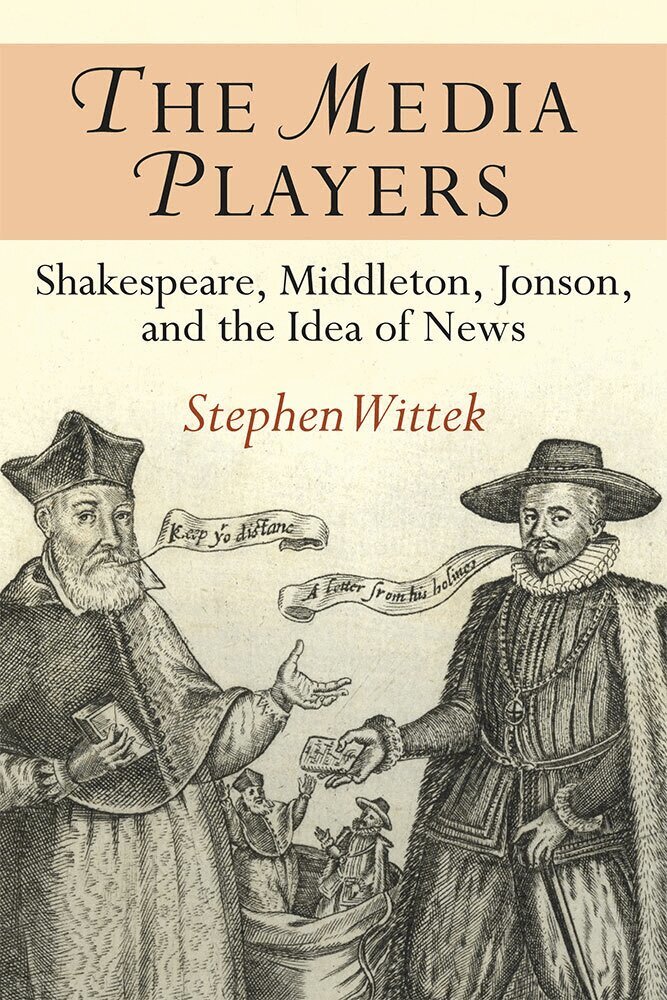
The Media Players: Shakespeare, Middleton, Jonson, and the Idea of News builds a case for the central, formative function of Shakespeare’s theater in the news culture of early modern England. In an analysis that combines historical research with recent developments in public sphere theory, Dr. Stephen Wittek argues that the unique discursive space created by commercial theater helped to foster the conceptual framework that made news possible. Dr. Wittek’s analysis focuses on the years between 1590 and 1630, an era of extraordinary advances in English news culture that begins with the first instance of serialized news in England and ends with the emergence of news as a regular, permanent fixture of the marketplace. Notably, this period of expansion in news culture coincided with a correspondingly extraordinary era of theatrical production and innovation, an era that marks the beginning of commercial theater in London, and has left us with the plays of William Shakespeare, Ben Jonson, and Thomas Middleton.
269 kr
Skickas inom 7-10 vardagar
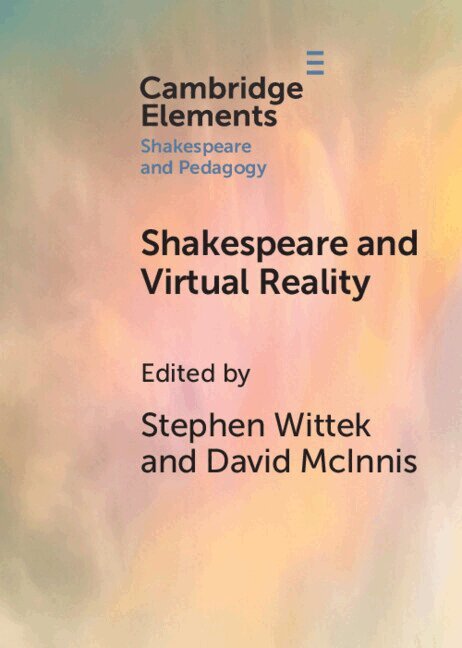
Teaching Shakespeare through performance has a long history, and active methods of teaching and learning are a logical complement to the teaching of performance. Virtual reality ought to be the logical extension of such active learning, providing an unrivalled immersive experience of performance that overcomes historical and geographical boundaries. But what are the key advantages and disadvantages of virtual reality, especially as it pertains to Shakespeare? And more interestingly, what can Shakespeare do for VR (rather than vice versa)? This Element, the first on its topic, explores the ways that virtual reality can be used in the classroom and the ways that it might radically change how students experience and think about Shakespeare in performance.
1 455 kr
Skickas inom 7-10 vardagar
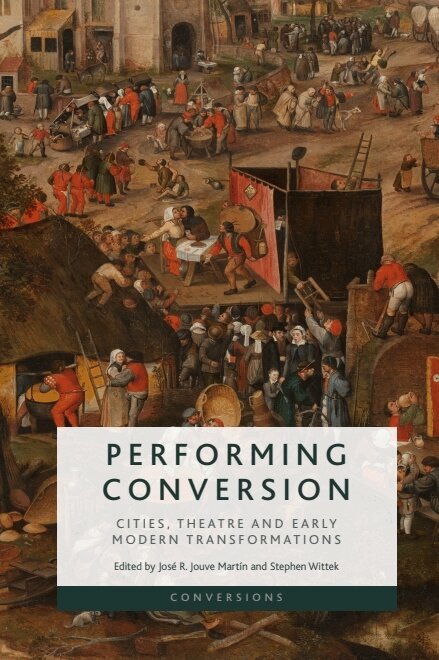
This volume asks, how did theatrical practice shape the multiplying forms of conversion that emerged in early modern Europe? Each chapter focuses on a specific city or selection of cities, beginning with Venice, then moving to London, Mexico City, Tlaxcalla, Seville, Madrid, Amsterdam, Zürich, Berne, and Lucerne (among others). Collectively, these studies establish a picture of early modernity as an age teeming with both excitement and anxiety over conversional activity. In addition to considering the commercial theater that produced professional dramatists such as Lope de Vega and Thomas Middleton, the volume surveys a wide variety of kinds of theatre that brought theatricality into formative relationship with conversional practice. Examples range from civic pageantry in Piazza San Marco, to mechanical statues in Amsterdam’s pleasure labyrinths, to the dramatic dialogues performed by students of rhetoric in colonial Mexico. As a whole, the volume addresses issues of conversion as it pertains to early modern theatre, literature, theology, philosophy, economics, urban culture, globalism, colonialism, trade, and cross-cultural exchange.
341 kr
Skickas inom 7-10 vardagar
Brings together diverse scholarship on theatre and conversional practices in early modern Europe and Latin AmericaMakes a compelling argument for the importance of theatrical practices and theatrical thinking in how conversion itself changed for early modernsDiscusses a wide range of theatrical practices that include, but are not limited to, established canonical authorsProvides new readings of classic plays by Middleton, Lope de Vega, and othersProvides a series of case studies of theatre and conversional practice centered around specific citiesThis volume asks, how did theatrical practice shape the multiplying forms of conversion that emerged in early modern Europe? Each chapter focuses on a specific city or selection of cities, beginning with Venice, then moving to London, Mexico City, Tlaxcalla, Seville, Madrid, Amsterdam, Z rich, Berne, and Lucerne (among others). Collectively, these studies establish a picture of early modernity as an age teeming with both excitement and anxiety over conversional activity. In addition to considering the commercial theater that produced professional dramatists such as Lope de Vega and Thomas Middleton, the volume surveys a wide variety of kinds of theatre that brought theatricality into formative relationship with conversional practice. Examples range from civic pageantry in Piazza San Marco, to mechanical statues in Amsterdam's pleasure labyrinths, to the dramatic dialogues performed by students of rhetoric in colonial Mexico. As a whole, the volume addresses issues of conversion as it pertains to early modern theatre, literature, theology, philosophy, economics, urban culture, globalism, colonialism, trade, and cross-cultural exchange.
1 170 kr
Skickas inom 10-15 vardagar
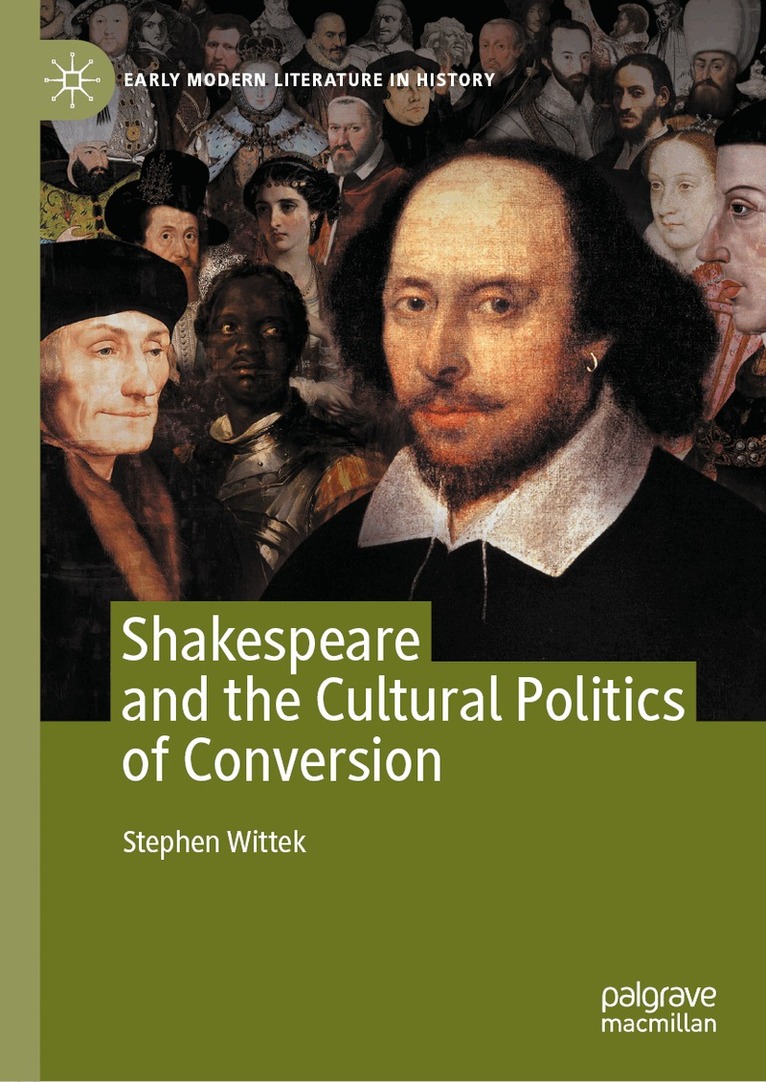
Shakespeare and the Cultural Politics of Conversion takes a close look at Shakespeare’s engagement with the flurry of controversy and activity surrounding the concept of conversion in post-Reformation England. For playhouse audiences during the period, conversional thought encompassed a diverse, fluid amalgamation of ideas, practices, and arguments centered on the means by which an individual could move from one category of identity to another. In an analysis that includes chapter-length readings of The Taming of the Shrew, Henry IV Part I, The Merchant of Venice, Othello, and The Tempest, Professor Stephen Wittek argues that Shakespearean drama made a unique and substantive intervention in public discourse surrounding conversion, and continues to speak meaningfully about conversional experience for audiences in the present age. It will be of particular benefit to students and scholars with an interest in theatrical history, performance theory, cultural studies, race studies, and gender studies.
1 170 kr
Skickas inom 10-15 vardagar
Shakespeare and the Cultural Politics of Conversion takes a close look at Shakespeare’s engagement with the flurry of controversy and activity surrounding the concept of conversion in post-Reformation England. For playhouse audiences during the period, conversional thought encompassed a diverse, fluid amalgamation of ideas, practices, and arguments centered on the means by which an individual could move from one category of identity to another. In an analysis that includes chapter-length readings of The Taming of the Shrew, Henry IV Part I, The Merchant of Venice, Othello, and The Tempest, Professor Stephen Wittek argues that Shakespearean drama made a unique and substantive intervention in public discourse surrounding conversion, and continues to speak meaningfully about conversional experience for audiences in the present age. It will be of particular benefit to students and scholars with an interest in theatrical history, performance theory, cultural studies, race studies, and gender studies.