Steve Gunn - Böcker
Visar alla böcker från författaren Steve Gunn. Handla med fri frakt och snabb leverans.
3 produkter
3 produkter
Subspace, Latent Structure and Feature Selection
Statistical and Optimization Perspectives Workshop, SLSFS 2005 Bohinj, Slovenia, February 23-25, 2005, Revised Selected Papers
Häftad, Engelska, 2006
552 kr
Skickas inom 10-15 vardagar
This book constitutes the thoroughly refereed post-proceedings of the PASCAL (pattern analysis, statistical modelling and computational learning) Statistical and Optimization Perspectives Workshop on Subspace, Latent Structure and Feature Selection techniques, SLSFS 2005. The 9 revised full papers presented together with 5 invited papers reflect the key approaches that have been developed for subspace identification and feature selection using dimension reduction techniques, subspace methods, random projection methods, among others.
3 256 kr
Skickas inom 10-15 vardagar
Everyonelovesagoodcompetition. AsIwritethis,twobillionfansareeagerly anticipating the 2006 World Cup. Meanwhile, a fan base that is somewhat smaller (but presumably includes you, dear reader) is equally eager to read all about the results of the NIPS 2003 Feature Selection Challenge, contained herein. Fans of Radford Neal and Jianguo Zhang (or of Bayesian neural n- works and Dirichlet di?usion trees) are gloating “I told you so” and looking forproofthattheirwinwasnota?uke. Butthematterisbynomeanssettled, and fans of SVMs are shouting “wait ’til next year!” You know this book is a bit more edgy than your standard academic treatise as soon as you see the dedication: “To our friends and foes. ” Competition breeds improvement. Fifty years ago, the champion in 100m butter?yswimmingwas22percentslowerthantoday’schampion;thewomen’s marathon champion from just 30 years ago was 26 percent slower. Who knows how much better our machine learning algorithms would be today if Turing in 1950 had proposed an e?ective competition rather than his elusive Test? But what makes an e?ective competition? The ?eld of Speech Recognition hashadNIST-runcompetitionssince1988;errorrateshavebeenreducedbya factorofthreeormore,butthe?eldhasnotyethadtheimpactexpectedofit. Information Retrieval has had its TREC competition since 1992; progress has been steady and refugees from the competition have played important roles in the hundred-billion-dollar search industry. Robotics has had the DARPA Grand Challenge for only two years, but in that time we have seen the results go from complete failure to resounding success (although it may have helped that the second year’s course was somewhat easier than the ?rst’s).
Del 207 - Studies in Fuzziness and Soft Computing
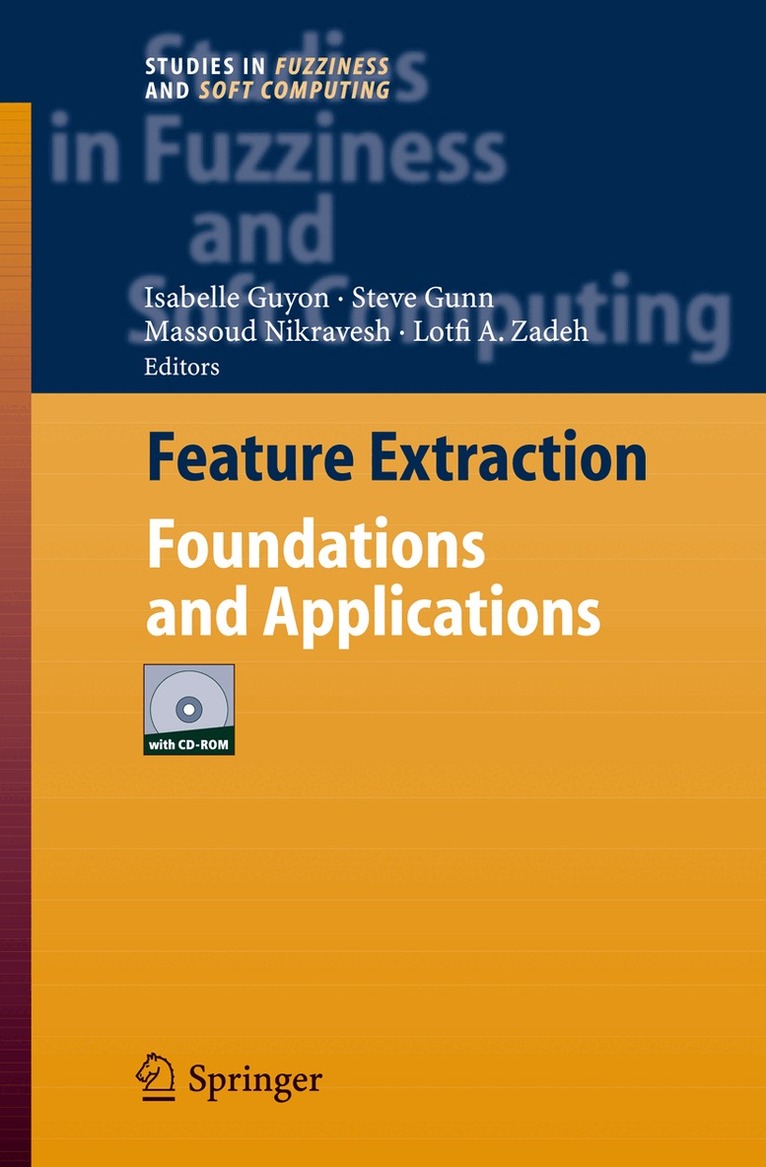
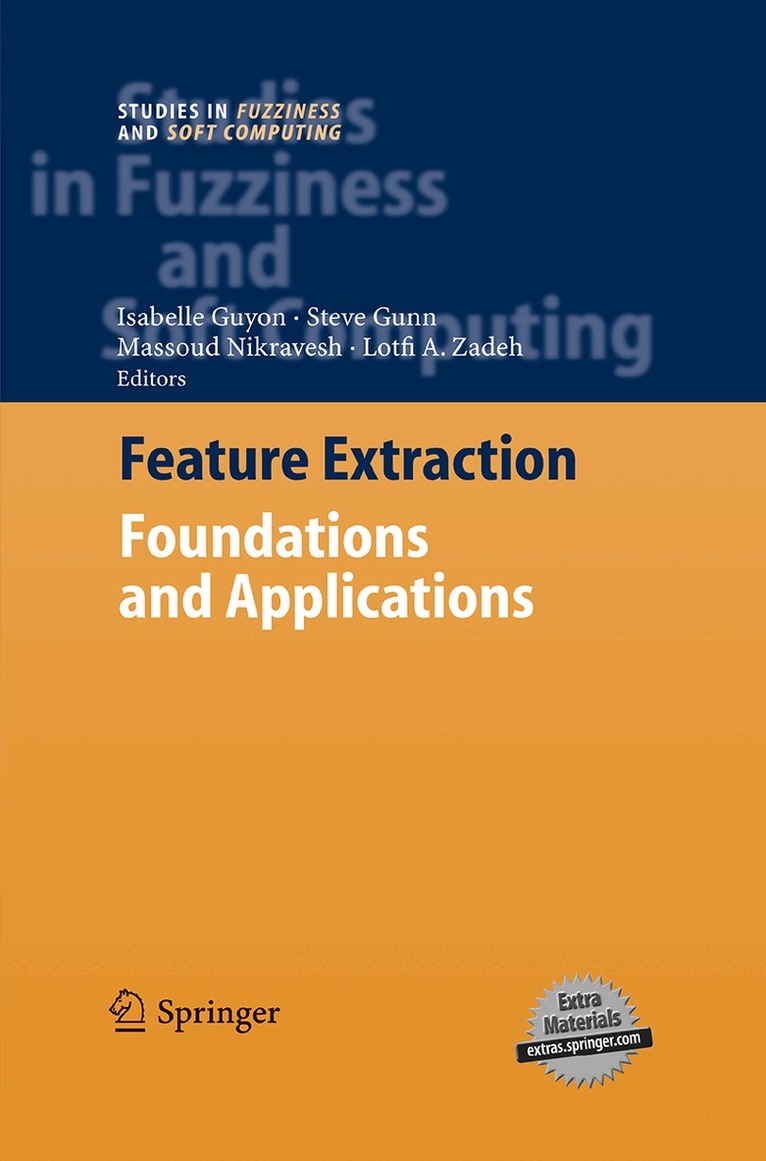
Feature Extraction
Foundations and Applications
Häftad, Engelska, 2017
3 162 kr
Skickas inom 10-15 vardagar
Everyonelovesagoodcompetition. AsIwritethis,twobillionfansareeagerly anticipating the 2006 World Cup. Meanwhile, a fan base that is somewhat smaller (but presumably includes you, dear reader) is equally eager to read all about the results of the NIPS 2003 Feature Selection Challenge, contained herein. Fans of Radford Neal and Jianguo Zhang (or of Bayesian neural n- works and Dirichlet di?usion trees) are gloating “I told you so” and looking forproofthattheirwinwasnota?uke. Butthematterisbynomeanssettled, and fans of SVMs are shouting “wait ’til next year!” You know this book is a bit more edgy than your standard academic treatise as soon as you see the dedication: “To our friends and foes. ” Competition breeds improvement. Fifty years ago, the champion in 100m butter?yswimmingwas22percentslowerthantoday’schampion;thewomen’s marathon champion from just 30 years ago was 26 percent slower. Who knows how much better our machine learning algorithms would be today if Turing in 1950 had proposed an e?ective competition rather than his elusive Test? But what makes an e?ective competition? The ?eld of Speech Recognition hashadNIST-runcompetitionssince1988;errorrateshavebeenreducedbya factorofthreeormore,butthe?eldhasnotyethadtheimpactexpectedofit. Information Retrieval has had its TREC competition since 1992; progress has been steady and refugees from the competition have played important roles in the hundred-billion-dollar search industry. Robotics has had the DARPA Grand Challenge for only two years, but in that time we have seen the results go from complete failure to resounding success (although it may have helped that the second year’s course was somewhat easier than the ?rst’s).