Steve J. Stern - Böcker
Visar alla böcker från författaren Steve J. Stern. Handla med fri frakt och snabb leverans.
7 produkter
7 produkter
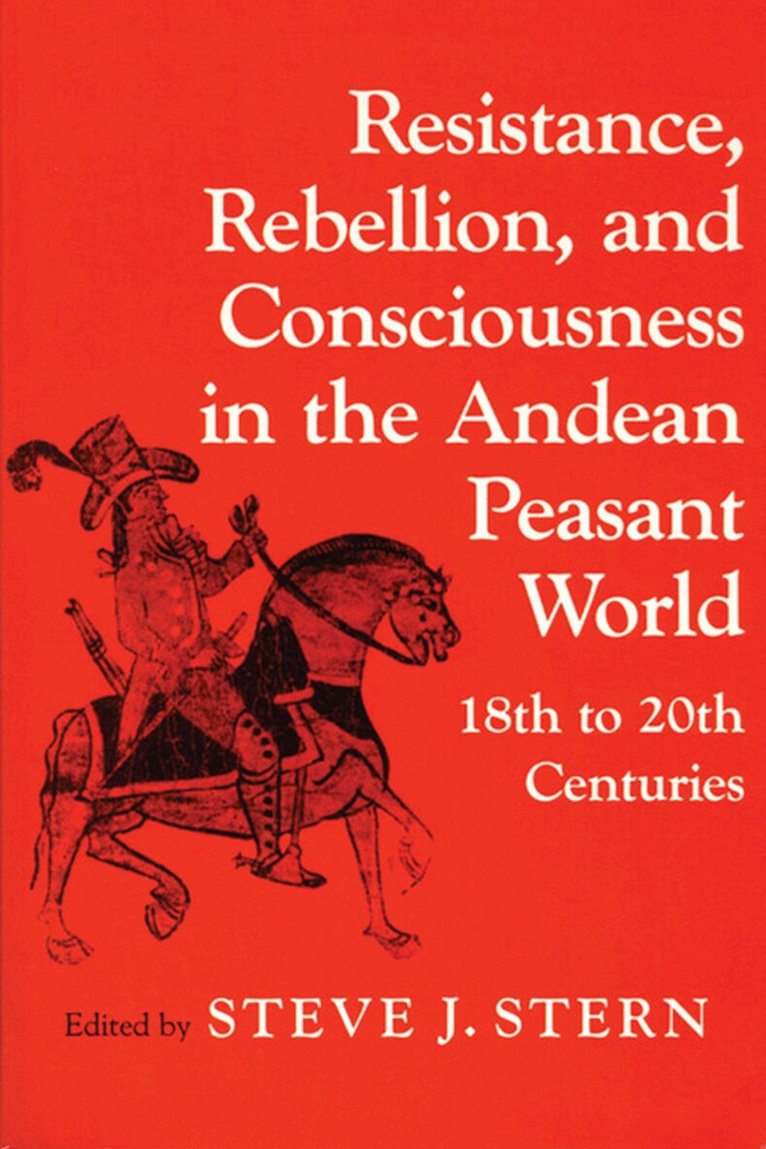
Resistance, Rebellion and Consciousness in the Peasant Andean World, 18th-20th Centuries
Häftad, Engelska, 1987
286 kr
Skickas inom 10-15 vardagar
This collection of essays challenges our understanding of the history of native Andean rebellion during the last three centuries.The contributors—historians and anthropologists from a number of countries—move beyond the traditional structural analysis of society to a finer understanding of people as actors. Native Andean initiatives and consciousness are clearly placed at the center of this inquiry, which merges the best methods of history an anthropology.Stern begins with a vigorously argued theoretical essay in which he identifies major findings and arguments running throughout the book, demonstrates their pertinence to the more general field of peasant studies, and draws out the implications for theory and method. He reappraises the role of peasant consciousness and political horizons; and the significance of ethnic factors in explaining "peasant" consciousness and revolt.The case studies themselves revamp the history of Andean peasant rebellion and consciousness in Peru and Bolivia. This is accomplished by studying violent uprisings as transitional moments within a long-term trajectory embracing varied forms of resistance, and by scrutinizing closely the ideological and cultural aspects of domination, political legitimacy, and rebellion. The results sharply alter our understanding of three major historical problems: the crisis of Spanish colonial rule and the outbreak of native Andean insurrection in the eighteenth century; the response to peasants to creole wars and nation-building efforts in the nineteenth century; and the political strategies and dilemmas of Andean peasants in the context of populist and radical politics in the twentieth century.
Confronting Historical Paradigms Peasants, Labor and the Capitalist World System in Africa and Latin America
Häftad, Engelska, 1993
268 kr
Skickas inom 10-15 vardagar
Confronting Historical Paradigms argues that confrontation with major paradigms of world history has marked the fields of African and Latin American history during the last quarter-century and that the process has dramatically restructured historical and theoretical understanding of peasantries, labour and the capitalist world system. Moreover, it maintains, the intellectual reverberations within and across the African and Latin American fields constitute a challenging and under-appreciated counterpoint to laments that contemporary historical knowledge has suffered a splintering so extreme that it undermines larger dialogue and meaning. The authors in their substantive essays synthesise, order and evaluate the significance of the enormous resonating literatures that have come to exist for Africa and Latin America on the themes of the capitalist world system, labour and peasantries. They historicise these literatures by analysing an entire cycle of critical dialogue and confrontation with historical paradigms and the professional upheavals that accompanied them. They also review the initial confrontations with frameworks of historical knowledge that erupted in the 1960s and the early 1970s; the emergence of new ""dissident"" paradigms; the outpouring of subsequent scholarship on peasants, labour and capitalism that began to unravel the newly proposed paradigms by the 1980s and 1990s; and the outlines of the new interpretive frameworks that tended to displace both the ""traditional"" and ""early dissident"" paradigms. They also suggest possible outlines of a new cycle of ""Third World"" confrontations with paradigm, anchored in themes such as gender and ethnicity. ""Confronting Historical Paradigms"" employs a historicised awareness of intellectual networks, conversations and history-theory dialogues. The result is a critical analysis and synthetic presentation of substantive advances that have preoccupied scholarship on Africa and Latin America in recent decades and a powerful challenge of notions that ""new"" fields of history have ended up destroying intellectual coherence and community.
514 kr
Skickas inom 10-15 vardagar
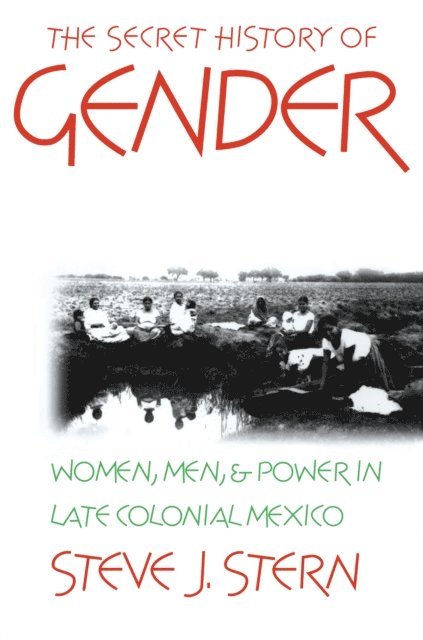
In this study of gender relations in late colonial Mexico (ca. 1760-1821), Steve Stern analyzes the historical connections between gender, power, and politics in the lives of peasants, Indians, and other marginalized peoples. Through vignettes of everyday life, he challenges assumptions about gender relations and political culture in a patriarchal society. He also reflects on continuity and change between late colonial times and the present and suggests a paradigm for understanding similar struggles over gender rights in Old Regime societies in Europe and the Americas. Stern pursues three major arguments. First, he demonstrates that non-elite women and men developed contending models of legitimate gender authority and that these differences sparked bitter struggles over gender right and obligation. Second, he reveals connections, in language and social dynamics, between disputes over legitimate authority in domestic and familial matters and disputes in the arenas of community and state power. The result is a fresh interpretation of the gendered dynamics of peasant politics, community, and riot. Third, Stern examines regional and ethnocultural variation and finds that his analysis transcends particular locales and ethnic subgroupings within Mexico. The historical arguments and conceptual sweep of Stern's book will inform not only students of Mexico and Latin America but also students of gender in the West and other world regions. |An illustrated history of the hurricanes known to have struck North Carolina from the days of the first European settlers to the present. This edition takes into account the three major storms--Bonnie, Dennis, and Floyd--that have hit North Carolina since the last edition was published in 1998.
624 kr
Skickas inom 3-6 vardagar
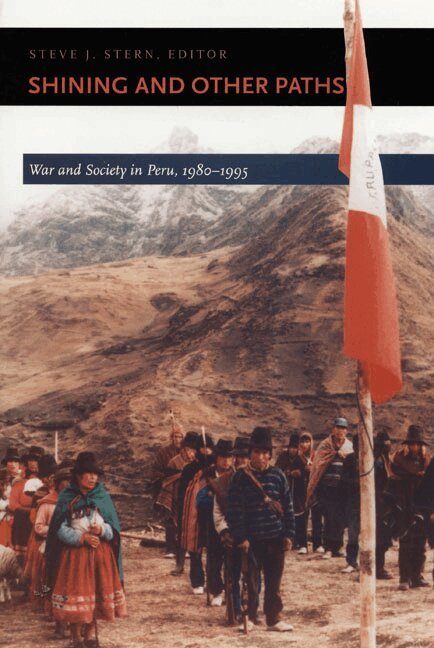
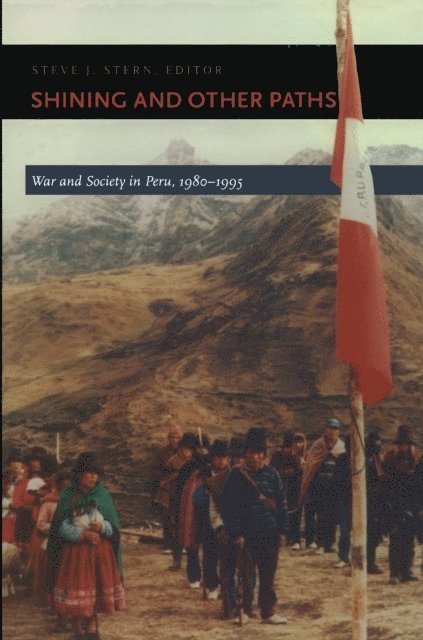
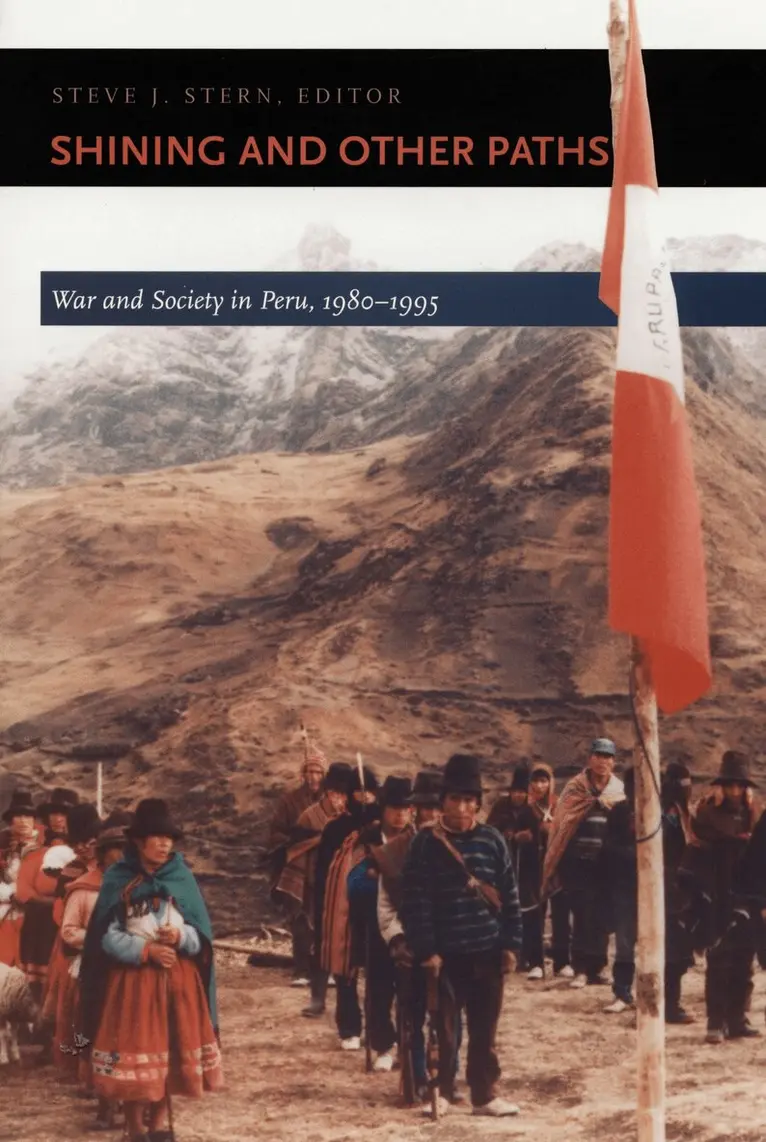
Shining and Other Paths offers the first systematic account of the social experiences at the heart of the war waged between Shining Path and the Peruvian military during the 1980s and early 1990s. Confronting and untangling the many myths and enigmas that surround the war and the wider history of twentieth-century Peru, this book presents clear and often poignant analyses of the brutal reshaping of life and politics during a war that cost tens of thousands of lives.The contributors-a team of Peruvian and U.S. historians, social scientists, and human rights activists-explore the origins, social dynamics, and long-term consequences of the effort by Shining Path to effect an armed communist revolution. The book begins by interpreting Shining Path’s emergence and decision for war as one logical culmination, among several competing culminations, of trends in oppositional politics and social movements. It then traces the experiences of peasants and refugees to demonstrate how human struggle and resilience came together in grassroots determination to defeat Shining Path, and explores the unsuccessful efforts of urban shantytown dwellers, as well as rural and urban activists, to build a “third path” to social justice. Integral to this discussion is an examination of women’s activism and consciousness during the years of the crisis. Finally, this book analyzes the often paradoxical and unintended legacies of this tumultuous period for social and human rights movements, and for presidential and military leadership in Peru. Extensive field research, broad historical vision, and strong editorial coordination enable the authors to write a coherent and deeply humanistic account, one that draws out the inner tragedies, ambiguities, and conflicts of the war.Providing historically grounded explication of the conflicts that reshaped contemporary Peru, Shining and Other Paths will be widely read by Latin Americanists, historians, anthropologists, gender theorists, sociologists, political scientists, and human rights activists.Contributors. Jo-Marie Burt, Marisol de la Cadena, Isabel Coral Cordero, Carlos IvÁn Degregori, IvÁn Hinojosa, Carlos BasombrÍo Iglesias, Florencia E. Mallon, Nelson Manrique, Hortensia MuÑoz, Enrique Obando, Patricia Oliart, Ponciano del Pino H., JosÉ Luis RÉnique, Orin Starn, Steve J. Stern
557 kr
Skickas inom 3-6 vardagar
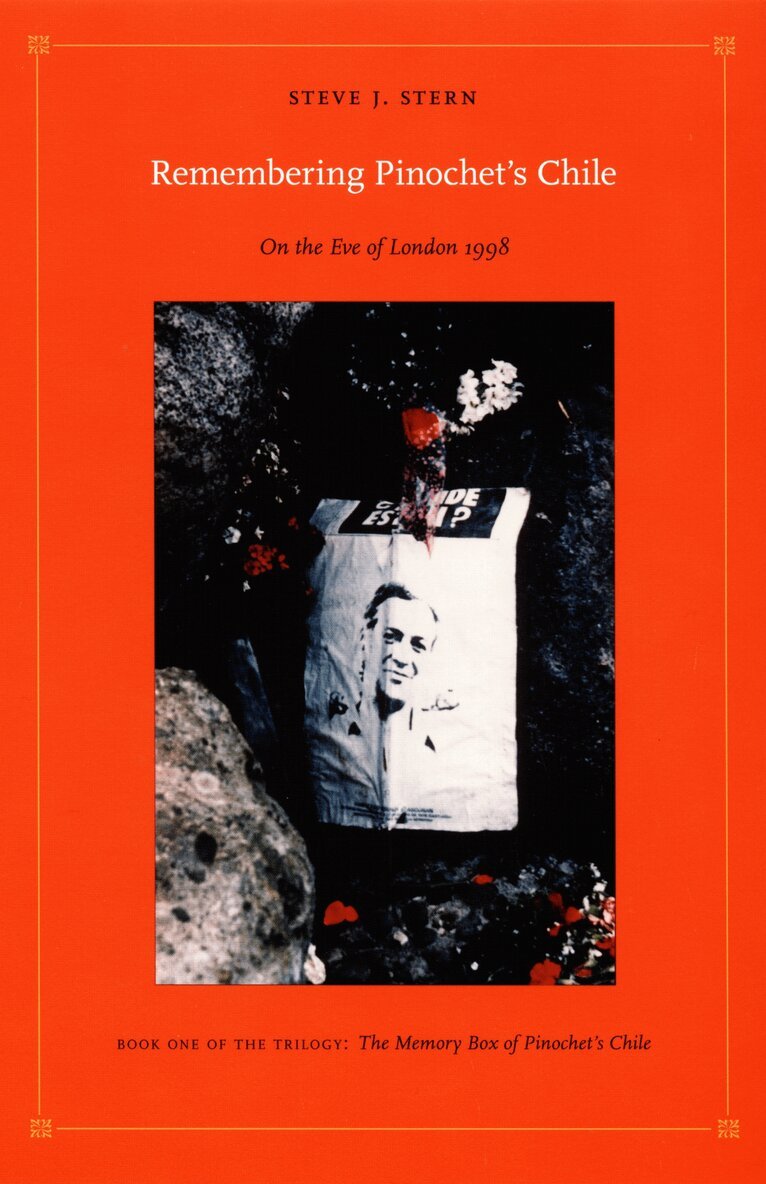
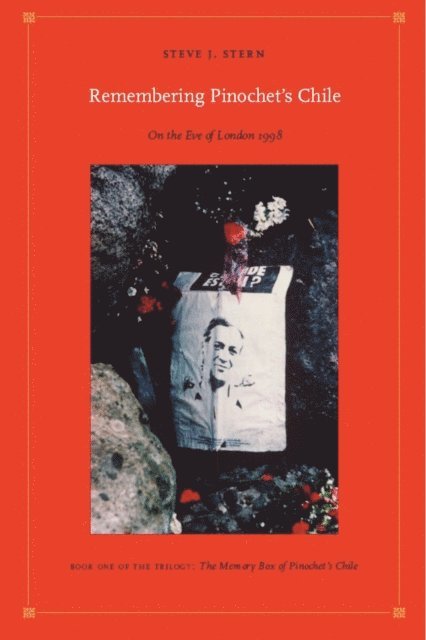
During the two years just before the 1998 arrest in London of General Augusto Pinochet, the historian Steve J. Stern had been in Chile collecting oral histories of life under Pinochet as part of an investigation into the form and meaning of memories of state-sponsored atrocities. In this compelling work, Stern shares the recollections of individual Chileans and draws on their stories to provide a framework for understanding memory struggles in history.“A thoughtful, nuanced study of how Chileans remember the traumatic 1973 coup by Augusto Pinochet against Salvador Allende and the nearly two decades of military government that followed. . . . In light of the recent revelations of American human rights abuses of Iraqi prisoners, [Stern’s] insights into the legacies of torture and abuse in the Chilean prisons of the 1970s certainly have contemporary significance for any society that undergoes a national trauma.”-Publishers Weekly“This outstanding work of scholarship sets a benchmark in the history of state terror, trauma, and memory in Latin America.”-Thomas Miller Klubock, American Historical Review“This is a book of uncommon depth and introspection. . . . Steve J. Stern has not only advanced the memory of the horrors of the military dictatorship; he has assured the place of Pinochet’s legacy of atrocity in our collective conscience.”-Peter Kornbluh, author of The Pinochet File: A Declassified Dossier on Atrocity and Accountability“Steve J. Stern’s book elegantly recounts the conflicted recent history of Chile. He has found a deft solution to the knotty problem of evenhandedness in representing points of view so divergent they defy even the most careful attempts to portray the facts of the Pinochet period. He weaves a tapestry of memory in which narratives of horror and rupture commingle with the sincere perceptions of Chileans who remember Pinochet’s rule as salvation. The facts are there, but more important is the understanding we gain by knowing how ordinary Chileans-Pinochet’s supporters and his victims-work through their unresolved past.”-John Dinges, author of The Condor Years: How Pinochet and His Allies Brought Terrorism to Three Continents
606 kr
Skickas inom 3-6 vardagar
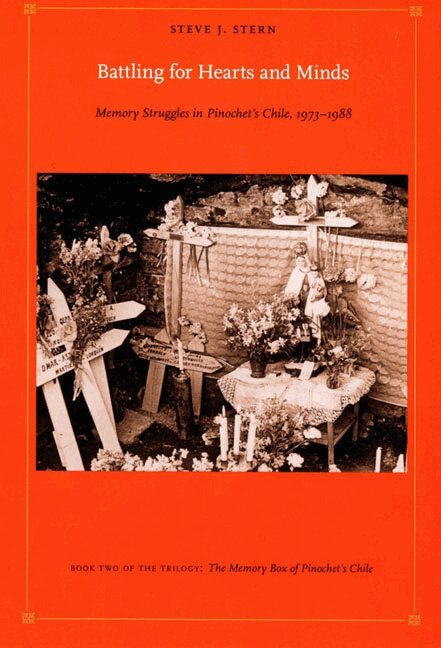
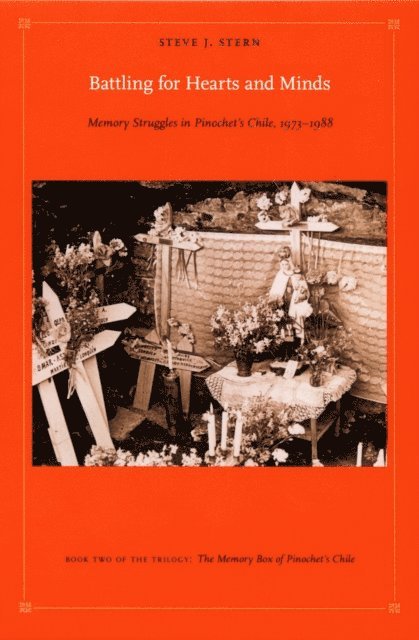
Battling for Hearts and Minds is the story of the dramatic struggle to define collective memory in Chile during the violent, repressive dictatorship of General Augusto Pinochet, from the 1973 military coup in which he seized power through his defeat in a 1988 plebiscite. Steve J. Stern provides a riveting narration of Chile’s political history during this period. At the same time, he analyzes Chileans’ conflicting interpretations of events as they unfolded. Drawing on testimonios, archives, Truth Commission documents, radio addresses, memoirs, and written and oral histories, Stern identifies four distinct perspectives on life and events under the dictatorship. He describes how some Chileans viewed the regime as salvation from ruin by Leftists (the narrative favored by Pinochet’s junta), some as a wound repeatedly reopened by the state, others as an experience of persecution and awakening, and still others as a closed book, a past to be buried and forgotten.In the 1970s, Chilean dissidents were lonely “voices in the wilderness” insisting that state terror and its victims be recognized and remembered. By the 1980s, the dissent had spread, catalyzing a mass movement of individuals who revived public dialogue by taking to the streets, creating alternative media, and demanding democracy and human rights. Despite long odds and discouraging defeats, people of conscience-victims of the dictatorship, priests, youth, women, workers, and others-overcame fear and succeeded in creating truthful public memories of state atrocities. Recounting both their efforts and those of the regime’s supporters to win the battle for Chileans’ hearts and minds, Stern shows how profoundly the struggle to create memories, to tell history, matters.Battling for Hearts and Minds is the second volume in the trilogy The Memory Box of Pinochet’s Chile. The third book will examine Chileans’ efforts to achieve democracy while reckoning with Pinochet’s legacy.
1 575 kr
Skickas inom 7-10 vardagar
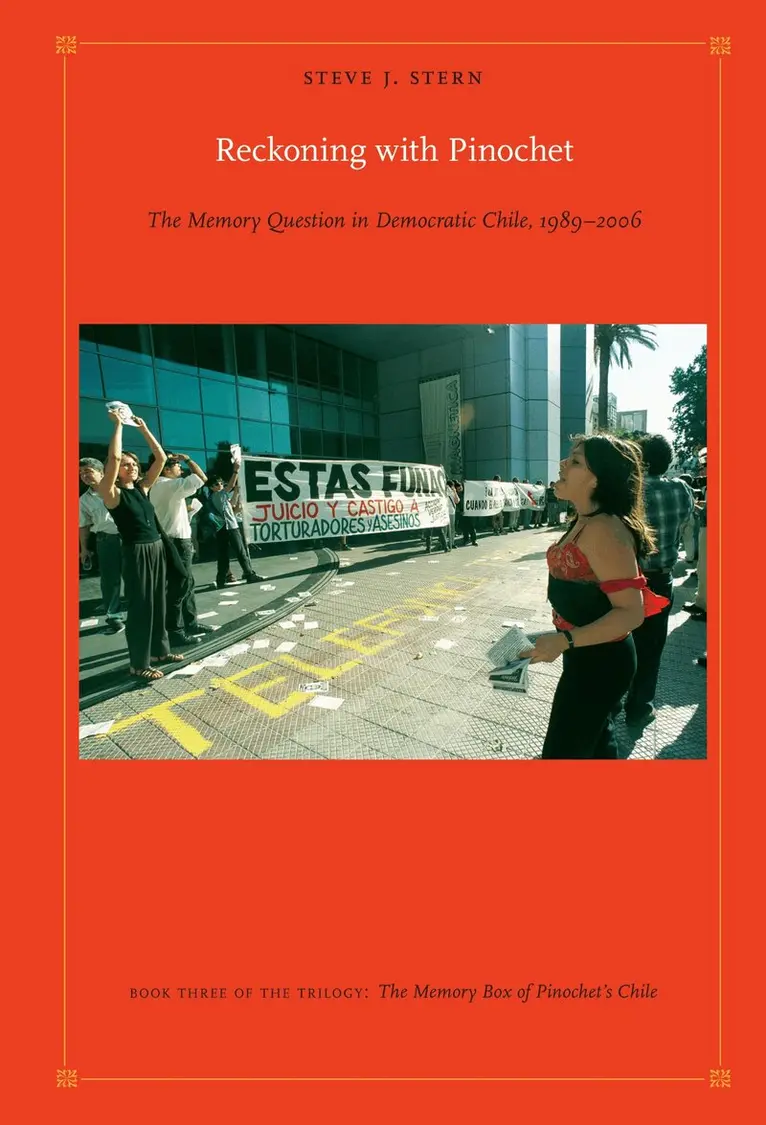
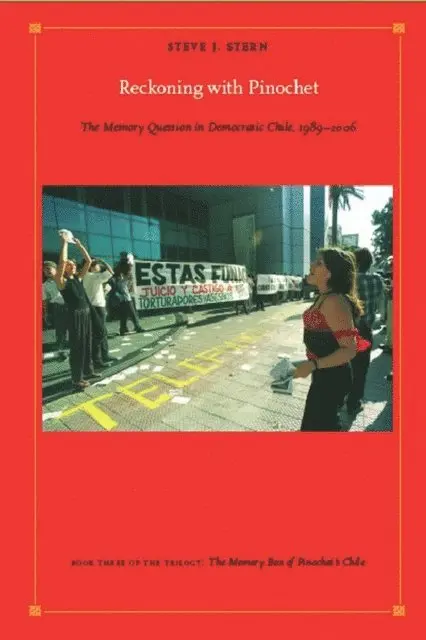
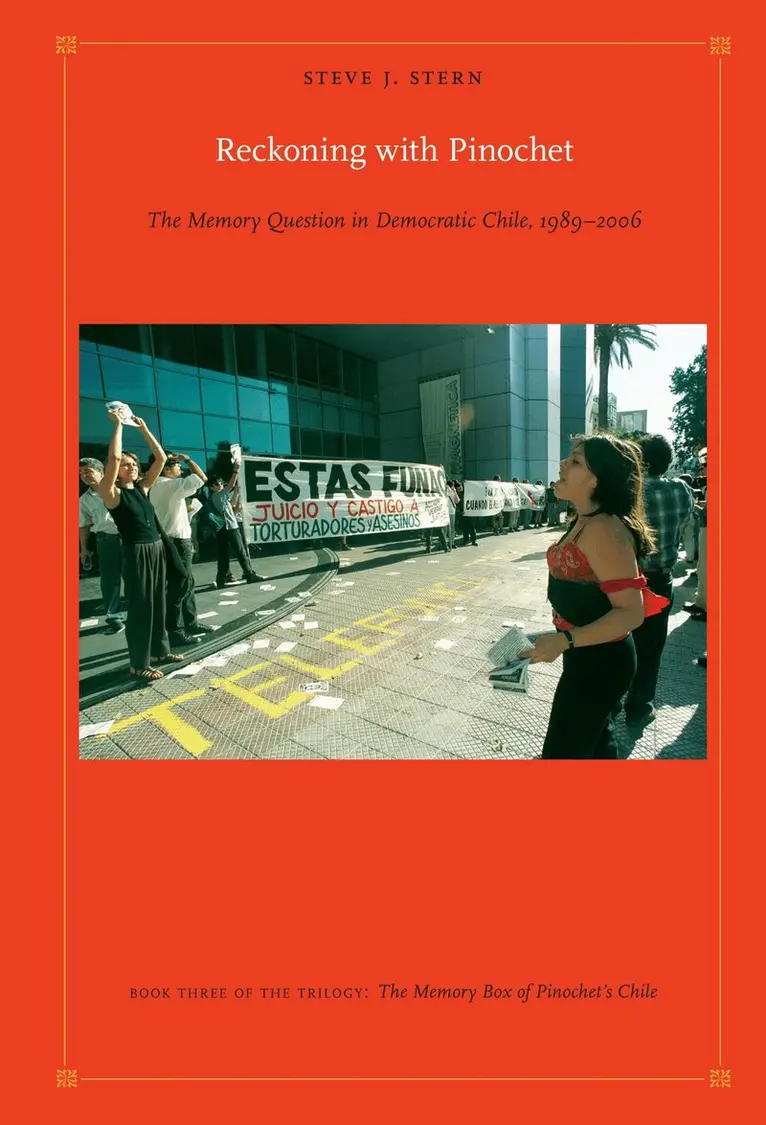
Reckoning with Pinochet is the first comprehensive account of how Chile came to terms with General Augusto Pinochet’s legacy of human rights atrocities. An icon among Latin America’s “dirty war” dictators, Pinochet had ruled with extreme violence while building a loyal social base. Hero to some and criminal to others, the general cast a long shadow over Chile’s future. Steve J. Stern recounts the full history of Chile’s democratic reckoning, from the negotiations in 1989 to chart a post-dictatorship transition; through Pinochet’s arrest in London in 1998; the thirtieth anniversary, in 2003, of the coup that overthrew President Salvador Allende; and Pinochet’s death in 2006. He shows how transnational events and networks shaped Chile’s battles over memory, and how the Chilean case contributed to shifts in the world culture of human rights.Stern’s analysis integrates policymaking by elites, grassroots efforts by human rights victims and activists, and inside accounts of the truth commissions and courts where top-down and bottom-up initiatives met. Interpreting solemn presidential speeches, raucous street protests, interviews, journalism, humor, cinema, and other sources, he describes the slow, imperfect, but surprisingly forceful advance of efforts to revive democratic values through public memory struggles, despite the power still wielded by the military and a conservative social base including the investor class. Over time, resourceful civil-society activists and select state actors won hard-fought, if limited, gains. As a result, Chileans were able to face the unwelcome past more honestly, launch the world’s first truth commission to examine torture, ensnare high-level perpetrators in the web of criminal justice, and build a public culture of human rights. Stern provides an important conceptualization of collective memory in the wake of national trauma in this magisterial work of history.