Steven A. Long - Böcker
Visar alla böcker från författaren Steven A. Long. Handla med fri frakt och snabb leverans.
3 produkter
3 produkter
541 kr
Skickas inom 10-15 vardagar
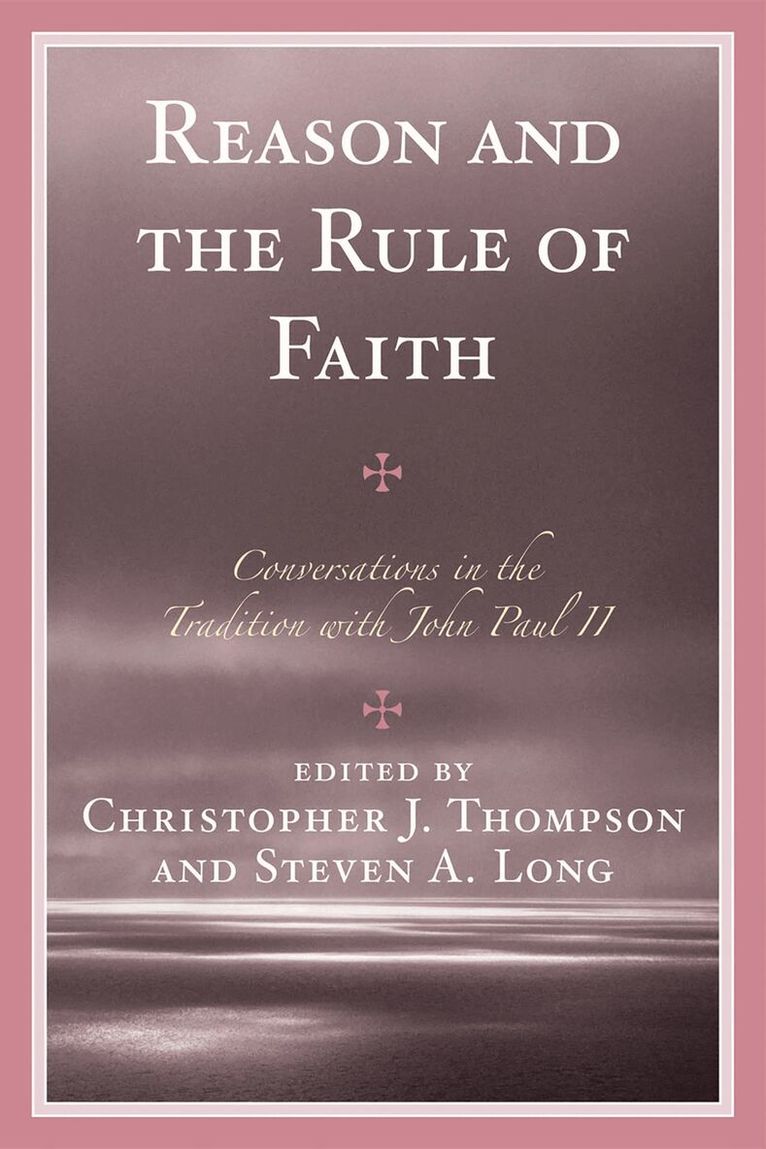
Inspired by the Catholic intellectual tradition, these essays are the fruit of a series of seminars sponsored by the Center for Catholic Studies and the Saint Paul Seminary School of Divinity at the University of St. Thomas in Saint Paul, Minnesota. With a special focus on the works of John Paul II (especially Veritatis Splendor and Fides et Ratio), the authors bring to light a host of considerations that set the work of his pontificate within the illuminating light of the living intellectual tradition.
954 kr
Skickas inom 10-15 vardagar
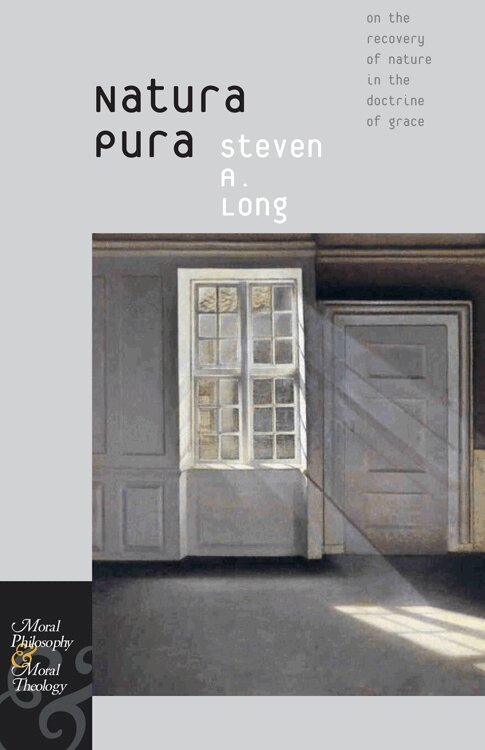
From speculative theology to the exegesis of Aquinas, to contemporary North American philosophy and Catholic social and ethical thought, to the thought of Benedict XVI, this work argues the crucial importance of the proportionate natural end within the context of grace and supernatural beatitude. Long argues that, in the effort to avoid naturalism, Henri de Lubac unwittingly consummated the loss of nature as a normative principle within theology, both doctrinally and exegetically with respect to the teaching of Aquinas. The author argues that this constitutes an understandable but grave error. De Lubac's view of the matter was adopted and extended by Hans Urs von Balthasar in The Theology of Karl Barth, in which Balthasar argues that Aquinas could not even consider pure nature because it was "impossible for him even to make the conceptual distinction implied by this problem," a view contradicted by Aquinas's text. Long argues that in The Theology of Karl Barth, Balthasar's account evacuates nature of its specific ontological density and treats it as "mere createdness as such," a kind of dimensionless point terminating the line of grace. Given the loss of natura within theological method, its recovery requires philosophic instrumentalities. In its third chapter this book argues that by reason of its lack of any unified philosophy of nature or metaphysics, the analytic thought so widespread in Anglophone circles is merely a partial metaphilosophy and so cannot replace the role of classical Thomism within theology. The fourth chapter argues against those who construe affirmation of a proportionate natural end as equivalent to social Pelagianism or minimalism in the public square, engaging the work of Jacques Maritain, Jean Porter, and David Schindler, Sr. In an appendix, the author examines the early thought of Cardinal Ratzinger / Pope Benedict XVI, and its development toward the Regensburg Lecture.
415 kr
Skickas inom 7-10 vardagar
There is perhaps no aspect of traditional Thomistic thought so contested in modern Catholic theology as the notion of predestination as presented by the classical Thomist school. What is that doctrine, and why is it so controversial? Has it been rightly understood in the context of modern debates? At the same time, the Church’s traditional affirmation of a mystery of predestination is largely ignored in modern Catholic theology more generally. Why is this the case? Can a theology that emphasizes the Augustinian notion of the primacy of salvation by grace alone also forego a theology of predestination?Thomism and Predestination: Principles and Disputations considers these topics from various angles: the principles of the classical Thomistic treatment of predestination, their contested interpretation among modern theologians, examples of the doctrine as illustrated by the spiritual writings of the saints, and the challenges to Catholic theology that the Thomistic tradition continues to pose. This volume initiates readers— especially future theologians and Catholic intellectuals—to a central theme of theology that is speculatively challenging and deeply interconnected to many other elements of the faith.