Steven Dickens - Böcker
Visar alla böcker från författaren Steven Dickens. Handla med fri frakt och snabb leverans.
13 produkter
13 produkter
111 kr
Skickas
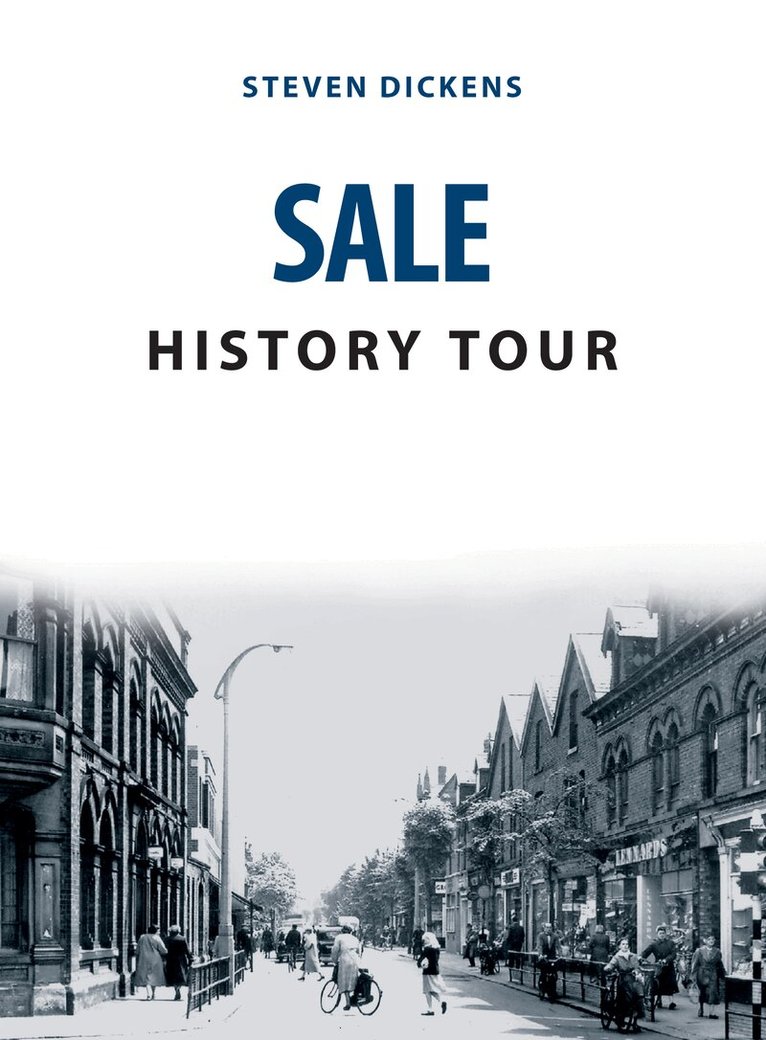
Sale History Tour offers an insight into the fascinating history of this town in Greater Manchester. Author Steven Dickens guides us around its well-known streets and buildings, showing how its famous landmarks used to look and how they have changed over the years, as well as exploring its lesser-known sights and hidden corners. With the help of a handy location map, readers are invited to follow a timeline of events and discover for themselves the changing face of Sale.
111 kr
Kommande
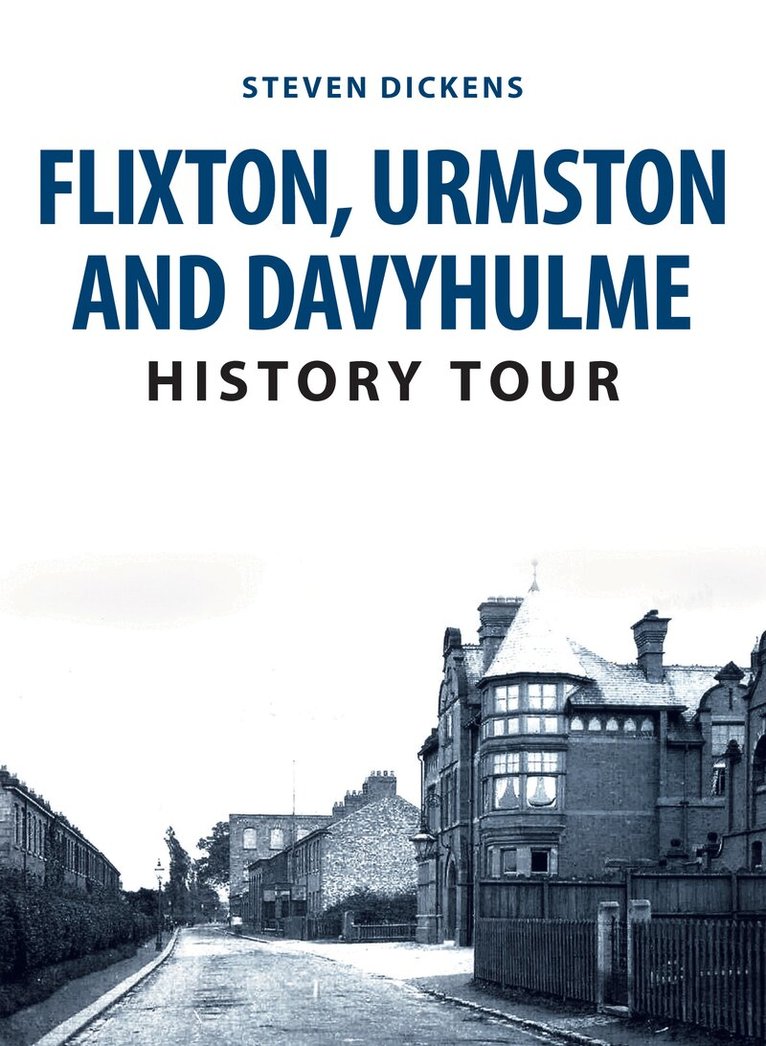
Flixton, Urmston and Davyhulme History Tour offers an insight into the fascinating history of the town of Urmston, including Flixton and Davyhulme, in Trafford, Greater Manchester. Author Steven Dickens guides us around its well-known streets and buildings, showing how its famous landmarks used to look, as well as exploring its lesser-known sights and hidden corners. With the help of a handy location map, readers are invited to follow a timeline of events and discover for themselves the changing face of Flixton, Urmston and Davyhulme.
178 kr
Skickas inom 11-20 vardagar
The fascinating town of Sale in the Metropolitan Borough of Trafford, historically a part of Cheshire, has a rich and diverse history, which is extensively illustrated in the pages of this book. Old buildings, long forgotten, are recalled, such as the Brooklands Hotel, where famous comedians Laurel and Hardy stayed in 1947. There is the strange case of Doctor Charles White, of Sale Priory, who kept the embalmed body of Hannah Beswick at his home, where it stayed for 100 years. Sale Priory and grounds are now given over to modern housing. Sale has also had its fair share of successful and influential inhabitants, including Robert Bolt, who was born on Northenden Road and wrote 'A Man For All Seasons', several screenplays and won an Oscar for his work. Famous scientist and physicist, J. P. Joule, lived on Wardle Road. There is a monument to him in nearby Sale Park.
178 kr
Skickas inom 11-20 vardagar
Manchester’s unique Victorian red-brick and sandstone architecture still dominates the twenty-first century skyline, despite modern developments. Manchester’s Victorian history consists of much more than cotton mills and canals. Scientists like John Dalton enhanced the city’s reputation. The world’s first passenger railway station is located at Liverpool Road, which was later superseded by Victoria Station. Manchester University, originally the Victoria University of Manchester, has a worldwide reputation as an academic institution, and writers like James Kay, Edwin Chadwick, Karl Marx and Friedrich Engels have commented on the fascinating effects of Manchester’s rapid growth.Victorian Manchester Through Time contains fascinating contemporary and modern photographs that detail how some of the city’s more familiar buildings and streets have changed over the last 150 years. Featured are impressive views of Piccadilly, Market Street, Manchester Cathedral, St Peter’s Square and Oxford Road, depicting the evolution of this north-west cultural hotspot.
178 kr
Skickas inom 11-20 vardagar
The route covered by this book dates from 1849 onwards. It ran from Manchester to Altrincham, utilising the infrastructure of the Manchester South Junction and Altrincham Railway, then to Knutsford by 1862, with extensions to Northwich and Mouldsworth, and a new terminus at Chester Northgate by 1874. Operated by the Cheshire Lines Committee, trains from Chester via Altrincham terminated at Manchester Central until its closure in 1969, with Northgate closing later in the same year. For many years the line had the reputation of being one of the busiest in the country and today serves many small rural communities in Cheshire.The Mid Cheshire Line is essentially one of contrasts. From its beginning in the historic Roman city of Chester, this book details those differences: the farmland and villages of Mid Cheshire and the remaining industrial remnants of the salt and chemical industries around Northwich; the affluent outer suburbs of Greater Manchester; and the culturally and economically diverse city centre, with its rich heritage of Victorian railway infrastructure.
178 kr
Skickas inom 11-20 vardagar
The market town of Altrincham, historically a part of Cheshire but now part of the metropolitan borough of Trafford, has a rich history. The name Altrincham is derived from Old English, meaning the homestead of Aldhere’s people. The Roman road to Chester ran through Altrincham, but there is no evidence that the Romans ever settled in the market town. Altrincham’s market was created by charter in 1290 and in medieval times a court leet was established. The town eventually became a borough in 1886, with an elected council.Hamon de Massey was given land in the area by William the Conqueror and the de Masseys remained influential until the male line died out in the fifteenth century. From the de Masseys the estate passed to Robert del Boothe of Barton upon Irwell and in 1627 the Earls of Stamford became Lords of the Manor, rebuilding Dunham Massey Hall, which they left in 1855, returning to Altrincham 1906. The estate was bequeathed to the National Trust in 1976. Join local historian Steven Dickens as he looks at this history and shows, through a beautiful collection of photographs, how this charming market town has altered over time.
178 kr
Skickas
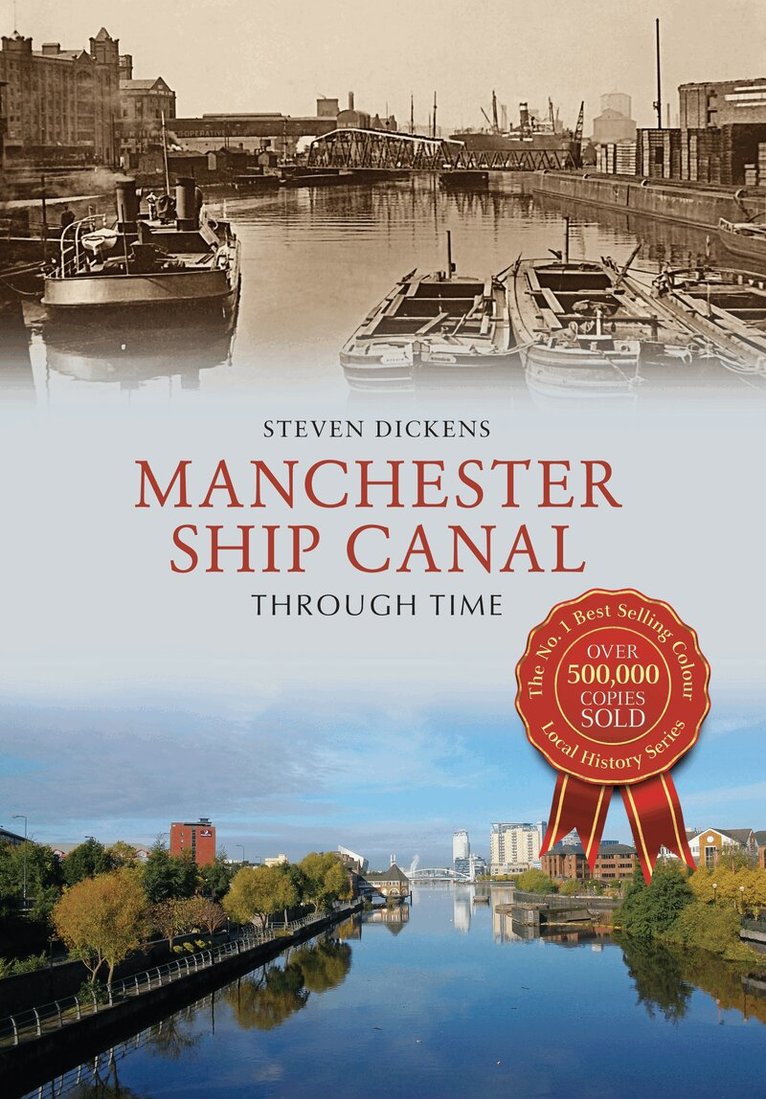
The Manchester Ship Canal was a huge engineering achievement. It included seven swing bridges and the aqueduct at Barton, and helped turn the cotton-producing capital of Great Britain into an inland seaport. This was a feat many at the time believed could not be achieved. One of the wonders of the modern industrial world, the Manchester Ship Canal, with its huge locks and ocean-going vessels, was a magnetic draw for enthusiastic Victorians who marvelled at its construction.This book looks at the changes and development of the Manchester Ship Canal through time, from its origins as a thriving economic hub in the late nineteenth century, to an important retail, leisure and media centre in the early twenty-first century and beyond. Join Steven Dickens as he explores the history of this 36-mile-long inland waterway in the north-west of England, which links Manchester to the Mersey Estuary and the Irish Sea.
168 kr
Skickas inom 11-20 vardagar
Caernarfon, situated on the southern bank of the Menai Strait facing the Isle of Anglesey, is a royal town, community and port in Gwynedd, Wales. In the thirteenth century Llywelyn ap Gruffudd, ruler of Gwynedd, refused to pay homage to Edward I of England, prompting the English conquest of Gwynedd. The construction of Caernarfon Castle, one of the largest and most imposing fortifications built by the English in Wales, followed shortly after. In 1284, the English-style county of Caernarfonshire was established by the Statute of Rhuddlan; the same year, Caernarfon was made a borough, a county and market town, and the seat of English government in North Wales.Caernarfon’s historic prominence and landmarks have made it a major tourist centre. As a result, many of the local businesses cater for the tourist trade. Caernarfon is home to numerous guest houses, inns and pubs, hotels, restaurants and shops. The majority of shops in the town are located either in the centre of town around Pool Street and Castle Square, or on Doc Fictoria. A number of shops are also located within the town walls. Join local author Steven Dickens as he traces some of the ways Caernarfon has changed over the last century using images from the past and present.
178 kr
Skickas inom 11-20 vardagar
Chorlton is derived from Old English and probably means Ceolfrith’s Farm or settlement. Hardy is probably from the name Hearda or the Anglo-Saxon for ‘island’ or ‘dry ground in a well-watered land’; it may also mean ‘by the woods’ as the ancient forest of Arden Wood grew either side of the River Mersey. Despite there being no record of Chorlton-cum-Hardy as a settlement name before 1700, there was an Anglo-Saxon settlement here from the ninth century.In 1904 Chorlton-cum-Hardy was incorporated into the City of Manchester. The district borders onto Stretford, Sale, Didsbury, Withington and Whalley Range, with the River Mersey forming part of its southern boundary. As a result, Chorlton-cum-Hardy has a rich and historically diverse heritage. Through a selection of old and new photographs Chorlton-cum-Hardy Through Timetraces the area’s development over the last century, and is essential reading for anybody who knows and loves this historic suburb.
146 kr
Skickas inom 11-20 vardagar
Manchester’s proud past can be well summed up in its headlines. Steven Dickens delves into the archives of the Evening News to discover the events and personalities that have made the city what it is today. From the dramatic effects of the First and Second World Wars on the city and its residents to its regeneration in the 1980s, the Madchester era of the 1990s and beyond, learn about Manchester’s status as a cultural, industrial and political powerhouse. The stories uncovered are a testament to the wit and generosity of the city’s people.Steven Dickens perfectly encapsulates the essence of Manchester and what has helped to create one of the most distinctive senses of community pride. This book highlights why Manchester always was, and continues to be, a thriving town and the most culturally relevant city in the north-west.
178 kr
Skickas
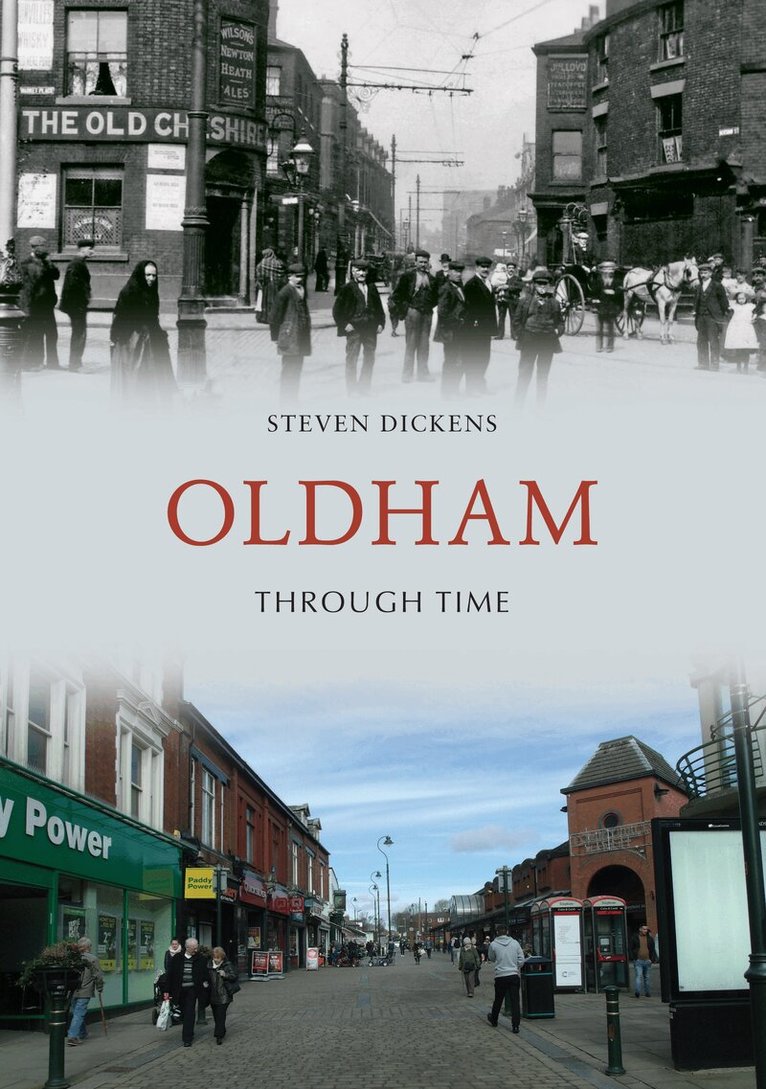
The Lancashire town of Oldham was a boom town of the Industrial Revolution and among the first ever industrialised towns in England. At its peak it was the most productive cotton-spinning mill town in the world, producing more cotton than France and Germany combined. It was not until the last quarter of the eighteenth century that Oldham changed from being a cottage industry township producing woollen garments via domestic manual labour to a sprawling industrial metropolis of textile factories.The town’s population was greatly increased by the mass migration of workers from outlying villages, resulting in an explosion from just over 12,000 in 1801 to 137,000 in 1901.At its peak, in 1928, there were more than 360 mills operating night and day, but Oldham’s textile industry fell into decline in the mid-twentieth century and the town’s last mill closed in 1998. Today, Oldham is a predominantly residential town and a centre for further education and the performing arts. Oldham Through Timecharts these remarkable changes through a fascinating series of images of the town over the last century and a half.
177 kr
Tillfälligt slut
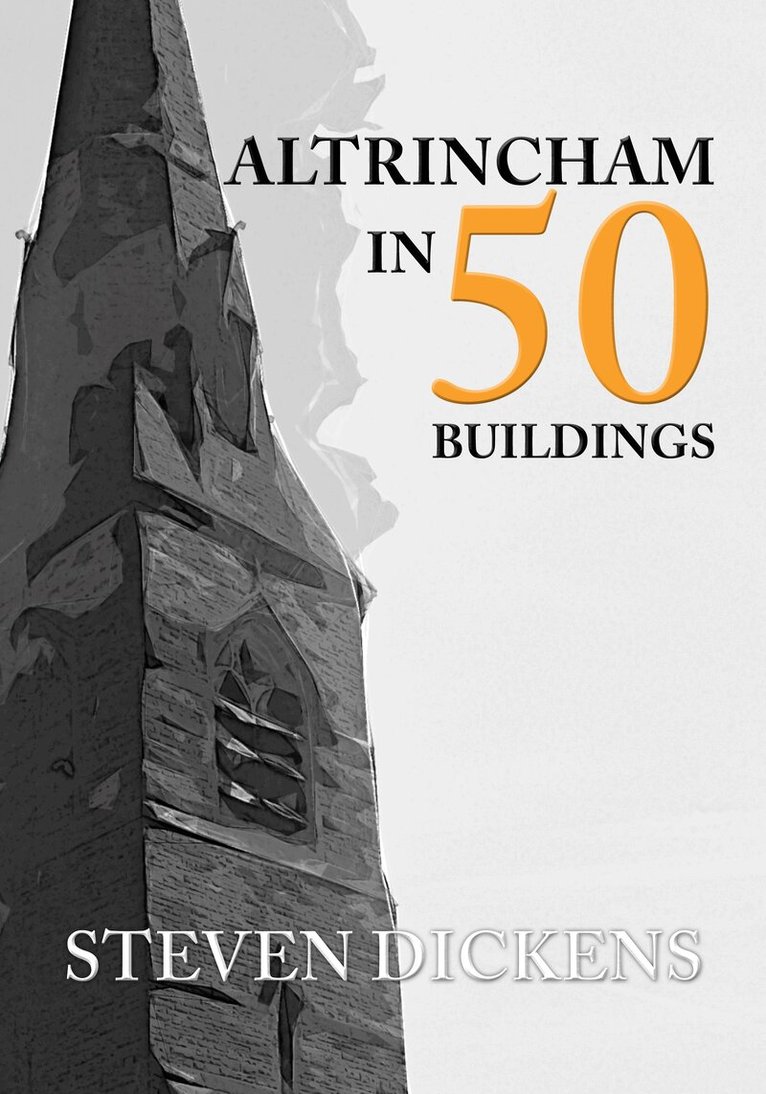
The market town of Altrincham, historically part of Cheshire but now part of the Metropolitan Borough of Trafford, has a rich history dating back to its charter as a free borough and the establishment of a market in 1290. The buildings found in Old Market Place, the original centre of the town, are mainly from the sixteenth to the nineteenth centuries. They include the old town hall, once home to the Court Leet and now a public house, and several inns and restaurants. Old Market Place was a regular stopover point for stagecoaches on the turnpike road between Manchester and Chester. It remains busy today, and has been designated a Conservation Area in order to preserve its unique character. Although the market is now in a covered market hall, 1879–80, located on Market Street, Altrincham is still an important centre for trade. The buildings in Old Market Place echo the ‘black and white’ timber-framed constructions of Cheshire’s past. There are also more recent constructions, civic buildings – the town hall – dating from c. 1900 and the old Altrincham General Hospital, now replaced by a brand-new, purpose-built hospital in the town centre. Altrincham also boasts the medieval deer park at Dunham Massey and the expansive hall, the former seat of the Earls of Stamford and now in the stewardship of the National Trust. Latest developments include the new Altrincham Interchange building at Stamford New Road, its modern lines and graceful frontage a good example of function and design, while there are many examples of public buildings in Altrincham dating to the Victorian period.Altrincham in 50 Buildings celebrates Altrincham’s architectural heritage through history to the present day.
168 kr
Tillfälligt slut
The Borough of Trafford includes Flixton, Urmston, Davyhulme, Stretford, Old Trafford, Ashton-on-Mersey, Sale, Bowdon, Hale, Hale Barns and Altrincham, as well as Partington, Carrington, Timperley and Trafford Park. North and South Trafford are separated by the River Mersey, the historic boundary between Lancashire and Cheshire until the Borough’s formation. Trafford is also home to Manchester United Football Club, Lancashire County Cricket Club, the Imperial War Museum North and the Trafford Centre.In Trafford: The Postcard Collection the various towns of the Borough are represented, including lesser-known views of the Trafford Park industrial estate and rural views of Carrington, Ashton-on-Mersey and Partington, which are often overlooked. The book takes the reader on an evocative journey into Trafford’s past through a selection of old postcards that offer a fascinating window into the history of this area of north-west England.