Steven Hahn – författare
Visar alla böcker från författaren Steven Hahn. Handla med fri frakt och snabb leverans.
16 produkter
Nation Without Borders
The United States and Its World in an Age of Civil Wars, 1830-1910
Häftad, 2017
210 kr
Lägg i varukorg
The era from 1830 to 1910 witnessed massive transformations in how people lived, worked, thought about themselves, and struggled to thrive. It also witnessed the birth of economic and political institutions that still shape our world. From an agricultural society with a weak central government, the …
Roots of Southern Populism
Yeoman Farmers and the Transformation of the Georgia Upcountry, 1850-1890
Av Steven Hahn
E-bok, 1985
521 kr
Lägg i varukorg
Despite the vast changes in plantation agriculture following the Civil War and Reconstruction, the lot of small farmers was little improved. Examining the nonplantation region of upcountry Georgia as a microcosm of the South, Steven Hahn showed how farmers were buffeted by such forces as the …
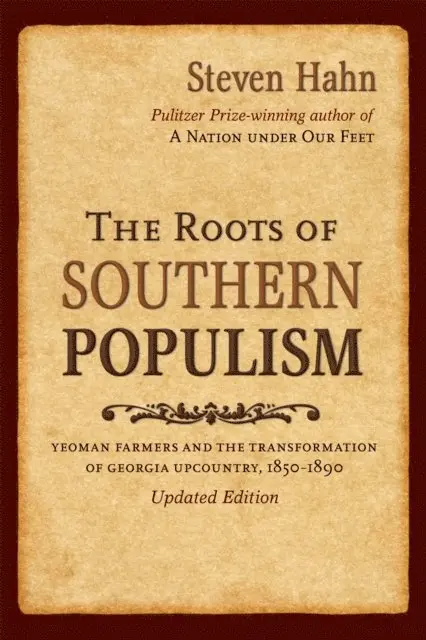
The Roots of Southern Populism
Yeoman Farmers and the Transformation of the Georgia Upcountry, 1850-1890
Av Steven Hahn
Häftad, 2006
754 kr
Lägg i varukorg
Despite the vast changes in plantation agriculture following the Civil War and Reconstruction, the lot of small farmers was little improved. Examining the nonplantation region of upcountry Georgia as a microcosm of the South, Steven Hahn showed how farmers were buffeted by such forces as the …
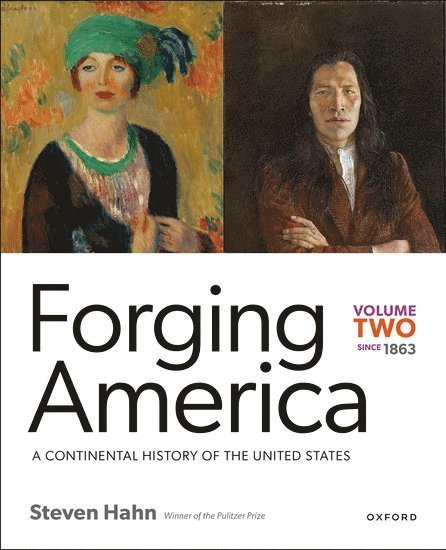
Forging America: Volume Two since 1863
A Continental History of the United States
Av Steven Hahn
Häftad, 2024
1504 kr
Lägg i varukorg
Forging America speaks to both the complexities of historical experience and the meanings of the past for our present-day lives. Warning against the assumption of pre-ordained outcomes, Pulitzer-Prize winning historian Steve Hahn focuses the reader's attention on those moments when historical …
Forging America: Volume One to 1877
A Continental History of the United States
Av Steven Hahn
E-bok, 2023
878 kr
Lägg i varukorg
Winner of the Textbook & Academic Authors Association''s Most Promising New Textbook Award Forging America speaks to both the complexities of historical experience and the meanings of the past for our present-day lives. Warning against the assumption of preordained outcomes, Pulitzer Prize-winning …
Forging America: Volume Two since 1863
A Continental History of the United States
Av Steven Hahn
E-bok, 2023
878 kr
Lägg i varukorg
Forging America speaks to both the complexities of historical experience and the meanings of the past for our present-day lives. Warning against the assumption of preordained outcomes, Pulitzer Prize-winning historian Steve Hahn focuses the reader''s attention on those moments when historical …
Sources for Forging America Volume One
A Continental History of the United States
Av Steven Hahn, Alexandra E. Stern m. fl.
Häftad, 2023
432 kr
Lägg i varukorg
Designed to accompany Forging America by Steven Hahn, this sourcebook provides a diverse set of documents that situates U.S. History within a continental framework. Covering political, social, and cultural history, the nearly 100 selections--including thirty-three visual documents--are intended to …
Roots of Southern Populism
Yeoman Farmers and the Transformation of the Georgia Upcountry, 1850-1890
Av Steven Hahn
E-bok, 1985
586 kr
Lägg i varukorg
Despite the vast changes in plantation agriculture following the Civil War and Reconstruction, the lot of small farmers was little improved. Examining the nonplantation region of upcountry Georgia as a microcosm of the South, Steven Hahn showed how farmers were buffeted by such forces as the …
Illiberal America
A History
Av Steven Hahn
Inbunden, 2024
301 kr
Lägg i varukorg
A storm of illiberalism, building in the United States for years, unleashed its destructive force in the Capitol insurrection of 6 January 2021. The attack on American democracy and images of mob violence led many to recoil, thinking “That’s not us”. But Steven Hahn shows in his startling new …
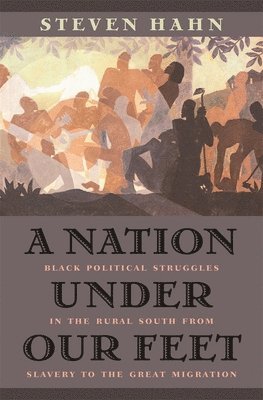
Nation under Our Feet
Black Political Struggles in the Rural South from Slavery to the Great Migration
Av Steven Hahn
Häftad, 2005
287 kr
Lägg i varukorg
This is the epic story of how African-Americans, in the six decades following slavery, transformed themselves into a political people—an embryonic black nation. As Steven Hahn demonstrates, rural African-Americans were central political actors in the great events of disunion, emancipation, and …
Political Worlds of Slavery and Freedom
Av Steven Hahn
Inbunden, 2009
226 kr
Lägg i varukorg
Pulitzer Prize–winner Steven Hahn’s provocative new book challenges deep-rooted views in the writing of American and African-American history. Moving from slave emancipations of the eighteenth century through slave activity during the Civil War and on to the black power movements of the twentieth …
Nation Without Borders
The United States and Its World in an Age of Civil Wars, 1830-1910
Av Steven Hahn
E-bok, 2016
209 kr
Lägg i varukorg
A Pulitzer Prize–winning historian’s "breathtakingly original" (Junot Diaz) reinterpretation of the eight decades surrounding the Civil War. "Capatious [and] buzzing with ideas." --The Boston Globe Volume 3 in the Penguin History of the United States, edited by Eric Foner In this ambitious story of …
Illiberal America
A History
Av Steven Hahn
Häftad, 2025
192 kr
Lägg i varukorg
A storm of illiberalism, building in the United States for years, unleashed its destructive force in the Capitol insurrection of January 6, 2021. The attack on American democracy and images of mob violence led many to recoil, thinking “That’s not us.” But now we must think again, for Steven Hahn …
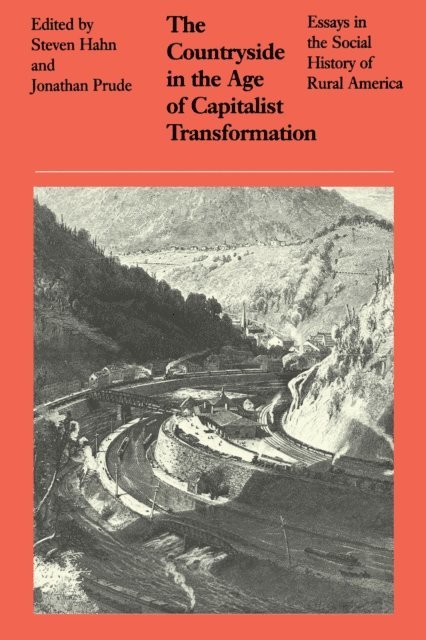
Countryside in the Age of Capitalist Transformation
Essays in the Social History of Rural America
Av Jonathan Prude, Steven Hahn
E-bok, 2018
535 kr
Lägg i varukorg
This volume represents one of the first efforts to harvest the rapidly emerging scholarship in the field of American rural history. Building on the insights and methodologies that social historians have directed toward urban life, the contributors explore the past as it unfolded in the rural …
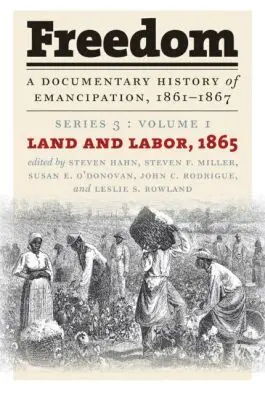
Freedom: a Documentary History of Emancipation, 1861-1867
Series 3, Volume 1: Land and Labor, 1865
Av Steven Hahn, Steven F. Miller m. fl.
Häftad, 2017
896 kr
Lägg i varukorg
Land and Labor, 1865 examines the transition from slavery to free labor during the tumultuous first months after the Civil War. Letters and testimony by the participants-former slaves, former slaveholders, Freedmen's Bureau agents, and others-reveal the connection between developments in workplaces …
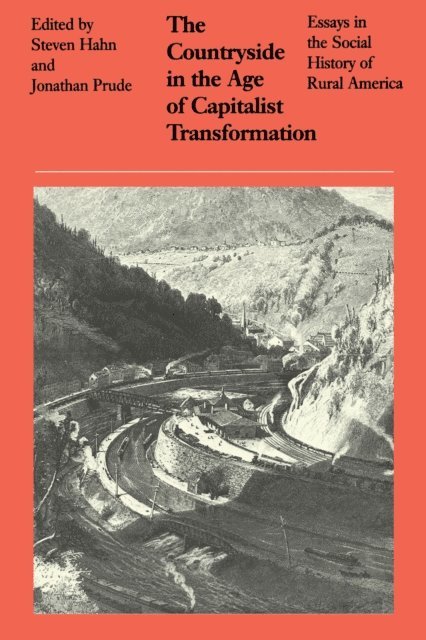
Countryside in the Age of Capitalist Transformation
Essays in the Social History of Rural America
Av Jonathan Prude, Steven Hahn
E-bok, 2018
535 kr
Lägg i varukorg
This volume represents one of the first efforts to harvest the rapidly emerging scholarship in the field of American rural history. Building on the insights and methodologies that social historians have directed toward urban life, the contributors explore the past as it unfolded in the rural …